If you’re looking to transform your backyard this year, the right trees can deliver shade, privacy, and even food in one package. I’ve compiled five standout options that range from fast-growing willows that reach 10 feet annually to fruit-bearing natives that attract wildlife.
But here’s the thing: choosing between speed, aesthetics, and practicality requires understanding what your specific space actually needs. Let’s break down each option and the key factors that’ll guide your decision.
Austree Hybrid Willow Tree – Fast Growing Privacy Tree

#1 GROWTH RATE: Fastest growing tree in the world, very attractive look, no cotton or suckers to clean up. Very Easy and Effective EASY TO GROW: Planting and Growing...
Are you looking to establish a natural privacy screen or windbreak without waiting years for results? The Austree Hybrid Willow grows 10 feet in your first year, making it the fastest growing tree available. I’d space them 3-5 feet apart for a dense hedge row or barrier.
These trees thrive in USDA Zones 3-10, so they work across the entire USA. They’re drought and disease tolerant, which means less maintenance headaches for you. Plus, you’ll get planting instructions and an instructional video included, along with a satisfaction guarantee.
The attractive appearance makes them functional without sacrificing aesthetics. And here’s a bonus: no messy cotton or suckers to clean up like some trees produce.
Best For: Homeowners and property managers seeking rapid privacy solutions, windbreaks, or sound barriers across all USA climate zones who want fast results without extensive maintenance.
Pros:
- Exceptionally fast growth rate of 10 feet in the first year provides quick privacy and windbreak coverage
- Hardy and low-maintenance with drought and disease tolerance across USDA Zones 3-10
- Clean growth pattern with no cotton or suckers to clean up, plus included planting instructions and instructional video
Cons:
- Requires close spacing (3-5 feet apart) for effective hedgerow, increasing the total number of trees needed for larger areas
- Limited information provided about long-term maintenance requirements, mature size, or potential invasiveness concerns
LIGHTSHARE Artificial Lighted Solar Palm Tree Decor

【Unique Design & Hawaii Style】Unique twins palm tree design makes attractive appearance. The design of trunk starting from large to small and curved mimics the growth...
If you’re after that tropical island ambiance without the maintenance headaches of a living tree, the LIGHTSHARE Artificial Lighted Solar Palm Tree brings resort-style flair to your outdoor space. This 4ft or 6ft beauty features 64 to 120 warm white LED lights powered by solar energy. The twin palm design with naturally curved, tapering trunks and lifelike fabric leaves creates authentic tropical vibes for patios, pools, or gardens.
Its iron and PVC construction withstands weather with IP44 waterproof rating, while four reinforced metal stakes anchor it securely. Assembly’s straightforward, and the reusable design makes storage simple when seasons change. Perfect for year-round ambiance or holiday decorating.
Best For: Homeowners and outdoor enthusiasts seeking a low-maintenance, energy-efficient tropical aesthetic for patios, gardens, pools, and year-round holiday decorating.
Pros:
- Energy-efficient solar-powered LED lighting reduces electricity costs
- Durable waterproof construction (IP44 rating) with reinforced metal stakes makes it suitable for both indoor and outdoor use in various weather conditions
- Easy assembly and reusable design allows for convenient seasonal storage and repositioning
Cons:
- Limited to two size options (4ft and 6ft), which may not accommodate all space requirements or aesthetic preferences
- Solar power dependency means performance may vary based on sunlight exposure and seasonal daylight variations
- Artificial materials, while lifelike, may not provide the same natural aesthetic appeal as a living plant for some customers
3 Pack Live Pawpaw Trees (Asimina triloba)

🍈 Unique Tropical-Tasting Fruit: Produces creamy, custard-like fruit with flavors similar to banana, mango, and melon—rare and highly sought after. 🌿 Native & Hardy...
Want tropical fruit flavors without the tropical climate? I’d recommend the 3 Pack Live Pawpaw Trees from CZ Grain. These native North American trees thrive in zones 3-11, making them surprisingly cold-hardy for their creamy, custard-like fruit that tastes like banana, mango, and melon combined.
You’re getting three seedlings specifically for cross-pollination, which boosts fruit production significantly. Plant them in full sun, and you’ll develop lush shade trees perfect for backyard orchards or food forests. Fast-growing and edible, they transform your outdoor space into a functional landscape while delivering genuinely unique flavors you won’t find at grocery stores.
Best For: Gardeners and homeowners in cooler climates (zones 3-11) who want to grow exotic tropical fruit trees with minimal maintenance and improve their landscape with fast-growing shade trees.
Pros:
- Cold-hardy native trees that thrive across a wide range of climates, making them accessible to gardeners outside tropical regions
- Three-pack design ensures cross-pollination for improved fruit production and higher yields
- Fast-growing trees provide dual benefits as both productive fruit sources and attractive shade providers for outdoor spaces
Cons:
- Young seedlings require several years before reaching mature fruit production, demanding patience from growers
- Full sun requirement may limit placement options for gardeners with partially shaded yards or smaller properties
Pawpaw Tree Live Plants 1-2 Feet Tall (3-Pack)

🍈 Delicious & Nutritious Fruit: Mature trees produce clusters of sweet, creamy pawpaw fruits packed with vitamins and natural antioxidants. Perfect for fresh eating,...
You’ll love this 3-pack if you’re serious about building a home orchard. These native Asimina triloba trees arrive 1-2 feet tall and dormant, meaning they’ll establish roots quickly, often sprouting within 2-4 weeks.
Plant them in USDA zones 5-9 with full sun to partial shade and rich, well-drained loam soil. You’re getting three hardy fruit trees that produce sweet, creamy pawpaws with tropical flavors of banana, mango, and custard. Perfect for fresh eating, smoothies, or baking, they’ll transform your backyard into a productive edible landscape while adding lush foliage that enhances your yard’s aesthetic appeal.
Best For: Home gardeners and orchard enthusiasts in USDA zones 5-9 who want to establish a productive edible landscape with native fruit trees that require minimal maintenance.
Pros:
- Three hardy, fast-growing trees that establish roots quickly (often within 2-4 weeks) and produce delicious, nutrient-rich fruit with tropical flavors
- Native North American species adapted to a wide range of climates and growing conditions with flexible light requirements (full sun to partial shade)
- Versatile fruit suitable for fresh eating, smoothies, desserts, and baking while adding attractive lush foliage to enhance yard aesthetics
Cons:
- Shipped dormant without leaves or visible fruit, which may concern some buyers unfamiliar with dormant plant shipping practices
- Requires rich, well-drained loam soil and specific USDA hardiness zones (5-9), limiting suitability for gardeners outside these regions or with poor soil conditions
- As young 1-2 foot plants, these trees will require several years before reaching full maturity and producing significant fruit yields
2 Sweet American Plum Tree Seedlings (1-Year-Old)

GROWING FACTS: Well-rooted 1-year-old seedlings are ready for immediate planting. They establish quickly in garden soil, giving you a head start compared to seeds and...
Ready-to-plant 1-year-old seedlings transform your backyard orchard dreams into reality. These well-rooted trees arrive dormant, appearing as bare stems with established root systems that establish quickly once planted.
You’ll water moderately, keeping soil consistently moist but never waterlogged, and position them in full sun for at least 6-8 hours daily. Within 2-4 years, you’re harvesting sweet, juicy plums perfect for fresh eating, baking, or preserving. At maturity, these trees reach 12-15 feet, fitting nicely into residential spaces. The dormant shipment reduces transplant stress significantly, allowing roots to develop faster so your trees start sprouting within weeks of planting.
Best For: Home gardeners and backyard orchard enthusiasts looking for an accessible, fast-growing fruit tree that produces sweet plums within 2-4 years with minimal maintenance.
Pros:
- Well-rooted 1-year-old seedlings arrive ready to plant and establish quickly, sprouting within 2-4 weeks with significantly reduced transplant stress
- Produces sweet, juicy plums suitable for fresh eating, baking, and preserving within 2-4 years, offering faster harvests than starting from seeds
- Mature trees reach a manageable 12-15 feet, fitting well into residential backyards and requiring only moderate watering and 6-8 hours of daily sunlight
Cons:
- Requires a 2-4 year wait before the first fruit harvest, which may not satisfy gardeners seeking immediate yields
- Needs full sun exposure for at least 6-8 hours daily, limiting placement options in shaded or partially shaded yards
- Requires consistent soil moisture management to prevent waterlogging, demanding regular monitoring and attention to watering schedules
Factors to Consider When Choosing Backyard Trees
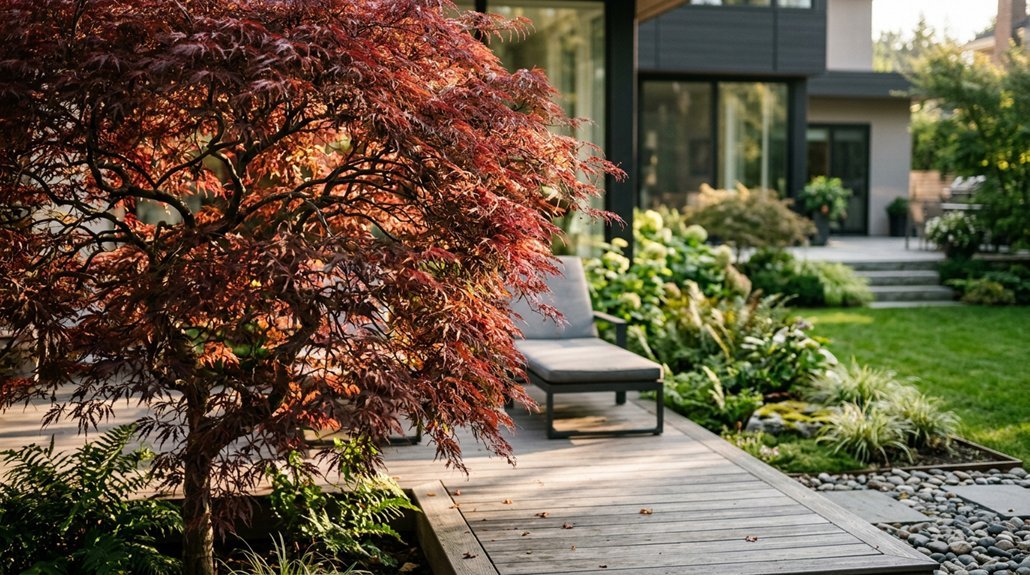
Before you pick out your next backyard tree, I want you to think through several key factors that’ll make the difference between a thriving addition and a struggling one. You’ll want to consider how fast the tree grows, whether it actually survives in your climate zone, what kind of maintenance you’re willing to commit to, how much space you’ve got available, and what you’re really hoping it’ll do for your yard, whether that’s shade, privacy, fruit production, or wildlife habitat. Getting these elements right from the start saves you frustration and money down the road.
Growth Rate And Speed
When you’re envisioning that shaded retreat or living windbreak in your backyard, the speed at which your tree grows matters more than you might think. Some fast-growing species can gain roughly 10 feet in their first year under the right conditions, dramatically accelerating your timeline to shade and privacy.
Your local USDA climate zone and the tree’s drought or disease tolerance directly influence how quickly it establishes itself. I’d recommend spacing fast-growing varieties 3 to 5 feet apart if you’re building a hedge, which maximizes lateral expansion and creates that dense canopy faster.
And here’s what really clinches success: solid planting guidance and care instructions minimize transplant shock and ensure proper establishment. Species vary wildly in growth tempo, so matching your choice to your patience level and goals for wind barriers or aesthetic impact makes all the difference.
Climate Zone Compatibility
How do you know which trees will actually thrive in your backyard instead of struggling through harsh winters or scorching summers? The answer lies in matching your tree species to your USDA hardiness zone, which reflects your region’s temperature extremes and precipitation patterns.
I’d recommend checking whether a tree’s hardiness range aligns with your zone (typically zones 3–11 depending on your location). Beyond cold tolerance, consider drought and disease resistance specific to your climate. Some species, like those suited for zones 3–10, offer versatility across multiple regions, making them reliable choices.
Verify the tree’s native origins too. Native species naturally adapt to your local frost, heat, and humidity levels, requiring less maintenance long-term. This compatibility directly impacts whether your tree becomes a thriving backdrop or a struggling eyesore.
Maintenance And Care Requirements
Picking the right tree is only half the battle; what really determines your success is committing to proper care during those essential establishment years. I’ve found that getting the fundamentals right makes everything else easier.
Start by planting at the correct depth, ensuring your tree’s root collar sits level with the soil surface. You’ll want well-drained soil and appropriate spacing, typically 3-5 feet for fast-growing varieties, which reduces competition and promotes healthier root systems.
Water consistently during establishment, though drought-tolerant species need less frequent irrigation once mature. Faster-growing trees demand regular pruning to manage shape and prevent weak branches. Monitor soil nutrients through observation, apply mulch to retain moisture, and adjust fertilization based on your tree’s growth stage. These fundamentals create a strong foundation for years of healthy growth.
Space And Spacing Needs
Because your backyard’s square footage is finite, spacing decisions become some of the most critical choices you’ll make when planting trees. I recommend spacing fast-growing trees 3 to 5 feet apart for dense privacy screens, but you’ll want to account for their mature width too.
Fast-growing varieties can reach significant heights within a year, so plan accordingly to avoid crowding structures or utilities.
Consider these spacing essentials:
- Allow gaps for maintenance access and root room
- Factor mature canopy spread to minimize shade competition
- Maximize air circulation between trees
- In containers, account for root depth and growth potential
Getting spacing right prevents stunting, girdling, and future headaches. It’s worth measuring twice and planting once.
Purpose And Functional Benefits
Once you’ve figured out your spacing constraints, it’s time to match tree selection to what you actually want from your scenery. I find that clarity here makes all the difference. Are you after fast privacy screening, substantial shade, a windbreak, fruit production, or purely ornamental appeal? Each function demands different growth habits and characteristics.
Consider multi-use potential too. A fruit-bearing native species, for instance, delivers both food and pollinator support simultaneously. And don’t overlook maintenance realities. Some trees need aggressive pruning, while others resist common diseases without fussing.
Think about sucker management and long-term care requirements before committing. When you align your tree’s natural strengths with your landscape goals, you’re setting yourself up for genuine success rather than disappointment down the road.
Durability And Weather Tolerance
How well your tree survives the seasons depends on its inherent toughness and how closely you match it to your climate. I’ve found that understanding hardiness zones, drought tolerance, and structural durability makes all the difference in choosing a tree that’ll thrive for decades.
Look for trees with deep root systems that handle dry spells, strong branching patterns that won’t snap under snow, and proven disease resistance in your region. And don’t overlook wind tolerance, especially if you live in areas prone to storms.
The best backyard trees combine multiple durability factors:
- Cold hardiness matching your winter lows
- Heat and humidity resilience for summer stress
- Pest and disease resistance specific to your area
- Structural strength for heavy weather
This combination ensures your investment pays off year after year.