I’ve found that transforming a bare trellis into a lush, fragrant garden isn’t as complicated as you might think. The right climbing plants do the heavy lifting for you, offering vibrant blooms, wildlife appeal, and the kind of privacy screen that makes your outdoor space feel genuinely yours.
But here’s the thing: not all climbers are created equal. Some fade fast, others demand constant attention, and a few are just plain spectacular. Let me walk you through the five varieties that’ll actually deliver what you’re after.
Climbing Jasmine Seeds for Planting (100pcs)
Abundant Seed Count: Includes 100 premium climbing jasmine seeds, providing ample quantity for extensive garden coverage, multiple planting locations, or sharing with fellow...
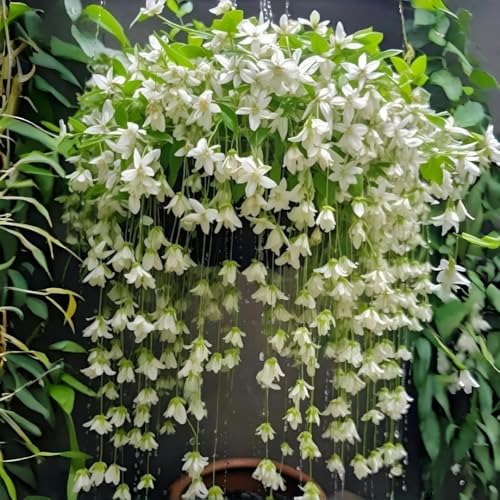
Want a climbing plant that’ll deliver both visual beauty and intoxicating fragrance without demanding expert-level gardening skills? BuggyBeds’ Climbing Jasmine Seeds offer exactly that. With 100 premium seeds in each packet, you’re getting serious coverage potential for fences, trellises, and arbors.
These heirloom seeds grow rapidly, establishing lush vertical greenery while producing aromatic blooms that attract butterflies and hummingbirds. The vines adapt well to various conditions, making them perfect whether you’re a novice or seasoned gardener. You’ll appreciate the versatility here: train them along pergolas, define garden borders, or beautify stark fence lines. And with Amazon’s 30-day return guarantee backing your purchase, you’re covered.
Best For: Gardeners of all skill levels seeking an easy-to-grow, fragrant climbing vine that provides rapid vertical coverage and attracts pollinators to their landscape.
Pros:
- High seed count (100 seeds) provides excellent value and coverage potential for large landscaping projects
- Fast-growing with minimal care requirements, making it ideal for both beginner and experienced gardeners
- Produces fragrant blooms that attract butterflies and hummingbirds while enhancing aesthetic appeal
Cons:
- Heirloom seeds may require specific growing conditions and patience during germination compared to hybrid varieties
- Rapid growth rate may require regular pruning and maintenance to keep vines under control on structures
- No pricing, availability, or customer reviews provided to assess cost-effectiveness or actual user satisfaction
Mixed Climbing Rose Vine Seeds – Perennial Flowering Bush

PACKAGE CONTENTS: 230 premium mixed color climbing rose seeds for creating a stunning vertical garden display on fences, trellises, and arches GROWTH HABIT: Perennial...
If you’re dreaming of a romantic garden draped in cascading blooms, these mixed climbing rose vine seeds deliver exactly what you need. With 230 premium seeds in your packet, you’re getting serious potential for vertical garden displays.
These perennials reach 8-12 feet when mature, perfect for fences, trellises, and arches. Plant them in full sun within USDA Zones 5-9, and they’ll reward you with long-blooming waves of mixed-color flowers throughout the growing season.
Start indoors 6-8 weeks before your last frost, or direct sow when soil hits 65°F. Water moderately, provide climbing support, and you’ll create those romantic privacy screens you’ve been imagining.
Best For: Gardeners and homeowners seeking to create romantic, vertically-planted privacy screens and decorative garden structures with minimal maintenance and long-lasting blooms.
Pros:
- Large seed count (230 seeds) provides excellent value and multiple planting opportunities for expansive coverage
- Long-blooming perennials deliver continuous waves of mixed-color flowers throughout the growing season for sustained visual appeal
- Versatile climbing design works perfectly for fences, trellises, arches, and various outdoor structures to enhance garden aesthetics
Cons:
- Requires full sun exposure and is limited to USDA Zones 5-9, restricting planting options for gardeners in other climates
- Seeds need 6-8 weeks of indoor starting before last frost or specific soil temperature conditions, requiring planning and patience before outdoor display
- Mature vines reaching 8-12 feet require sturdy support structures and regular maintenance including watering and pruning to manage growth effectively
Marde Ross Climbing Vines Seeds Colorful Mixture

VIBRANT CLIMBING VINES – This colorful seed mix includes morning blooming vine, nasturtium, black-eyed Susan vine, and sweet pea seeds, producing shades of red, orange,...
The Marde Ross Colorful Mixture delivers four vine varieties in one packet. You’ll get morning blooming vines, nasturtiums, black-eyed Susan vines, and sweet peas, all guaranteed to germinate within 7-21 days. These seeds reach 6-10 feet tall rapidly, making them perfect for covering fences, trellises, and arbors.
Plant them directly outdoors after your last frost in zones 3-10, choosing spots with full sun to partial shade and well-drained soil. The mixture attracts hummingbirds, butterflies, and bees, creating a vibrant pollinator haven. Marde Ross has been a trusted California nursery since 1985, ensuring premium untreated seeds for reliable, colorful garden displays season after season.
Best For: This product is best for gardeners who want to quickly create vibrant, pollinator-friendly displays on fences, trellises, and arbors with minimal effort and a guaranteed mix of colorful climbing vines.
Pros:
- Guaranteed germination within 7-21 days with rapid growth to 6-10 feet, providing quick coverage and results
- Premium untreated seeds from a trusted California nursery since 1985, ensuring reliable quality and performance season after season
- Attracts pollinators like hummingbirds, butterflies, and bees while offering versatile growing conditions across zones 3-10 with full sun to partial shade tolerance
Cons:
- Seed mixture format means you cannot select individual vine varieties, limiting customization for specific color or growth preferences
- Requires well-drained soil and proper planting after last frost, which may be challenging for inexperienced gardeners or those with poor soil conditions
- Only 50 seeds total across four varieties may provide limited coverage for large garden projects or multiple structures
100Pcs Climbing Clematis Vine Seeds Mix Colors

Clematis seeds are small to medium-sized (2–5mm); many varieties have a fine, hair-like pappus (a tufted structure) that aids in wind dispersal in natural settings Vibrant...
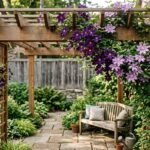
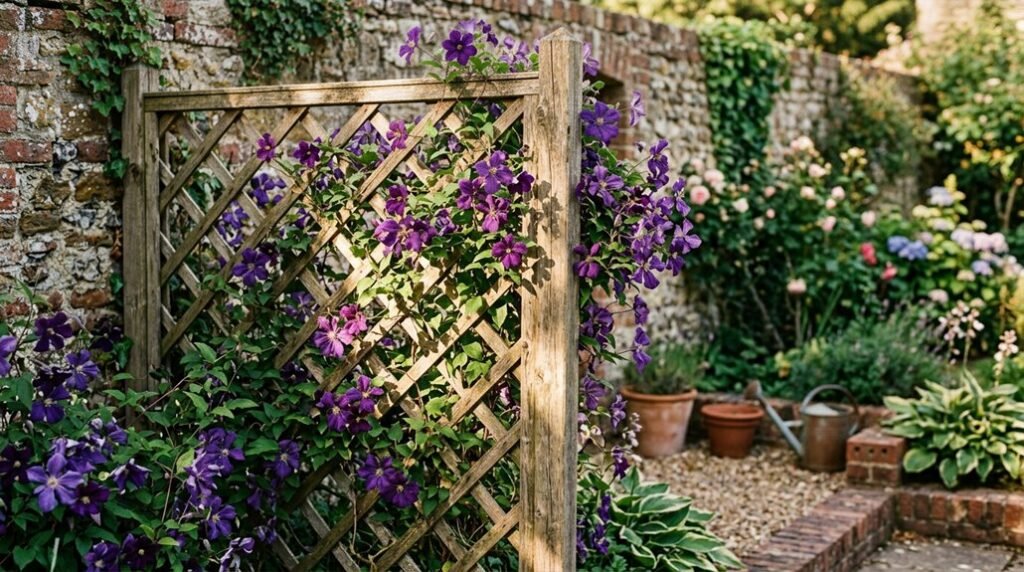
Clematis vines deliver those showstopping blooms you’ve been craving for your trellis. This 100-piece seed mix gives you purple, pink, white, and bi-color varieties that bloom large, reaching 3 to 6 inches wide. You’re looking at plants that climb 8 to 12 feet, perfect for arbors and fences.
The seeds are small to medium, featuring fine hair-like structures that aid dispersal. Plant in USDA zones 4 through 9 where they’ll tolerate frost and partial shade beautifully. Once established, they’re drought-tolerant and need minimal pruning. These perennials attract butterflies and hummingbirds, creating living vertical gardens that transform any outdoor space into something genuinely spectacular.
Best For: This product is best for gardeners and homeowners in USDA zones 4–9 who want to add vibrant, low-maintenance vertical interest to their outdoor spaces with large, pollinator-attracting flowers.
Pros:
- Large, vibrant blooms in multiple colors (purple, pink, white, bi-color) reach 3–6 inches wide and attract butterflies and hummingbirds
- Drought-tolerant once established with minimal pruning required, making them ideal for low-maintenance gardening
- Versatile climbing vines that grow 8–12 feet tall and work beautifully on trellises, fences, arbors, and containers across USDA zones 4–9
Cons:
- Seedlings require careful watering to avoid root rot, demanding attention during the establishment phase
- Seeds have a relatively short viability of only 2–3 years when stored, requiring proper airtight storage conditions
- Seeds are small to medium-sized (2–5mm), which can make handling and planting individual seeds more delicate and time-consuming
Climbing Rose Bush Seeds for Planting Outdoors

Blooms continuously from spring to fall, with each bloom lasting 7-10 days. . Thrives in zones 5-10, adapting to both cool and warm climates. Tolerates partial shade (4+...
Carpet Creeping’s 300+ Climbing Rose Bush Seeds work wonderfully if you want reliable, continuous blooms on your trellis from spring through fall. I appreciate how these heirloom, GMO-free seeds thrive in zones 5-10, adapting to both cool and warm climates.
They’re low maintenance once established, requiring only regular watering until they’re settled, then just during dry spells. The red blooms attract pollinators and last 7-10 days each, so you’ll enjoy consistent color. Plant them where they get full sun for best results, though they tolerate partial shade. Strong winds and moderate drought won’t faze them, making them dependable for most garden situations.
Best For: Gardeners seeking low-maintenance, continuous blooms on vertical structures who live in zones 5-10 and want reliable, pollinator-friendly flowering plants from spring through fall.
Pros:
- Continuous blooms from spring to fall with each flower lasting 7-10 days, providing reliable and consistent garden color
- Low maintenance once established, requiring only regular watering until settled and then only during dry spells
- Hardy and weather-resistant, thriving in zones 5-10 and tolerating strong winds, moderate drought, and partial shade
Cons:
- Requires plant support structures like trellises or arbors for proper training and growth
- Blooms best in full sun, which may limit placement options for gardeners with predominantly shaded areas
- Seeds require proper establishment care with regular watering before transitioning to a more drought-tolerant maintenance schedule
Factors to Consider When Choosing Climbing Plants for Trellis
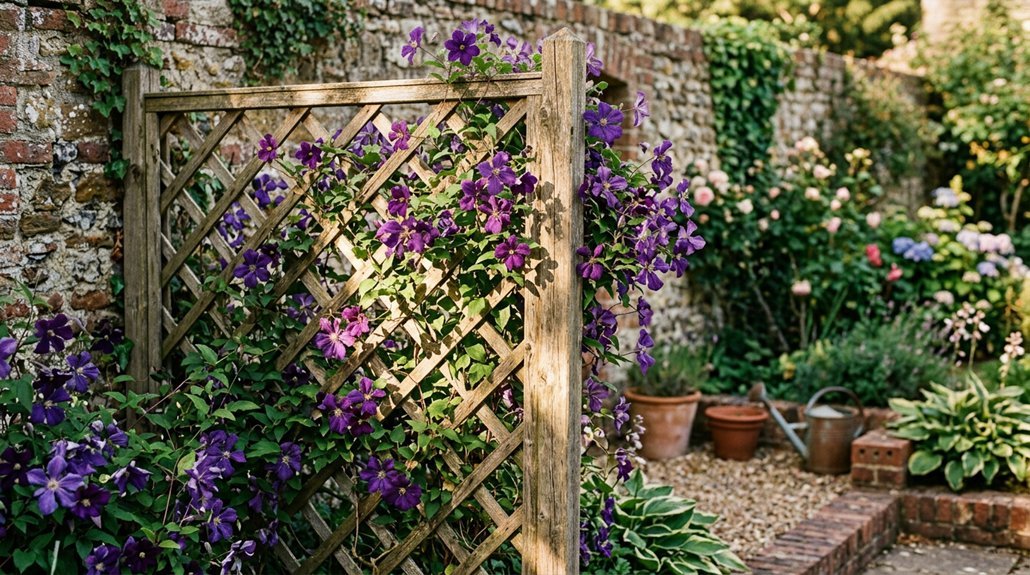
Before you commit to a climbing plant for your trellis, I want you to consider several key factors that’ll determine your success: growth rate and speed, sunlight requirements, climate zone compatibility, bloom color and fragrance, and maintenance demands. Each of these elements interacts with your garden’s specific conditions, so I can’t stress enough how important it is to match the plant’s needs with what you can actually provide. And once you understand these factors, you’ll be equipped to choose a climber that’ll thrive rather than struggle on your trellis.
Growth Rate And Speed
How quickly do you want your trellis transformed into a lush vertical garden? Growth rate matters tremendously when selecting climbing plants, and I’ll tell you why. Some varieties establish a substantial 6-12 foot vertical presence in just one year, while others take multiple seasons to reach their full height. Fast-growing vines can cover several feet during a single growing season, which means quicker results if you’re impatient like me.
However, speed depends heavily on your conditions. Sunlight, soil quality, and watering either accelerate or slow early vertical development significantly. And here’s the practical bit: rapid growers require sturdy support and intentional training to prevent damage as vines gain height and mass.
Sunlight Requirements Matter
Since light availability shapes everything from bloom production to vine vigor, matching your trellis location to a plant’s sunlight needs is one of the most critical decisions you’ll make. Most climbing plants thrive with at least 6 hours of direct sunlight daily, producing vibrant blooms and sturdy growth.
Some varieties tolerate partial shade, though you’ll notice fewer flowers and slower climbing speed compared to their sun-loving counterparts. Sunlight directly influences flowering duration and color intensity, so those full-sun spots reward you with showier, longer-lasting displays. Drought-tolerant climbers especially perform best in sunny, well-drained spots where heat promotes steady, vigorous growth.
Before selecting your plant, honestly assess your trellis location’s light exposure throughout the day.
Climate Zone Compatibility
Where you live matters just as much as where you plant your trellis, and that’s where climate zone compatibility becomes your hidden advantage for success. I can’t stress enough how crucial it is to match your climbing plant’s hardiness range with your USDA zone, whether that’s zones 4-9 or 5-9.
Here’s what I recommend considering:
- Perennial climbers excel in harsher winter zones, maintaining structure year after year
- Annual climbers work better for shorter warm seasons
- Frost tolerance directly impacts your plant’s survival and establishment
Beyond hardiness, factor in your region’s precipitation patterns and irrigation capabilities. A drought-tolerant climber thrives in dry areas, while moisture-loving varieties struggle without adequate water.
Matching these conditions prevents unnecessary stress and failure, setting your trellis garden up for lasting performance.
Bloom Color And Fragrance
Once you’ve locked in the right hardiness zone and watering schedule for your trellis, it’s time to contemplate what you actually want to see and smell when you step outside. I find that bloom color transforms your vertical garden into a living palette. You’ve got purple, pink, white, and bi-color varieties to choose from, each creating distinct visual impacts along fences and arches.
Fragrance matters equally. Some climbing clematis and roses release scents that attract pollinators like bees, butterflies, and hummingbirds, bringing your garden to life beyond aesthetics. Large blooms ranging from 3 to 6 inches create prominent focal points, while extended blooming cycles spanning spring through summer provide months of consistent color.
Pairing fragrant varieties with long-flowering options ensures your trellis delivers both visual drama and sensory pleasure throughout the growing season.
Maintenance And Care Level
How much time are you willing to invest in your climbing plants? This question matters because maintenance needs vary dramatically. Some climbers thrive with minimal attention after establishment, requiring irrigation only during dry spells. Others demand regular pruning and training to prevent tangled, overgrown messes.
Fast-growing varieties need frequent guidance on trellises to stay organized. Consider your light situation too: plants tolerating full sun through partial shade generally need less fussing with watering and fertilizing schedules.
Soil drainage significantly impacts your workload. Well-drained soils reduce root rot risks and lower monitoring demands considerably. And don’t overlook your support structure. Trellises and arbors need occasional adjustment or reinforcement as vines expand vertically.
Match your commitment level to the plant’s actual needs.
Mature Height And Spread
Before you commit to a climbing plant, you’ll want to nail down its mature dimensions because height and spread dictate everything from your trellis size to where you can actually position it in your garden. Some climbers reach 8-12 feet or beyond, while others max out under 6 feet, making them perfect for small fences or low arches.
Understanding spread matters equally since it shows how wide your plant will sprawl across surfaces, preventing awkward gaps that need filling. Dense, heavy blooms add another wrinkle. Larger flowers pack serious weight, demanding sturdier trellis construction to prevent sagging or structural failure.
Fast-growing varieties grow aggressively too, quickly overwhelming neighboring plants. That’s why knowing mature dimensions upfront shapes your entire garden layout and prevents costly redesigns later.
Pollinator Attraction Benefits
Why settle for a beautiful trellis that only looks good when you can turn it into a thriving hub for butterflies, bees, and hummingbirds?
I’ve found that selecting climbing plants with fragrant or showy blooms creates genuine pollinator magnets around your garden. You’ll want varieties offering extended blooming periods, which provide consistent foraging opportunities throughout the season. Plants with diverse flower colors and shapes attract broader pollinator ranges, boosting local biodiversity significantly.
Here’s what matters most: prioritize nectar-rich blossoms and open, accessible inflorescences like tubular flowers or large blooms. These features dramatically improve visitor rates compared to dense, inconspicuous flowers. By choosing climbers strategically, you’re not just gardening; you’re actively supporting pollinator populations in your space.