You’ll need to choose between running bamboo, which spreads aggressively through deep rhizomes and demands barriers 60 centimeters to 1.2 meters deep, or clump-forming varieties like Fargesia, which remain naturally contained. Plant in well-drained, moderately acidic soil, provide five or more hours of direct sunlight for timber bamboos, and water consistently during dry spells. Fertilize three times seasonally with nitrogen-rich blends, and monitor for yellowing leaves caused by salt buildup or overfeeding. The specific practices shift considerably depending on your chosen species and available space.
Choose Between Running and Clumping Bamboo for Your Climate
Why you’ll want to understand the difference between running and clumping bamboo comes down to one fundamental reality: these two types spread in dramatically different ways, and that spread will either enhance or frustrate your gardening plans depending on your space and ambitions.
Running bamboos, including Phyllostachys and Arundinaria, extend aggressively through long rhizomes, advancing 3–5 feet annually. Clump-forming varieties like Fargesia remain contained, spreading merely inches yearly. If you’re managing limited space, clump-forming bamboo offers peace of mind without sacrificing growth—you’ll gain 1–2 feet in height annually. Running types demand barriers, typically 60 centimeters to 1.2 meters deep with above-ground lips preventing escape. Consider your commitment level carefully: clump-forming bamboo suits most gardeners seeking reliable containment, while running varieties reward those willing to invest in infrastructure and ongoing monitoring.
Select the Right Location Based on Sunlight and Space
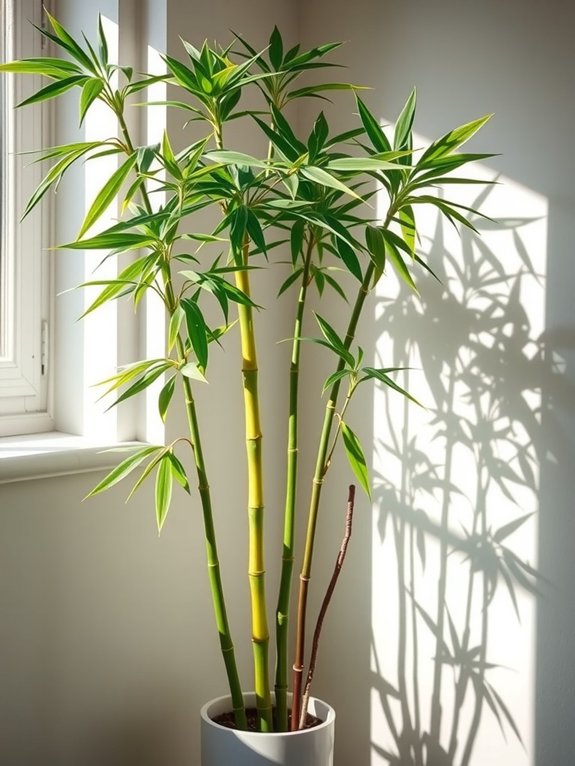
You’ll want to match your bamboo variety to available light, since large timber bamboos like Phyllostachys demand five or more hours of direct sun daily, while clump-forming types such as Fargesia and Sasa tolerate light to moderate shade quite well. Your spacing strategy—whether you’re clustering plants 3–5 feet apart for a dense screen or spreading them 5–20 feet apart for a sprawling grove—should reflect both your sun exposure and the growth rate you’re aiming for, keeping in mind that fuller, faster development happens in full sun. New plantings benefit from initial wind protection and dappled light, which you can gradually transition to stronger direct sun as the bamboo establishes itself and gains vigor.
Sunlight Requirements By Type
How your bamboo responds to light depends almost entirely on which type you’ve chosen, since the distinction between running and clump-forming varieties shapes not only their sun preferences but their entire growth trajectory. You’ll find that meeting these needs correctly accelerates establishment and prevents the disappointment of stunted growth.
- Running bamboo demands five or more hours of direct sunlight daily to achieve its characteristic vigor and height potential of three to five feet annually.
- Clump-forming types like Fargesia and Sasa actually thrive in light to moderate shade, which paradoxically protects them from excessive stress while maintaining compact form.
- Young shoots emerging in spring require abundant sun to reach full height within two to three months, regardless of variety.
Understanding these distinctions means you’re setting realistic expectations for your grove’s development and ensuring each plant receives what it genuinely needs to flourish.
Spacing For Optimal Growth
Once you’ve pinned down your bamboo’s light requirements and secured a location that’ll support its particular needs, the next layer of planning involves determining how far apart you’ll actually plant your specimens—a decision that ripples through everything from your grove’s ultimate density to how aggressively those running varieties’ll spread across your yard. Space clump-forming types, like Fargesia, closer together at three to five feet since they naturally contain themselves, whereas running Phyllostachys demands wider intervals—five to ten feet minimum—to accommodate their three to five feet annual spread. Consider your vision: tighter spacing creates dense screens quickly, while generous spacing allows fuller growth and canopy development. Account too for spring shoot bursts and rapid height gains, planning spacing generously enough that mature culms won’t crowd future expansion.
Shade And Wind Protection
Where you position your bamboo matters as much as how you space it, since the interplay between light exposure and shelter fundamentally shapes whether your plant’ll establish successfully and grow according to your design. Consider these essential placement strategies:
- Match sunlight to species: Large Phyllostachys varieties demand five or more hours of direct sun, while Fargesia, Thamnocalamus, and Sasa thrive in light to moderate shade.
- Prioritize wind protection: Windscreens shelter tender new shoots during establishment, reducing transplant shock and stress from drying winds that compromise growth.
- Balance light and shelter: Combine light shade with windbreaks to maximize initial vigor without overheating your plants, particularly when starting smaller specimens or recently transplanted bamboos.
Clump-forming varieties, notably shade-tolerant and less aggressive than running types, benefit from strategic shade placement that naturally contains their spread while supporting establishment.
Plant Bamboo in Well-Drained, Prepared Soil
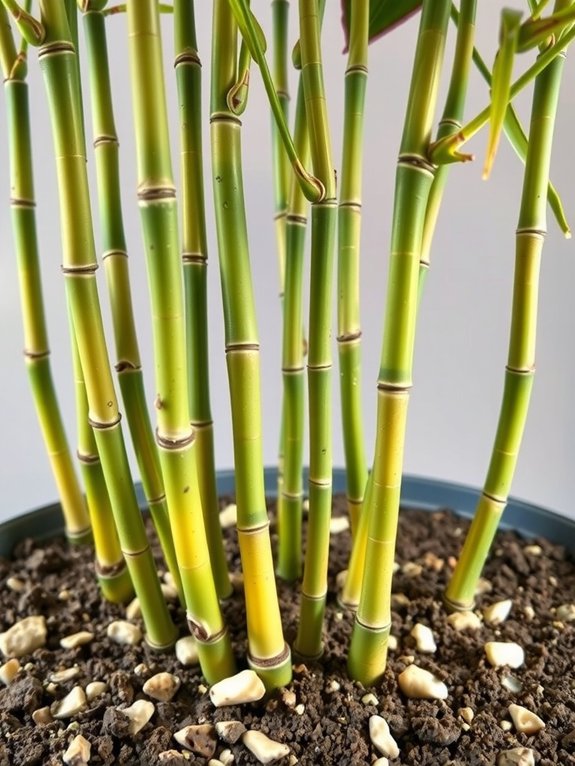
The foundation you’ll create for your bamboo—the soil itself—determines whether your plant thrives or languishes in waterlogged conditions that invite root rot. You’ll want moderately acidic loamy soil with reliable drainage, which means amending heavy soils with organic material to improve water movement. Dig a hole 1.5 to 2 times wider than the root mass, positioning the top of the roots level with your soil surface. Backfill with compost and native soil, then top with 2–3 inches of compost before watering thoroughly. Finally, mulch around your bamboo with at least two inches—this conserves moisture and suppresses weeds while protecting your investment. Water regularly afterward, keeping topsoil consistently moist without allowing pooling that damages roots.
Water Properly to Support Growth Without Overwatering
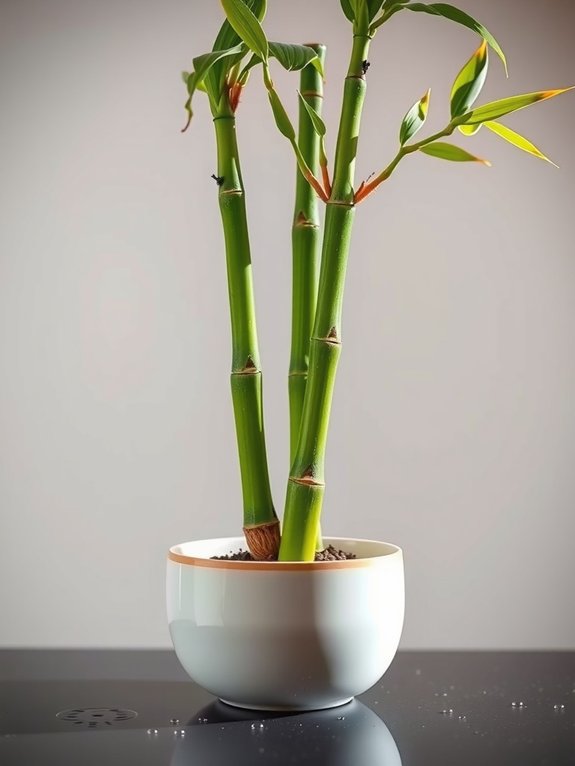
Proper watering—perhaps the most misunderstood aspect of bamboo care—requires you to strike a balance between meeting the plant’s moisture needs and avoiding the root rot that comes from waterlogged soil. As someone who’s watched containerized bamboos struggle when treated like typical houseplants, I’ve learned that soil moisture demands vary markedly based on growing conditions.
Consider these essentials:
- Water container bamboos 2–3 times weekly during summer, using 1–2 gallons per session until water drains from holes
- Ground-planted bamboos need supplemental water during dry spells to support newly established roots
- Adjust irrigation frequency for older, root-bound containers, which dry faster than in-ground specimens
The key lies in monitoring topsoil dryness rather than adhering to rigid schedules. Neutral to slightly acidic, well-draining soil that retains moisture—not waterlogged conditions—supports healthy growth throughout the growing season.
Fertilize Three Times During the Growing Season
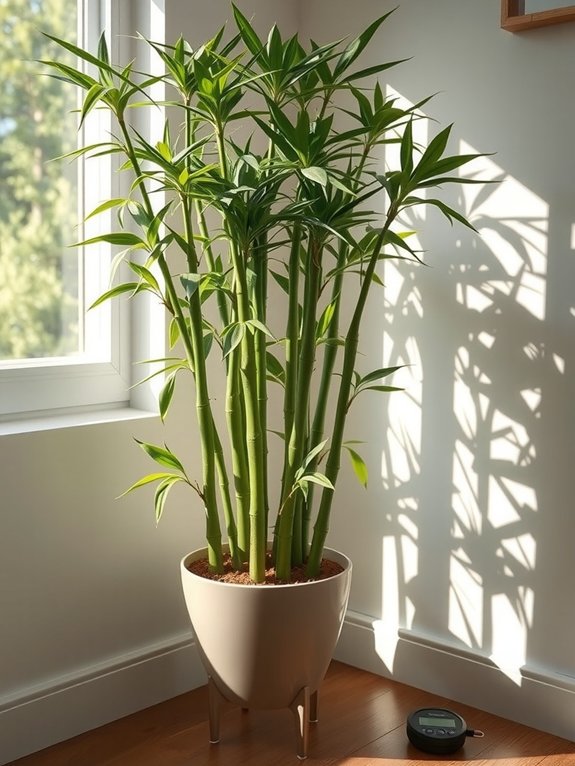
How you feed your bamboo throughout its active growing months fundamentally shapes whether your plant thrives or merely survives, which is why a deliberate three-application fertilizing schedule—timed to coincide with spring growth initiation, early summer vigor, and late summer consolidation—matters far more than many gardeners initially recognize. You’ll want nitrogen-rich fertilizer, such as 20-5-10 synthetic or 4-3-2 organic blends, applied consistently across the season.
| Fertilizer Type | Application Rate | Nitrogen Benefit |
|---|---|---|
| 21-5-6 Synthetic | 2 lbs per 10×10 ft | 0.42 lbs actual nitrogen |
| 4-3-2 Organic | Higher rate needed | Comparable availability |
| High-nitrogen blend | Per package directions | Sustained growth support |
Complementing your nitrogen regimen, add 2–3 inches of compost or aged manure around the base. Monitor your stalks carefully; yellowing signals overfeeding, requiring immediate adjustment to prevent root burn and maintain healthy development.
Install Underground Barriers to Control Spread
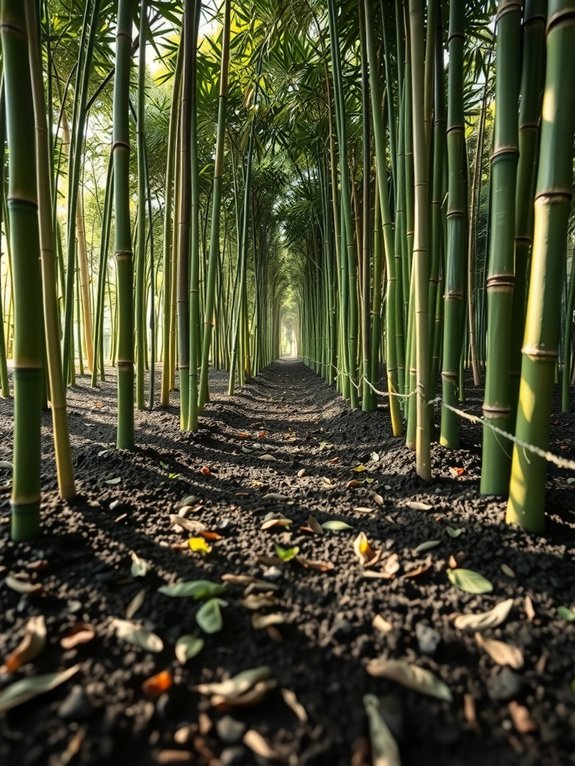
Why you’ll want to contain your bamboo’s aggressive rhizomes—those underground stems that spread horizontally with remarkable persistence—becomes painfully obvious once they’ve invaded a neighbor’s yard or compromised your garden’s layout. Installing a proper barrier system isn’t optional; it’s essential stewardship.
You’ll need to:
- Install HDPE barrier material, 60 mil thickness for most species or 80 mil for tougher varieties, positioned 60 cm to 1.2 m deep with 7.5 cm protruding above soil
- Eliminate gaps and air pockets adjacent to the barrier, preventing rhizomes from circumventing your containment
- Apply dense mulch—at least 5 cm thick—during late autumn through winter to suppress vigorous growth
Inspect regularly, particularly in late summer and fall, cutting any rhizomes threatening breach. This disciplined approach protects your landscape’s integrity while respecting others’ boundaries.
Prune Culms and Branches for Shape and Health
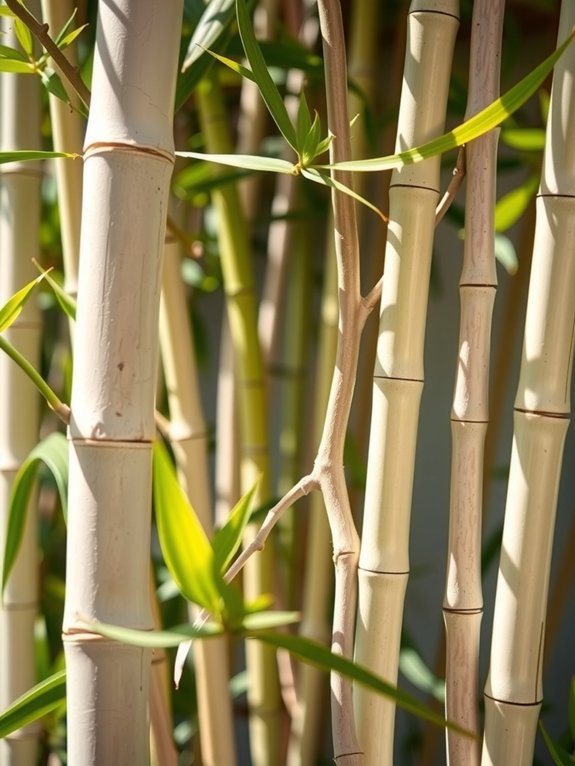
Once you’ve secured your bamboo’s spread with proper barriers, you’ll find that shaping the plant itself demands equally thoughtful attention—though this time, you’re working with what’s above ground rather than below. Pruning culms and branches requires removing older canes and dead wood to improve plant health and encourage new growth. In spring, thin dense clumps by cutting canes at the base, which reduces crowding and promotes better airflow. You can control height by pruning cane tops while maintaining a tidy appearance. Regularly eliminate weak or damaged canes to sustain vigor and prevent growth stagnation. Cutting away lower foliage reveals the canes themselves and creates a balanced, aesthetically pleasing profile as your bamboo matures.
Grow Bamboo in Containers if Ground Space Is Limited
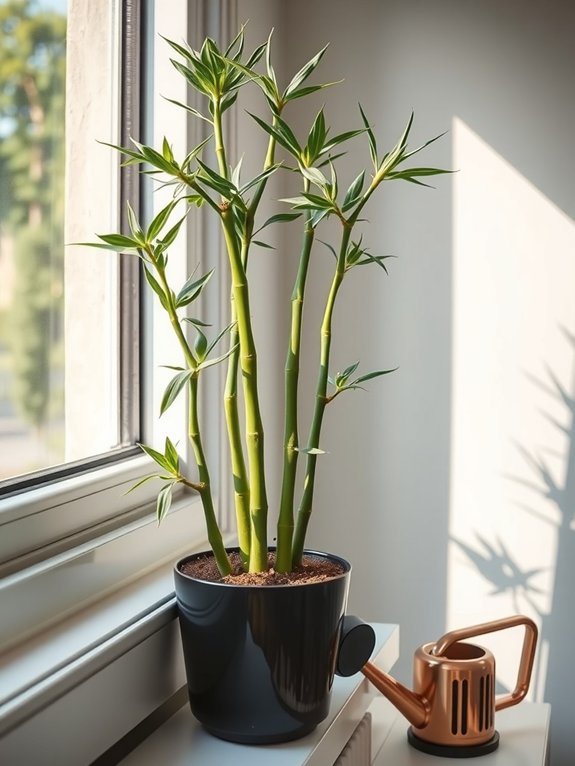
Limited yard space needn’t stop you from cultivating bamboo, provided you’re willing to work within the constraints that container growing imposes on your plants. You’ll find that new containers demand careful attention to detail, but the payoff justifies the effort:
- Choose large containers—at least 45 cm—filled with peat-free loam-based compost and lined with bamboo barriers for insulation and containment
- Water liberally during growing season; container bamboos dry faster and typically need 1+ gallons per irrigation, scaling with pot size
- Maintain well-draining soil, two inches of mulch, and protect roots by avoiding raking
Restricted root space keeps clumping varieties around 10 feet tall, though running types may exceed 15 feet. Shield containers from extreme winter temperatures by relocating to sheltered sites and insulating exposed pots against frost damage.
Diagnose and Treat Yellowing Leaves and Pest Damage
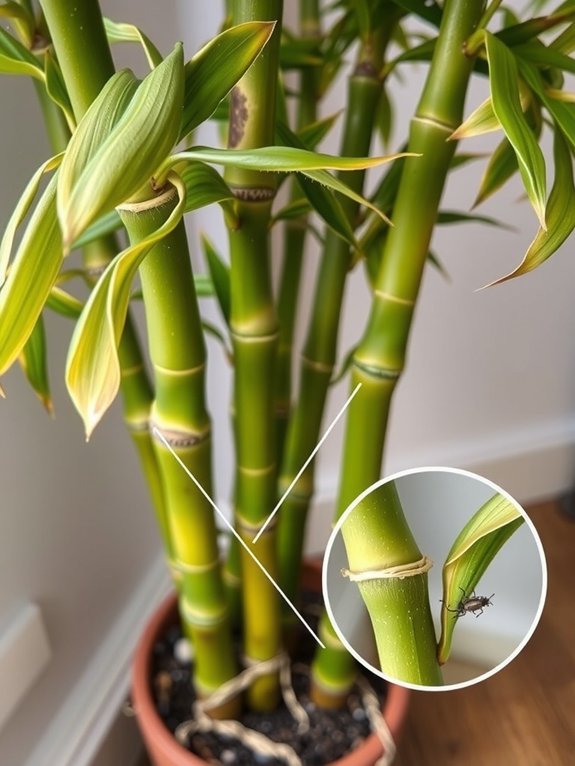
How you respond to the first signs of trouble—whether that’s a gradual yellowing creeping up the stalks or suspicious stippling on the undersides of leaves—often determines whether your bamboo recovers or declines further. You’ll notice that yellow leaves don’t revert; they brown and die, typically from dry intervals, fluoride or salt buildup, or over-fertilization. Early yellowing of lower leaves often signals age or salt accumulation.
| Problem | Solution |
|---|---|
| Brown tips with yellowing | Use bottled or remineralized RO water |
| Spider mites and mealybugs | Inspect undersides; treat promptly |
| Stalk yellowing | Monitor water quality and fertilizer amounts |
| Salt buildup | Switch water sources immediately |
| Broad decline | Implement preventive care practices |
Regular monitoring and appropriate fertilization practices protect your plant’s vitality, keeping it thriving as a capable caretaker would.