You’re ready when three conditions align: your local frost-free date has passed, indicating when frost becomes unlikely in your region; your soil temperature and moisture support germination—cool-season crops need 40°F with moist soil two inches down, while warm-season crops demand 60–70°F with balanced moisture; and early sprouts in cold-hardy vegetables like lettuce and spinach emerge, signaling dormancy has broken. These concrete markers, rather than calendar dates alone, guide successful planting. Understanding how each factor influences your specific garden’s timing takes deeper exploration.
Know Your Frost-Free Date First
When should you actually plant your garden? The answer hinges on understanding your frost-free date, that crucial marker indicating when frost becomes unlikely in your area. This safe planting window, determined by soil temperatures and historical weather patterns, guides whether you’re ready for tender seedlings or hardy crops. Your local extension agent possesses region-specific frost-free date information, refining the broad gardening calendar you’ll find online. The last frost date doesn’t guarantee safety—risk of frost persists even after this threshold passes, varying by year and microclimate. Before planting outdoors, verify your specific gardening timing with local sources, allowing you to make informed decisions about which vegetables tolerate cool nights and which demand warmer conditions for successful growth.
Check That Soil Temperature and Moisture Are Right
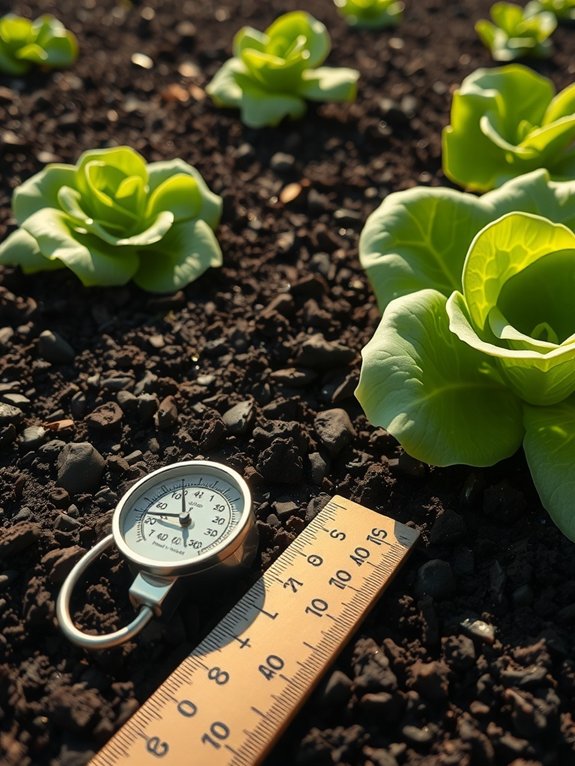
How you’ll know if your soil’s truly ready hinges on two interconnected factors—temperature and moisture—that work together to determine whether seeds’ll germinate successfully and seedlings’ll establish themselves. Beyond your frost-free date, you’ll need to assess both conditions before committing seeds to ground.
| Crop Type | Soil Temperature | Moisture Profile |
|---|---|---|
| Cool-season seeds | 40°F (4°C) | Cool, moist two inches down |
| Warm-season crops | 60–70°F (15–21°C) | Balanced, not waterlogged |
| Bareroot perennials | Workable soil phase | Moderate after light rain |
Check soil moisture by squeezing a handful—workable soil crumbles freely without clumping, indicating proper moisture balance. Push a finger two inches deep; you’re targeting that cool, moist sensation that signals adequate drainage without dryness. These interconnected gardening signs confirm your planting time’s arrived.
Watch for Early Sprouts in Cold-Tolerant Crops
What you’re really looking for, once soil temperatures climb to around 40°F (4°C), is evidence that cold-hardy vegetables—lettuce, spinach, peas, and kale among them—are ready to break dormancy and establish themselves in your garden bed. Monitor these three indicators as your early sprouts emerge:
- Rapid germination timing: When you’ve sown during the New Moon to First Quarter window in workable soil, cold-tolerant crops typically germinate faster than expected, signaling optimal seedbed conditions despite ongoing frost risk.
- Initial leaf vigor: Watch for yellowing or robust growth patterns, which reveal how seedlings adapt to cooler temperatures and establish themselves before frost danger fully passes.
- Spacing adjustments: As early sprouts develop, you’ll need to modify light exposure and spacing accordingly, recognizing that these hardy varieties demand different management than warm-season crops.