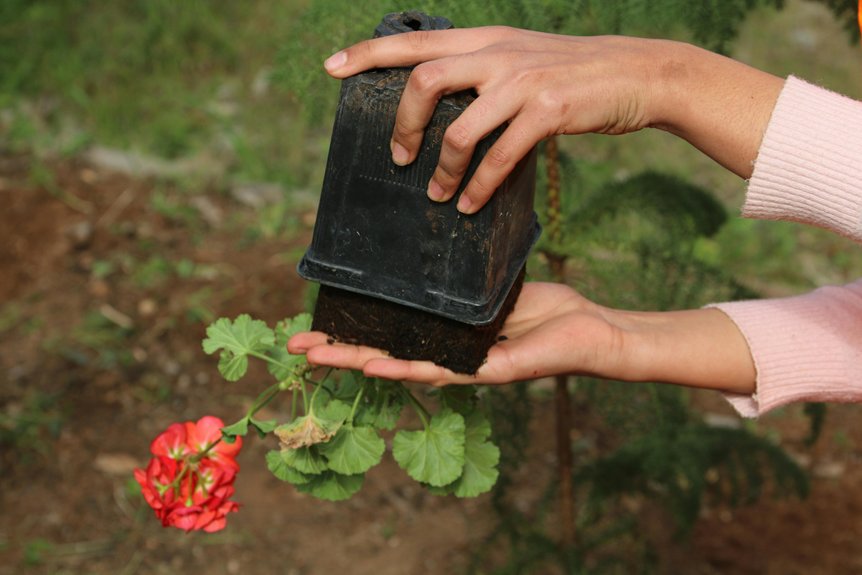
Keeping your geraniums healthy requires attention to a few key factors. You’ll want to give them six hours of direct sunlight each day and plant them in soil that drains well. When it comes to watering, skip the fixed schedule and instead check the top inch of soil—only water when it feels dry to the touch.
Regular deadheading makes a real difference in how many flowers your geraniums produce. When you remove spent blooms, the plant puts its energy into making new ones instead of setting seeds. You should also pinch back the stems occasionally to help your plants grow fuller and bushier rather than tall and leggy.
During the growing season, feed your geraniums every two to three weeks. This steady nutrition supports all that flowering work they’re doing.
Once frost gets close, move any potted geraniums inside to a cool room with good light. Cut back on watering at this point since the plants need less water during their dormant period.
Choose a Sunny Spot for Geraniums
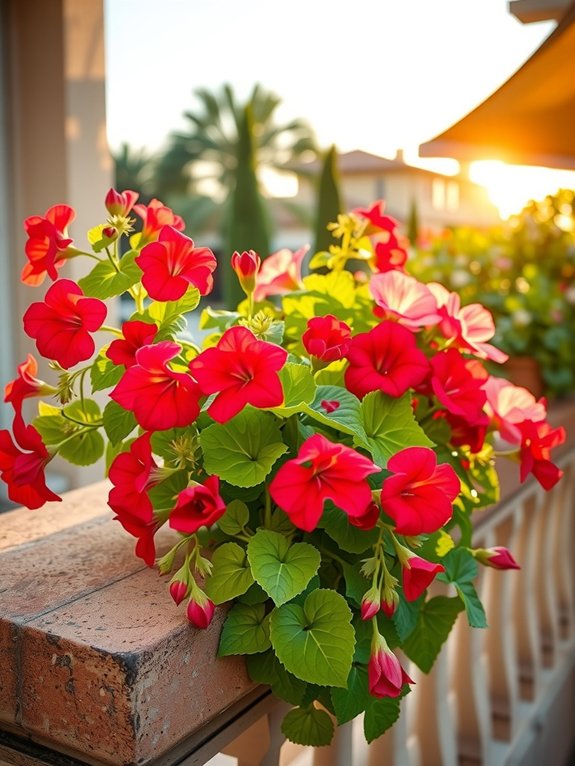
Where you position your geraniums will largely determine how well they bloom, making location selection one of the most important decisions you’ll make in their care. You’ll want to place them in a sunny spot where they get around six hours of direct sunlight daily. If full sun isn’t available, they can handle partial shade, though they won’t bloom quite as heavily.
Beyond sunlight, the spot you choose needs well-drained soil. Waterlogged soil leads to root rot and fungal problems, so this matters more than you might think. Space your plants about twelve to fifteen inches apart so air can move between them easily. Better air circulation means fewer disease issues down the line.
You can position geraniums in beds, borders, or containers depending on what works for your space. Purple varieties make a nice visual choice if you’re looking for something specific. This foundational decision about where you put them affects everything that comes next in how they grow.
Water Geraniums When the Top Inch Feels Dry
You’ll want to develop a reliable system for checking soil moisture by pressing your finger into the soil near the plant’s base to see if that top inch has dried out completely. This simple tactile method beats guessing and helps you avoid overwatering.
Geraniums actually prefer drier conditions between waterings. When you leave them sitting in consistently moist soil, they’re prone to root rot and fungal problems. Wait until the soil starts pulling away slightly from the container’s edges—that’s your signal to water thoroughly until it drains from the bottom.
Instead of watering on a fixed schedule, let your plant’s actual moisture needs guide you. This approach prevents the yellowing leaves and weakened growth that come from watering too much.
Checking Soil Moisture Levels
Checking Soil Moisture Levels
How often you water matters more than most people realize when growing geraniums. These plants actually prefer drier conditions, so resist the urge to water frequently—it’s one of the biggest mistakes gardeners make.
To check if your soil needs water, insert your finger about 1 to 2 inches into the soil. If it feels dry at that depth, it’s time to water. Wait until the top inch of soil dries out between waterings.
When you do water, water deeply so the moisture reaches the roots, then let any excess drain away completely. Make sure your containers have drainage holes and never let pots sit in standing water. Using well-draining soil helps prevent moisture from building up around the roots.
One clear sign you’re watering too much is yellowing leaves. This tells you the soil is staying too wet. Adjust how often you water based on your pot size and what’s happening with the weather that season. Smaller pots dry out faster than larger ones, and you’ll water less frequently in cool months than during hot spells.
Avoiding Overwatering Problems
Avoiding Overwatering Problems
The most common mistake you’ll make in geranium care—and I’ve seen experienced gardeners fall into this trap—isn’t neglecting your plants but watering them too much. This usually comes from thinking that more water equals healthier geraniums. The first sign that you’re overdoing it is yellowing leaves, which tells you it’s time to cut back on watering frequency.
To figure out when your geraniums actually need water, stick your finger about 1–2 inches into the soil. Water only when it feels dry at that depth. This method keeps your soil moderately moist without turning it into a soggy mess that damages roots.
| Problem | Cause | Solution |
|---|---|---|
| Yellowing leaves | Frequent watering | Reduce watering frequency |
| Root rot | Poor drainage | Use well-draining soil |
| Fungal issues | Excess moisture | Ensure drainage holes exist |
Drainage is your best defense against moisture problems. Make sure you’re using well-draining soil and containers with drainage holes in the bottom. These two things prevent water from pooling around your roots, which protects your geraniums from root rot and fungal issues over time.
Deadhead Geranium Blooms to Encourage Reblooming
Remove faded blooms regularly by pinching or cutting them back to the next leaf node. This practice redirects your geranium’s energy away from seed production and toward new flower development instead of letting spent blossoms hang around and block emerging growth.
Keep up with deadheading throughout the growing season, especially during peak flowering. This consistent maintenance stimulates continuous reblooming and keeps your plant looking neat while preventing yellowing leaves from making it look worn out. By staying disciplined with this task, you’re essentially telling your geranium to keep producing flowers instead of shifting into dormancy. The difference this makes is noticeable—you’ll get steady blooms from spring through frost rather than a scattered or mediocre display.
Remove Faded Blooms Regularly
Remove Faded Blooms Regularly
Pinching off spent flowers is one of the most effective ways to keep your geraniums blooming consistently throughout the season. When you remove dead flowers, you redirect your plant’s energy away from making seeds and toward producing new blooms instead. This simple shift makes a real difference in how many flowers you get.
The technique itself matters. Pinch or cut spent blooms all the way back to the next leaf node on the stem. This clean removal encourages your plant to branch out and become bushier. While you’re at it, remove any yellowing leaves you notice—this keeps your plant looking better and supports its overall health.
What deadheading does for your geraniums:
- Keeps flowers coming throughout the growing season
- Stops your plant from wasting energy on seed production
- Maintains a neat, attractive appearance
- Builds stronger plants that last longer
Regular deadheading transforms how your geraniums perform. You’ll notice the difference between plants you deadhead consistently and ones you neglect.
Pinch Back To Leaf Nodes
Once you’ve got the habit of removing spent flowers down, where you cut becomes just as important as the cutting itself. When deadheading geraniums, pinch back faded blooms to the nearest leaf node—that small bump on the stem where leaves branch out. This specific technique tells your plant to grow new flowering shoots while building bushier, more compact growth overall.
The key is consistency. By cutting just above leaf nodes every time, you’re directing your geranium’s energy toward denser foliage and more blooms instead of letting it waste resources on thin, sparse stems. Pair this with removing yellowing leaves, and you’ll keep flowers coming throughout the growing season without having to do much extra work.
Stimulate Continuous Flowering Growth
Because geraniums naturally direct their energy toward seed production once flowers fade, removing spent blooms becomes your most effective tool for extending the flowering season. Deadheading—the practice of pinching off faded flowers at the leaf node—redirects that energy into continuous flowering rather than seed development.
When you deadhead consistently, you prevent seed formation, which would otherwise halt blooming cycles. You’ll also remove yellowing leaves that drain plant resources and encourage bushier, more vigorous growth patterns. The result is successive flower production throughout the season.
Combine deadheading with strategic pruning to keep your plants compact and productive. Cut back to healthy leaf nodes moving from the crown downward, actively shaping plants that respond to your attention with steady blooms. This approach transforms routine maintenance into an investment in sustained flowering performance.
Fertilize Geraniums Every 2–3 Weeks
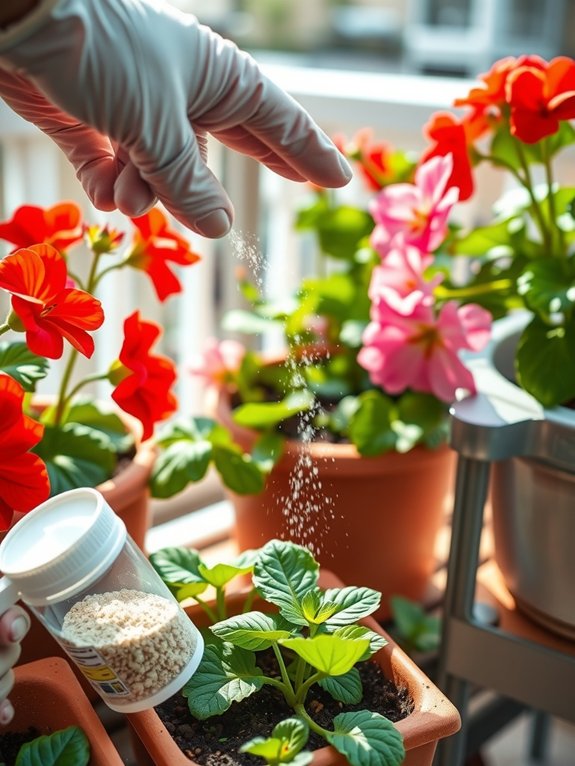
Feeding your geraniums consistently actually matters for how well they grow and flower. Rather than fertilizing whenever you remember or guessing at how often, you’ll get better results with a regular schedule. During the active growing season, use a quality all-purpose fertilizer every 2–3 weeks. Always dilute it according to the package directions so you don’t burn the roots.
For geraniums indoors, water the plant first, then apply fertilizer only when it’s actively growing. Skip fertilizer if the plant looks dry or wilted.
| Fertilizer Type | Application Frequency |
|---|---|
| Water-soluble | Every 2–3 weeks |
| Time-release | Every 3–4 months |
| Miracle-Gro All Purpose | As directed |
| Concentrated formula | Dilute properly |
You can also switch between water-soluble and time-release fertilizers every 3–4 months to support consistent growth and steady blooming throughout the season. This alternating approach helps prevent nutrient imbalances and keeps your plants producing flowers over a longer period.
Pinch Back Geranium Stems for Bushier Growth
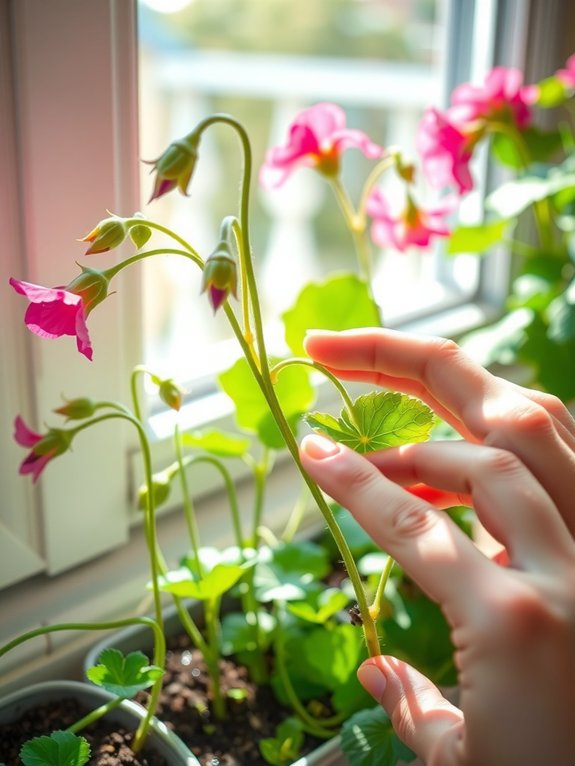
While consistent fertilizing keeps your geraniums well-nourished, you’ll also need to shape them through pruning if you want plants that look full and compact rather than tall and spindly. Pinch-back pruning involves removing new growth tips just above leaf nodes to encourage branching, and it’s one of the most effective ways to develop sturdy geraniums.
The key is timing and consistency. Pinch stems as new growth appears rather than waiting for mature wood to develop. By removing tips regularly, you redirect your plant’s energy toward creating multiple stems instead of one tall shoot. This results in fuller plants with denser flowering throughout the season.
As you pinch back the growth, also remove any dead or damaged stems you notice. After pinching, water and feed your geraniums to support the fresh growth that’ll follow. This combination of pinching and removing problem stems gives your plants the vigor they need to fill out the way you want them to.
Identify and Treat Common Pests
Identify and Treat Common Pests
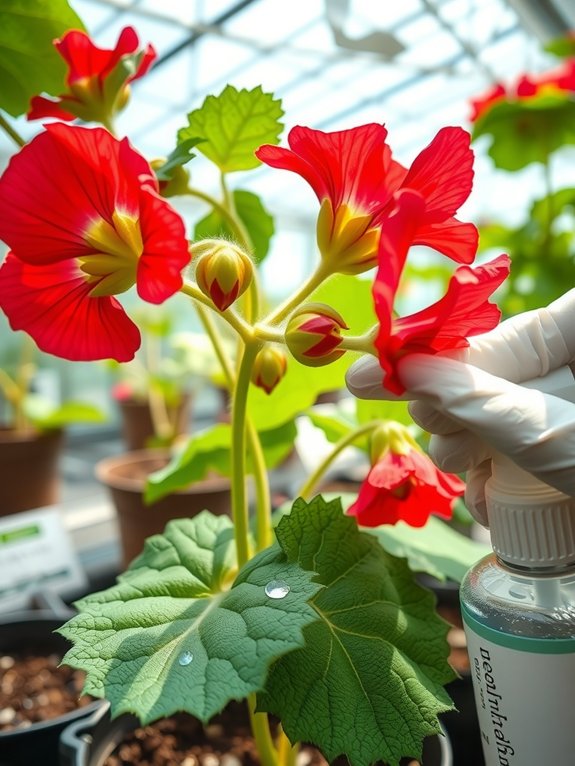
You’ll likely run into pests on your geraniums at some point—it’s just part of growing plants. The good news is that catching problems early makes a real difference in keeping your plants healthy. The main pests to watch for are aphids, spider mites, and whiteflies. They typically show up as deformed leaves, sticky honeydew residue on the stems and leaves, or yellowing foliage.
When you spot an infestation, treat it right away. For mild cases, horticultural soap or neem oil work well. If the problem is more serious, use an appropriate insecticide. Beyond treating what you see, prevent future issues by maintaining good air circulation around your plants and watering at soil level rather than from overhead. These practices reduce the fungal pests that often come along with insect problems.
Your best approach combines regular scouting, early detection, and targeted treatments. Check your geraniums frequently, catch problems when they’re small, and respond with the right solution for the specific pest.
Move Potted Geraniums Inside Before Frost Hits
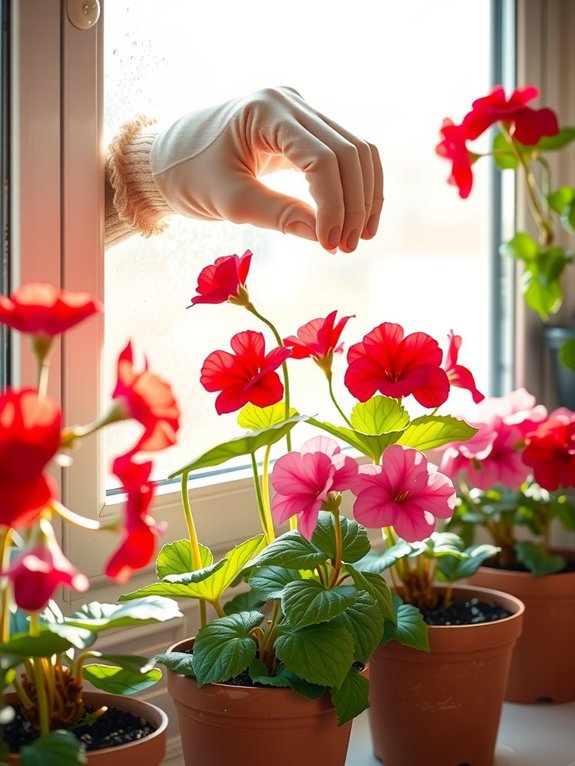
When frost threatens your region—typically in early autumn, though timing varies by climate zone—you’ll need to bring your potted geraniums indoors to protect them from freezing temperatures. Before you move them, take time to prepare your plants properly.
Start by pruning stems back to about one-third their length to remove any leggy growth. While you’re at it, trim off spent flowers and any damaged foliage. Check your pots for cleanliness, and if they look questionable, repot your geraniums into sterile soil to prevent problems down the line.
Once your plants are inside, find them a spot in your coolest, brightest room, away from heating vents. The key is to shift how you care for them during dormancy. You’ll need to reduce watering significantly since indoor plants use less moisture when they’re not actively growing. Wait until the top inch or two of soil feels dry before you water again. This period requires patience as you let your plants rest, but it sets them up for strong growth when spring arrives.
Prune and Store Geraniums for Winter
How you prepare your geraniums for winter storage determines whether they’ll bounce back strong come spring or struggle through the growing season. Start by pruning your plants back to about one-third of their current size. Remove any dead or damaged stems—they’ll just drain energy during dormancy without giving you anything in return.
Before you store the plants, take cuttings from the healthy growth. This gives you backup plants for next season without requiring extra effort. Once you’ve finished pruning, you have two main storage options. You can keep potted geraniums in a cool, bright indoor space where they’ll rest until spring. If you want to try bare-root storage, maintain temperatures around 45–50°F in a damp environment instead.
When spring arrives, gradually rehydrate or replant your geraniums. They’ll respond to your preparation with renewed growth and stronger performance than plants that weren’t cared for over winter.