You’ll want to match your wire gauge to what you’re growing. Grapes and kiwis demand 12.5-gauge high-tensile wire because they can load up to a thousand pounds. Brambles do better with 14-16 gauge galvanized wire spread across multiple levels, and annual vegetables work fine with standard 14 gauge.
Your post spacing matters just as much as wire choice. When you space posts closer together, you can get away with thinner wire. But if you’re spanning 20 feet between posts, you’ll need heavier gauge to keep the wire from sagging under pressure.
How you tension and maintain your system determines your long-term commitment. The right tensioning tool and coating type can mean you’re retightening yearly or basically forgetting about it for years.
What Gauge Do I Need for My Crops?
What Gauge Do I Need for My Crops?
Picking the right wire gauge comes down to two things: what you’re growing and how much weight your trellis needs to handle. Grapes and berries have pretty different demands. Grapes need sturdy vertical support that can handle serious loads, while berries like blackberries use lateral cane support with fruit spreading along the length of the canes.
For grapes, you’ll typically go with 12.5 gauge high-tensile wire. But if you’re growing heavier varieties like muscadines that produce 50–60 pounds of fruit per vine annually, step up to 9 gauge wire instead. The weight your structure has to support really drives everything—once you know whether you’re dealing with moderate or extreme loads, you can nail down your gauge choice and tension settings. This approach keeps your trellis solid and dependable year after year.
Heavy Vines: Gauge Requirements for Grapes and Kiwis
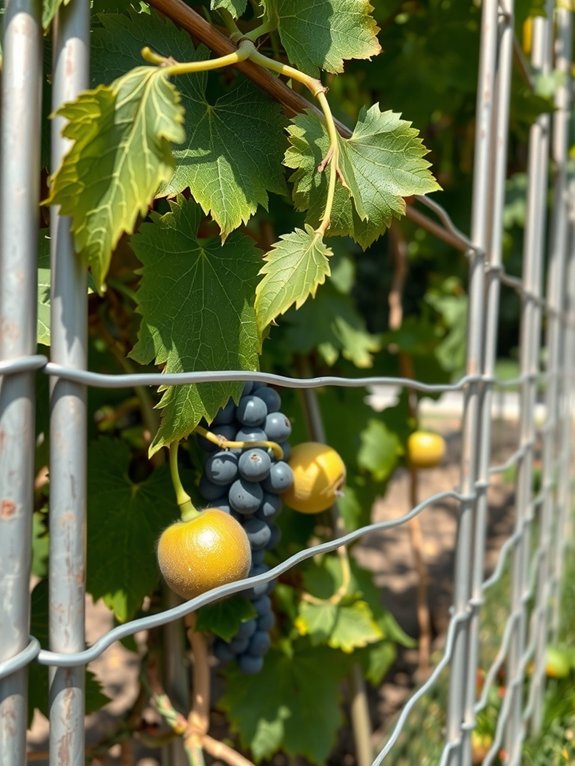
Why do grapes need heavier wire than most other crops you might grow. Their substantial canopy weight combined with continuous vertical support means you need a robust trellis that won’t sag under pressure. You’ll typically want 12.5 gauge high-tensile wire, though muscadine varieties benefit from upgrading to 9 gauge for added strength.
Here’s what you’re dealing with: heavy umbrella-style systems can exert 1000–1300 lbs of force across a 300 ft span. That’s why strategic post spacing around 20 ft and multiple support stands matter—they distribute this load across your trellis so individual wire runs don’t bear everything themselves.
Working with heavier gauges does present real challenges. Tensioning requires specialized equipment, and bending becomes considerably more difficult. Many experienced growers have found that passing weight through middle training wires or anchoring end posts deeply works better in practice than simply upgrading wire thickness alone. These approaches give you the strength you need without fighting the material every step of the way.
Medium-Load Crops: Wire Gauge for Brambles and Berries
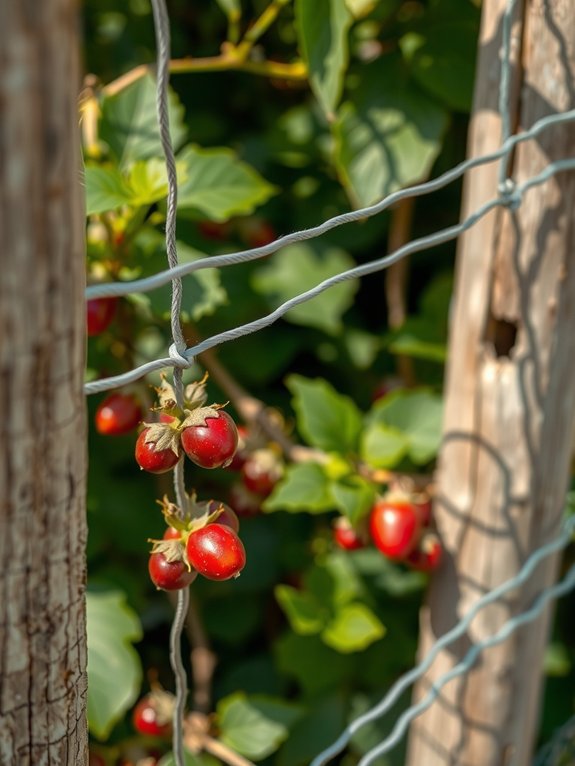
Once you move beyond the heavy-duty requirements of grape systems, brambles and berry canes operate differently. They don’t need industrial-grade infrastructure, but they still require solid support to handle their weight. For these medium-load crops, 14–16 gauge galvanized wire gives you the practical balance you need. It’s strong enough to do the job without being so rigid that it becomes difficult to work with.
14–16 gauge galvanized wire offers brambles and berry canes the practical balance between strength and workability they need.
You’ll want to run two or three wire levels through your canes. This approach distributes the weight as your plants grow and start producing fruit. Choose galvanized wire with either smooth or ribbed surfaces—both options protect your canes from damage and hold secure tie-offs.
On longer spans where you’re setting up permanent cane systems, stepping up to 12–14 gauge high-tensile wire makes sense. The extra investment pays off when you’re covering more distance and dealing with heavier loads over time.
Keep an eye on your wires as the fruiting season progresses. Inspect them regularly and tighten them as needed, since the weight of the fruit will cause some sag along the longer runs.
Annual Crops: Lighter Gauge Options for Vegetables and Climbers
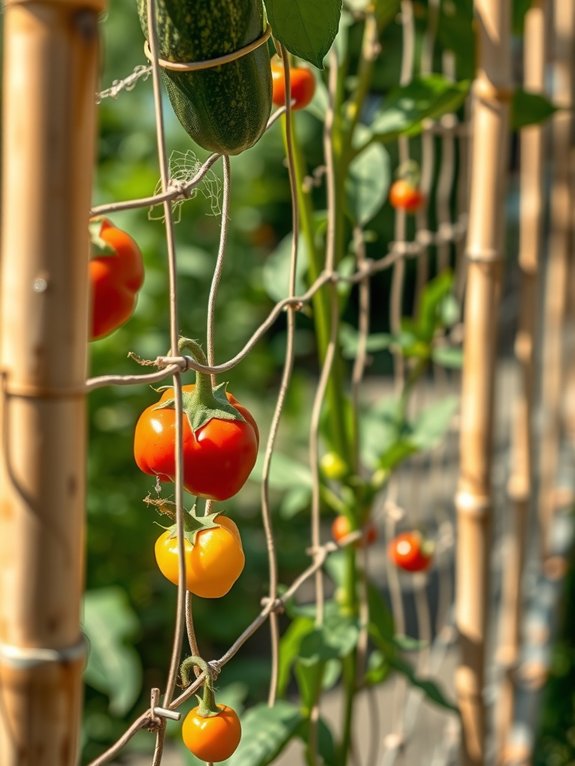
When you’re setting up support for vegetables and annual climbers like beans, cucumbers, and squash, 14 gauge wire gives you the right balance. It’s strong enough for one season‘s growth without feeling stiff to work with. You’ll find this lighter gauge works well for tomato supports and varieties that climb lightly, and it won’t make installation a hassle.
To get the most from your lighter wire, keep these points in mind:
- Space your support posts about every 10 feet. This keeps tension even across the whole setup.
- Use U-post configurations. They spread the weight better and reduce sagging between posts.
- Fasten the wire at regular points along the way. This keeps everything aligned as your plants grow through the season.
The real skill here is matching your wire gauge to how long your crops actually need support. That’s what separates people who know their way around a garden from those still figuring things out.
How Post Spacing Affects Your Wire Gauge Choice?
Post spacing directly affects which wire gauge you’ll need. When your posts sit 10–15 feet apart, you can get away with thinner wire because each post shares the load more evenly. The weight from your fruit doesn’t concentrate as heavily on any single span. But push your posts out to 20 feet, and the physics shift. The longer the distance between supports, the more the wire wants to sag in the middle under the same fruit weight.
This happens because the load path stretches out, putting extra stress right at the midpoint between posts. That’s where the wire is most vulnerable. To handle wider spacing, you’ve got two main options: upgrade to thicker gauge wire, or run multiple strands to distribute the load. Many growers find they need to do both, plus add tensioning devices to keep everything rigid.
The key takeaway is that spacing and wire gauge aren’t separate decisions. They’re locked together. Pick your post intervals first, then size your wire accordingly. If you try to stretch your posts too far apart with undersized wire, you’ll end up with gradual sag that eventually compromises your structure and damages your crop.
Spacing Determines Wire Strength
How far apart you space your posts directly affects which wire gauge will actually work for your trellis. The distance between supports determines how much lateral load and sag your wire needs to handle. Your spacing choices ripple through your whole system.
With 20-foot spacing, you’ll need high-tensile wire in 12.5 gauge or heavier. Wider spans create more wind leverage and require stronger tensioning mechanisms to keep everything stable. Drop down to 10–12 foot spacing, and you can get away with lighter gauges like 14–16 gauge. The frequent anchor points distribute the weight more effectively, so thinner wire does the job.
Longer spans amplify lateral forces in ways that surprise most people. You’ll either need to add extra wires running parallel or bump up to a thicker gauge. Otherwise, your wire will creep—gradually sagging and stretching—as seasons pass and plants grow heavier.
Closer post spacing works like insurance. You’re trading less material for straightforward installation and dependable performance. The reduced tension demands mean your trellis stays solid through years of growth and weather without constant adjustment.
Load Distribution Across Posts
The real test of your wire gauge happens between supports—that’s where the physics of your trellis actually matter. When you space posts farther apart, you’re asking your wire to span greater distances. That distance concentratively increases tension and sag risk. High tensile wire helps, but it can’t fix poor load distribution on its own.
Your end posts, when anchored deeply and properly braced, become the anchors that channel weight more evenly across the entire system. Closer spacing—around twenty-foot intervals—reduces what each wire section has to carry. This lets you use lighter gauge without losing performance.
It comes down to a trade-off you’ll recognize after you install a few systems: spend more money on posts upfront, or spend more later on heavier-gauge wire. The math usually favors the posts.
High-Tensile vs. Regular Galvanized Wire
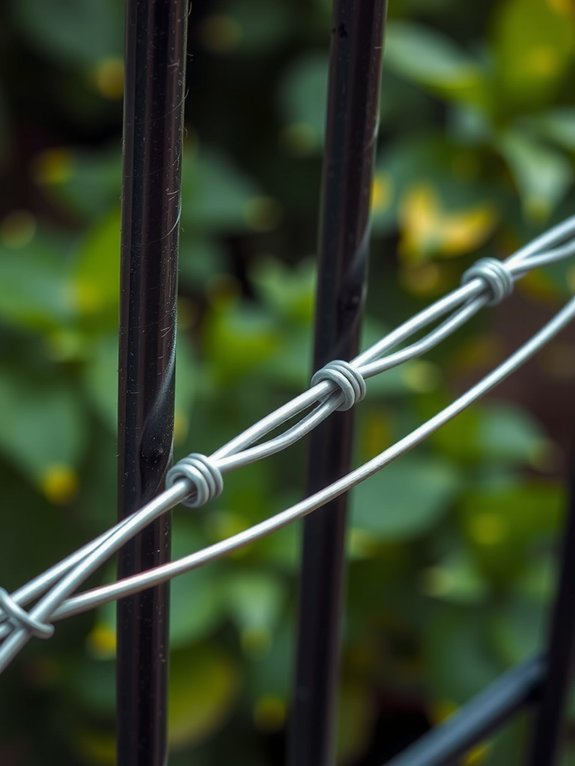
When you’re building a trellis that’ll support productive vines year after year, your wire choice directly affects how much upkeep you’ll actually do. High-tensile wire—rated at 200 KPSI for 12.5 gauge with around 1,500 lb breaking strength—resists stretching far better than regular galvanized wire, which sags under load and needs frequent retensioning.
High-tensile wire resists stretching and cuts maintenance, while regular galvanized wire sags and needs frequent retensioning.
Here’s what separates them:
- High-tensile wire cuts down on long-term maintenance and replacement work
- Regular galvanized wire requires you to keep adjusting your tensioning devices
- Thicker gauges like 9 gauge handle heavier fruiting loads better, though they’re tougher to work with during installation
The upfront cost of high-tensile wire pays off because you won’t spend your season constantly tightening things. The trade-off is that thicker gauges take more effort to install, so factor that into your planning.
Wire Gauge and Corrosion Protection: Best Materials
When you choose high-tensile wire for your trellis, you’re making a smart decision about strength. But here’s what matters just as much: that wire needs protection from rust and weathering, or the elements will break it down over time. The coating you select is just as important as the gauge itself.
Bekaert’s 12.5 gauge high-tensile wire with Bezinal coating gives you solid corrosion resistance without the downsides of other options. You might consider copper wire since it’s another material that resists rust, but copper accumulates in soil and can create toxicity problems as years go by. The Bezinal-coated option keeps things straightforward: you get a 200 KPSI strength wire that stands up to degradation without adding harmful mineral buildup to your soil. For a trellis that actually lasts, this approach makes the most practical sense.
Balancing Wire Gauge and Budget for Your Trellis Type
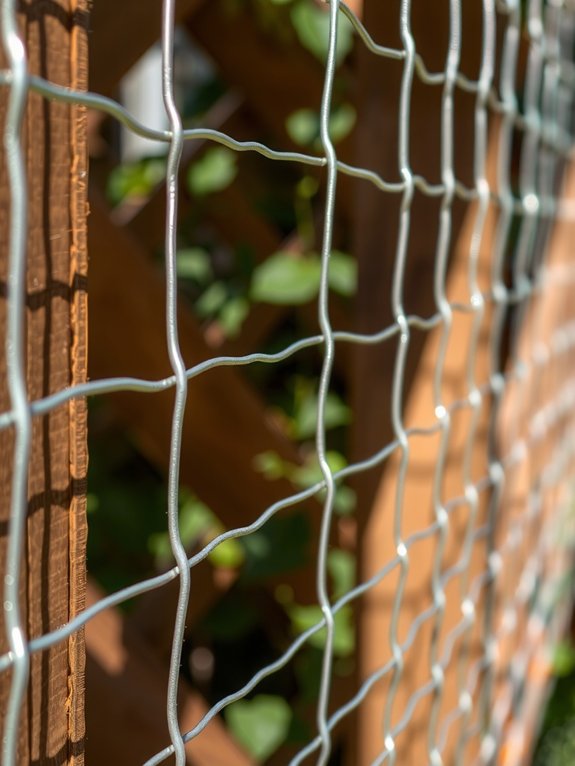
How you’ll actually use your trellis—whether it’s supporting lightweight ornamental vines or bearing the substantial weight of muscadine grapes during harvest—should drive your wire selection more than price alone. The cost difference between gauges often pales in comparison to what you’d spend rebuilding a failed system.
High-tensile 12.5 gauge wire works well for most gardeners, balancing strength with workability. Your situation matters though:
- Heavy fruiting loads (1000–1300 lbs on extended runs) need 9 gauge or thicker high-tensile options
- Post spacing around 20 feet lets you spread loads across multiple wire stands, which justifies spending more on better materials
- Installation ease counts—thicker regular wire gets frustrating to work with, while high-tensile gauges stay manageable
Your budget stretches further when you factor long-term durability into the equation. A wire system that lasts 10 years costs you less per season than one that fails in three.
Tensioning Tools for Heavy-Gauge Wire
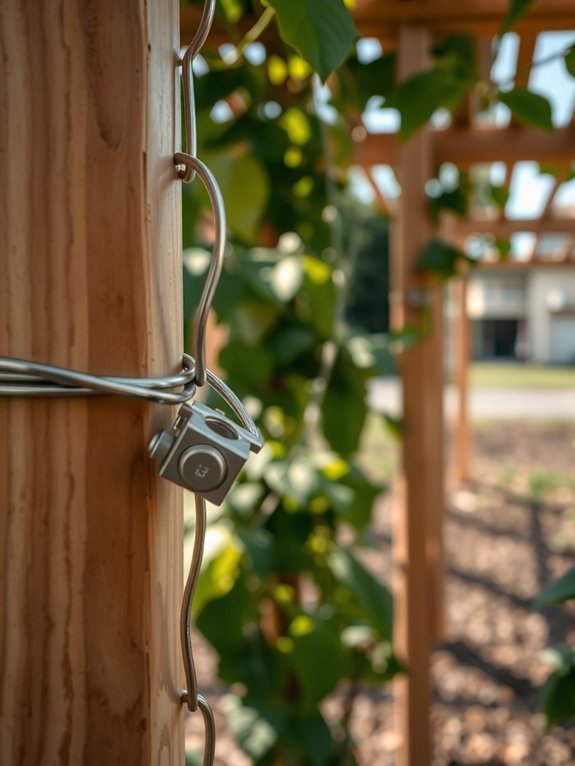
When you’re working with heavy-gauge wire, picking the right gauge is just the starting point. You also need to get that wire properly tensioned and keep it tight through changing seasons. That means using equipment designed specifically for the material you’re handling.
For heavy-gauge wire, one-way anchor vises and Kennecott-type tensioning devices are your best options. They let you achieve high tension without damaging your posts. During installation, a crimping tool, chain grabber, and vice grips give you the temporary control you need when dealing with stiffer materials.
The foundation of any tensioning system is your end posts. You’ll want to anchor them deeply because heavy-gauge wire puts serious load on them. When your posts are properly set and your tools are the right fit for the job, you get consistent performance and won’t spend your time making adjustment after adjustment.
3 Wire Selection Mistakes to Avoid
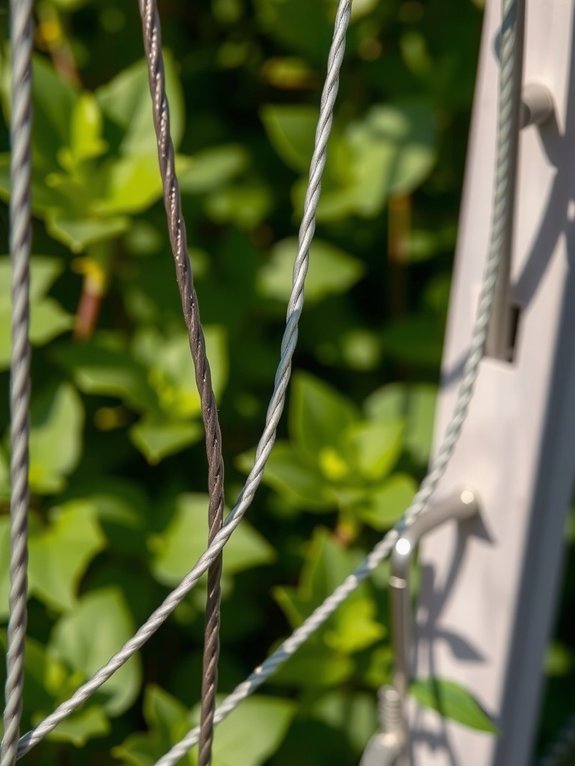
You might find yourself frustrated with your trellis system after just a season or two. Often, the problem comes down to choosing the wrong wire gauge, and these mistakes tend to get worse over time.
Oversizing wire for lightweight crops** is a common waste of money. When you’re growing annual vegetables, you don’t need heavy 9–12.5 gauge high-tensile wire. Using it anyway** makes installation harder and tensioning more difficult without giving you any real benefit.
Ignoring how post spacing affects wire performance creates real structural problems. If you space your posts 20 feet apart but use inadequate wire gauge, your system will sag more than it should. You’ll also need to apply more tension to compensate, which destabilizes everything.
Swapping regular thick wire for high-tensile wire skips over important differences in how these materials actually work. High-tensile wire has different elongation characteristics and needs specialized tensioning tools. Regular wire can’t give you the same long-term stability.
The solution is straightforward: pick a gauge that matches what you’re actually growing and supporting. Spread the weight across multiple wires instead of relying on single strands to carry everything. These specific choices protect your investment and keep your structure reliable for years.
How to Tension Wire Without Sagging?
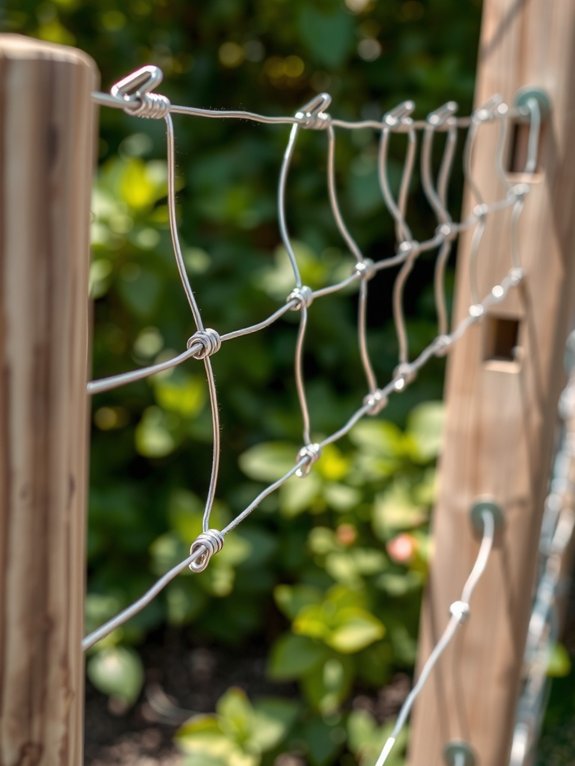
Proper wire tensioning comes down to two main strategies working together. First, you need the right tools—Kencove-style tensioning devices work well because they maintain a consistent pull as you tighten. Second, you need to space your posts so that no single span goes beyond roughly 20 feet. This spacing matters because when you have longer stretches, the weight of fruit creates localized sagging in the middle of each span.
Using multiple supporting wires instead of a single strand makes a real difference too. When you distribute the load across several wires, each one carries a portion of the stress rather than one wire bearing everything. This shared load keeps your whole trellis structure more stable and resistant to sagging under the weight of a heavy crop.
After harvest, your wires will have taken a beating from supporting all that fruit weight. Set aside time to inspect them and re-tension where needed. This regular maintenance keeps your wire runs straight and taut so your system stays reliable season after season.
Tensioning Tools And Methods
How do you keep wire from sagging once you’ve strung it across your trellis posts? You’ll need the right combination of tools and methods, working systematically to maintain tension while securing your heavy gauge wire permanently.
Start with dedicated tensioning devices designed for this purpose. BeFAST Brace Kits or Kennecott-type tensioners apply steady, consistent pull without slippage. One-way anchor vises or grip tools let you secure initial tension before final fastening, which reduces movement during tightening. When you’re ready to attach wire to posts, use crimping tools and proper wire grips to prevent deformation.
Your end posts need to be securely anchored too. Set them deeply and evenly into the ground so they can resist movement from wire tension. Another effective approach is distributing the load across multiple wire stands rather than relying on single strands—this works especially well on grape trellises, significantly reducing sag and keeping your tension stable long-term.
Post Spacing And Load Distribution
Once your tensioning devices are in place and your wire is pulled tight, you need to think about what’s holding everything up. Your post spacing directly affects how well your trellis handles the weight distribution across the system. When you space posts about 20 feet apart, you get a good balance between span length and wire performance. This spacing prevents excessive sag when fruit weight builds up over the season. If you go wider than that, you’ll need higher-tensile wire to compensate. If you bring posts closer together, you reduce the strain on each individual post.
| Post Spacing | Wire Tension Requirement | Sag Risk | Best Use |
|---|---|---|---|
| 15 ft | Standard | Low | Compact gardens |
| 20 ft | High | Moderate | Standard trellises |
| 25+ ft | Extra-high | Significant | Long-span systems |
At your end posts, you need deep anchoring to stabilize your entire framework. This prevents arch bowing, which would undermine the trellis tension throughout the whole system. Think of your end posts as the foundation that keeps everything else working properly.
Cattle Panel Trellises: When Four-Gauge Is Your Only Option
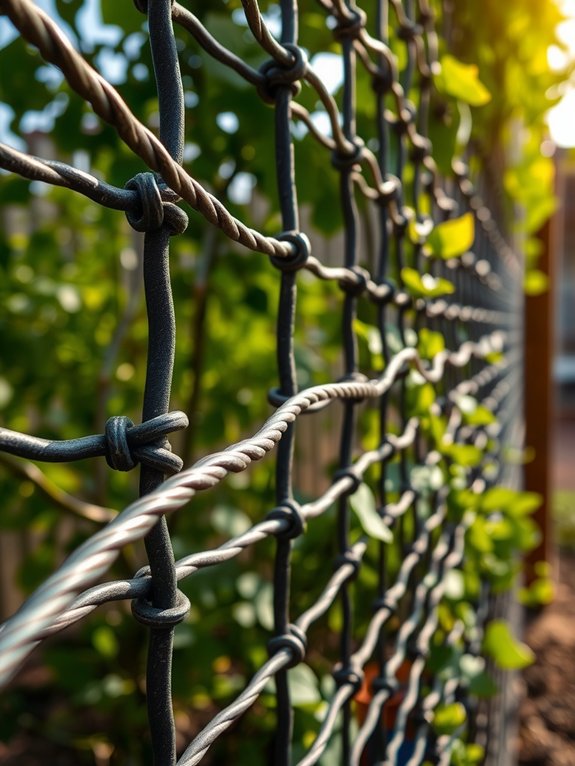
When you’re looking for a trellis that doesn’t demand constant maintenance after installation, a cattle panel arch built from four-gauge galvanized wire is a solid choice. These panels typically run 16 feet long and 50 inches wide, and they’re built to last. Just know that you’re working with some real limitations—the four-gauge wire is strong, but it won’t bend the way you might want it to.
The stiffness of cattle panels means you need to plan your installation carefully to keep the arch from sagging or bowing. Here’s what actually matters:
- Install studded T-posts about 5 feet apart, especially at the corners where the panel takes the most stress
- Use zip ties to secure the panel wherever the wires cross your posts
- Consider building it with a gothic-top shape, which adds noticeable rigidity to the whole structure
The key is accepting that this material isn’t flexible. Instead of trying to force the panel into graceful curves, work with what you’ve got. The stiffness is actually your friend when you design around it.