Creating a natural privacy barrier in your backyard doesn’t have to mean waiting years for results. I’ve found that the right trees can transform your outdoor space quickly, blocking unwanted views while adding genuine value to your property.
Whether you’re dealing with nosy neighbors or just want a quieter retreat, you’ve got solid options available. But which trees actually deliver on their promises, and what should you consider before planting?
Green Wall Willow Privacy Tree Cuttings (10 Pack)

🌿 ULTRA FAST GROWING PRIVACY SCREEN: Green Wall Willow is one of the fastest growing trees available, quickly forming a dense, living wall for privacy, wind protection,...
Green Wall Willow Privacy Tree Cuttings (10 Pack)
Want to create a dense, living privacy screen without waiting years for results? Green Wall Willow Privacy Tree Cuttings offer exactly that. This 10-pack gives you fast-growing material that establishes quickly when planted 2-3 feet apart directly in soil.
The thick branching and abundant foliage create a lush green barrier perfect for borders, windbreaks, and noise reduction. What makes these cuttings special is their adaptability, thriving across various soil types and climates while demanding minimal maintenance once established. They’re hardy, reliable, and return year after year, making them an excellent investment for anyone serious about natural privacy fencing on their property.
Best For: Homeowners and property owners seeking a fast-growing, low-maintenance natural privacy solution that establishes quickly and requires minimal ongoing care.
Pros:
- Ultra-fast growing and quick-establishing cuttings that create a dense privacy screen without years of waiting
- Hardy and adaptable to various soil types and climates with minimal maintenance requirements once established
- Natural fencing solution that returns year after year for long-term value
Cons:
- Requires initial proper spacing (2-3 feet apart) and correct planting technique for optimal establishment
- Demands full sun exposure and may not be suitable for shaded areas or all property locations
- May require occasional pruning or management to maintain desired density and shape over time
Perfect Plants Thuja Green Giant Evergreen (8-Pack)

the thuja green giant is known as the premier. fast growing privacy tree for much of the united states This large privacy evergreen has dense, dark green foliage that smells...
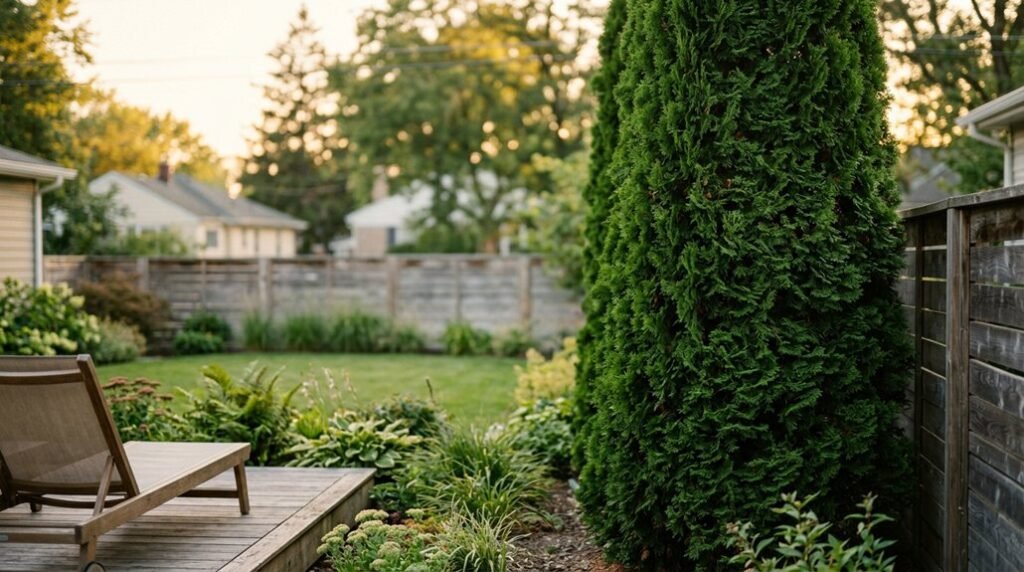
If you’re serious about creating a dense, fast-growing privacy barrier that’ll reach 60 feet tall, this 8-pack of Thuja Green Giants hits the mark. I appreciate that these aren’t bare-root specimens but full-sized, pot-ready plants shipped directly from Florida nurseries.
They thrive in zones 5 through 9, adapting beautifully across most of the country. Plant them in full sun, water consistently during establishment, and you’ll watch them develop that signature pyramidal shape with deep green foliage. They’re remarkably low-maintenance once established, though yearly fertilizer keeps them vigorous. The bonus? Their leaves release a pleasant pine scent when brushed, and they naturally block both prying eyes and traffic noise.
Best For: Homeowners and property managers in USDA zones 5-9 seeking a fast-growing, low-maintenance evergreen privacy screen that can reach impressive heights and block both visual intrusions and noise.
Pros:
- Fast-growing, dense foliage creates an effective privacy barrier that can reach up to 60 feet tall with a naturally attractive pyramidal shape
- Shipped as full-sized, pot-ready specimens from Florida nurseries rather than bare-root plants, allowing for immediate planting and continued growth
- Low-maintenance once established with adaptability across most of the United States (zones 5-9), plus the bonus of pleasant pine-scented foliage and natural sound/wind-blocking abilities
Cons:
- Requires consistent watering during the establishment period and regular yearly fertilization to maintain vigorous, healthy growth
- Demands full sun exposure to thrive, limiting placement options for properties with significant shade
- Mature size of up to 60 feet tall and 20 feet wide requires substantial space and long-term commitment, making it unsuitable for smaller yards or those wanting quicker results
20 Leyland Cypress Trees 6-12″ Fast Growing Privacy Screen

For sale are 20 Leyland Cypress trees that are approximately 6-12" tall and shipped in pots LIGHTNING-FAST GROWTH - Watch your privacy appear before your eyes with an...
Looking to transform your backyard into a private retreat without waiting years for results? I’d consider the 20 Leyland Cypress Trees, which grow 3-4 feet annually. These evergreens arrive as 6-12 inch saplings in pots, ready to establish themselves quickly.
Their naturally pyramidal shape means you’ll achieve mature-looking privacy screens within just a few seasons. What I appreciate most is the minimal maintenance required once established, occasional watering and virtually no pruning necessary. They’re versatile for formal or casual landscapes, offering year-round green foliage and noise reduction potential. These trees truly deliver dramatic results fast.
Best For: Homeowners seeking quick privacy solutions who want mature-looking landscaping results within a few seasons without investing significant time in tree maintenance.
Pros:
- Extremely fast growth rate of 3-4 feet per year creates privacy screens much quicker than traditional trees
- Low maintenance requirements with minimal watering and virtually no pruning needed once established
- Year-round evergreen foliage provides consistent color and aesthetic appeal in any season
Cons:
- Leyland Cypress trees are susceptible to disease and pest issues in certain climates, requiring careful monitoring
- Not suitable for all regions; they prefer specific growing conditions and may struggle in areas with extreme heat or humidity
- They require proper spacing for optimal growth and air circulation
Hybrid Willow Tree Plants Fast Growing Privacy Hedge (10 Trees)

🌲 FAST GROWING TREES: Austree Hybrid plants grow fast at rate of 12 feet per year with maximum height of 50-75 feet. But they can be trimmed to remain low and dense....
Hybrid Willow Trees deliver what most homeowners desperately want: a dense, towering privacy screen without the decade-long wait. You’re looking at growth rates up to 12 feet annually, reaching mature heights of 50-75 feet with canopies spreading 35-50 feet wide.
They’re engineered for exactly what you need: privacy, windbreaks, and shade. The care routine’s straightforward—keep soil moist, water 2-3 times weekly, and plant in quality garden soil with full sun exposure. Winter hardy across zones 4-8, these trees tolerate various conditions and live 50+ years.
You’ll receive 10 fresh cuttings with detailed planting instructions, and they’ll ship dormant during extreme weather to protect the starts. It’s low-maintenance landscaping that actually delivers results.
Best For: Homeowners seeking fast-growing privacy screens, windbreaks, and shade solutions without waiting years for mature trees to establish.
Pros:
- Exceptional growth rate of up to 12 feet per year with mature heights of 50-75 feet, providing quick privacy and aesthetic results
- Low-maintenance care requirements with hardy tolerance across zones 4-8 and a lifespan of 50+ years
- Environmental benefits including air filtration, oxygen production, and effective noise reduction alongside practical landscaping uses
Cons:
- Requires consistent watering of 2-3 times per week to maintain optimal growth and health
- Needs full sun exposure and specific soil moisture conditions, limiting placement flexibility in shaded or poorly-draining areas
- Large mature size (35-50 feet wide canopy) demands significant space and may require regular trimming to maintain desired form and density
Willow Hybrid Trees for Privacy Fast Growing (10 Cuttings)
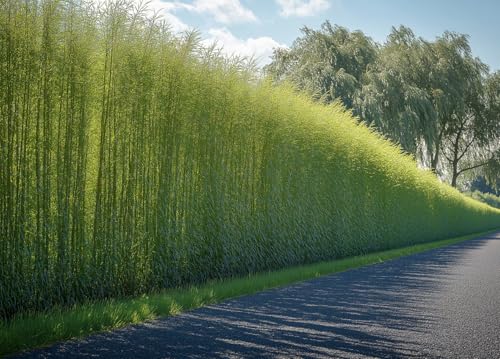
Hybrid Willow also known as Aussie Willow are the fastest growing tree on the planet. They can grow 6 feet the first year and 10 feet a year after that. Great for a visual or...
Here’s a privacy screen that actually keeps pace with your impatience? I’d grab these Austree Willow cuttings, the fastest growing trees on the planet. You’re getting ten 9-inch cuttings that’ll shoot up 6 feet your first year, then keep climbing about 10 feet annually.
Root them in water, plant them 6 inches deep with 2-foot spacing, and water every other day or via drip irrigation. And here’s the thing: these trees genuinely love moisture, so don’t skimp on hydration. Consider staggering a second row for denser coverage. With Amazon’s return policy backing you, you’re looking at a smart investment in actual privacy that won’t leave you waiting around.
Best For: Homeowners seeking fast-growing privacy solutions who want significant height and screening coverage within the first year of planting.
Pros:
- Exceptionally fast growth rate—up to 6 feet in year one and approximately 10 feet per year thereafter
- Easy to establish from cuttings; root readily in water and require straightforward planting at just 6 inches deep
- Highly water-responsive trees that thrive with regular irrigation, making them reliable for creating dense visual and sound barriers
Cons:
- Require consistent watering every other day or drip irrigation, which demands ongoing maintenance commitment and higher water usage
- Need adequate spacing (2 feet apart minimum, potentially requiring staggered rows) to achieve desired density, increasing the total number of cuttings needed
- Outdoor-only species requiring full sun exposure, limiting placement options for properties with shade or space constraints
Factors to Consider When Choosing Trees for Backyard Privacy
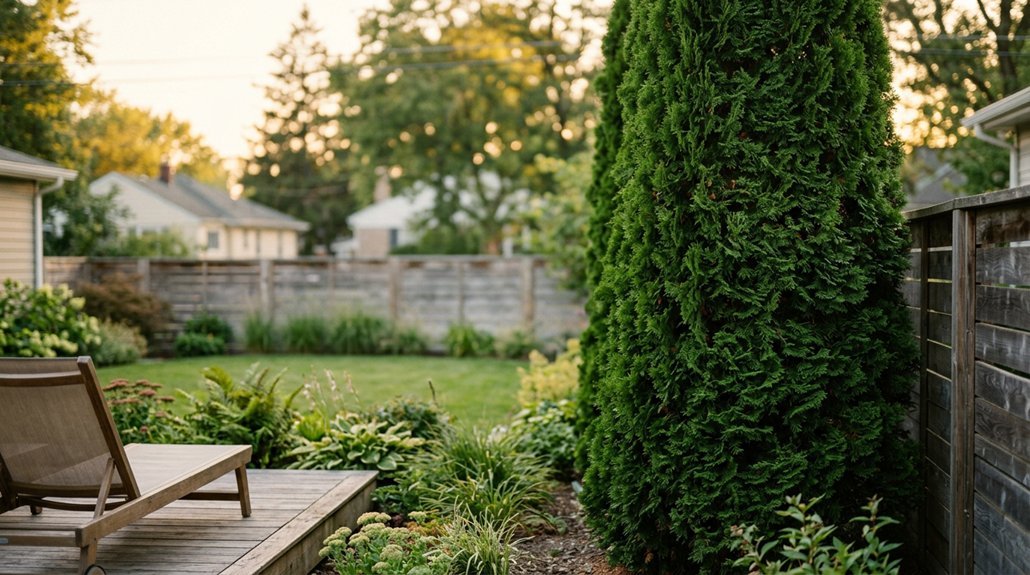
Here’s the deal: Before you pick a privacy tree, I need you to think through several key factors that’ll determine whether you’re planting a winner or a regret: growth rate and speed (how fast you need that screen), mature height and width (does it fit your space?), hardiness zones and climate (will it actually survive where you live?), maintenance and care requirements (how much work are you willing to put in?), and foliage density and coverage (can it actually block the view?). And here’s the catch: these aren’t independent considerations, because a fast-growing tree that loves your climate might demand constant pruning, while a low-maintenance option could take five years to give you real privacy. So let’s walk through each one so you can make a choice that actually works for your specific situation.
Growth Rate And Speed
How quickly do you need that privacy screen up and running? Growth rate is your answer. Some trees rocket upward at 12 feet per year, while others take a steadier 2 to 6 feet annually. That difference means real years of waiting or surprisingly fast results.
I’d focus on fast-growing species that establish strong roots early, because vigorous young trees fill in gaps faster and reach full density in months to a few years rather than decades.
Pay attention to seasonal patterns too. Trees grow differently in spring versus summer, and their juvenile phase often differs dramatically from mature growth patterns. Species eventually max out at certain heights and spreads. Understanding these limits helps you choose trees that’ll stay effective without constant pruning.
Mature Height And Width
Once you’ve identified a fast-growing species that’ll fill your yard within a reasonable timeframe, you’ll want to know exactly how tall and wide it’ll actually get. Some trees reach impressive dimensions, topping out at 50-75 feet tall with spreads of 35-50 feet, while others max out around 20-60 feet with narrower profiles.
This matters because a columnar tree creates dense vertical screening, whereas spreading forms deliver wider horizontal coverage. And here’s the thing: you need to match these mature dimensions to your actual space, considering root spread and overhead clearance. Plant a giant too close to power lines or your foundation, and you’re setting yourself up for expensive problems down the road. Choose wisely based on what your property can actually accommodate.
Hardiness Zones And Climate
Your local hardiness zone is basically your tree’s survival manual, telling you whether a species can actually thrive where you live or if it’ll struggle through winters or wilt in unexpected heat. I’m talking zones 4–8 or 5–9, depending on the species you’re eyeing.
Here’s what matters: trees planted within your zone experience fewer winter injuries and establish faster. Zones 4–8 plants, for instance, handle both cold winters and hot summers, making them reliable across much of the U.S.
Consider this too. Evergreens maintain year-round privacy regardless of season, while deciduous trees lose foliage in colder climates, potentially compromising your screening in winter. Matching your selection to your local climate ensures long-term survivability and consistent privacy performance without constant replanting headaches.
Maintenance And Care Requirements
Most privacy trees need some upfront attention during their establishment phase, but the favorable news is they’ll settle into a low-maintenance rhythm once they’re established. During those essential first months, you’ll want to water consistently, especially if you’re planting cuttings at 2–3 feet spacing to create a dense screen. Once roots take hold, maintenance becomes pleasantly simple.
Mature evergreens rarely demand heavy pruning. You’ll mainly trim to maintain your desired height and density. Soil and sun conditions matter greatly, so plant in full sun whenever possible and monitor moisture levels across seasons.
Different hardiness zones (like zones 4–8 for hybrids) may require irrigation adjustments based on rainfall. The bottom line: invest early, relax later.
Foliage Density And Coverage
The thickness of a tree’s canopy makes all the difference when you’re building a privacy barrier, and I can’t overstate how much this single factor shapes your screening timeline and effectiveness. Dense foliage blocks sightlines quickly, while sparse branching leaves gaps that compromise your privacy goals.
Look for trees with small-to-medium leaves arranged in overlapping patterns. These create perceived density that translates to genuine visual screening. Height and branching shape matter too. Tall trees with wide pyramidal forms deliver thicker coverage at ground level where you need it most.
Evergreens deserve your attention here. They maintain consistent density year-round, so you’re not watching your privacy evaporate each fall. Fast-growing varieties accelerate this process, reducing your wait for full coverage from years down to seasons.
Soil Adaptability And Conditions
How adaptable is your yard’s soil to the trees you’re considering? I’d recommend prioritizing species that thrive across clay, loam, and sandy soils, since most backyards aren’t perfectly uniform. Look for trees that handle varying pH levels and moisture conditions without requiring extensive soil amendments, which saves you time and money.
Drought-tolerant and floodplain-tolerant varieties are your best friends here. They’ll weather both dry spells and occasional soggy periods without fussing. And don’t overlook root systems. Non-invasive roots protect your foundation and underground utilities from damage.
Before planting, verify establishment guidance specific to your soil type, including watering frequency and any necessary prep work. This groundwork ensures your privacy trees settle in successfully and thrive for years.