You’ll want to position your succulent where it receives about six hours of daily sun, maintaining home temperatures between 55°F and 75°F. Plant it in a container with drainage holes, using a well-draining soil mix—equal parts potting soil and mineral components like perlite or sand. Water thoroughly every two to three weeks only when the soil’s top inch feels dry, then remove excess water. Fertilize sparingly during spring and summer at quarter strength. Watch for gnats, mealybugs, and root rot, each requiring specific interventions. The particulars of addressing stretching, leaf drop, and repotting deserve closer attention.
Assess Your Light and Temperature Situation First
Where you position your succulent matters more than you might initially think, since light and temperature work together to determine whether your plant thrives or merely survives. Most succulents require about six hours of sun exposure daily, though newly planted specimens need gradual acclimation to prevent leaf scorch. You’ll want to maintain typical home temperatures between 55°F and 75°F, recognizing that extreme fluctuations compromise your plant’s light tolerance. If you notice leggy growth or widely spaced leaves, your succulent’s signaling insufficient brightness—a cue to relocate it toward stronger indirect light or a brighter window. Some cacti tolerate direct sun once acclimated, while others burn quickly; sheer curtains offer protective filtering during initial exposure. Regular rotation promotes even growth and prevents your plant from leaning persistently toward its light source.
Choose a Pot With Drainage Holes for Succulents
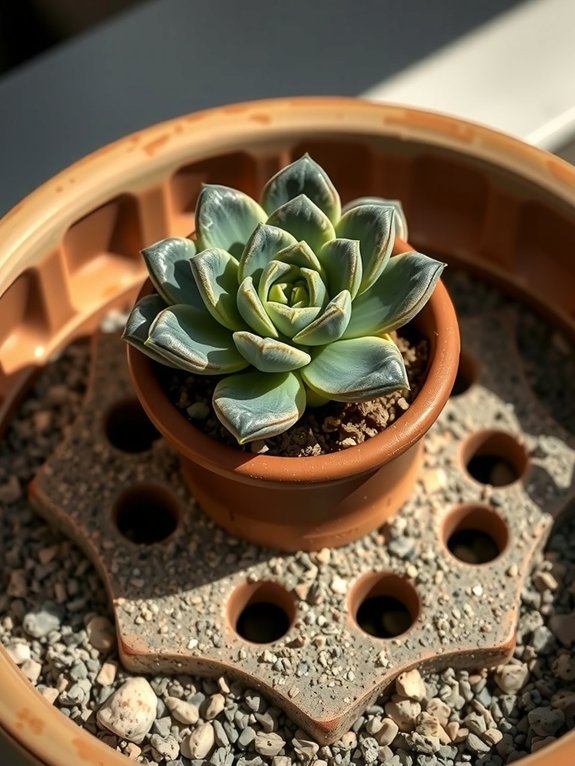
After you’ve positioned your succulent in appropriate light and temperature conditions, the container itself becomes your next critical consideration—because even the most well-placed plant will rot if its roots sit in stagnant water. You’ll want drainage holes, non-negotiable for succulent survival, paired with a succulent soil mix that resists moisture retention. Terra-cotta pots, which I’ve found indispensable through years of growing, offer porous material that naturally encourages evaporation. Avoid oversized containers that trap excess moisture; smaller pots reduce overwatering risk significantly. If you prefer a decorative outer container without drainage, nest a drilled pot inside it instead.
| Container Type | Benefit |
|---|---|
| Terra-cotta | Promotes moisture evaporation |
| Small drainage pot | Prevents root rot |
| Succulent soil mix | Reduces water retention |
Mix Your Own Well-Draining Soil (Here’s the Simple Recipe)
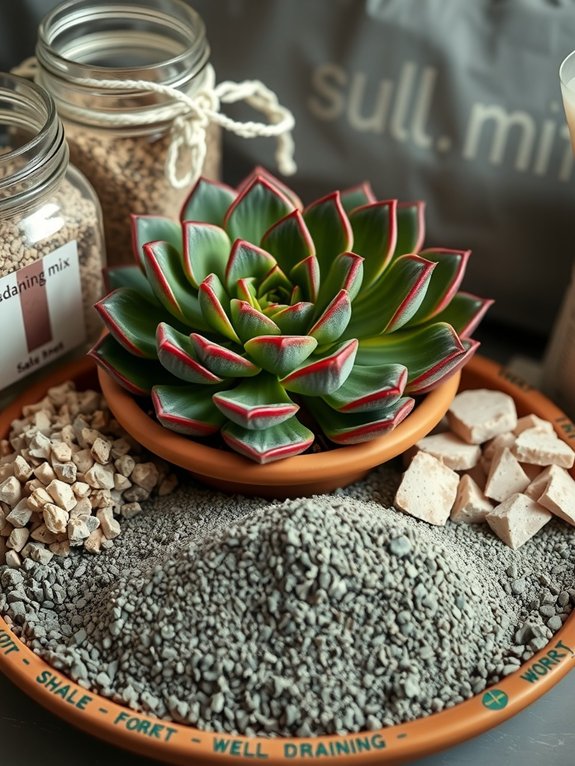
The pot and drainage holes you’ve selected will only perform their job if you fill them with soil that actually lets water pass through—and here’s where many people stumble, reaching for standard potting soil that, despite its reputation, retains far too much moisture for succulents to thrive. You’ll want to create your own succulent mix by combining equal parts potting soil with mineral components like sand, perlite, or pumice. Better yet, use a 1:2 ratio of organic to inorganic material, which provides superior drainage. This approach—blending one part organic soil to two parts perlite or pumice—ensures your soil dries quickly after watering. When you fill your pot, settle the mix gently around roots, level the surface, and wait several days before watering. This deliberate patience prevents root rot and establishes the foundation for healthy growth.
Plant Your Succulent: Step-by-Step (It’s Easier Than You Think)
You’ll start by selecting a container with drainage holes—this isn’t optional if you want to avoid root rot—then fill it partially with your well-draining soil mix, which you’ve either purchased as a cactus blend or mixed yourself with porous, sandy components. Position your succulent in the center so that the top of its root ball sits slightly below the rim, allowing room for watering, then gently backfill around the sides with additional soil, pressing lightly to eliminate air pockets while keeping the root zone stable and adequately covered. This straightforward process, which takes just a few minutes once you’ve gathered your materials, establishes the foundation for healthy growth by ensuring proper drainage and root contact with nutrient-rich soil.
Prepare Your Planting Container
Getting your container right sets the entire foundation for succulent success, and it’s where many beginners stumble without realizing it. You’ll want drainage holes—non-negotiable—since they prevent root rot by allowing soil to dry properly between waterings. Terra-cotta pots work exceptionally well for this purpose; their porous nature facilitates moisture evaporation, making them particularly forgiving for those still calibrating their watering habits. Fill your chosen vessel with a well-draining succulent mix, one specifically formulated to shed water quickly rather than retain it. If your mix seems dense, amend it with sand or perlite to enhance drainage further. Avoid oversized containers, which encourage overwatering and prolonged soil moisture. Right-sizing your pot—choosing one only slightly larger than your plant’s root ball—demonstrates restraint that ultimately sustains healthier growth.
Fill With Proper Soil Mix
Choosing the right soil mix—this is where many growers, myself included during my early attempts, discovered that standard potting soil wasn’t going to cut it—fundamentally determines whether your succulent thrives or slowly succumbs to root rot. You’ll want to abandon traditional heavy soils like loam or black soil entirely, instead opting for cactus or succulent-specific mixes that prioritize drainage above all else. If you’re working with regular potting soil, amend it generously with sand or perlite, aiming for a balanced 1:1 ratio that enhances both aeration and drainage simultaneously. Fill your prepared container with this custom mix before positioning your succulent, then gently top off around the roots afterward, ensuring adequate soil contact without compaction.
Position Plant And Backfill
With your soil mix prepared and your container ready, the actual positioning of your succulent is straightforward, though it requires a light touch and attention to one critical detail: ensuring that the roots make adequate contact with soil without being crushed by overzealous packing. Position your succulent so its roots settle naturally into the soil, then gently backfill around it, lightly tamping as you go. Avoid compacting the soil tightly, which restricts air circulation and drainage—two essentials for root protection. Once backfilled, rotate your plant occasionally to encourage balanced growth. This gentle approach to positioning and backfill transforms what might seem like a delicate operation into something you’ll handle with confidence, knowing you’re providing the aeration your plant needs to thrive.
Water Succulents Thoroughly Every Two to Three Weeks
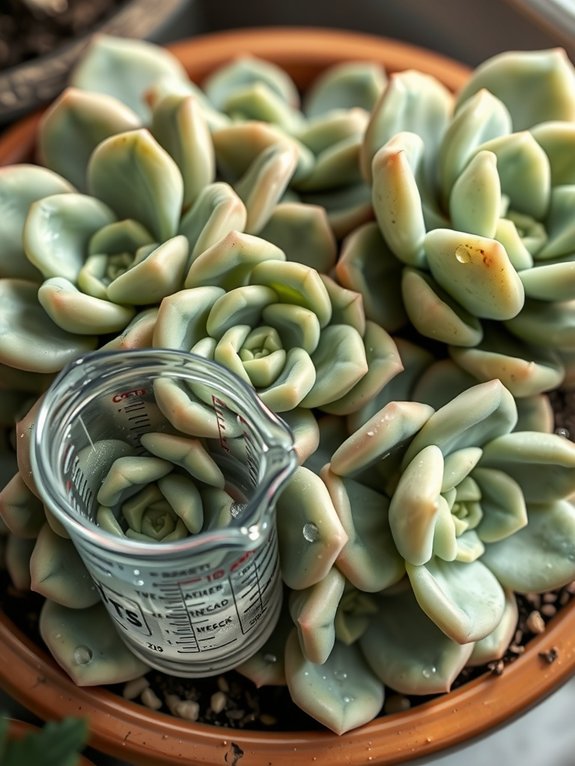
How often you water—this single decision shapes everything about your succulent’s survival, since overwatering kills more of these plants than any other mistake. Water thoroughly every two to three weeks, soaking the soil completely until drainage holes run clear, then remove excess water immediately. Check soil moisture by feeling the top 1.25 inches; water only when it feels dry to the touch. This approach prevents the root rot that occurs when water sits stagnant. During spring and summer’s active growth, increase watering frequency slightly, while fall and winter demand deeper dormancy with minimal moisture. Use well-draining soil and containers with drainage holes—these essentials facilitate rapid drying, protecting your plant from the very conditions that threaten it.
Provide 10+ Hours of Bright, Indirect Light Daily
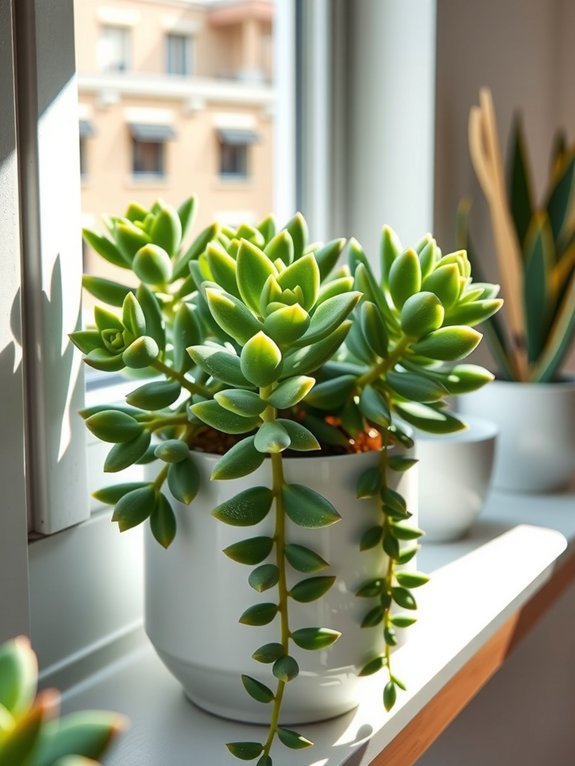
Once you’ve established a watering rhythm that keeps your succulent’s roots healthy, light becomes the next force shaping how your plant grows—determining whether it’ll develop compact, vibrant growth or stretch into a leggy, pale version of itself. Indoors, you’ll want to provide at least 10 hours of bright, indirect light daily, positioning your plant where it casts a shadow without enduring harsh, direct sun exposure. The acclimation process matters here; if you’re introducing a new succulent to stronger conditions, start with partial shade or a sheer curtain, gradually increasing sun exposure to build tolerance and prevent sunburn. Rotating your plants regularly promotes even development, preventing that telltale lean toward the light source. Should your succulent’s growth stretch awkwardly or its leaves space widely apart, that’s your signal to increase light exposure substantially.
Rotate Your Succulents for Even Growth
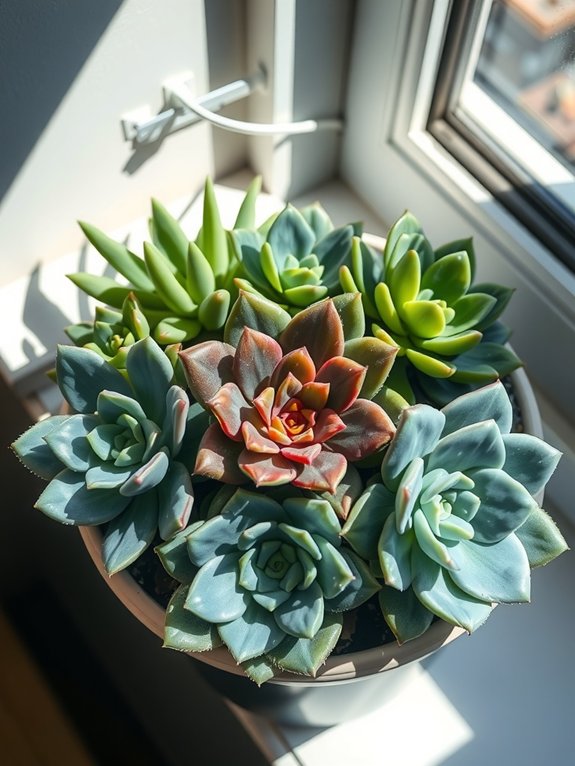
Why your succulent leans toward the windowsill—stretching one side toward light while the opposite flank languishes in comparative darkness—reveals a fundamental truth about plant growth that rotation directly addresses. You’ll notice this uneven development when one side grows more vigorously than the other, a condition called etiolation that compromises your plant’s symmetrical shape.
Rotating your succulents regularly ensures balanced light exposure across all sides, preventing this directional stretching. Turn them every week or two, changing their orientation and, when possible, relocating them to maintain consistent sun access. This practice supports uniform size, shape, and coloration throughout your collection, transforming plants that’d otherwise develop lopsided growth into evenly developed specimens. You’re essentially partnering with light itself, orchestrating its reach across every growing surface for the healthiest results.
Fertilize Lightly in Spring and Summer Only
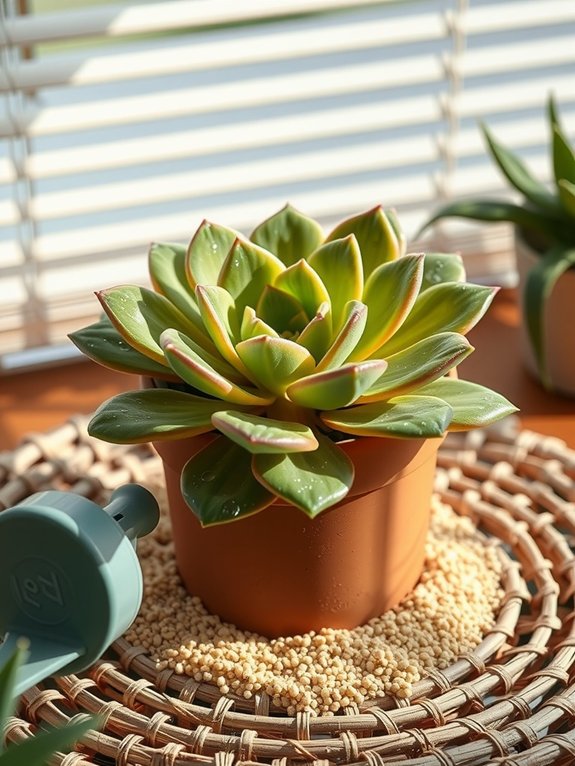
Unlike cacti or other desert dwellers you might assume need minimal feeding, succulents do benefit from nutrients during their active growing season—spring and summer—though the operative word here is “lightly,” a principle that separates thriving plants from those weakened by overzealous fertilization. You’ll want to use a 13-6-6 houseplant fertilizer applied at roughly half to a quarter of the labeled rate, integrating it into your regular watering schedule every three to four waterings or employing a slow-release option early in the season. This measured approach prevents salt accumulation while delivering adequate nutrition. Resist the temptation to overfertilize; excessive nitrogen promotes leafy growth at flowering’s expense. Come winter, when your plants enter dormancy, you’ll skip fertilizing altogether, allowing them the rest they’ve earned.
Spot and Eliminate Gnats, Mealybugs, and Root Rot
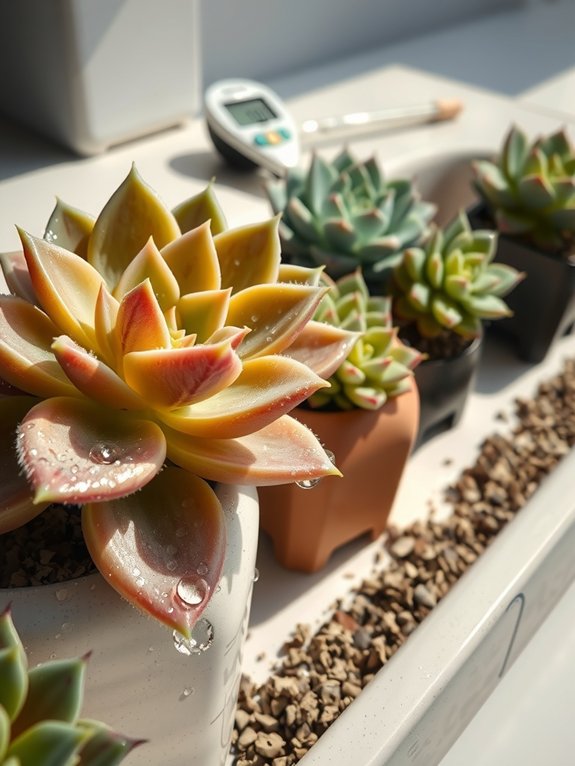
While you’re managing your watering schedule and fertilizing strategy, you’ll likely encounter pests and diseases that thrive in conditions you’ve inadvertently created—gnats, mealybugs, and root rot being the most persistent culprits. Gnats signal overwatering; let soil’s top inch dry between waterings to eliminate them. Mealybugs, those cottony clusters infesting foliage and soil, respond to isolation and careful isopropyl alcohol spraying—a measured approach preventing plant stress. Root rot, the consequence of excessive moisture in poor drainage, demands immediate intervention: repot using succulent mix (soil, sand, perlite) and verify drainage holes exist. Prevent recurrence by avoiding saucers, maintaining airflow, and watering thoroughly until runoff clears. These practices—though sometimes requiring persistence—form the foundation of sustainable succulent care.
Stop Common Problems: Stretching, Rot, and Leaf Drop Before They Kill Your Plant
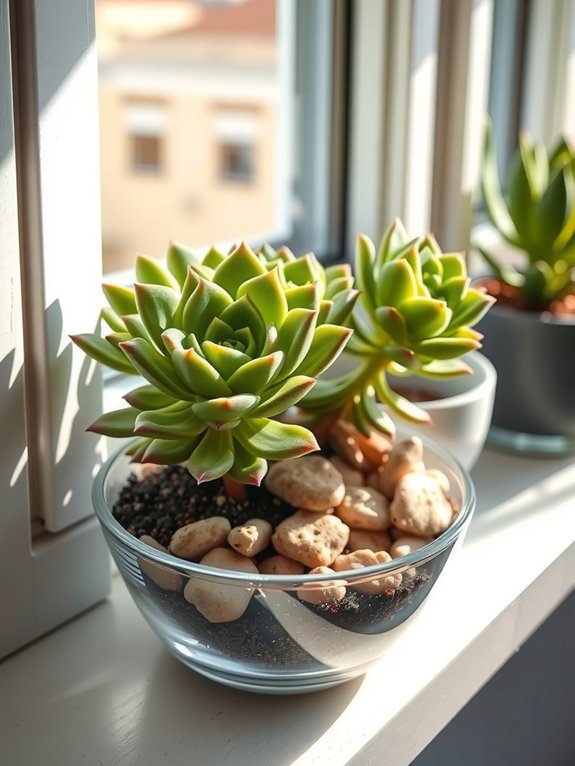
Once you’ve addressed the immediate threats—gnats breeding in soggy soil, mealybugs clustering on stems, root rot advancing through compromised drainage—you’ll find yourself facing a different set of challenges, ones that develop more gradually and often signal deeper imbalances in your care routine. Stretching, rot, and leaf drop represent your plant’s way of communicating stress, though the remedies differ considerably based on their root causes. Stretching indicates insufficient light; provide about six hours of sun daily or relocate to a brighter spot, rotating periodically to prevent leaning. Rot thrives in overwatered conditions, so ensure sharp-draining soil and allow the top layer to dry between waterings. Leaf drop signals water or nutrient stress, requiring direct soil watering until drainage runs clear. Gradual acclimation combined with consistent, measured watering minimizes these cascading problems.
Repot and Propagate: Expanding Your Succulent Collection
After you’ve stabilized your existing plants and resolved the stress signals they’ve been sending, you’ll likely find yourself wanting to expand—not just to fill empty shelf space, but because propagation, the process of creating new plants from existing ones, proves remarkably straightforward and genuinely rewarding. You’ll discover that most succulents propagate vegetatively through offsets, stem cuttings, or leaf cuttings, depending on species and growth habit. When potting propagated plants, fill containers with well-draining soil drainage before positioning each specimen, then gently top off around it. This simple process enables collection expansion while sharing plants with fellow enthusiasts. The accessibility of propagation invites experimentation, transforming your care routine into a generative practice that deepens both your skills and your community connections.
| Method | Best For | Difficulty | Timeline |
|---|---|---|---|
| Offsets | Clustering species | Easy | 2-4 weeks |
| Stem cuttings | Branching types | Simple | 3-6 weeks |
| Leaf cuttings | Rosette forms | Very easy | 4-8 weeks |