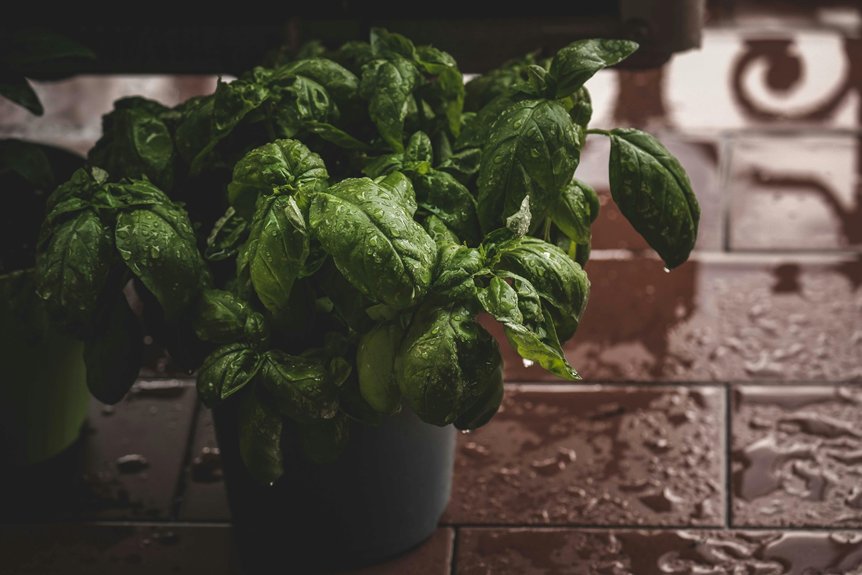
You’ll keep your basil thriving by providing six to eight hours of direct sunlight daily, maintaining consistently moist—not waterlogged—soil, and spacing plants twelve to sixteen inches apart for adequate airflow. Feed regularly with balanced organic fertilizer, water before applying nutrients to prevent burn, and monitor undersides of leaves for whiteflies or other pests. Harvest strategically above leaf nodes to encourage bushier growth. These fundamentals address most challenges, though particular situations—from pest management to preserving your harvest—warrant their own attention.
Why Start Growing Basil
Why’d you put off growing basil until now, when you could’ve been harvesting armfuls of fragrant leaves all season long? Starting basil in mid-spring through early summer positions you to capture maximum growth during warm months, when the plant thrives and produces prolifically. Once established with adequate sun light—roughly six to eight hours daily—your basil develops vigor that sustains consistent harvest. Proper basil care, including strategic pruning just above leaf nodes, encourages bushier plants while delaying flowering, which extends your leafy production window considerably. Maintaining soil moist through deliberate watering techniques prevents root stress. Growing basil rewards attention to detail: warm conditions, humidity during germination, and regular maintenance transform seedlings into generous producers. You’ll join the community of gardeners who’ve discovered that fresh basil, cultivated with intention, elevates both kitchen and garden experience substantially.
Starting Basil From Seed Indoors
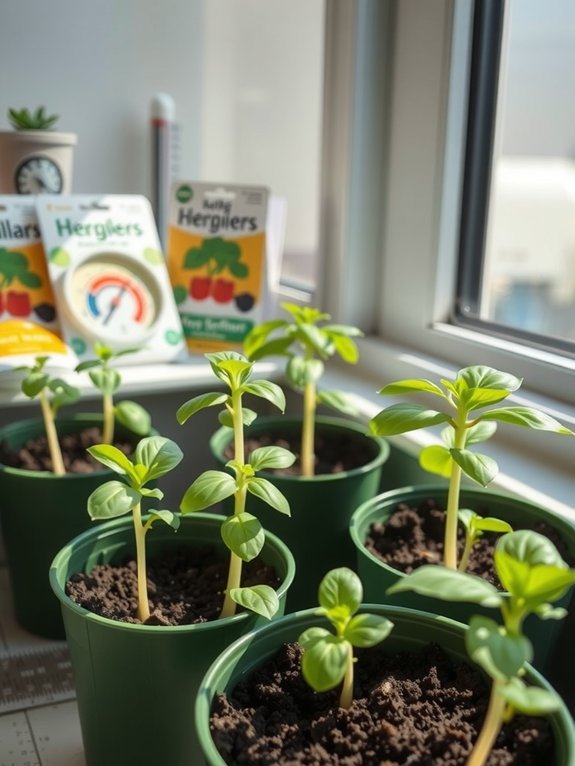
You’re ready now to move beyond the why and into the actual work of raising basil from seed, beginning indoors where you can control the variables that seedlings need most. Start 4 to 8 weeks before your last frost date, sowing 1–2 seeds per cell in seed-starting mix, barely covering them with ¼ inch. Maintain 70°F for germination, using a plastic dome to preserve humidity—a detail that makes genuine difference in success rates. Provide at least 8 hours of bright light daily through windows or grow lights, preventing the leggy weakness that undermines sturdy development. Around six weeks in, transplant seedlings outdoors gradually, hardening them against temperature shifts and wind. This patient progression builds the resilient foundation your basil needs.
How to Plant Basil Seeds: Step-by-Step
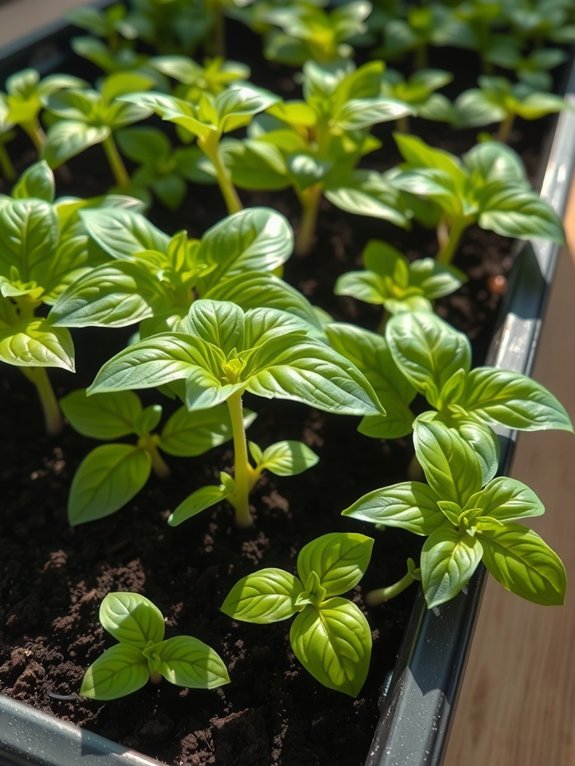
Once you’ve gathered your supplies—seed-starting mix, small pots or cells, a spray bottle, and a plastic dome or wrap—the actual planting process becomes straightforward, though the details matter more than you’d expect. Fill your starter pots with moistened seed-starting mix, then place one or two basil seeds per cell, barely covering them with roughly ¼ inch of dry mix. This shallow seed depth, which I’ve learned through trial, ensures proper germination without smothering the delicate seedlings. Gently mist the surface, then seal your containers with plastic to maintain humidity while you wait for germination around 70°F. Starting seeds indoors four to eight weeks before your last frost date positions you perfectly for transplanting robust six-week-old seedlings outdoors when conditions allow, joining countless gardeners who’ve mastered this reliable method.
Transplanting Seedlings Into the Garden
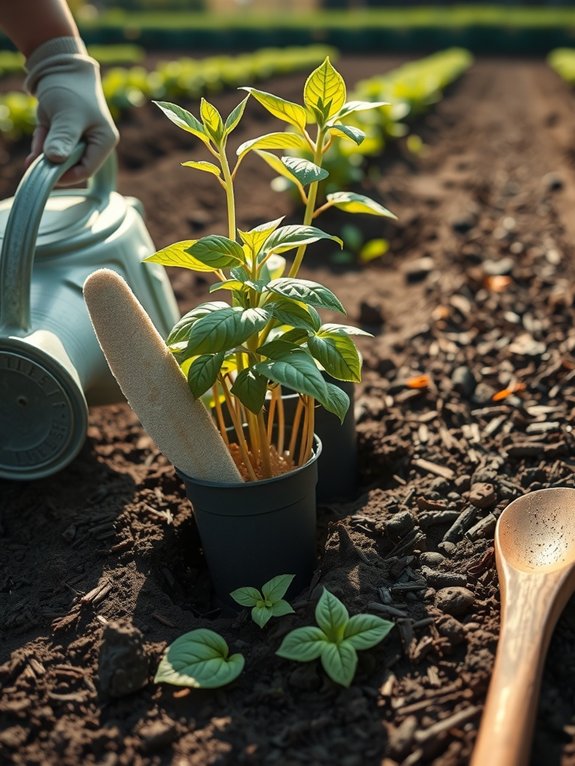
When you’ve nurtured your basil seedlings through their indoor phase, they’re ready for the garden once the danger of frost has truly passed—timing that’ll vary by region but typically lands around May in many areas. Follow these essential steps for successful transplanting:
- Select a location with full sun, good air flow, and well-draining soil
- Space basil seedlings 6–12 inches apart to balance airflow and harvest yield
- Dig holes large enough to accommodate the root ball at soil level
- Water deeply at the soil base and apply 1–2 inches of mulch
Monitor your seedlings closely for transplant shock, maintaining moderately moist soil as weather patterns shift. Amending heavy soil with compost beforehand prevents drainage problems that’ll compromise your plants’ establishment and long-term health.
Choose the Right Location for Basil
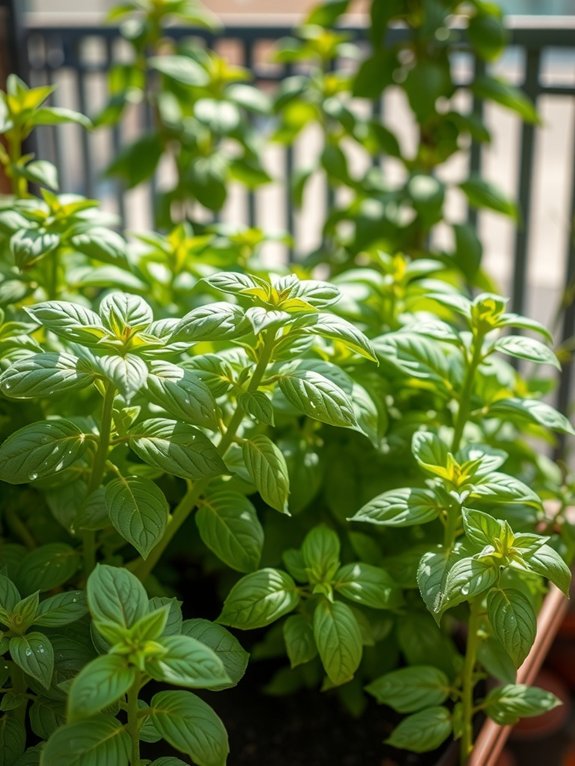
Where you position your basil—whether in garden beds, containers, or raised planters—determines how vigorously it’ll grow and how long you’ll harvest from it. Your basil location must receive full sun, ideally six to eight hours daily, with morning exposure being particularly valuable for establishing robust growth. You’ll want well-drained soil with a pH between 6.0 and 7.0, enriched with organic matter to support nutrient uptake. Space plants twelve to sixteen inches apart, allowing adequate air circulation that reduces disease pressure—something I’ve learned matters considerably when humidity climbs. If you’re in a hot region, afternoon shade provides welcome protection against wilting. Plant only after frost risk passes. In containers, use large pots with drainage holes and light, fluffy soil mixes that prevent waterlogging while accommodating your basil’s root system.
Prepare Your Garden Bed for Basil
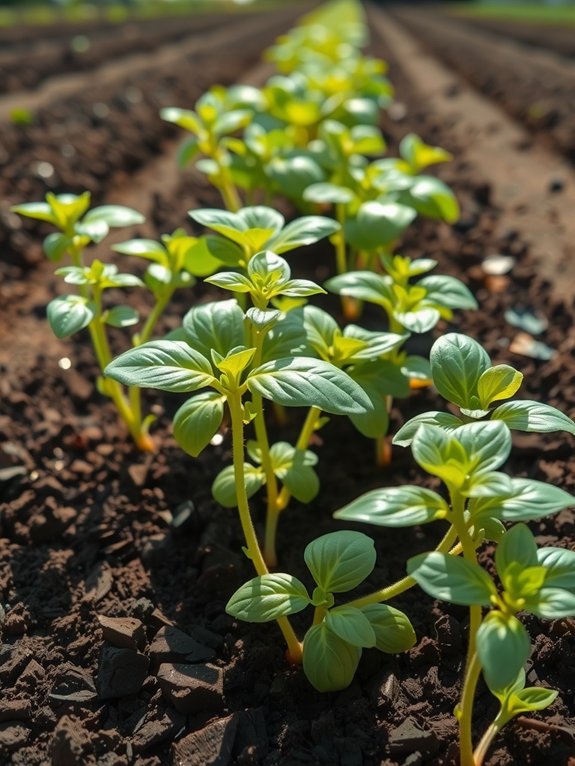
How you prepare your soil makes the difference between basil that merely survives and basil that thrives—a lesson I’ve reinforced through seasons of variable results. Your garden bed foundation determines everything that follows, so invest time upfront to establish conditions your basil plants genuinely need.
- Work soil to at least 8 inches deep, breaking up compacted earth
- Amend with compost to improve structure, fertility, and drainage simultaneously
- Space basil plants 12–16 inches apart, ensuring adequate air circulation
- Target a pH between 6.0 and 7.0 for optimal nutrient availability
Well-draining soil prevents root rot, while compost enriches the bed with organic matter. Position your garden bed where it receives full sun, then water deeply when the top inch feels dry. These deliberate preparations create the environment where basil genuinely flourishes.
Water Basil Without Drowning It
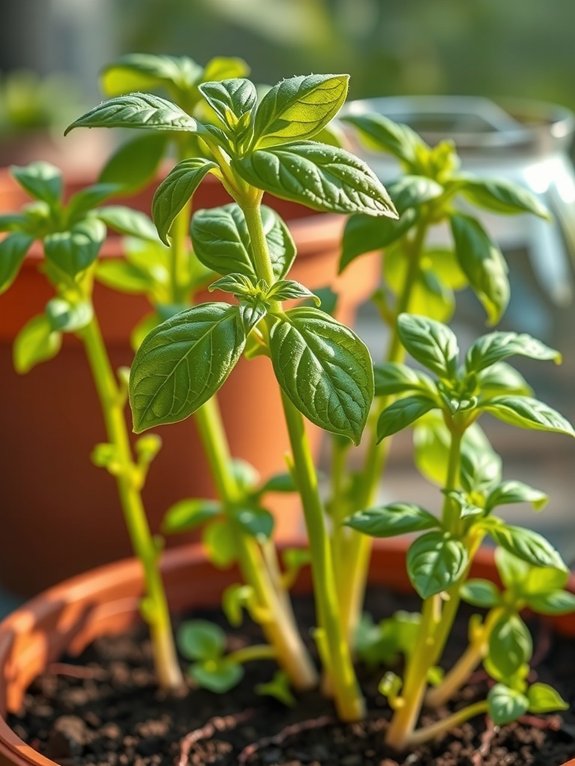
You’ll want to master two interconnected skills—understanding your basil’s soil moisture balance and timing your waterings correctly—because overwatering, which most gardeners struggle with,’ll kill your plant faster than neglect ever could. The trick isn’t watering on a rigid schedule but rather checking that top inch of soil, letting it dry completely before you water again, which prevents the soggy conditions that invite mold and root rot. Starting with top-watering for those initial days gives you a feel for how quickly your particular pot dries, after which you’ll transition to the saucer method, allowing the plant to drink from below while you maintain better control over moisture levels and surface conditions.
Soil Moisture Balance
Basil’s relationship with water operates within a narrow margin—moist soil that’s genuinely damp, rather than waterlogged, strikes the balance that keeps these plants thriving, and finding that sweet spot requires understanding that the top inch of soil serves as your primary indicator for when deep watering becomes necessary. You’ll develop a feel for this rhythm through practice.
Consider these soil moisture strategies:
- Check soil depth regularly before watering to avoid overwatering mistakes
- Switch to bottom watering using a saucer once established, topping it up consistently
- Apply mulch to conserve moisture and extend intervals between waterings
- Monitor drainage carefully, allowing the top to dry if mold appears
This approach—grounded in observation and adjustment—keeps your basil flourishing without the guesswork.
Watering Frequency Guidelines
When does basil truly need water, and how do you know the difference between adequate moisture and the soggy conditions that invite root rot? You’ll find your rhythm by monitoring soil moisture directly—touch the top inch regularly, establishing a tactile familiarity with what dry feels like. Initially, use top-watering to moisten your seed starter mix thoroughly, then transition to bottom-watering by maintaining an oversized saucer filled with water beneath your container. This shift prevents the fungal issues that plague overzealous gardeners. Water deeply when that top inch becomes dry, allowing the saucer to supply consistent moisture afterward. Should mould appear on soil or terracotta, empty the saucer temporarily, letting the surface dry several days before resuming. You’re balancing precision here—moist, never drenched—cultivating both plant health and your own confidence.
Give Basil 6–8 Hours of Sun Daily
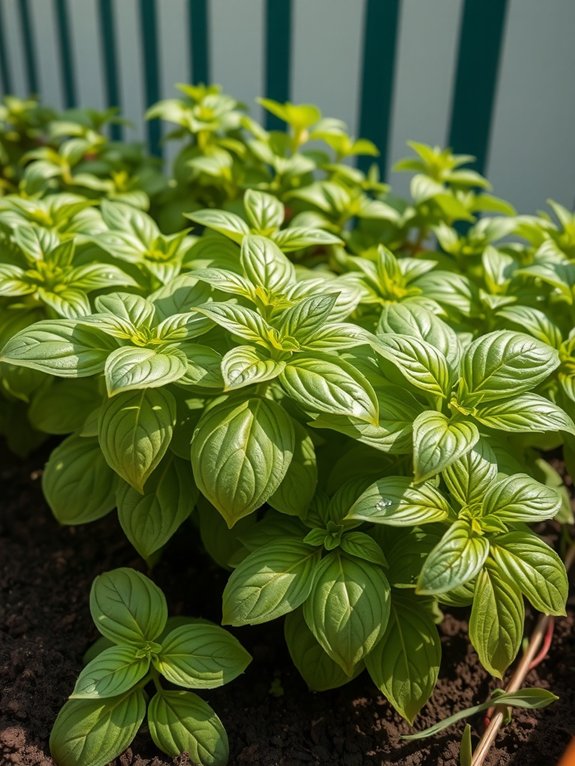
How much sunlight’s actually reaching that spot where you’re planning to grow basil? You’ll want to position your plant where it receives 6–8 hours of direct sunlight daily, a requirement that fundamentally shapes how your basil develops. This light exposure drives healthy leaf growth and plant vigor, determining whether you’ll harvest a thriving plant for several months or struggle with weak growth.
Basil needs 6–8 hours of direct sunlight daily to develop healthy leaves and vigorous growth throughout the growing season.
Consider these essentials:
- Assess your growing location’s sun patterns throughout the day
- Adjust watering frequency based on how much direct sun the area receives
- For indoor growing, supplement with a bright window or grow light to meet the 6–8 hour threshold
- Monitor how adequate sunlight sustains basil health and supports continued growth after pruning
Proper sun exposure isn’t optional—it’s foundational to your basil’s success.
Space Plants for Optimal Airflow
Adequate spacing between your basil plants, though it might seem like you’re leaving valuable garden real estate unused, actually determines whether you’ll cultivate vigorous growth or inadvertently create conditions for disease. Space basil plants 12–16 inches apart outdoors, or 6–12 inches in garden settings when balancing airflow with harvest yield. This spacing prevents crowding, which reduces disease pressure and improves transpiration through leaves.
For indoor growing, select containers large enough to maintain air circulation around each plant rather than clustering them together. Position your basil in full morning sun with good air movement, using well-draining soil that supports healthy root systems. This deliberate arrangement—spacing, soil quality, and airflow combined—creates the environment thriving basil requires, transforming your cultivation efforts into consistently productive growth.
Feed Basil for Faster, Fuller Growth
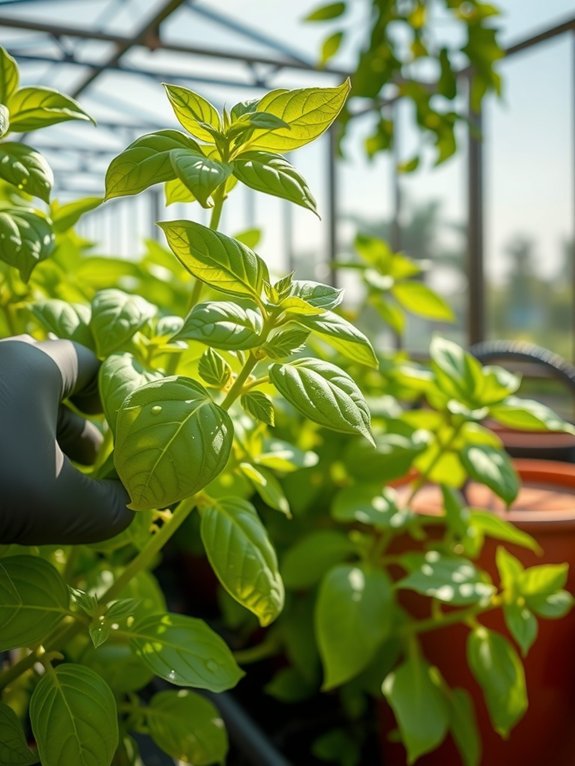
You’ll discover that grasping your basil’s nutrient needs—especially its appetite for nitrogen to support leafy growth and phosphorus for root development—transforms what might otherwise be a merely adequate plant into one that’s genuinely vigorous and productive. Regular feeding with a balanced organic fertilizer like Miracle-Gro® Performance Organics® Edibles Plant Nutrition, applied according to label directions, paired with soil amendments such as aged compost or blood meal for container plants, guarantees your basil receives steady nutrition throughout the growing season. Equally important is recognizing that your feeding schedule should adapt to your plant’s signals: weekly applications during peak growth phases, less frequent feeding during slower periods, and always watering beforehand to prevent fertilizer burn on the roots.
Nutrient Requirements For Growth
Basil’s appetite for nutrients—whether you’re cultivating it in containers or garden beds—directly shapes how vigorously it’ll grow and how abundantly it’ll produce the tender leaves you’re after. To support this growth, you’ll want to:
- Feed regularly with Miracle-Gro Performance Organics Edibles Plant Nutrition to fuel consistent development
- Pair container growing with quality soil like Miracle-Gro Performance Organics All Purpose Container Mix for balanced nutrients and drainage
- Enrich in-ground beds using aged compost, blood meal, or cottonseed meal to build soil organic matter
- Water deeply when the top inch feels dry, enabling roots to absorb nutrients effectively
A rotating watering schedule combined with mulch conserves moisture and maintains steady nutrient availability, reducing irrigation stress that compromises your basil’s potential.
Feeding Schedule And Methods
How often should you feed your basil, and does the feeding schedule differ between container and garden plantings? Yes, it does. For container basil, you’ll want to feed every two to three weeks using Miracle-Gro Performance Organics Edibles Plant Nutrition, since containers lack the organic matter that garden soil provides. Pair this with All Purpose Container Mix to maximize nutrient availability and soil structure from the start. In-ground basil benefits from initial soil amendment with aged compost and organic nutrients like blood meal, requiring less frequent feeding thereafter. Both methods demand consistent attention during active growth periods, particularly when temperatures rise. Regular feeding cycles—whether liquid or granular—sustain the vigor necessary for continuous harvesting, while mulching reduces feeding frequency by improving moisture retention and organic matter decomposition.
Identifying and Treating Common Basil Pests
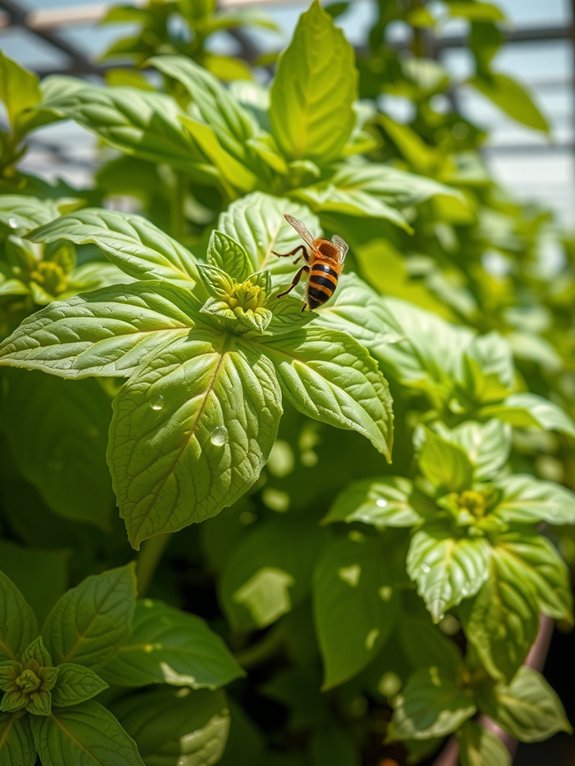
When does a thriving basil plant suddenly begin to decline, its leaves yellowing or curling despite your attentive watering schedule? Pest problems, which emerge as plants age or experience stress, demand prompt attention to preserve plant health.
Common basil pests require a multi-layered approach:
- Whiteflies – Keep saucers empty and allow soil to dry between waterings, disrupting their lifecycle
- Misting practice – Regular moisture on foliage deters pest establishment and promotes healthier growth
- Manual pest removal – Inspect undersides of leaves and remove affected portions by hand
- Insecticidal soap application – Deploy when preventive measures prove insufficient against persistent infestations
Your pest prevention strategy, combining consistent monitoring with proactive interventions, protects your basil investment. Regular inspection habits catch problems early, while maintaining proper watering discipline fortifies plant resilience against future pest pressures.
Solving Wilting, Yellowing, and Bare Stems
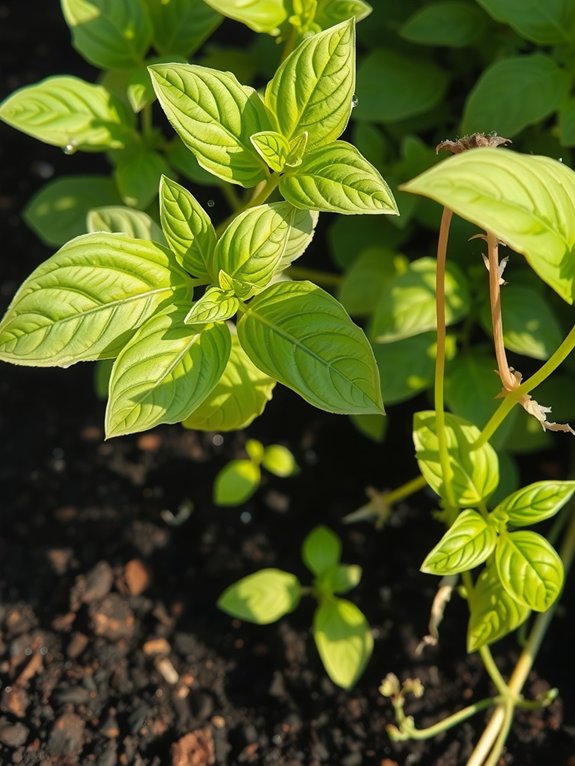
Why does your basil suddenly droop despite what seems like adequate care, its leaves losing their vibrant green for a dull, tired yellow? Basil wilting often stems from soil moisture imbalances—either waterlogged or parched conditions compromise turgidity. Aim for consistently damp, not drenched, soil; check the base regularly to prevent root stress. Hot midday sun intensifies wilting, so providing light shade during peak heat helps maintain plant vigor. Bare stems accompanying yellowed leaves signal underlying stress, frequently linked to pest damage or disease. Implement pest prevention through regular misting and inspection, since pests directly contribute to leaf decline and stem deterioration. Address wilting promptly by adjusting watering practices and environmental conditions—these interventions restore turgidity and prevent further deterioration of your basil’s health.
Should You Grow Basil Indoors or Outdoors?
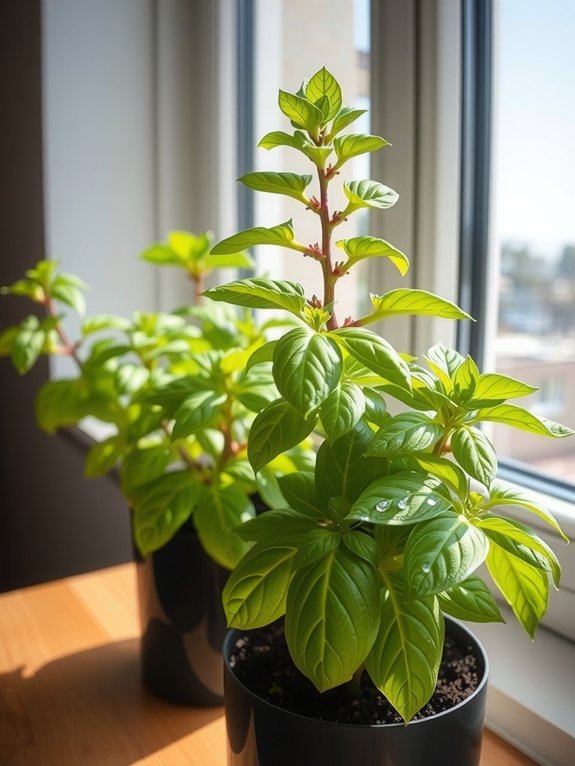
Once you’ve addressed the wilting and yellowing that plague struggling basil plants, you’ll find yourself considering a more fundamental question: where your basil ought to grow in the first place. Both environments offer distinct advantages, and your choice depends on your commitment level and climate:
- Basil indoors thrives year-round with 8–12 hours of bright light daily, using 8–12 inch containers with drainage holes
- Outdoor sun exposure requires full sun and 6–8 hours minimum, spacing plants 12–18 inches apart
- Soil moisture demands differ: outdoors you’ll water 2–3 times weekly; indoors, you’ll monitor more carefully to prevent wilting
- Frost sensitivity means outdoor basil needs planting after the last frost, while container growing offers flexibility
I’ve found that containers—whether indoors or outdoors—grant you control over light and soil moisture, ultimately preventing the struggles you’ve already conquered.
Freezing, Drying, and Storing Basil to Lock in Flavor
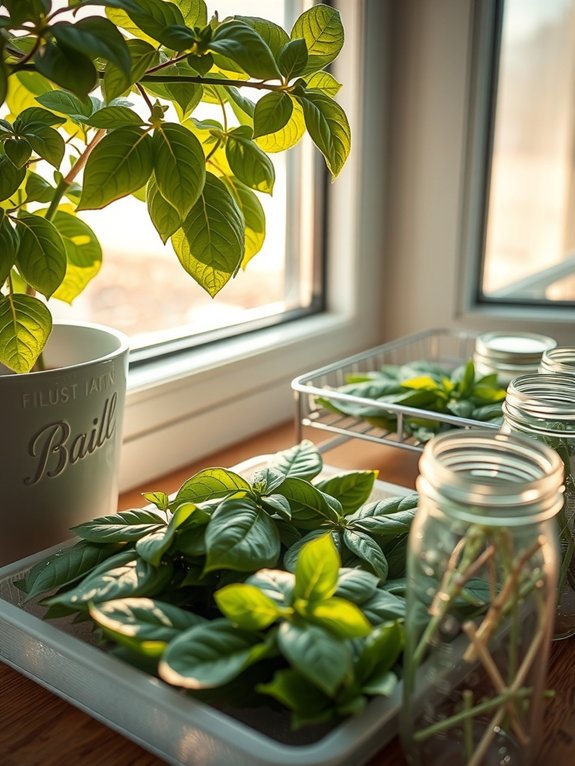
The basil you’ve cultivated with such care—whether indoors under grow lights or outdoors in full sun—deserves preservation that honors its vibrant flavor rather than diminishes it. Freezing offers your best option for long-term storage; chop leaves and freeze them in olive oil cubes that you’ll retrieve whenever you need that fresh basil intensity. Air drying, unfortunately, causes browning and flavor loss, making it less reliable than freezing for serious flavor preservation. If you’re making pesto, refrigerate it for about a week or freeze larger batches for months ahead. You might also infuse basil into vinegar for a different application. These methods—freezing particularly—ensure you’re capturing the essence of your harvest rather than watching its character fade away.