You’ll find success by positioning your hydrangeas where they receive morning sun with afternoon shade—a balance that protects blooms from scorching heat while ensuring adequate light. Test your soil’s composition, then amend it with organic matter and adjust pH to achieve your desired flower color: acidic for blue, alkaline for pink. Plant at crown level, water consistently with drip irrigation, and prune minimally before August to preserve next season’s buds. Winter mulch becomes your safeguard against freeze damage. Each element builds toward thriving plants, though mastering the nuances requires understanding how they interact.
Choose the Right Location for Hydrangeas
Where you plant your hydrangeas will largely determine whether they’ll flourish or merely survive, since these plants are somewhat particular about their light exposure and growing conditions. In northern zones, you’ll want full morning sun paired with dappled afternoon shade to maximize blooms. Southern gardeners should aim for 2–3 hours of morning sun with afternoon shade, protecting plants from intense heat that scorches flowers and stresses shallow roots.
Your location choice directly affects soil moisture levels too. Position hydrangeas where consistently moist, well-drained soil naturally occurs—avoiding areas with strong afternoon sun on hot days. Space mature plants so they barely touch, ensuring air circulation reduces disease. Wind protection matters equally; find spots sheltered from forceful gusts that can damage tender growth and increase water stress.
Test and Prepare Your Soil
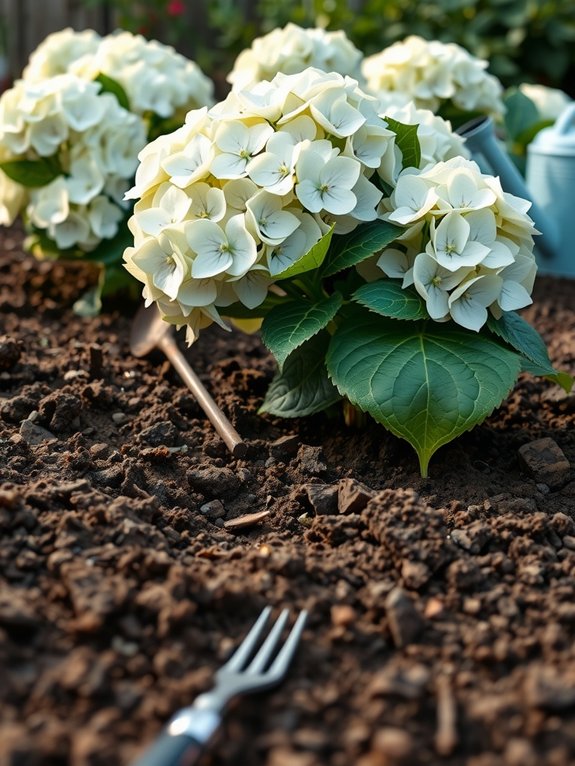
How’s your soil actually composed? You’ll want to run a jar test—layering sand, silt, and clay—to determine your soil type and whether you’ve got that ideal loam consistency hydrangeas prefer. Heavy clay soil needs gypsum amendments, roughly 5–15 pounds per 100 square feet, to enhance drainage and prevent waterlogging. Sandy soil, conversely, demands peat moss incorporation to boost moisture retention. Regardless of your soil type, aim for at least 5 percent organic matter by spreading 2–6 inches of compost or humus across your planting bed. These soil amendments create the foundation your hydrangeas need—not just surviving, but genuinely thriving. Once you’ve established this baseline, you’ll find managing pH and nutrient availability becomes considerably more straightforward.
Plant Hydrangeas at the Right Depth
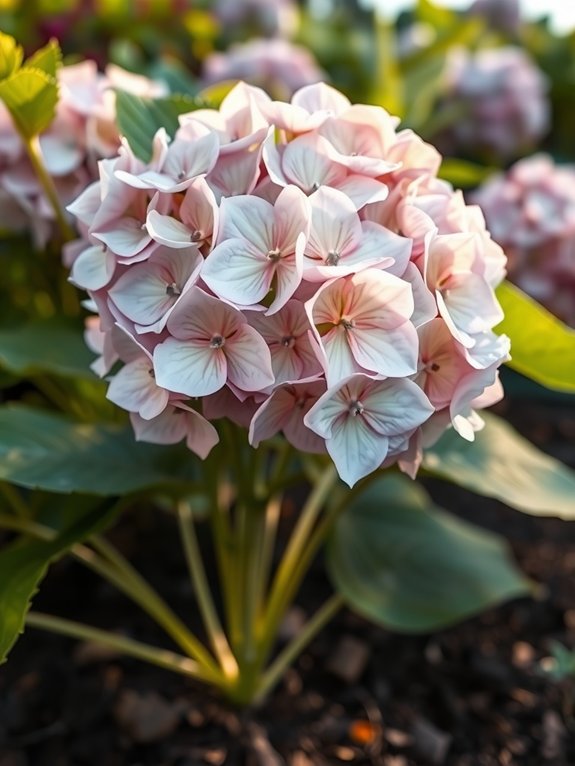
You’ll want to dig your planting hole slightly larger than the pot itself, mixing soil amendments directly into the excavated area so your hydrangea’s root zone benefits from improved drainage and fertility from the moment you set it in place. Position the plant so that its crown—that critical point where the stem meets the root system—sits level with the surrounding ground, neither sinking below the soil surface nor sitting proud of it, since settling or inadvertent burial will compromise establishment and long-term health. Before backfilling, loosen any tightly packed roots with gentle fingers to encourage outward growth, then refill the hole firmly, create a water dam around the perimeter, water thoroughly until drainage occurs, and refill once more to seal the root zone completely.
Crown Placement Essentials
Getting the crown—that critical juncture where the stem meets the roots—positioned correctly at planting time will determine whether your hydrangea establishes itself vigorously or struggles through its first season. Crown placement essentials guide successful establishment:
- Position the crown level with ground surface, neither buried nor elevated above soil
- Dig your planting hole slightly larger than the root ball, incorporating amendments for optimal soil contact
- Gently loosen tightly packed roots before settling the plant, encouraging outward growth
After positioning, firm soil around the base, create a water dam, and water thoroughly. The crown, that vulnerable transition zone connecting plant to earth, demands this precision because improper depth—whether smothered or exposed—compromises nutrient uptake and invites disease. Your attention here pays dividends throughout the plant’s life.
Hole Preparation Guidelines
With your planting site selected and the crown’s critical positioning in mind, the actual work of preparing the hole determines whether your hydrangea’s roots will spread outward into welcoming soil or circle uselessly in a cramped pocket.
Dig your planting hole slightly larger than the pot itself, creating space for roots to establish confidently. Before placing the hydrangea, amend the surrounding soil with organic matter to improve both drainage and nutrient availability—essential conditions that prevent waterlogging while supporting growth. Loosen any tightly packed roots gently; this encourages outward expansion rather than continued circling patterns.
After backfilling, pack soil firmly around the root zone, create a water dam to contain moisture, then water thoroughly to settle everything. Allow drainage before adding final soil adjustments, ensuring your hydrangea stands on stable, well-prepared ground.
Soil Level Alignment
How deeply you set that hydrangea in the ground—seemingly a small decision—shapes whether the plant thrives or merely survives the season ahead. The crown, that critical juncture where stems meet roots, demands precise placement for optimal establishment and long-term vigor.
Your planting depth determines whether roots access moisture and nutrients effectively or struggle against compacted soil. Consider these alignment essentials:
- Position the crown level with the soil surface, neither buried nor elevated
- Avoid burying the base, which invites rot and fungal issues
- Ensure the root ball sits flush with surrounding grade
When you’ve achieved proper soil level alignment, you’ve created conditions where roots expand naturally into amended earth, establishing the foundation for seasons of reliable blooms and resilient growth.
Water and Fertilize Hydrangeas on Schedule
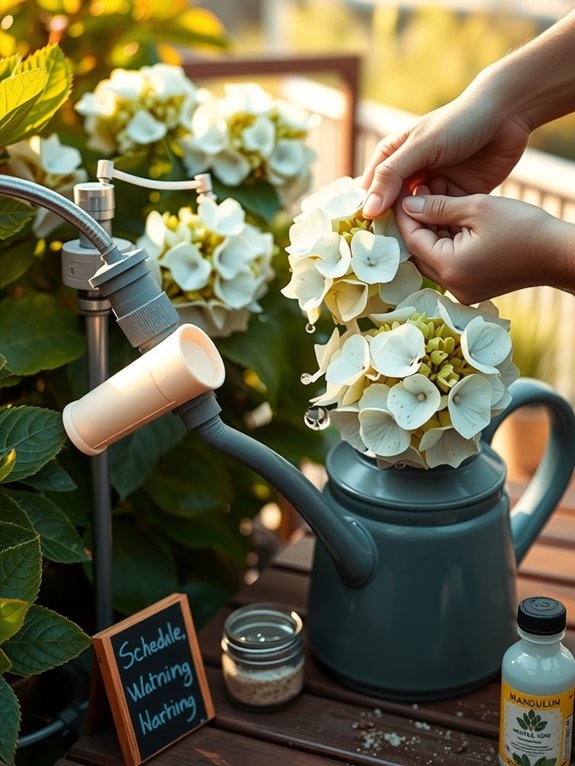
When does a hydrangea truly thrive? When you’ve mastered the rhythm of consistent watering and strategic fertilizing—two practices that work together to sustain vigorous blooms. You’ll want to establish a watering schedule that keeps soil consistently moist but never waterlogged, adjusting frequency based on season and location. Drip irrigation or soaker hoses deliver moisture directly to roots, minimizing waste while supporting your plant’s needs.
For fertilization, apply a slow-release fertilizer in spring through early summer, selecting formulations with elevated phosphorus content, which promotes flowering without spurring excessive foliage. Following package directions prevents over-fertilizing—a common mistake that paradoxically reduces bloom production. During winter months, maintain light watering to prevent desiccation, recognizing that moisture management remains critical even when growth slows.
Control Hydrangea Bloom Color
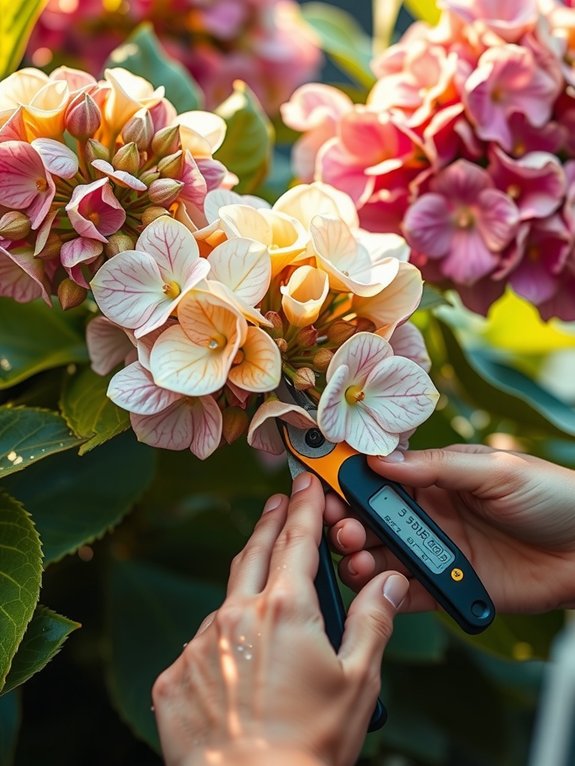
One of hydrangea’s most engaging qualities—and one you’ll want to master—is the plant’s remarkable ability to shift its bloom color based on soil chemistry, a trait that gives you genuine control over your garden’s palette. You’ll discover that soil pH directly determines whether your hydrangeas produce blue or pink flowers:
Hydrangeas shift bloom color based on soil pH—acidic soils produce blue flowers, alkaline soils produce pink blooms.
- Blue blooms emerge in acidic soils below pH 6.0; apply aluminum sulfate and incorporate composted oak leaves or pine needles
- Pink blooms develop in alkaline soils above pH 6.0; use wood ashes, lime, or high-phosphorus fertilizers to limit aluminum uptake
- Consistent color requires gradual pH adjustment and monitoring, preventing stress that compromises bloom quality
Avoid heavy pruning, since blooms appear on current and previous years’ growth. Minimal pruning protects your carefully cultivated color while preserving the plant’s natural structure.
Prune and Winterize Hydrangeas
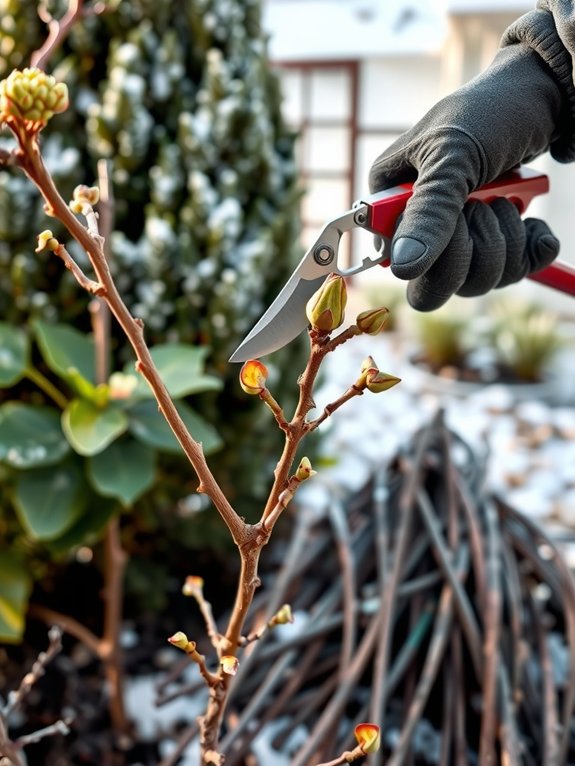
You’ll find that minimal pruning, done before August 1st to preserve next season’s flower buds, combined with strategic removal of only dead or damaged wood, protects your hydrangea’s bloom potential while maintaining its shape. As winter approaches, you can mound soil or mulch 12 inches around the base and apply heavy mulch coverage to shield the roots from freezing temperatures, then carefully uncover these protective layers once spring frost danger passes. These techniques—restrained pruning paired with deliberate winter insulation—demand patience and timing rather than aggressive intervention, a balance that rewards you with fuller blooms year after year.
Minimal Pruning Techniques
How tempting it is to grab the pruning shears and reshape a hydrangea into something tidier, yet this impulse, if indulged too freely, can cost you next year’s blooms—a hard lesson many gardeners learn only after the flowers fail to appear. Since hydrangeas flower on both old and new wood, your pruning strategy determines your bloom potential directly.
Focus your maintenance on these three priorities:
- Remove only dead, damaged, or crossing branches that compromise air circulation
- Avoid pruning after August 1st, which protects developing flower buds for next season
- Delay winter pruning until late winter or early spring after frost danger passes
Light, selective pruning preserves the plant’s natural form while maintaining its flowering capacity. You’ll find that restraint in the garden often yields the most rewarding results.
Winter Protection Methods
With your pruning work completed by August and your plant shaped for the season ahead, the focus shifts to preparing your hydrangea for the cold months when freezing temperatures, inconsistent moisture, and harsh winds threaten the flower buds you’ve carefully preserved. You’ll apply mulch around the plant’s base, mounding it approximately 12 inches high to insulate the roots effectively. This protective layer acts as winter care’s cornerstone, regulating soil temperature and retaining moisture when snow and rain prove unreliable. During winter, lightly water your hydrangea since natural precipitation won’t sustain it adequately. Come early spring, resist the urge to remove protective mulch until frost risk passes; premature uncovering exposes tender growth to damage. Maintaining this insulated root zone, paired with adequate air circulation, preserves both buds and plant vigor through winter’s challenges.