
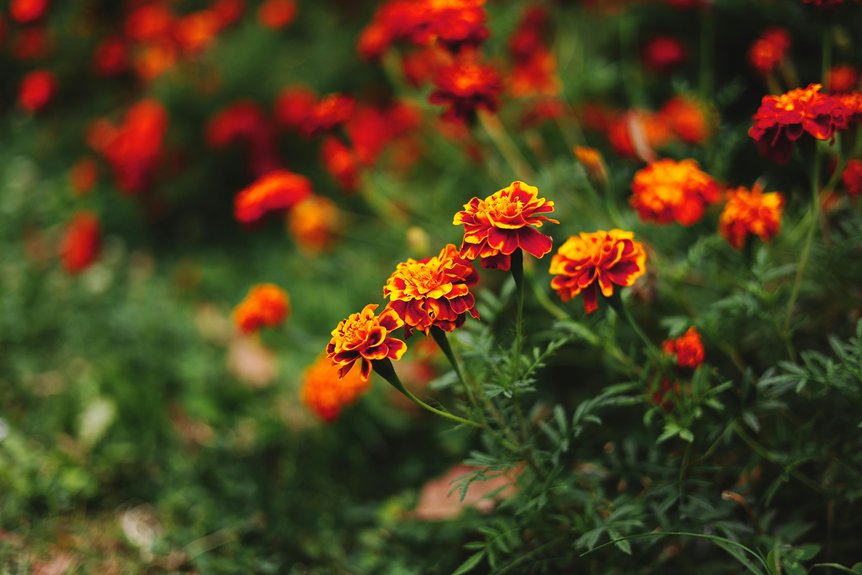
You’ll notice that where you place marigolds makes a real difference in how well they protect your garden. Start by positioning French marigolds eight to twelve inches apart along the edges of your beds and between vegetable rows. Their scent keeps flying insects away, and their roots work underground to suppress nematodes that damage plants.
Put container pots at the spots where you enter your garden, since that’s often where pests first move in. Mix marigolds into your vegetable rows to bring in pollinators like bees, which help your vegetables produce better. Place extra marigolds near your tomatoes and squash, since those plants tend to attract more pest problems than others.
If you’re growing in a greenhouse, try heat-tolerant varieties like Little Gem planted next to your peppers. Use drip irrigation to water them efficiently in that enclosed space. Each location you choose reinforces your pest management approach in its own way, so think about where your specific garden struggles most with insects and disease.
Build a Scent Fence Border Around Bed Edges
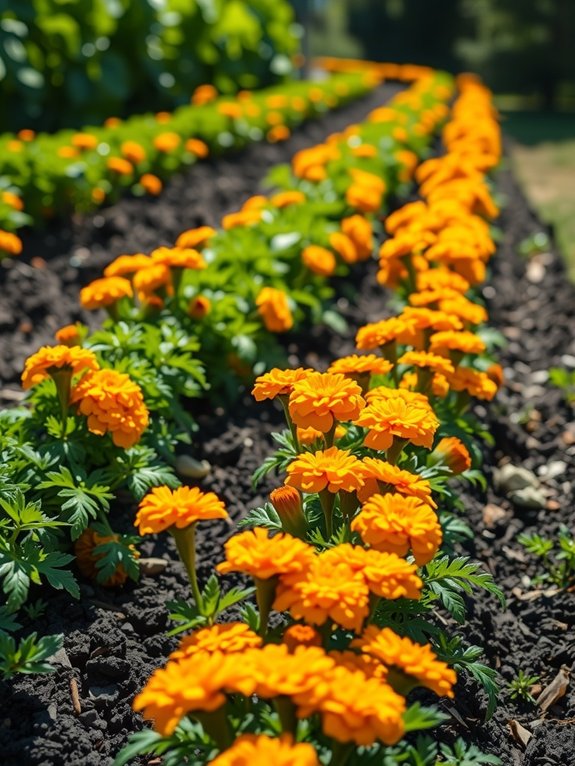
How many times have you watched aphids or whiteflies find your vegetables no matter what you try. A marigold border planted around your bed edges creates what gardeners call a scent fence—a continuous aromatic barrier that confuses and deters flying insects looking for their targets.
Space French marigolds roughly 8 to 12 inches apart to maintain an unbroken line. This consistent spacing matters because it keeps both the visual and scent barrier solid. Strong-scent varieties, particularly triploid hybrids, release steady repellent aromas throughout the season without fading.
Space French marigolds 8 to 12 inches apart for an unbroken scent barrier that deters pests all season.
Beyond stopping insects, this perimeter approach also discourages rabbits and larger animals from pressing against your beds. The same scent that bothers flying pests works on ground-level visitors too.
Keep deadheading regularly to maintain bloom density and ensure steady scent emission. You’re essentially establishing a functional defense system that operates quietly while your vegetables grow without constant pest pressure.
Interplant Marigolds to Target Nematodes
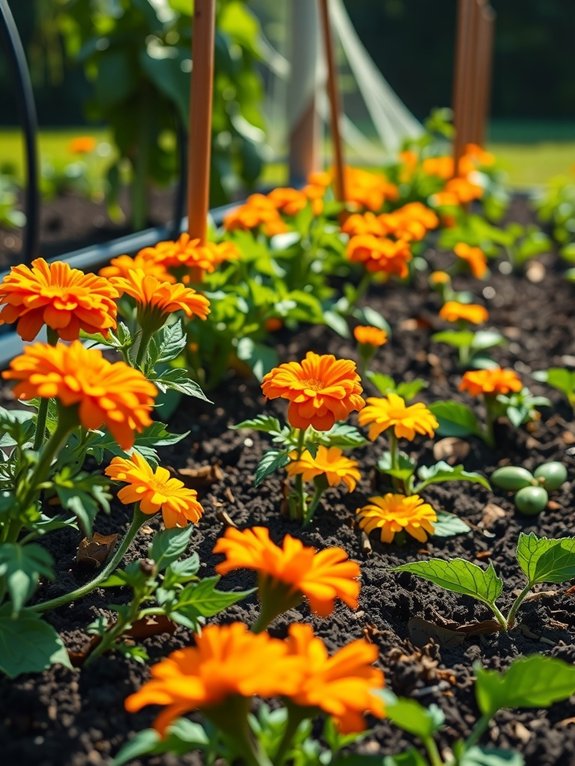
While a scent fence stops what you can see flying overhead, you’re also battling an invisible threat lurking in your soil—root-knot nematodes that’ll stunt your tomatoes, peppers, and squash from below. French marigolds, specifically triploid hybrids, release allelopathic compounds like alpha-terthienyl directly into the root zone, where the real battle happens.
Interplanting marigolds throughout your tomato and pepper beds positions this natural defense exactly where you need it most. Space them 16–18 inches from your crop roots to maximize root-secretion coverage. This creates a protective network that suppresses nematode populations before they establish serious infestations.
How to set up your interplanting strategy:
Position your marigolds in rows that run parallel to your vulnerable crops, or use interplanting blocks near squash, tomato, and pepper roots. Deadhead your marigolds regularly to sustain the strong nematode-killing compounds they produce. Choose long-blooming varieties so you maintain consistent protection throughout the growing season.
Line Vegetable Rows With Marigolds

When you line your vegetable rows with marigolds spaced 8 to 12 inches apart, you create a scent barrier that makes it harder for pests to find their way to your plants. French marigolds (Tagetes patula) work especially well along row edges and between different crops.
These marigolds do double duty in your garden. At ground level, they help protect against nematodes that damage plant roots. At the same time, they create natural pathways that draw beneficial insects like ladybugs and hoverflies to the exact spots where you need them.
To keep your marigolds doing their job, make sure they get at least 6 hours of direct sun each day. When they flower consistently, they maintain the chemical compounds that deter pests while continuing to attract the insects that help keep your garden in balance throughout the growing season.
Spacing and Row Organization
Spacing and Row Organization
Where you position marigolds—whether along row edges or threaded between plantings—affects both their pest-deterrence function and your garden’s layout. Thoughtful spacing and row organization turn marigolds into strategic pest-control partners rather than just decoration.
Space marigolds 8 to 12 inches apart along rows. This distance gives them enough airflow and light while keeping their pest-repellent effects strong. When you interplant marigolds among vegetables, use one marigold for every one or two plants. This spreads their scent and nematode-deterring properties evenly across your beds.
Plant marigolds densely along row ends to create clear floral boundaries. These visual markers help you identify where crops are and protect against pests that approach from pathways. If you’re growing tomatoes or peppers, position marigolds at their root zones. This placement targets nematodes while still supporting the pollinators your vegetables need. A measured approach like this strengthens your garden without crowding individual plants.
Pest Deterrent Barriers
Pest Deterrent Barriers
How well can your garden defend itself with the right setup? You can build a pest deterrent barrier by planting French marigolds along your vegetable rows—a companion planting method that works because the flowers release a scent that flying insects want to avoid.
Space your marigolds eight to twelve inches apart along the edges of each row. This spacing gives you enough coverage to protect your vegetables without crowding them. French marigolds also release compounds from their roots that kill nematodes in the soil, which means they’re especially helpful for protecting tomatoes and peppers.
Position the marigolds at the ends of your rows and around your garden’s perimeter. This placement lets them catch problems like tomato hornworms, cabbage moths, and Mexican bean beetles before those pests reach your actual crops. Pair this with drip irrigation to keep the soil well-drained and your marigold defenders in good shape throughout the season.
Pollinator Access Benefits
While marigolds excel at repelling unwanted insects, they’re equally skilled at inviting beneficial ones your vegetables need—bees and butterflies that boost your fruit set and seed production in ways pest barriers alone can’t match. By positioning these flowers strategically, you create a pollinator corridor that maintains steady nectar access throughout the season.
Here’s how to make it work:
- Space French marigolds 8–12 inches apart along garden borders to establish continuous scent barriers
- Intersperse marigolds every one or two vegetables within rows, building a nectar pathway that keeps pollinators engaged
- Deadhead spent blooms consistently to maintain flower abundance and steady pollinator visitation
- Plant compact varieties like Tagetes patula for their frequent flowering and accessible form
This approach comes from observation and practice. When you understand how pollinators move through your garden, you can design your space to keep them engaged and working for you.
Shade Soil With Marigolds Under Tall Crops
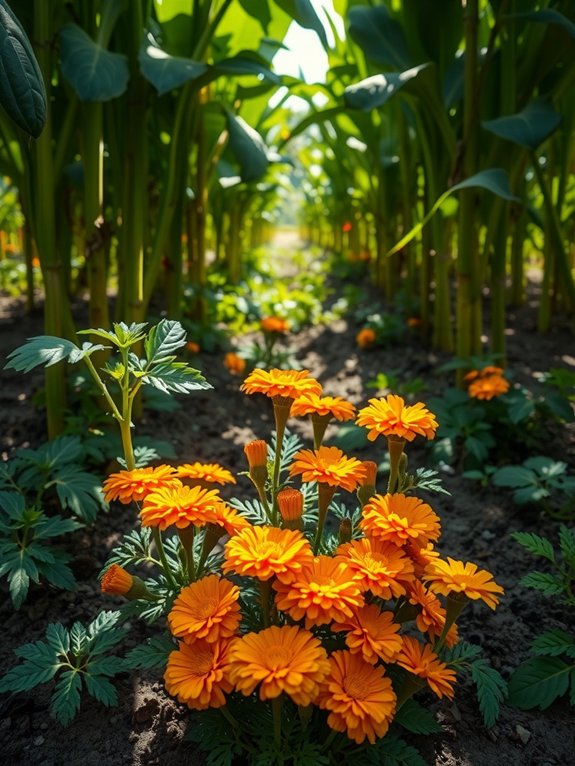
You’ve probably noticed that the soil beneath tall crops—tomatoes, pole beans, corn—tends to dry out quickly and invite weeds to establish themselves in the open space. That’s where compact French marigolds become genuinely useful as a living mulch. Plant them at 8–12 inch spacing below your towering vegetables to create a dense ground cover that shades the soil, stabilizes temperature, and reduces moisture loss while simultaneously suppressing weeds and deterring pests without competing for light.
Compact French marigolds create a dense ground cover beneath tall crops, shading soil, suppressing weeds, and deterring pests without competing for light.
This approach transforms underutilized garden space into productive territory. Here’s what you gain:
Soil shading reduces evaporation, which means less frequent watering and more stable moisture levels for your main crops’ root zones.
Dense coverage from the marigolds prevents most weeds from establishing themselves, cutting down on your weeding time.
Air circulation around the base of your tall crops helps prevent slug problems that often develop in humid, shaded areas.
Vertical space use lets you maximize every square foot of your garden while maintaining pest deterrence without adding competing plants that would fight your vegetables for resources.
The marigolds essentially do multiple jobs at once—protecting your soil, regulating temperature, and keeping pests in check while you focus on your main crops.
Station Marigold Pots at Garden Entry Points
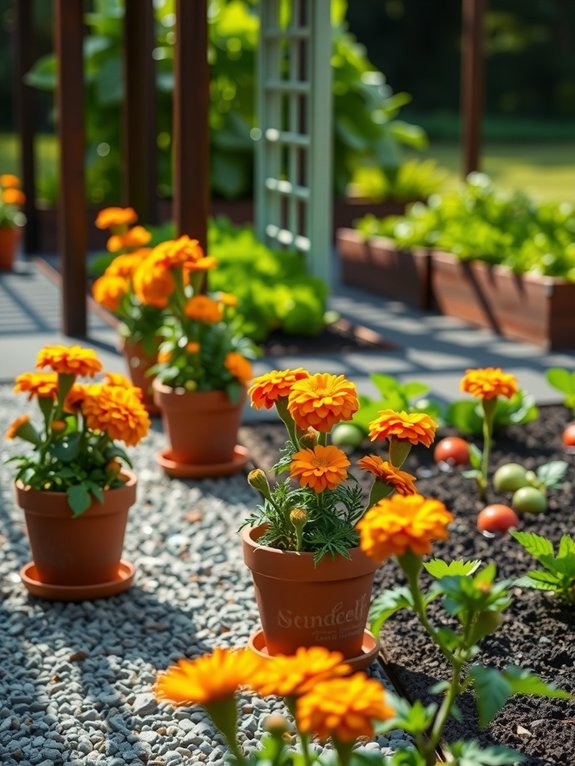
Station Marigold Pots at Garden Entry Points
Your garden’s entry points—gates, path intersections, and boundary transitions—are where you can set up your first line of pest defense. Marigolds in containers work well here because their strong scent creates a deterrent barrier before insects and small animals reach your productive beds.
To get the most out of container planting at these spots, position compact French or signet marigold pots in dense, staggered lines spaced 8 to 12 inches apart. This dense arrangement maintains a continuous scent presence that disrupts how pests locate your garden.
Make sure each pot gets at least 6 hours of direct sun daily. Use soil that drains well, and water evenly without letting the soil stay soggy. Adjust how often you water based on rainfall and temperature in your area.
This setup works like a living scent fence. It lets air move through while also attracting beneficial insects that support your garden’s ecosystem.
Cluster Marigolds Where Pest Pressure Peaks
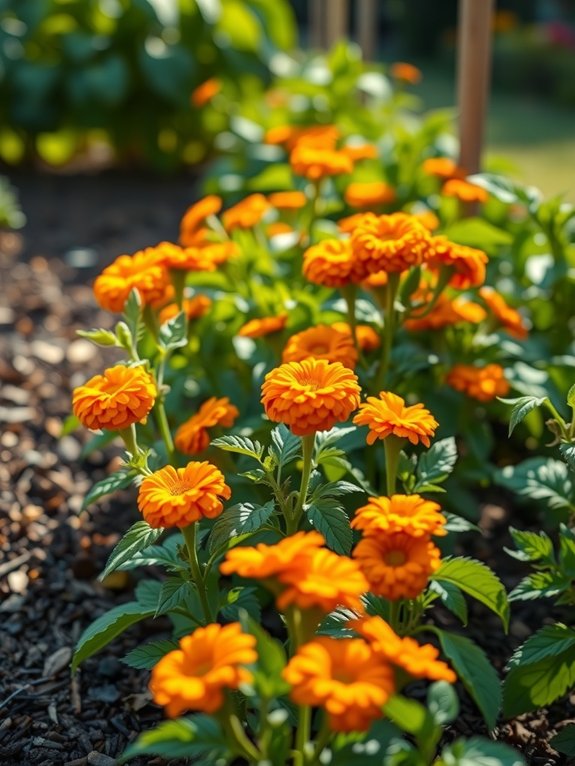
When you position marigolds around your most vulnerable crops instead of spreading them thinly across the garden, you’ll actually see results in pest control. The key is clustering them densely at the edges of vegetable beds and row ends, where pests tend to concentrate.
Near tomatoes, marigolds use limonene and root exudates to push back aphids, whiteflies, and hornworms. Around beans and squash, they work as sacrificial patches that draw pests away from what you really want to protect. Along brassica borders, they help with cabbage moths and flea beetles, though you should keep an eye out for slugs attracted to thick plantings.
Space small flowering groups eight to twelve inches apart in your garden hotspots—corners, trellis bases, and other problem areas. This setup maximizes beneficial insects and predator activity right where you need them most. Concentrating marigolds this way gives you better pest suppression than scattering them randomly throughout your space.
Pair Marigolds With Root Vegetables in Raised Beds
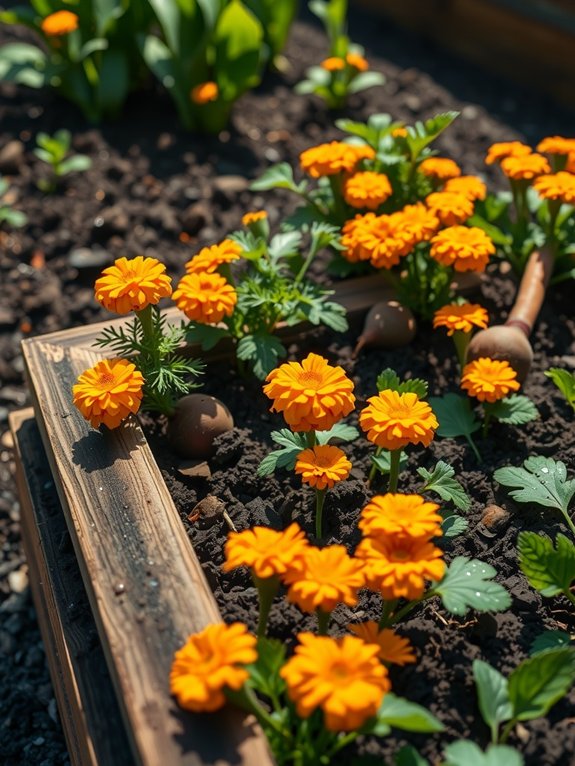
Root vegetables—carrots, beets, and potatoes especially—deal with a persistent underground problem that’s tough to spot until damage shows up: parasitic nematodes that feed on roots and slow your plants’ growth. French marigolds offer real companion planting protection through allelopathic root exudates, particularly alpha-terthienyl, which suppress nematode populations in raised beds.
You can position compact marigold varieties strategically around your root vegetables to get the most out of this relationship. Space plants 8–12 inches apart along bed edges to create continuous pest deterrence without crowding the shallow roots of your vegetables. You can also intersperse marigolds throughout rows for maximum nematode suppression across the growing zone.
Dwarf French or signet marigold types work best because they minimize competition while still delivering reliable protection. Use them as living mulch at bed perimeters, where they simultaneously shade soil and retain moisture. This approach turns marigolds into active defenders rather than decorative additions—a practical strategy that experienced growers recognize as foundational to sustainable raised-bed success.
Deploy Trap-Crop Marigolds Away From Vegetables
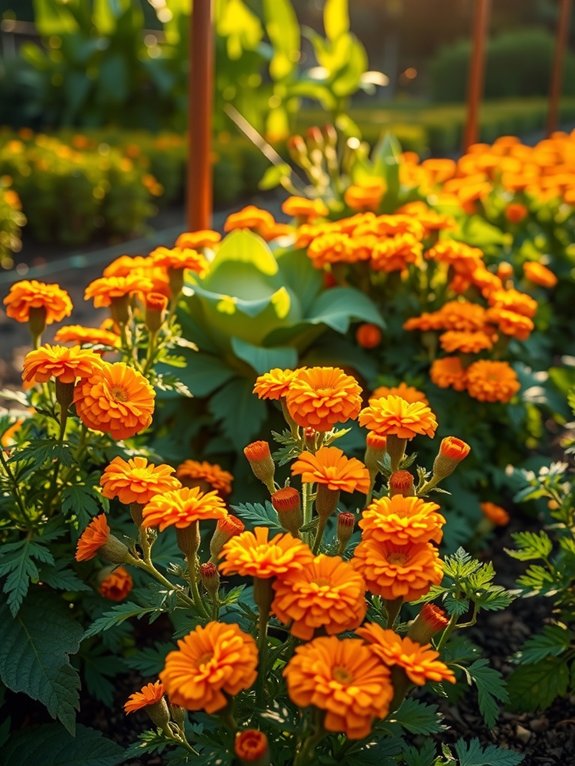
When you’ve invested months nurturing your vegetable beds, watching Mexican bean beetles or caterpillars descend on your crops feels frustrating—but you’ve likely overlooked one of your best defenses: sacrificial marigolds planted deliberately at your garden’s perimeter.
Deploy trap-crop marigolds, particularly French varieties or triploid hybrids, several feet away from your vulnerable vegetables. This distance creates pest-attraction zones that intercept insects before they reach your edibles. Position these plants along known pest hotspots and outer boundaries, where their dense scent and root exudates form a protective barrier.
Keep an eye on your marigolds and replace severely damaged specimens regularly. This approach maintains ongoing pest pressure on the marigolds rather than your vegetable garden, turning perimeter planting into one of your garden’s most practical tools.
Dot Small Pots Around Compact Garden Spaces
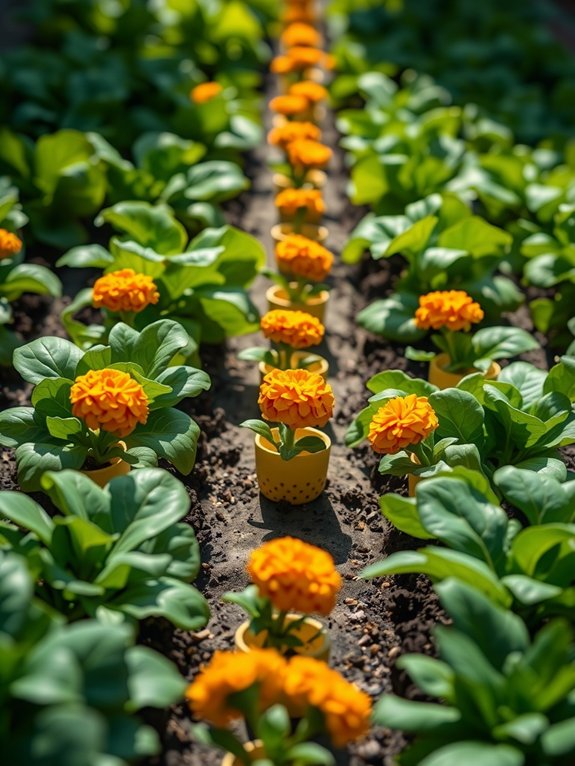
When space gets tight and you need to balance pest control with planting density, containerized marigolds give you a solid option. You’ll arrange small pots around your garden’s edges to create a scented barrier that protects your vegetables without eating up valuable bed space.
French marigolds work especially well because their strong smell repels aphids and whiteflies while drawing in helpful insects that boost your garden’s natural defenses. Six- to eight-inch pots scattered throughout your space will get the six hours of direct sunlight they need for steady blooming. Compact varieties like signet or Little Gem take up minimal room, so they won’t crowd out your vegetables while still giving you those interplanting benefits.
Here’s how to set this up:
- Place pots at the ends of rows where they’re most useful
- Space them evenly between closely planted vegetables
- Choose French varieties over other types for better pest control
- Make sure each pot gets at least six hours of direct sun daily
This strategy converts your garden’s edges into working boundaries that actually serve a purpose.
Grow Marigolds in Your Greenhouse With Heat-Loving Crops
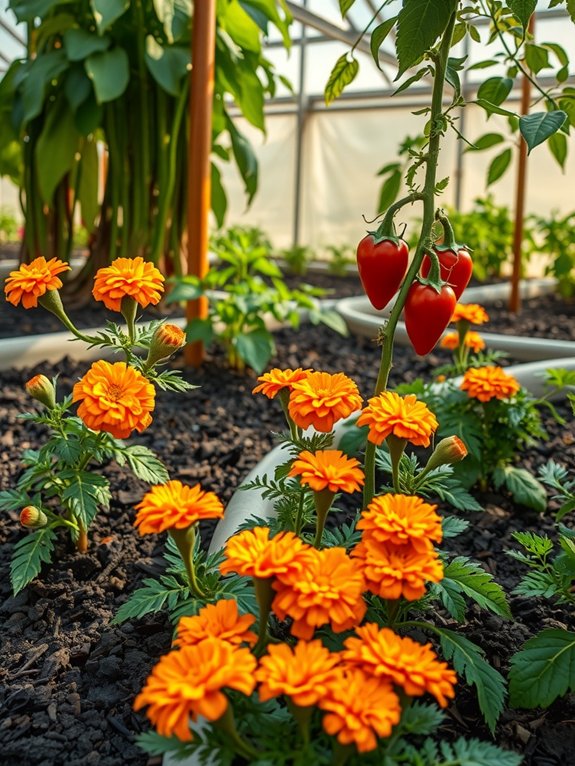
You’ll find that marigolds—particularly Little Gem and Orange Gem varieties—do well alongside heat-loving crops like tomatoes and peppers in your greenhouse. These plants actively deter nematodes and whiteflies while handling the elevated temperatures that would stress less hardy companion plants.
Position your marigolds along bed edges or between your vegetables to maximize pest control without blocking sunlight. You can also place them as border plants near entry doors where pests typically land first. This strategy traps insects away from your most valuable crops.
Your marigolds need the same consistent drip irrigation as your tomatoes and peppers. However, you’ll want to avoid waterlogging since all three prefer well-drained soil and good air circulation. This combination prevents the fungal issues that greenhouse humidity can create.
Greenhouse Pest Protection Benefits
Did you know that the warm, sheltered conditions your tomatoes and chiles need are also ideal for marigolds like Little Gem and Orange Gem varieties? These plants work as natural pest defenders when you grow them alongside your vegetables. By positioning them together, you’re building a system where different plants support each other and tackle pest problems in practical ways.
Marigolds protect your greenhouse in several ways:
- Root parasites get suppressed through compounds that marigold roots release into the soil, blocking nematodes from attacking your vegetables
- Whiteflies get pushed away by the plants’ distinctive scent, which these pests find off-putting
- Thrips and hornworms see reduced populations when marigolds are present, lowering overall insect damage
You’ll get the best results by deadheading spent flowers regularly and making sure air moves freely around your plants. Good spacing prevents the greenhouse from getting overcrowded and keeps those protective effects working at their strongest.
This approach isn’t just decoration. Experienced growers use companion planting with marigolds as a core part of their greenhouse management because it actually works.
Ideal Temperature And Conditions
| Condition | Requirement |
|---|---|
| Daytime Temperature | 70–85°F (21–29°C) |
| Nighttime Temperature | Above 50°F (10°C) |
| Light Duration | 6+ hours direct light |
| Soil Drainage | Well-drained, organically rich loam |
You’ll want to pair these temperature ranges with at least six hours of direct light—or supplemental lighting if you’re working indoors. This combination sets up your companion planting strategy for success.
When it comes to watering, drip irrigation is your best bet. It keeps your soil evenly moist without spraying water on the leaves, which can invite fungal problems in warm greenhouse conditions. Overhead watering creates the kind of moisture that fungi love, so skip that approach.
For the strongest results, plant heat-tolerant varieties like Little Gem or Orange Gem. These selections naturally deter more pests, which matters when they’re growing alongside your heat-loving crops. They handle the warmer conditions you’re providing and give you better protection without extra work.
Pairing With Tomatoes And Peppers
Pairing With Tomatoes And Peppers
Why separate marigolds from the crops that benefit most from their presence when they’re designed to do well in the same warm, bright greenhouse environment? Through companion planting, you’ll find that French and Signet marigolds work well alongside tomatoes and peppers, creating a relationship that strengthens your entire growing system.
These pungent cultivars—Little Gem and Orange Gem among them—work on multiple fronts. They deter nematodes underground while attracting beneficial insects that control aphids and thrips. How you position them matters quite a bit.
Getting the placement right:
- Position marigolds around bed edges to establish a continuous scent barrier
- Interplant in alternating rows for maximum pest deterrence coverage
- Maintain 16–18 inches spacing to prevent competition and ensure adequate air circulation
Combining all three crops gives you layered protection against tomato hornworms and underground threats. This approach transforms your greenhouse into an integrated pest management system where each plant reinforces the others’ natural defenses.