

You’ll want to nail a few basics to keep your snake plant in good shape. Position it in bright, indirect light and water only when the soil dries completely—that’s roughly every two weeks, though you’ll water less often during winter months.
The soil matters too: use well-draining cactus soil mixed with perlite, and plant it in a terracotta pot with drainage holes. This setup prevents root rot, which is the main reason snake plants fail.
Temperature-wise, keep things above 10°C, and dial back on fertilizer since over-feeding does more harm than good. You should plan to stick with this routine for a solid, long-lasting plant.
Yellowing leaves and pest problems need their own attention, though, so those issues deserve a closer look if they pop up on your plant.
Light and Temperature: Creating the Right Environment
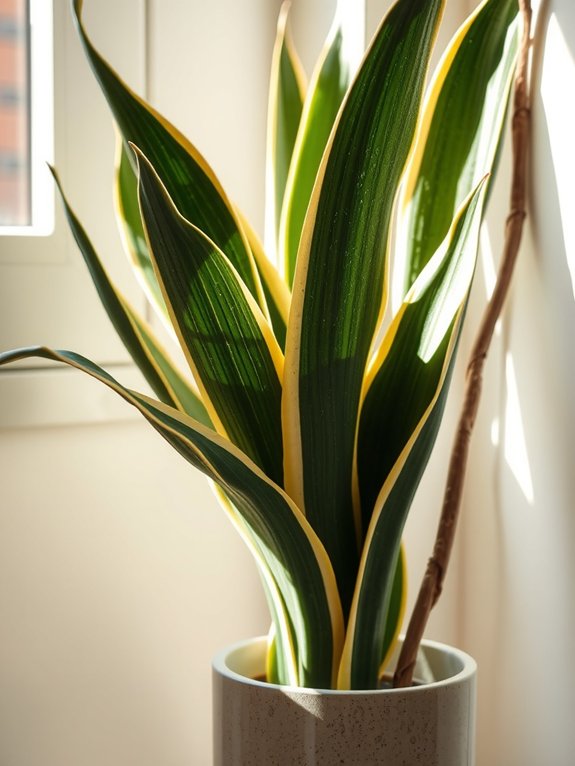
How much light does your snake plant actually need? These resilient plants do best in bright, indirect light—the kind that filters through a sheer curtain or reaches a north-facing window. If your space doesn’t get much natural light, your snake plant will still survive, though you’ll notice its growth will slow down considerably. This is a real trade-off worth considering for your particular situation.
Temperature is just as important as light. You’ll want to keep your plant above 10°C and protect it from cold drafts that come through windows and doors during winter. Consistent warmth matters more than fluctuation; steady conditions support steady growth. When you get both adequate light and stable temperature working together, your snake plant won’t just barely make it—it’ll develop at a normal pace and become the low-maintenance companion it’s designed to be.
Watering and Soil: The Foundation of Snake Plant Care
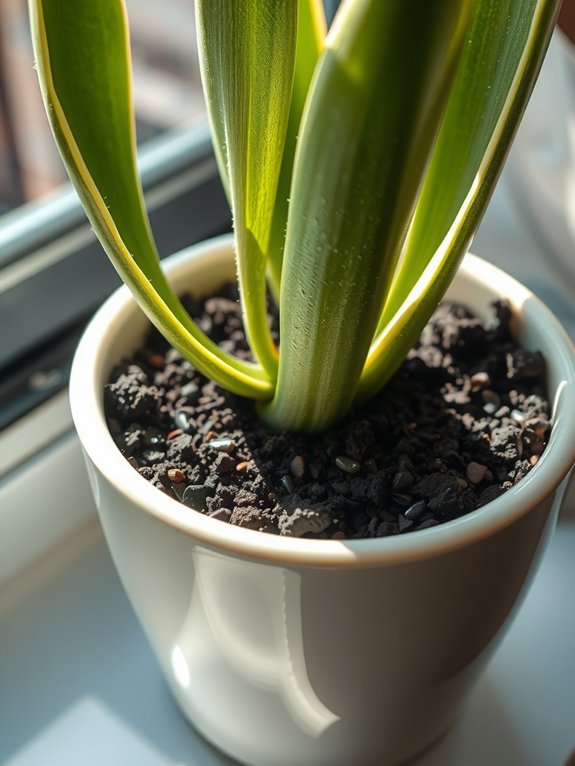
Proper watering and soil composition are the foundation of snake plant care. These factors determine whether your plant survives or develops root rot, which you’ll want to prevent.
Start with the right soil. Use a well-draining cactus or succulent mix and add sand and perlite to improve aeration. Your snake plant needs this kind of loose, quick-draining soil to stay healthy.
For watering, establish a schedule of roughly every two weeks, but adjust this based on the season and your plant’s size. Water less frequently during winter months, and reduce watering for larger specimens that need less frequent hydration.
The trickiest part is holding back. You’ll likely want to water more often than your snake plant actually needs. Instead, let the soil dry out completely between waterings. When you do water, apply water at soil level only—avoid getting the leaves wet. Use room-temperature water so you don’t shock the roots with cold water.
Soil Drainage and Composition
The difference between a snake plant that stays healthy and one that develops root rot comes down to what you put it in. Your soil choice and pot setup matter just as much as your watering habits.
Skip outdoor soil and play sand completely. Both compact over time and create conditions where pests can move in and damage your plant. Instead, buy a cactus or succulent mix made for drainage. Mix in some perlite to open up the soil even more so water moves through it faster. Then plant it in a terracotta pot with drainage holes at the bottom. Terracotta lets water evaporate from the sides of the pot, which keeps the soil from staying too wet.
| Component | Purpose | Why It Matters |
|---|---|---|
| Cactus mix | Base soil | Drains quickly |
| Perlite | Amendment | Increases aeration |
| Terracotta | Container | Evaporates moisture |
| Drainage holes | System | Prevents root rot |
The combination of loose, fast-draining soil in a breathable pot with proper drainage holes stops water from pooling around the roots. That’s your best defense against the rot that kills most snake plants indoors.
Watering Frequency and Schedule
Watering Frequency and Schedule
Your watering schedule is where snake plants either make it or fall apart. The key is simple: water only when the soil dries completely. This typically means watering every two weeks during the growing season, but you’ll need to stretch that timeline in winter when the plant needs less moisture.
The biggest mistake you can make is watering too often. Root rot is the number one killer of snake plants, and it happens because people mean well but give their plants too much water. You don’t need to drench the soil—just moisten it lightly at soil level, and only when it’s fully dry.
Larger plants might need slightly more water than smaller ones, but don’t use that as an excuse to water more frequently. The patience part matters. You have to actually wait until the soil is completely dry before you water again. This discipline is what separates people who succeed with snake plants from those who constantly battle soggy roots.
Use room-temperature water when you do water. Aged tap water or rainwater works best since it has fewer salts that can build up in your soil over time. If you’re using tap water straight from the faucet, letting it sit for a day or two helps those salts settle.
Preventing Root Rot Issues
Root rot is the leading cause of snake plant death. Once you see a plant turn to mushy decay, you understand why prevention matters more than any other care principle. You’ll prevent root rot by mastering three interconnected strategies: watering restraint, soil composition, and container selection.
| Prevention Strategy | Your Action |
|---|---|
| Watering | Allow soil to dry completely between waterings |
| Frequency | Water every two weeks; extend intervals in winter |
| Soil Type | Use well-draining cactus/succulent mix with perlite |
| Container Material | Choose terracotta pots for moisture evaporation |
| Drainage | Ensure pots have drainage holes |
Overwatering is the primary culprit. You might think frequent watering shows care, but it actually suffocates roots in waterlogged conditions that invite fungal decay. The key is understanding that snake plants prefer drought over moisture. When you let soil dry completely between waterings, you’re creating an environment where roots can breathe and stay healthy rather than rot away.
Your container choice directly affects how quickly water drains. Terracotta allows excess moisture to evaporate through its porous walls, while plastic traps water inside. Make sure your pot has drainage holes—this isn’t optional. Paired with a well-draining cactus or succulent mix that includes perlite, proper drainage becomes your first line of defense against the conditions that lead to root rot.
Choosing the Right Pot and When to Repot
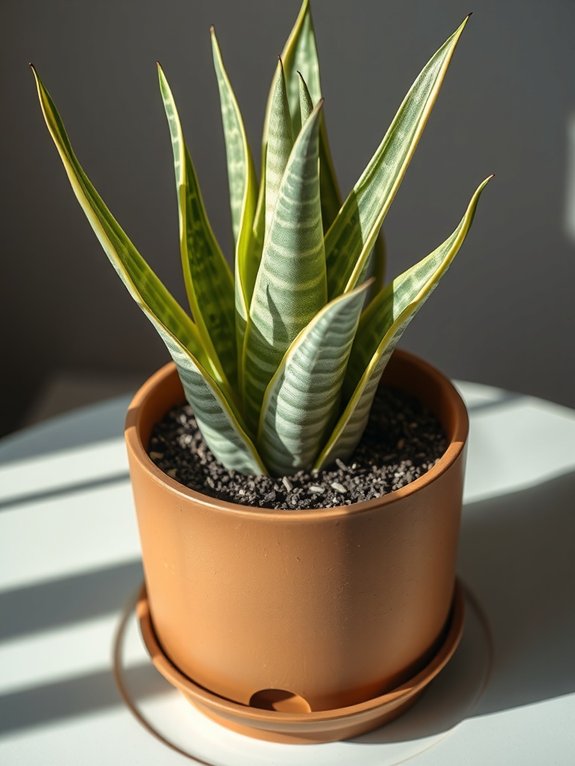
Choosing the Right Pot and When to Repot
The container you pick makes a real difference in how well your snake plant does. Terracotta pots with drainage holes are your best bet because they let moisture evaporate and keep water from sitting around your roots. Root rot happens when soil stays too wet for too long, so good drainage matters more than almost anything else. Use cactus or succulent mix and mix in some perlite to help water drain through faster.
Wait to repot until you see roots poking out of the drainage holes or your plant clearly needs more space. When you do repot, go up about two inches in diameter. Bigger pots hold onto moisture longer, which can lead to rot. If you have a tall variety, pick a pot that’s just slightly larger to keep it stable so it won’t tip over as your plant grows.
Feeding Your Plant: When, How Often, and Why It Matters
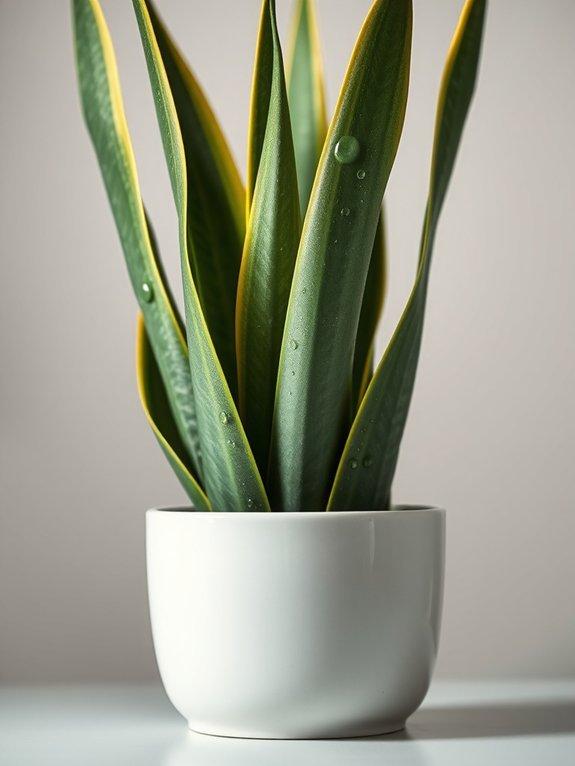
Feeding Your Plant: When, How Often, and Why It Matters
Snake plants don’t need fertilizer to survive, but adding a modest feeding schedule during the growing season can push your plant toward noticeably faster growth. Here’s what works: apply half-strength general plant fertilizer at the start of spring and again in mid-summer, then water right after to spread the nutrients through your soil.
You don’t have to fertilize if you don’t want to—your snake plant will be fine either way. That said, if you stick with this simple routine, you’ll likely see more vigorous new growth than you would otherwise. Just keep in mind that fertilizer isn’t a fix for other problems. It can’t make up for overwatering, underwatering, or poor drainage.
The real foundation of snake plant care is getting the soil right. Use well-draining cactus or succulent soil, which prevents water from sitting around the roots. When you combine solid soil conditions with occasional fertilizing, you end up with a healthy plant that lasts for years.
Fixing Yellow Leaves, Pests, and Root Rot
Yellow leaves on your snake plant are telling you something has changed in its environment. It could be too much water sitting in the soil, pests you haven’t noticed yet, or roots starting to rot underneath. Here’s how to figure out what’s going on.
Start by checking your soil. Stick your finger in and see if it feels soggy. If it does, your plant is sitting in too much moisture. Repot it using a well-draining cactus mix and carefully remove any roots that look mushy or dark—those are the ones that are breaking down. Once you’ve fixed the soil situation, you can prevent it from happening again by using terracotta pots, letting the soil dry out completely between waterings, and not over-fertilizing.
While you’re inspecting, flip some leaves over and look at the undersides. Spider mites and mealybugs like to hide there. If you spot any tiny bugs or sticky residue, treat the plant with neem oil according to the package directions.
For leaves that are already yellow and not coming back, trim them off at the base. This redirects the plant’s energy toward producing new, healthy leaves instead of trying to save the damaged ones.
Growing More Plants From One Leaf
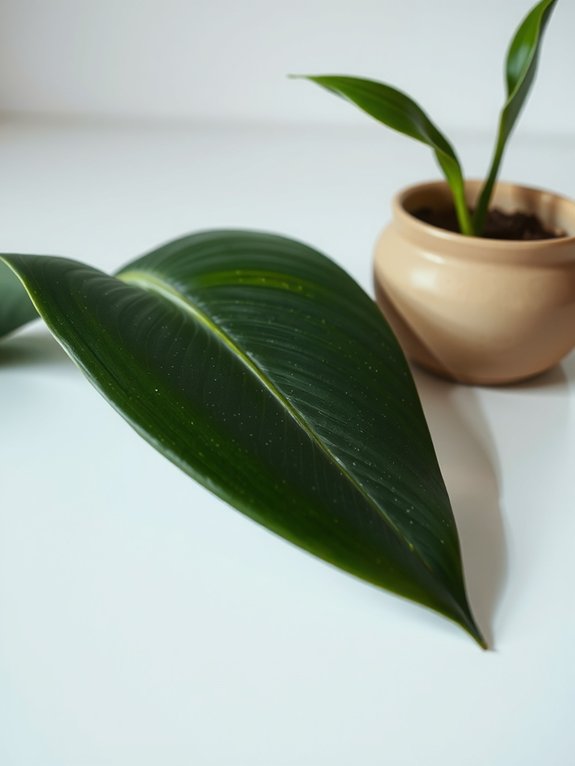
You can propagate snake plants from a single leaf using either water or soil. Both methods work because snake plants can regenerate from leaf tissue.
With the water method, place your freshly cut leaf in bright light and change the water whenever it gets cloudy. You’ll see roots develop in 1–2 inches over about a month or two. Once they reach that size, move the leaf to well-draining soil.
The soil approach skips the water stage—you just push the cut leaf directly into damp cactus or succulent soil and keep it consistently moist. This method takes longer and you won’t see progress as clearly, but you avoid the transplanting step. Either way works fine if you’re patient enough to wait several weeks or even months for visible growth.
Leaf Cutting Propagation Method
How efficiently can a single leaf transform into an entirely new snake plant? Leaf cutting propagation is slower than division, but it’s a solid way to expand your collection if you’re willing to put in the time.
Start by picking a healthy leaf from your snake plant and cutting it cleanly with sterilized scissors. To speed things up a bit, make a “V” shaped cut at the bottom of the leaf. This increases the rooting surface area, which helps roots develop faster.
You have two options for propagation. You can place the leaf in water and change it regularly until roots reach one to two inches long. Or you can stick it directly into damp, well-draining cactus soil. Either way, keep the moisture consistent but avoid waterlogging, which will rot your leaf before it can root.
The waiting period requires patience. Roots typically take several weeks to establish, and you’ll need to monitor progress gently without constantly disturbing the leaf. Once you see solid root development, transplant your new plant into a pot with drainage holes. From there, standard snake plant care takes over as the plant begins putting out new growth.
Water Rooting and Potting
Water rooting lets you watch your leaf’s transformation without any guessing—everything happens right in front of you in a glass vase. You’ll place your freshly washed leaf in water positioned about 4 inches from the bottom and then follow these steps to keep things moving forward:
- Change the water whenever it turns cloudy, since fresh water encourages better root development
- Keep your setup in bright light consistently
- Check on it regularly until roots reach 1–2 inches in length
Once your roots are established, transplant the leaf into a cactus or houseplant mix in a larger nursery pot. This switch from water to soil completes your propagation work and gets your new plant ready for regular growth patterns.