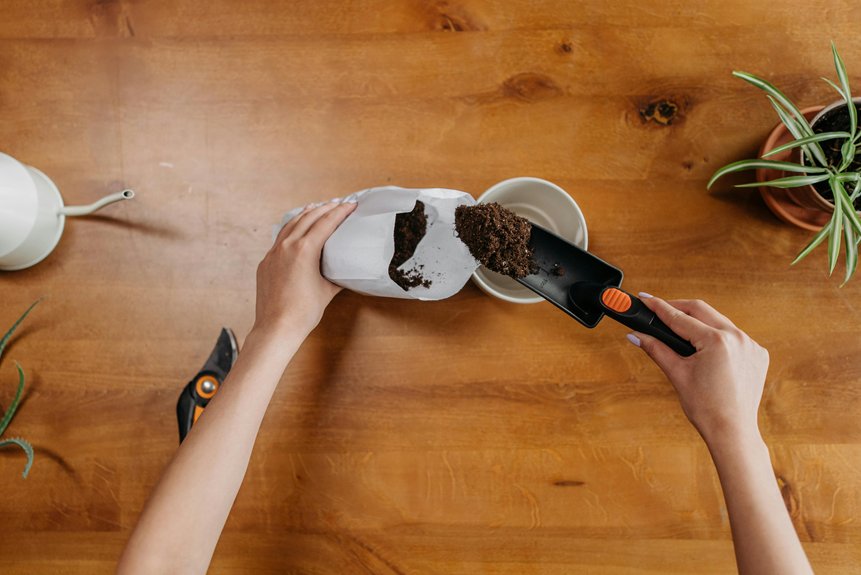
When you’re picking potting soil for your houseplants, you need something that drains well while still holding enough moisture. Regular garden soil doesn’t cut it in containers because it compacts too easily and traps water around the roots.
Fox Farm’s Happy Frog and Ocean Forest are solid choices for most houseplants. Both contain beneficial microbes and balanced nutrients that work across different plant types. If you’re growing orchids or succulents, though, you’ll want specialized mixes instead. Orchid bark and succulent blends include extra perlite or pumice to keep roots from sitting in water and rotting.
If you’re watching your budget, you can mix coconut coir with perlite yourself and get good results. The key is thinking about where your plant originally came from. A plant that evolved in tropical rainforests has completely different soil needs than one from a desert. That’s why no single potting mix works perfectly for every situation.
Best Potting Soil for Houseplants: Drainage and Aeration Basics
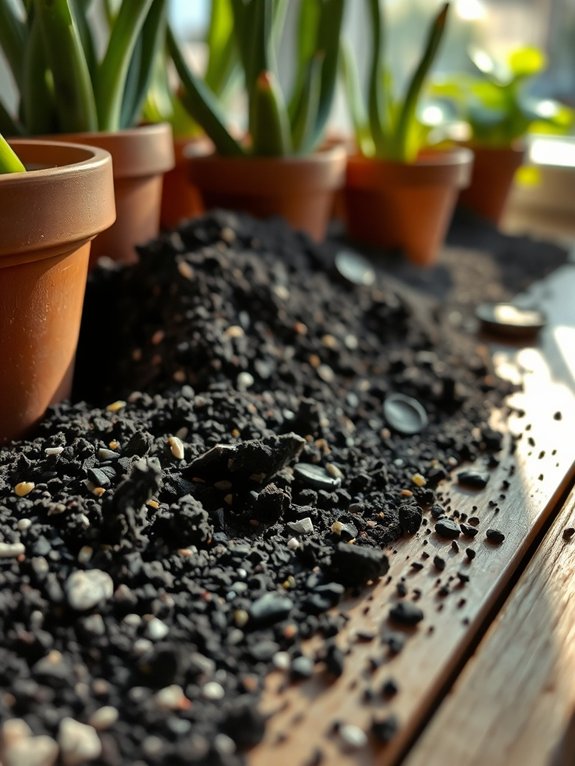
Why do so many houseplants struggle indoors when they’d do fine in a garden bed? The answer often lies beneath the surface: poor drainage and aeration. You’ve probably noticed that standard garden soil—dense and moisture-retentive—suffocates roots in containers.
What you need instead is a soilless potting mix. These formulations combine perlite, vermiculite, bark fines, and horticultural charcoal to prioritize airflow while preventing waterlogging. The components work together to create pathways for oxygen while maintaining the right amount of moisture retention.
Consider upgrading to peat-free options using coconut coir paired with perlite or pumice. These alternatives offer sustainability without sacrificing performance. For succulents and cacti, incorporate extra sand or pumice into your mix to improve drainage even more. This deliberate approach to soil composition makes a real difference in your indoor gardening results, allowing roots to get the oxygen they need to develop properly.
Fox Farm Potting Soil Blends: Nutrients for Thriving Plants
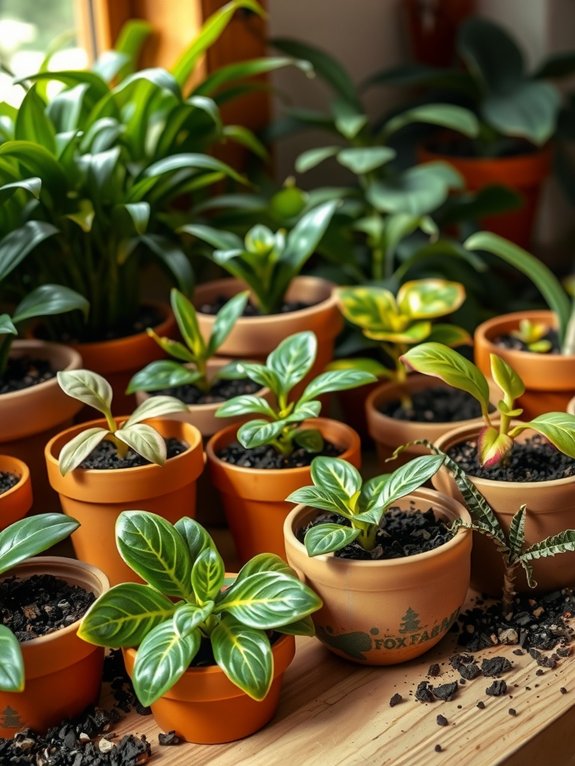
Once you’ve got your drainage foundation sorted with those aerated, soilless mixes, your next step is picking a soil that actually feeds your roots. Fox Farm potting soil blends—specifically Happy Frog and Ocean Forest—pack in nutrients that move your houseplants past just surviving.
Happy Frog works well because it combines nutrients with beneficial microbes that establish themselves in your soil. Ocean Forest delivers a stronger nutrient punch, which suits plants like monsteras that need consistent feeding. The real advantage of using these ready-to-use blends is that they do the heavy lifting for you. Most indoor plants need minimal additions on top of what’s already in the bag, so you’re not constantly guessing what to add.
Fox Farm also makes specialized mixes for orchids and bonsai. These targeted formulas exist because different plants actually need different microbial and nutrient balances to perform well.
Specialized Potting Soils by Plant Type (Orchids, Succulents, Aroids)
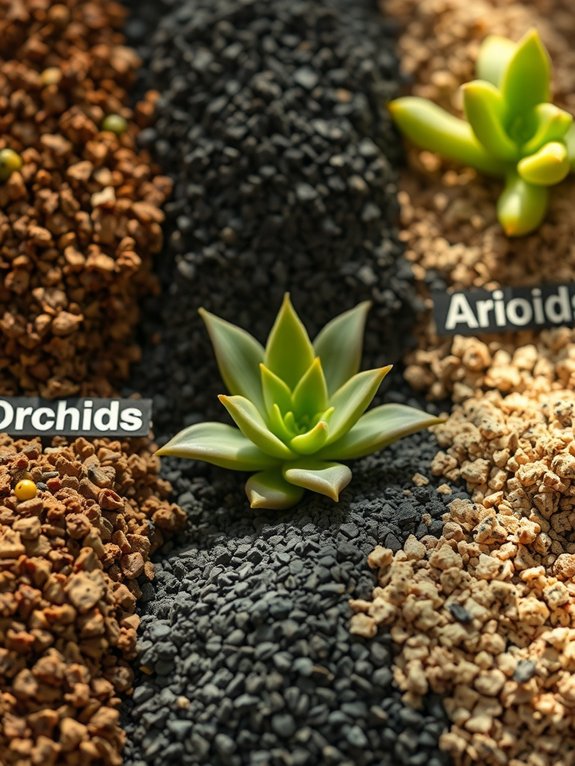
How you’ve set up your soil foundation matters far less than matching it to what your plant actually needs. That means moving past general-purpose mixes once you’re caring for orchids, succulents, or aroids—plants with genuinely different environmental demands based on where they grow in nature.
For orchids, you’ll want orchid bark-based media or specialized orchid mix designed for epiphytic orchids. These formulations prioritize aeration and drainage through peat-free components like bark, charcoal, and perlite. Since orchids grow on trees in their native habitats rather than in soil, they need fast drainage to prevent root rot.
Succulents require a different approach entirely. A cactus and succulent mix with pumice or perlite lets moisture shed quickly, which matches how these plants adapted to drought conditions. Without that rapid drainage, their roots will rot from sitting in wet soil.
Aroids fall somewhere in between. They benefit from soil that balances moisture retention with rapid drainage, often incorporating orchid mix principles. This dual approach works because aroids grow in tropical environments where they experience both moisture and air circulation.
Each formulation directly reflects your plant’s native habitat. When you match your soil to where your plant actually comes from, you’re setting it up to perform well rather than just hoping it survives in a generic mix.
DIY Potting Mix: Build Your Own Soil for Less
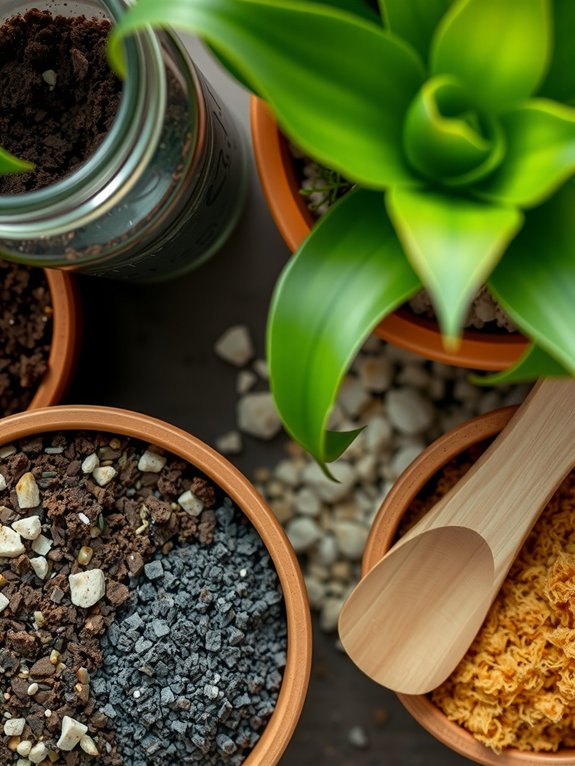
When you make your own potting mix instead of grabbing a generic bag from the shelf, you get to control exactly what goes into your containers. Over time, especially if you’re potting multiple plants or trying different species, the cost savings add up. The key is balancing how much water your soil holds against how quickly it drains and lets air through.
You’ll typically combine a moisture-holding base like peat moss or coconut coir with something textured for drainage—perlite or pumice work well. If you choose coconut coir, rinse it first to wash away excess salt that can damage roots.
| Base Component | Drainage Component | Ratio | Best For |
|---|---|---|---|
| Peat moss | Perlite | 2:1 | General houseplants |
| Coconut coir | Pumice | 2:1 | Moisture-sensitive plants |
| Pine bark | Sand | 1:1 | Orchids |
| Coir | Perlite + sand | Mixed | Succulents |
Since DIY mixes don’t naturally contain much nutrition, mix in slow-release fertilizers or organic matter when you first combine everything. This keeps your plants fed without constant feeding schedules. Making your own soil shifts potting from something you do out of necessity into something you’re actually thinking through.
Affordable Potting Soil Alternatives Under $20
You don’t need to spend a fortune on premium brands like Fox Farm Ocean Forest or Happy Frog. While these options deliver nutrient-rich composition and beneficial microbes, they can drain your budget when you’re potting multiple plants or testing out different species. The good news is that affordable potting soil alternatives exist and work well for indoor plants when you know where to look.
Your budget-friendly options include Miracle-Gro yellow bag, which is affordable and widely available for general houseplant needs. Coast of Maine pink bag offers compost, lobster meal, and kelp for added nutrition. You can also mix your own by combining peat or coco coir with perlite or pumice to create proper drainage and aeration. Store-bought blends under $20 often balance moisture retention effectively without skimping on performance.
Choosing budget-conscious soil solutions doesn’t mean your plants suffer. You get solid results by understanding what components matter most for your specific plants rather than paying for premium branding.