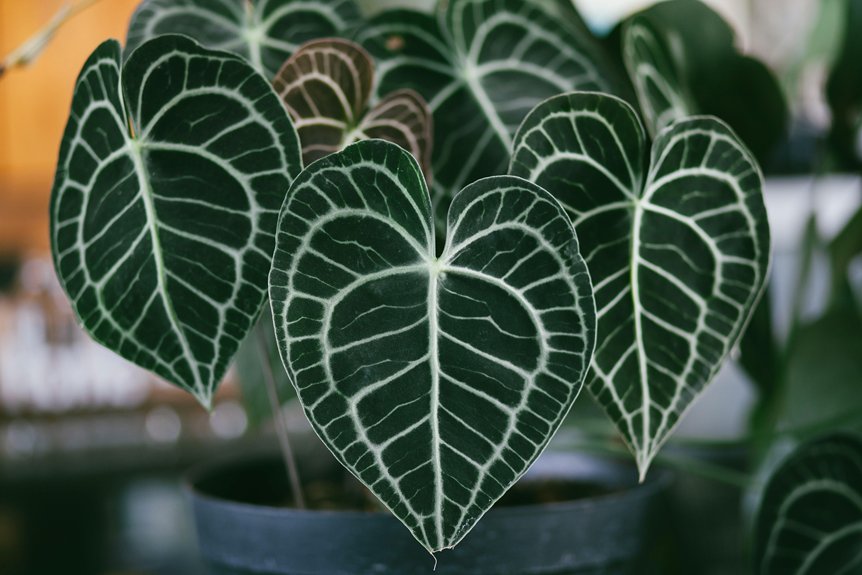
You’ll want to position your prayer plant about 6–7 feet from a south-facing window. This spot gives it indirect light and morning sun without the harsh afternoon rays that can scorch the leaves.
When the top inch of soil feels dry, that’s your signal to water. Use distilled water instead of tap water, since regular water can cause those annoying brown tips on the leaves. Keep the humidity around 65% by misting regularly or setting the pot on a pebble tray with water.
Your prayer plant does best between 68°F and 85°F, so keep it away from cold drafts, heating vents, and other sources of direct heat. Use a well-draining soil mix made with peat and perlite, and make sure your pot has drainage holes. Every two years, repot when you see roots starting to come through the drainage holes.
Different prayer plant varieties—like Neon and Rabbits Foot—have slightly different preferences, so it’s worth learning what your specific type needs to do its best.
Light Conditions Prayer Plants Need to Thrive
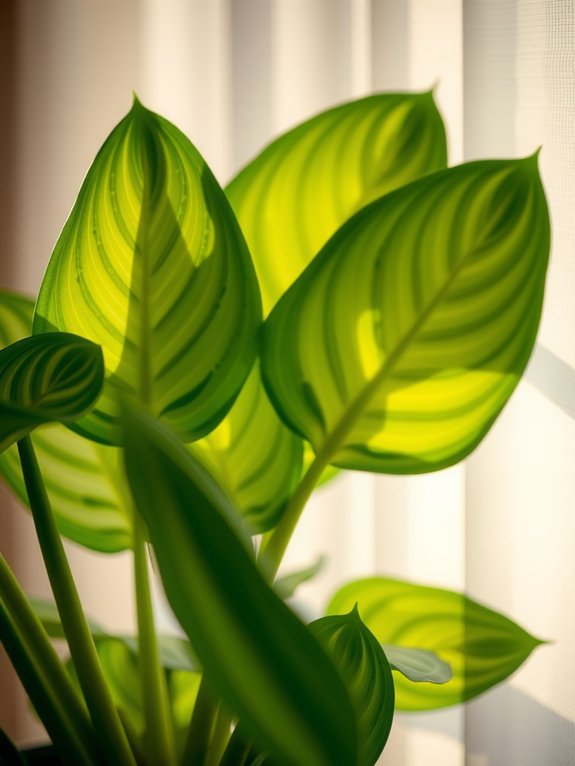
Prayer plants originally grew on the forest floor beneath tall trees, so they’re used to light that filters down through the canopy rather than direct sunshine. Your setup should mimic that environment. Position your plant about 6–7 feet away from a south-facing window where it gets indirect light most of the day. Morning sun is fine, but afternoon rays will actually scorch the leaves pretty quickly, so you’ll want to avoid that timing.
The amount of light you provide directly affects how your plant looks. Without enough light, the growth slows down and those distinctive leaf patterns fade into dull colors. Too much direct sun causes the opposite problem—the patterns bleach out and the leaves get damaged. You need to find that middle ground.
To keep all the leaves developing evenly, rotate your plant every week or two. This ensures each side gets similar light exposure and helps maintain the symmetrical patterns on the leaves that indicate your plant is doing well. It’s a simple habit that makes a real difference in how balanced your plant’s appearance becomes.
Prayer Plant Watering Schedule and Soil Moisture
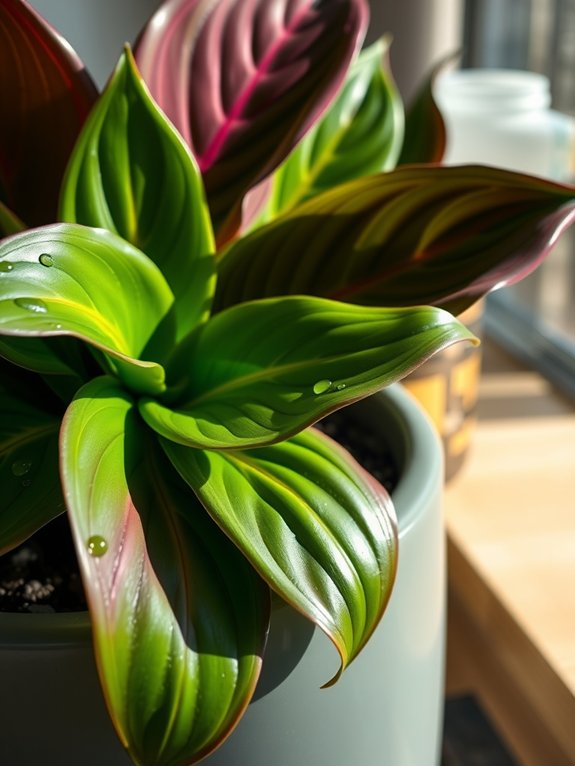
Watering your prayer plant correctly matters more than you might think. These tropical plants evolved in understory environments where moisture stays consistently available but never pools around the roots. The best approach is the top-25% soil test: when the upper inch of soil feels dry, water thoroughly until water drains through the drainage hole, then empty any excess from the saucer. This method prevents both root rot and dehydration.
Your watering frequency should shift with the seasons. During spring and summer, water more often as your plant grows faster and needs more moisture. Outside these peak seasons, you can reduce how often you water.
Use distilled or filtered water instead of tap water. The minerals in tap water can cause leaf tip browning, which signals that your plant is stressed. Pair your watering routine with regular misting or a humidifier to maintain the medium-to-high humidity that prayer plants need.
The key is observing your soil consistently rather than following a rigid schedule. Check the top inch regularly and adjust based on what you see and feel. This attentive approach keeps your prayer plant in good condition.
Prayer Plant Humidity Requirements and Setup
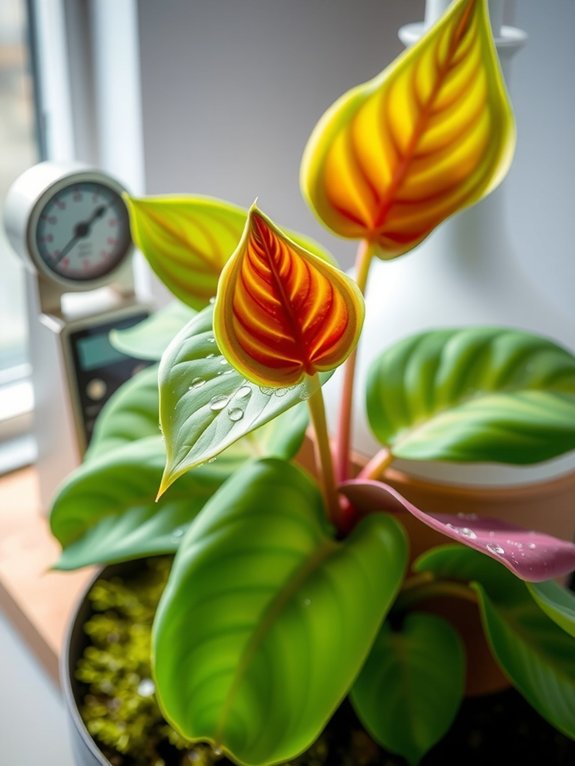
You’ll want to aim for humidity levels around 65% or higher, especially if you’re growing sensitive varieties like Stromanthe Trio Star or Calathea White Fusion. These plants struggle in dry air and will develop brown leaf edges and curled fronds if conditions aren’t moist enough.
To maintain this level of humidity consistently, you have a few options. A humidifier positioned near your plant is one straightforward approach. You can also set your pot on a pebble tray filled with water, making sure the drainage holes stay above the waterline so roots don’t sit in standing water. A regular misting routine works too, though it requires daily attention depending on how dry your home is.
Which method you pick depends on your indoor climate and how much daily care you’re willing to commit to. Winter months and naturally drier homes need extra attention to humidity management. Pay special attention during these periods because low moisture combined with wet soil creates conditions that damage your plant’s leaves. It’s worth noting that some Calathea and Ctenanthe varieties tolerate slightly lower humidity than Stromanthe and Maranta varieties, so you have a bit of flexibility depending on which species you’re working with.
Optimal Humidity Levels
The difference between prayer plant leaves that stay smooth and ones that develop crispy edges usually comes down to one thing: how much moisture is in the air around your plant. You should aim for around 65% humidity, though some varieties like Stromanthe ‘Trio Star’ and Calathea ‘White Fusion’ actually do better when you go higher. Calathea ‘Makoyana’ is more flexible and handles slightly lower humidity without as many problems.
What really matters is keeping that humidity steady rather than letting it swing up and down. When you maintain consistent moisture in the air, your plant’s leaves will fold and unfold—that movement called nyctinasty—in a smooth, natural way. This tells you the plant is comfortable. Stable humidity reduces stress on your plant and keeps growth moving forward. The results are pretty straightforward: fewer brown tips on the leaves and healthier overall foliage.
Humidifier and Pebble Trays
Getting your humidity to that steady 65% level takes some intentional effort, especially if you live somewhere dry or deal with winter heating that sucks moisture out of the air. A humidifier placed near your prayer plant does the heavy lifting here—it’s the most dependable way to keep ambient moisture levels up, which tropical plants like Stromanthe and Calathea really need.
A pebble tray works alongside the humidifier by creating localized humidity right around your plant. Fill it with water and set your pot on top of the pebbles, making sure the pot itself never sits directly in the water. As the water evaporates, it raises moisture around your plant’s leaves while keeping the roots safe from rot.
Running these two methods together gives you the consistent moisture environment your plant needs. On days when humidity dips unexpectedly, a quick misting session fills in the gaps.
Misting and Seasonal Adjustments
Misting and Seasonal Adjustments****
When humidity drops—especially as seasons change and heating systems turn on—misting fills the gap between what your humidifier and pebble tray provide and what your prayer plant actually needs. You’ll get the best results from misting during winter when indoor air gets particularly dry, but be careful not to overdo it. Too much moisture on the leaves can lead to fungal problems.
Your misting approach should shift with the seasons:
Winter: Mist every two to three days, focusing on the undersides of leaves where spider mites hide.
Summer: Drop back to weekly misting since the air naturally holds more moisture during humid months.
Year-round considerations: Some varieties like Stromanthe ‘Trio Star’ need consistent humidity no matter the season. Pay attention to how your specific plant responds.
Heating systems: If you have forced-air heating, you’ll need to mist more often since these systems pull moisture from the air faster than other heat sources.
This balanced approach keeps your prayer plant in the humid tropical conditions it prefers without creating the damp environment where disease thrives.
Prayer Plant Temperature Ranges and Avoiding Drafts
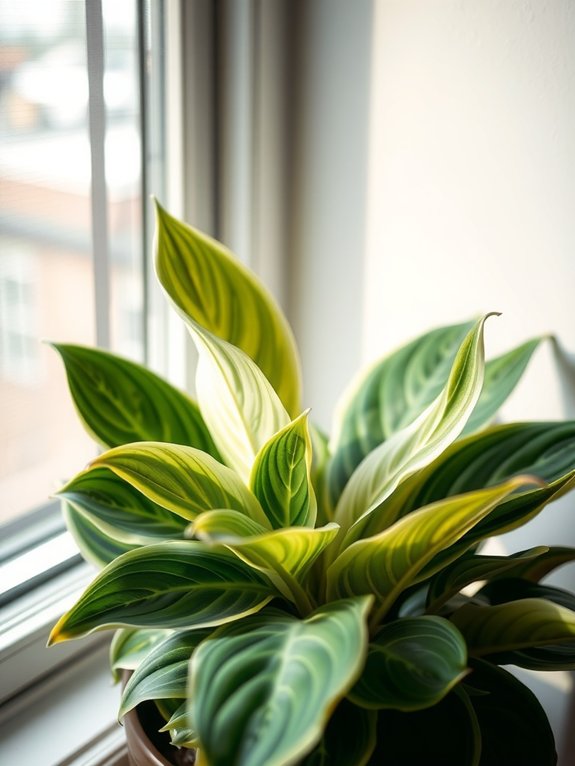
You’ll want to keep your prayer plant between 68°F and 85°F (20°C to 29°C). This temperature range is where you’ll see those characteristic folding leaf movements—what botanists call nyctinasty—work reliably and consistently.
Cold drafts are your plant’s enemy. Air-conditioning vents, heater jets, and poorly sealed windows can all drop temperatures below your target range and stress your plant. That stress weakens the stems and reduces the plant’s overall resilience. Where you position your plant matters more than you might think.
If nighttime temperatures regularly dip toward 60°F (15°C) or lower, move your plant to a warmer spot with more stable conditions. Look for a location away from direct draft sources so your plant can maintain steady warmth.
Optimal Temperature Zones
Temperature matters more than you might think when caring for prayer plants. It affects both how quickly your plant grows and that distinctive leaf-folding movement you’ve probably noticed happening throughout the day and night.
The sweet spot for your prayer plant is between 68°F and 85°F. Within this range, your plant will grow steadily and move its leaves normally without stress. Beyond these boundaries, problems start to show up.
Keep your plant away from temperature swings and extreme heat or cold. Cold drafts from doors, windows, or air vents trigger leaf drop and weaken your plant overall. On the other side, direct heat from radiators or sunny windows can scorch the foliage. Position your plant in a spot with stable, moderate conditions year-round.
If temperatures dip below 60°F regularly, your plant’s growth slows down significantly and stress builds up. Sudden temperature changes damage leaves more noticeably than gradual seasonal shifts do. During winter months, work to keep conditions as consistent as possible rather than letting temperatures swing between warm days and cold nights.
Draft Protection Strategies
Where your prayer plant sits in your home matters far more than many people initially realize, because drafts—those invisible currents of cold or fluctuating air—create stress that shows up slowly as weakened growth and leaf damage. Understanding your home’s air patterns and addressing them ahead of time makes a real difference.
| Draft Source | Location | Risk Level | Protection Method |
|---|---|---|---|
| Air conditioning vents | Upper walls, ceiling | High | Relocate plant away from vent path |
| Window gaps | Perimeter seals | Medium | Add weatherstripping or move plant inward |
| Exterior doors | Entry areas | High | Position behind light barrier screen |
| Radiators/heaters | Wall-mounted units | High | Maintain distance or use deflection shield |
| Ceiling fans | Room circulation | Medium | Move to still corner location |
The key is positioning your plant away from these sources. When you create a stable microclimate, your prayer plant responds by developing better temperature tolerance. You’re essentially removing the stressor that would otherwise hold back its growth, so it can develop a stronger root system and healthier leaves.
Choosing Soil and Pots for Prayer Plants
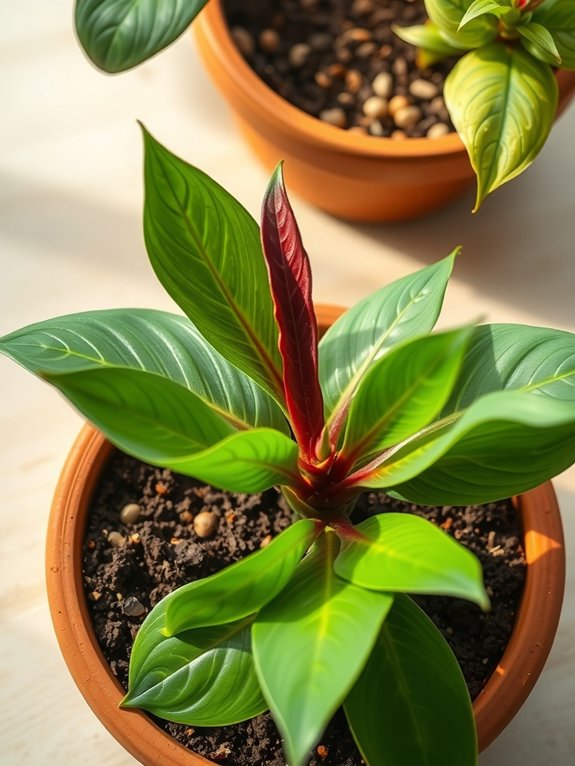
Choosing Soil and Pots for Prayer Plants
Getting the soil and pot right matters more than you might expect. Prayer plants need consistent moisture paired with excellent drainage—that’s a tricky combination that takes some thought rather than just grabbing whatever’s nearby.
Here’s what you need to do:
- Pick pots with drainage holes. These prevent water from sitting at the bottom while letting roots develop properly.
- Use the right soil mix. Go with peat-based or coco coir-based soil combined with perlite. This combination holds moisture without letting water pool around the roots.
- Water carefully. Keep the soil moist but not soggy. Pour water through the drainage holes and dump out any excess water that collects in the saucer to avoid root rot.
- Plan ahead for growth. Move your prayer plant to a slightly larger pot every two years as it gets bigger.
The key is matching your pot’s drainage with soil that stays moist but still drains well. This setup gives your prayer plant the stable conditions it needs to do well.
Common Prayer Plant Problems and Fixes
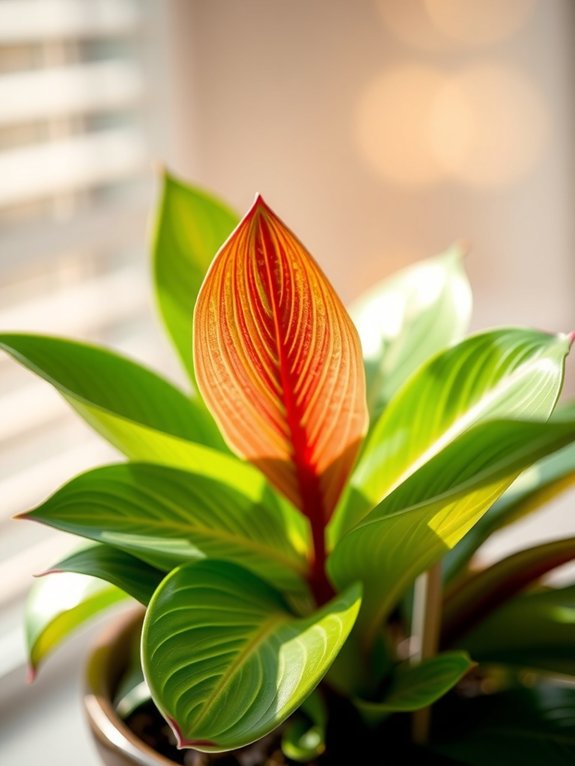
Even with the right soil, pot, and watering schedule in place, prayer plants will sometimes show distress through their leaves and overall appearance. Learning to read these signals helps you catch problems early.
Curling leaves typically mean your watering isn’t consistent. You’ll want to keep the soil lightly moist without letting it dry out completely. Brown or faded leaf tips usually come from tap water chemicals or low humidity levels. Try switching to distilled water and misting around the plant more often to help considerably.
Leaf spots often develop from either careless insecticidal soap application or persistently low humidity. Light-related stress shows up as sunburn when your plant sits in direct afternoon sun. Instead, give your prayer plant bright indirect light throughout the day.
Yellowing leaves signal that you’re overwatering or your drainage isn’t working well enough. Make sure your pot has drainage holes, and allow the soil to dry slightly between waterings.
Fertilizing Your Prayer Plant Through the Seasons
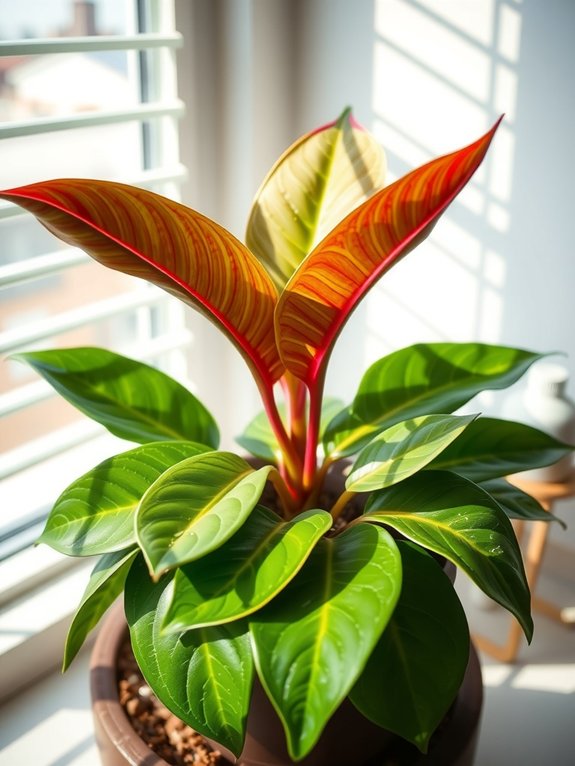
Fertilizing Your Prayer Plant Through the Seasons
Prayer plants respond well to a feeding schedule that changes with the seasons. Think of fertilizer as a spring and summer boost rather than something you need year-round. During their active growing period, a consistent feeding routine supports healthy growth without stressing the plant.
Here’s what works:
- Apply diluted all-purpose indoor fertilizer every four weeks during spring and summer
- Mix your fertilizer to half-strength to prevent leaf burn
- Water thoroughly before fertilizing to protect the roots from chemical damage
- Skip fertilization entirely during fall and winter when the plant naturally slows down
If your plant’s growth stalls or the leaves start to look pale, restart light feeding while also checking that the plant gets enough light, water, and humidity. The tricky part with prayer plants is that over-fertilization damages them more reliably than underfeeding does. You’re better off erring on the side of less rather than more.
Pruning Prayer Plants and Shaping Leggy Growth
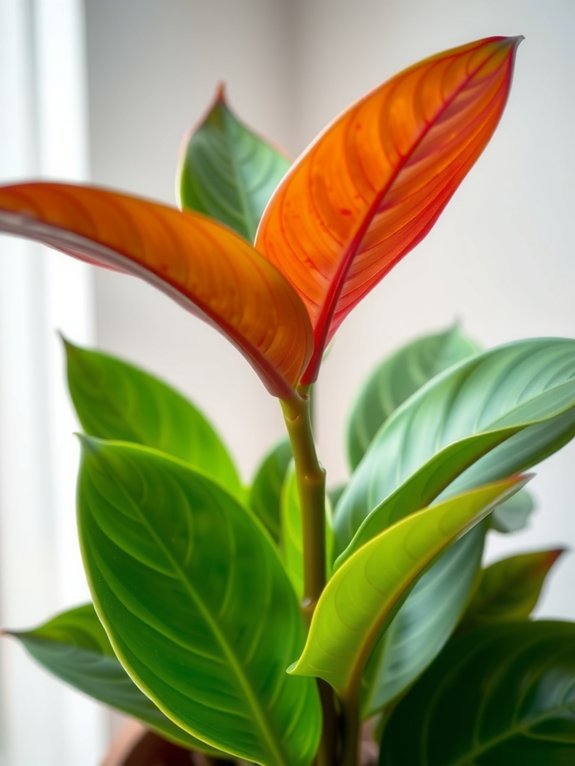
Why do your prayer plants sometimes stretch into thin, sparse stems that look nothing like the full, compact plants you brought home? Inadequate light typically causes this leggy growth, though inconsistent care makes it worse. You’ll want to prune these elongated stems back to encourage bushier development while removing yellow or dead leaves.
Spring is your ideal time to prune, since your plant focuses energy on new growth rather than resting. Use clean, sharp tools to prevent disease, and trim decisively right above leaf nodes where new shoots will emerge.
After pruning, keep three things consistent: balanced light, steady moisture, and appropriate humidity. These conditions support strong recovery and new growth.
Don’t waste those cuttings you’ve removed. You can propagate them as stem cuttings to expand your collection while reshaping your original plant into the fuller form you want.
Repot Your Prayer Plant Every Two Years
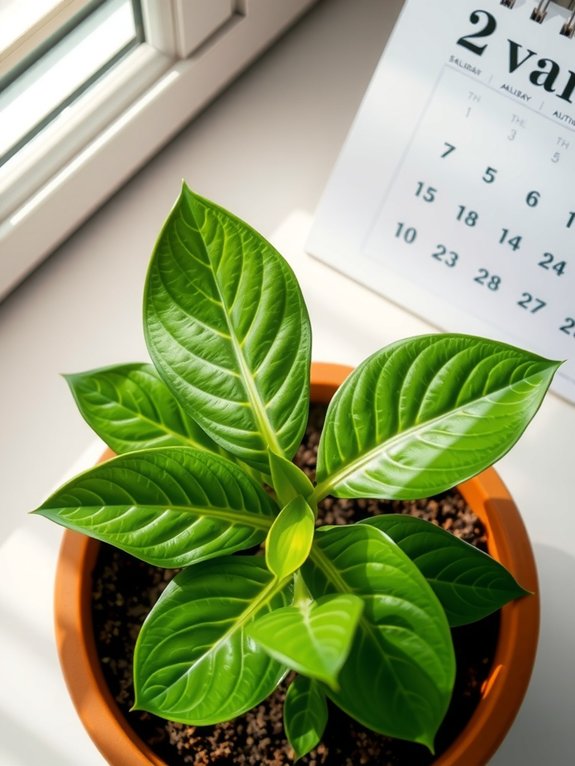
You’ll know your prayer plant needs a bigger pot when you spot roots poking out of the drainage holes, notice water isn’t soaking in as quickly as it used to, or see that new leaves aren’t growing as fast. These signs tell you it’s time to move your plant to a container that’s about an inch or two larger in diameter. Spring and early summer are your best windows for repotting since your plant has the energy to bounce back from the move.
When you’re picking out a new pot, make sure it has drainage holes and resist the urge to go too big. Oversizing your pot is a common mistake that traps too much moisture around the roots and can lead to rot, no matter how careful you are with watering.
The actual repotting process isn’t complicated. Gently loosen the root ball, fill your new pot with a well-draining mix—something like peat-based soil or coco coir combined with perlite works well—and make sure water can drain freely. Once you understand how these pieces fit together, repotting becomes straightforward maintenance that keeps your plant in good shape for years. Plan to do this every two years or whenever your plant outgrows its current home.
Signs Your Plant Needs Repotting
How often does your prayer plant actually need a fresh pot? You’ll recognize repotting signs when your plant shows them. Watch for these indicators:
- Slowed growth despite proper light and watering
- Roots visible at drainage holes or circling the soil surface
- Soil that dries out quickly after watering, requiring frequent attention
- Cramped root systems that’ve outgrown their current container
These signs tell you your plant’s roots need fresh soil and more space. When you notice them, you’re observing your plant’s natural progression—a milestone that shows you’re paying attention. Rather than waiting for obvious distress, responding to these signals demonstrates attentive care.
Every two years typically aligns with your prayer plant’s growth cycle, though individual plants vary based on conditions and how vigorous they grow. You’ll develop a feel for your specific plant’s needs over time.
Choosing The Right Pot Size
Once you’ve figured out that your prayer plant’s roots have outgrown its current pot, your next step is picking a container that actually fits what your plant needs. Grab a pot that’s just one size larger than what you’re using now. This keeps you from making the mistake of watering too much, which happens when extra soil holds onto moisture around the roots. Make sure whatever pot you choose has drainage holes—these are essential for stopping waterlogged soil that can cause root rot.
Pairing the right pot size with a potting mix that drains well but still holds some moisture gives your prayer plant the balanced conditions it needs to develop properly. This careful approach matches how your plant naturally grows while making sure water moves through the soil the way it should.
Best Repotting Practices And Timing
Best Repotting Practices And Timing
Prayer plants grow steadily when conditions are right, so you’ll typically need to repot every two years or so as they outgrow their containers. When that time comes, here’s how to do it properly.
Start by choosing a pot that’s only one size larger than your current one. This matters because a container that’s too big can trap excess moisture around the roots and create drainage problems. You want just enough extra space for the plant to expand without sitting in soggy soil.
Before you repot, gently loosen the root ball and trim away any dead or circling roots using clean shears. Circling roots happen when plants have been in the same pot too long, and removing them helps the plant establish better in its new home.
Fill your new pot with a well-draining potting mix made from peat-based soil combined with perlite. This combination holds enough moisture for your plant’s needs while letting excess water drain away quickly. When you place your plant in the new pot, keep it at the same depth it was growing before. Make sure the drainage holes stay clear so water can move through freely.
This approach gives your plant room to grow without overwhelming its root system. The key is finding the balance between providing space and avoiding the moisture problems that come with oversized containers.
Multiply Your Plants via Cuttings and Division
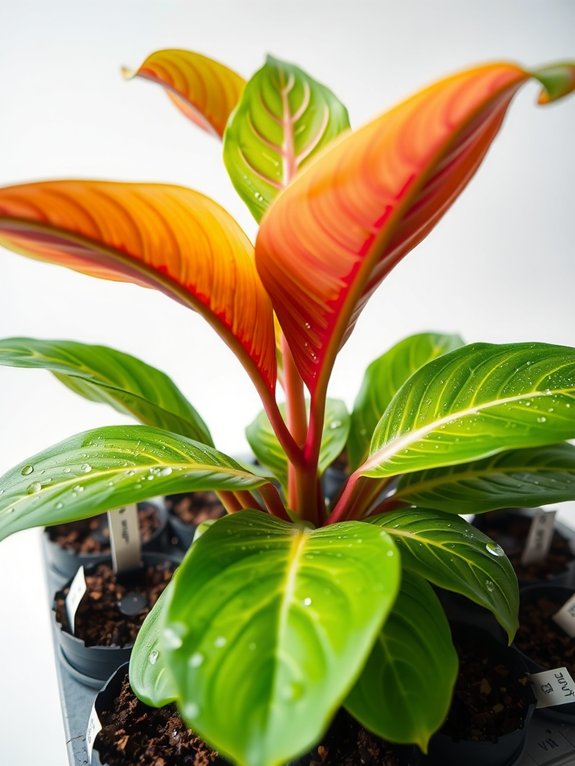
Why wait for your prayer plant to mature when you can expand your collection through propagation. You have two straightforward methods to choose from: stem cuttings and division, and spring is your best time to try them since that’s when growth picks up.
For stem cuttings, you’ll want to select healthy sections that have at least one node—that’s the small bump where leaves come out. Place these cuttings in a humid, warm spot, and roots should develop within a few weeks. Division works differently. You take a mature plant and separate it into multiple sections, making sure each piece has its own roots and shoots. Then you pot each one right away.
Whichever method you pick, keep the soil consistently moist but not waterlogged, since too much water causes rot. Once you’ve propagated your plants, put them where they get bright indirect light and feed them regularly. These conditions help them settle in and establish themselves.
Customize Care for Six Prayer Plant Varieties
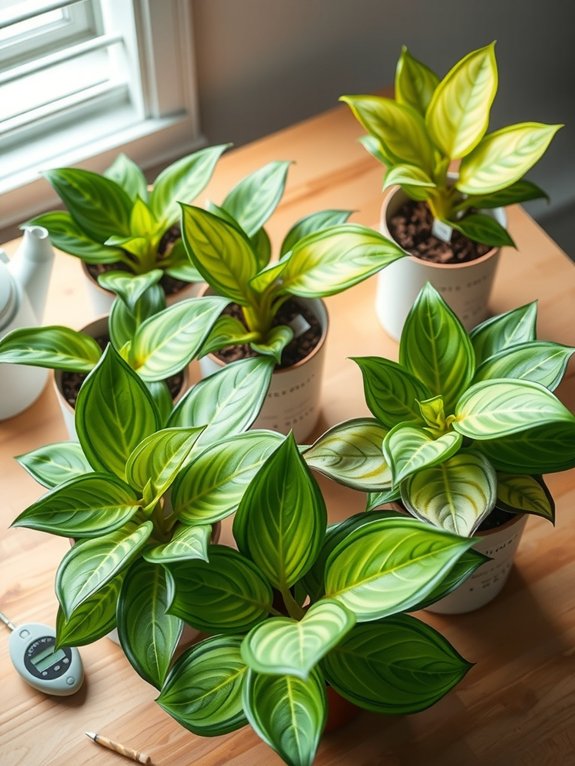
While prayer plants share fundamental needs—consistent moisture, indirect light, and elevated humidity—the six main varieties you’ll encounter each have distinct preferences that’ll shape how you approach their care. You’ve likely noticed that mastering one variety doesn’t guarantee success with another, and that’s precisely where customization matters most.
Mastering one prayer plant variety doesn’t guarantee success with another—customization of care is precisely where the real payoff lies.
Consider these specific variations as you refine your prayer plant care:
Neon Prayer Plant requires temperatures between 68–85°F. You’ll need to maintain humidity through a humidifier or regular misting, which works better than relying on humidity trays alone for this variety.
Rabbits Foot Prayer Plant is your most flexible option. It tolerates brighter light conditions than other prayer plants and actually prefers weekly waterings with distilled water rather than the moisture consistency other varieties demand.
Red Prayer Plant needs bright indirect light and the same 68–85°F temperature range as the Neon variety. It’s less forgiving about light levels, so positioning matters more with this one.
All varieties benefit from drainage holes in their pots. You can elevate humidity levels across any prayer plant by placing the pot on a pebble tray filled with water, making sure the pot itself sits above the water line.
The payoff for paying attention to these details is straightforward: your plants will show you exactly what they need through their foliage color and leaf patterns when conditions match their preferences.