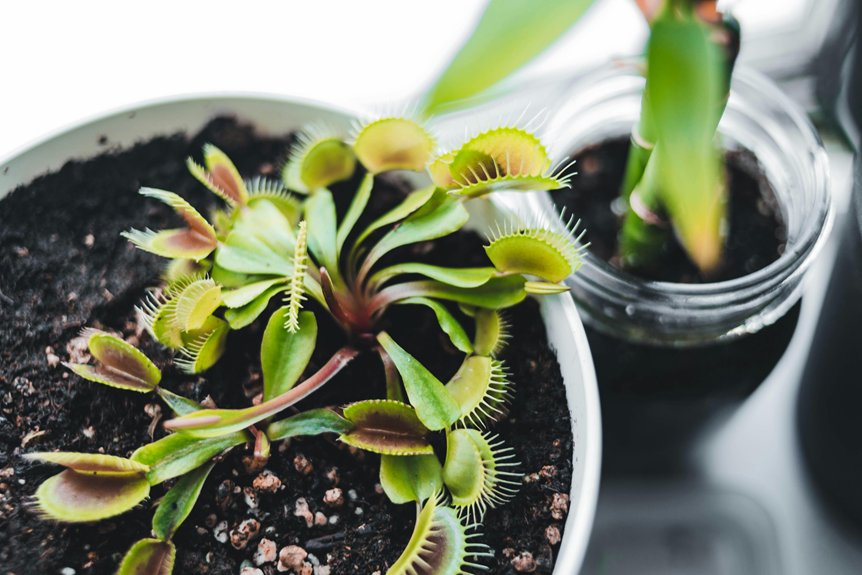
How Do You Care for a Venus Flytrap Plant
To care for your Venus flytrap, you’ll need to recreate the conditions of its native North Carolina bog environment. Start by giving your plant six to eight hours of direct sunlight each day, which is essential for proper growth and trap function.
Water is another critical factor. Use only distilled or rainwater since tap water contains minerals that can harm your plant. Keep the soil consistently moist by setting your pot on a tray and filling the tray with water, allowing the plant to absorb moisture from below.
Plant your Venus flytrap in a mixture of nutrient-poor peat moss and perlite. This mimics its natural habitat where nutrients are scarce, and it prevents the buildup of salts that would damage the plant.
During winter months from November through February, your Venus flytrap needs a dormancy period with cooler temperatures. This rest phase is necessary for the plant to survive long-term and produce healthy traps in the following season.
When it comes to feeding, skip the dead insects entirely. Your Venus flytrap only digests live prey, which triggers the necessary biological processes. Feeding it dead insects wastes the plant’s energy without providing any benefit.
Remove any flower stalks that appear on your plant. Flowering takes significant energy, and removing these stalks redirects that energy toward developing and maintaining the traps you’re trying to grow.
Finally, purchase your Venus flytrap from a reputable nursery. This ensures you’re getting a healthy plant while supporting the conservation efforts that protect wild populations.
Where Venus Flytraps Come From and Why That Matters
Why should you care where your Venus flytrap originally grew? Understanding their habitat—the nutrient-poor, acidic wetlands of North and South Carolina—shapes how you’ll cultivate yours successfully. These carnivorous plants evolved in coastal bogs where soil lacks nitrogen and phosphorus, forcing them to extract nutrients from insects instead.
This evolutionary history explains their specific needs. Your flytrap requires bright light that mimics its open wetland environment, pure water free from minerals, and deliberately impoverished soil. These aren’t arbitrary rules—they’re direct results of how the plant adapted to its original home.
There’s another reason to think about origins: many Venus flytraps face extinction through habitat destruction. When you source your plant from reputable nurseries rather than wild collection, you’re supporting conservation. You’re also acknowledging that this species has a precarious future worth protecting. Understanding where your flytrap came from and why it matters helps you care for it properly while respecting the ecosystem it evolved in.
Essential Light Care for Healthy Venus Flytraps
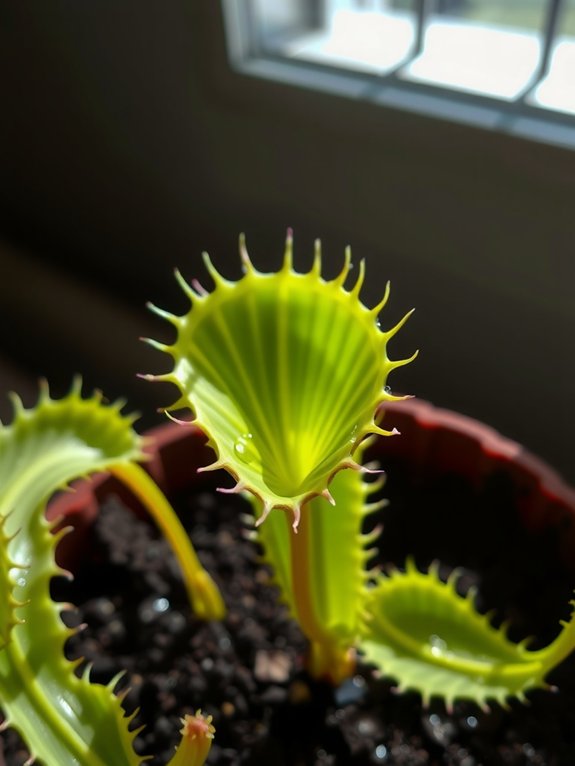
Your Venus flytrap’s light needs are straightforward: direct sunlight for at least four hours daily, with six to eight hours being ideal for stronger growth. Getting the light right makes the biggest difference in how well your plant actually performs.
When your Venus flytrap gets enough light, you’ll notice specific changes. The traps develop a red color that signals proper exposure. The leaves stay firm and upright instead of getting weak and droopy. The trap mechanisms form correctly so the plant can actually catch and digest insects the way it’s supposed to.
South-facing windowsills work best if you’re in a temperate climate. If you’re growing your plant indoors and don’t have access to intense natural light, grow lights can do the job. They simulate outdoor conditions well enough to keep your plant healthy.
Without adequate lighting, your Venus flytrap gradually weakens. The leaves become fragile and the traps won’t develop properly. Once you’ve seen what a well-lit plant looks like, the difference in an under-lit one becomes obvious. If your current setup isn’t giving your plant enough direct sun, it’s worth moving it or adding grow lights before the damage becomes noticeable.
Water Care: Using Distilled, RO, and Rainwater
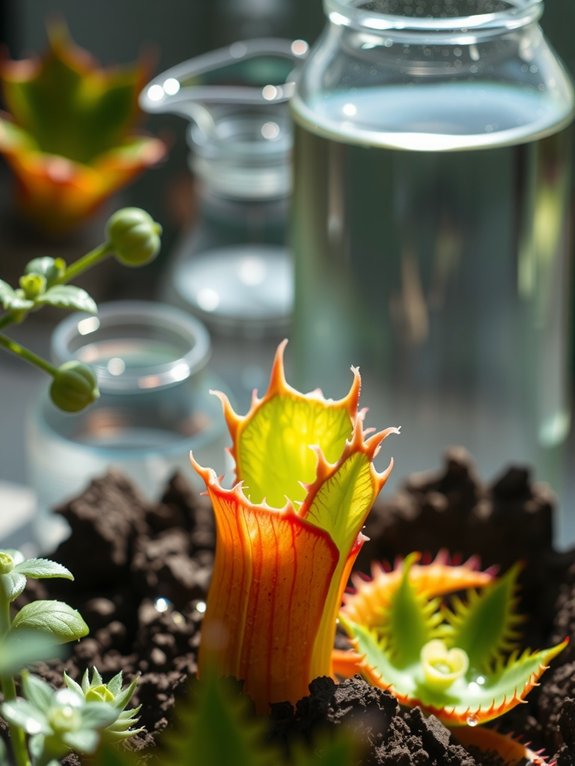
Getting the water right matters as much as getting the light right, though it’s a detail that catches many growers off guard. You’ll want to use distilled, rainwater, or reverse osmosis water exclusively—tap, bottled, and filtered water contain minerals that accumulate in your soil and eventually poison the plant. Water quality determines whether your Venus flytrap stays healthy or slowly declines, so this choice isn’t negotiable.
Aim for a total dissolved solids level below 50 ppm. Some experienced growers tolerate up to 100 ppm if they flush regularly and repot often. During the growing season, keep your soil consistently wet by standing the pot in about 1 centimeter of water or soaking it for 30–45 minutes. Even during winter dormancy, maintain moisture without allowing the soil to dry completely.
Choosing the Right Soil Mix
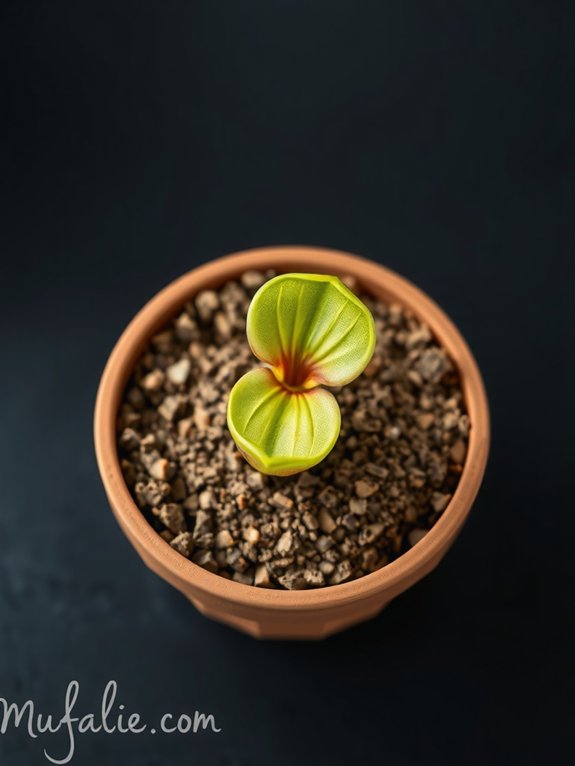
When you’re mixing soil for your Venus Flytrap, the traditional approach of combining sphagnum peat moss with lime-free sand or perlite in a 2:1 ratio is reliable and widely used. If you prefer an environmental alternative, pure long-fibre sphagnum moss works well, though it costs more.
When you build your own mix instead of buying pre-made soil from suppliers like Hampshire Carnivorous Plants or California Carnivores, you need to be careful about a few things. Keep nutrient levels as low as possible and avoid mineral-rich components. Skip vermiculite and unglazed clay pots—both leach minerals into your plant’s roots. Perlite is your better choice because it helps with aeration while keeping the nutrient-poor conditions your flytrap actually needs.
Traditional Peat and Perlite
What makes the difference between a Venus flytrap that merely survives and one that actually does well comes down largely to soil—that foundation that either supports or undermines everything else you’ll do. The traditional peat moss and perlite blend has worked for generations of growers, and once you understand why, you’ll see why deviating from it often causes problems.
This approach works because it addresses your plant’s two critical needs at the same time. Peat moss gives you the acidic, nutrient-poor environment Venus flytraps need. Perlite ensures water drains quickly so roots don’t rot. The 4:1 ratio (peat to perlite) balances how much moisture the soil holds with how much air gets through. Since the mix contains no minerals, you don’t have to worry about harmful buildup in your soil over time.
The key thing to understand: you’re building an ecosystem, not just filling a container. The way these two materials work together matters more than using them separately.
Peat-Free Sphagnum Moss
If you want to skip peat extraction, pure long-fibre sphagnum moss gives you a solid option—though you’ll pay more for it and need to be more hands-on. This substrate holds moisture really well without adding minerals that Venus flytraps struggle with, which means you get the acidic environment they actually like. The trade-off is that sphagnum moss doesn’t buffer minerals the way peat does, so you’ll need to watch your plant’s moisture and nutrient levels more closely. Make sure your pot has excellent drainage to keep roots from rotting, and don’t add anything mineral-rich to the mix. The extra cost and attention you invest will pay off when you see your plant grow strong and healthy while sticking to your environmental values.
Ready-Made Soil Options
Ready-Made Soil Options
When you’re ready to pot your Venus flytrap, buying a pre-mixed soil made for carnivorous plants saves you the guesswork of blending your own. Companies like Hampshire Carnivorous Plants and California Carnivores sell these mixes through Amazon, both in the US and internationally.
These ready-made options typically include peat moss as a base (which keeps nutrients low), perlite or sand for drainage and air flow, and mineral-free compositions so nothing harmful leaks into your soil. Many come in balanced 50:50 ratios that prevent water from sitting around your plant’s roots. Some suppliers offer long-fibre sphagnum as an alternative, though it costs more.
What matters most is avoiding vermiculite and unglazed clay pots. Both release minerals over time that gradually damage your plant. When you stick with established mixes from reputable suppliers, you’re using formulas that other growers have already tested and refined. That’s a practical shortcut when you’re starting your carnivorous plant collection.
Winter Dormancy Care: Cold Rest for Spring Growth
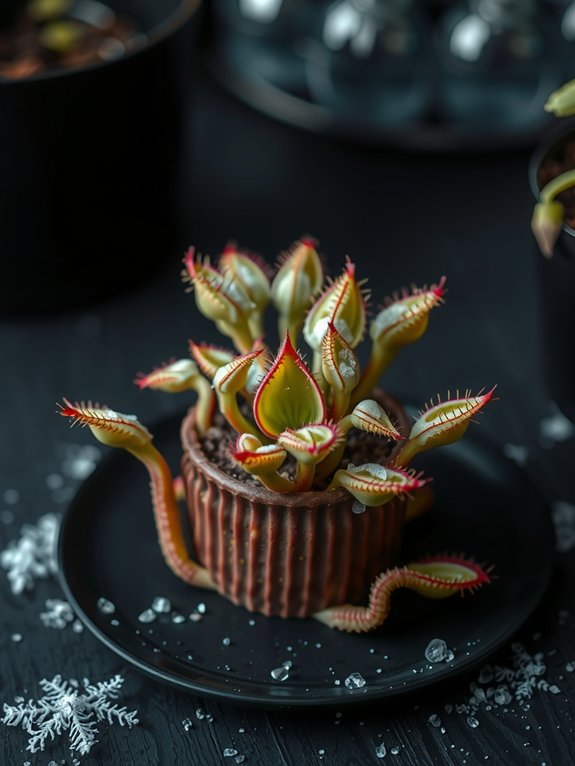
Your Venus flytrap doesn’t actually want to grow year-round. Pushing it to stay active all twelve months will gradually wear the plant down and cause decline. Instead, you need to give it winter dormancy—a rest period from November through February that copies what happens in nature and keeps your flytrap healthy long-term.
Venus flytraps need winter dormancy from November through February to stay healthy and prevent gradual decline from year-round growth.
When dormancy time arrives, move your flytrap to somewhere cold. A garage, shed, unheated greenhouse, or sheltered outdoor spot works well. The key is keeping temperatures consistently cool throughout those months. During this time, you’ll see the leaves turn black and the plant’s growth fade back down to the rhizome. That’s not a problem—it’s exactly what should happen.
While your flytrap rests, keep the soil damp but not waterlogged. The swollen underground corm needs moisture to survive the cold months. Once spring shows up and new growth starts appearing, repot your plant if it needs more space and go back to your regular watering routine.
This dormancy cycle isn’t something you can skip. It’s a necessary part of keeping your Venus flytrap alive and healthy.
Spring Growth and Flowering
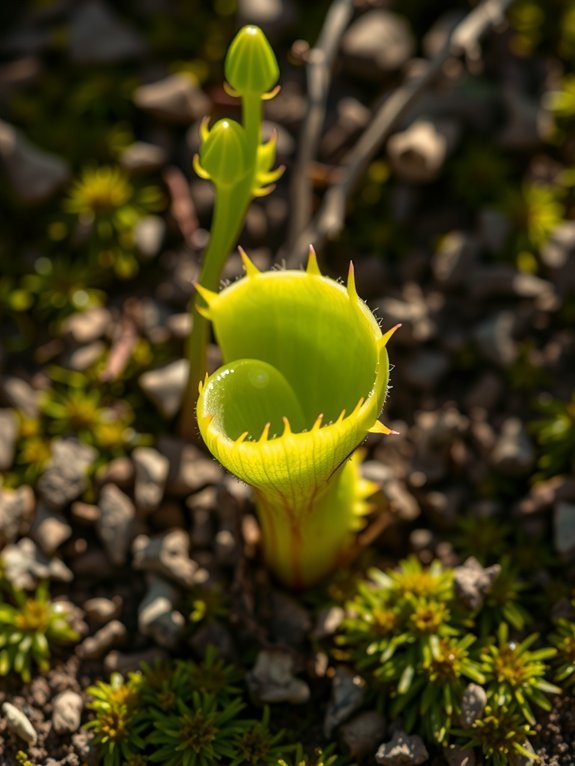
As temperatures rise and daylight lengthens in spring, your Venus flytrap will wake up from dormancy. You’ll want to resume regular watering and keep it in bright light to support the growth that’s coming.
When flower stalks start to emerge, you have a choice to make. You can cut them off at about 5 centimeters to redirect the plant’s energy toward developing new traps instead of spending resources on seed production. If you leave the flowers intact, you’ll notice that leaf development slows down noticeably because the plant is focused on reproduction rather than growth.
During this growth phase, keep the soil consistently damp but never waterlogged. If your other growing conditions are solid, you can also try feeding your plant live prey to help it build the strength and vigor it needs for summer ahead.
Resuming Normal Watering
When your Venus flytrap starts showing new growth in spring, that’s your signal to shift from winter’s minimal watering routine. You’ll see fresh traps forming and leaves expanding—these physical changes tell you when to pick up the pace.
Here’s how to adjust your care:
- Use distilled, rainwater, or reverse osmosis water with a TDS of 50 ppm or less. Tap water minerals will build up in your soil over time.
- Set your plant on a tray filled with water during the growing season. This keeps the soil consistently moist without becoming waterlogged.
- Watch your trap development closely. Bigger, faster-growing traps mean your plant wants more frequent watering. Slower growth signals you should back off slightly.
- Remove any flower spikes as soon as they appear. Your plant puts serious energy into flowering, and you want that energy going into leaf growth instead.
The key is matching your watering to what your plant actually shows you rather than following a fixed schedule. Every growing season looks a little different depending on light, temperature, and other factors in your space.
Managing Spring Flowers
When spring arrives and your Venus flytrap starts forming flower buds—those small, greenish stalks that will eventually open into delicate white or pink flowers—you’ll need to make a decision about what comes next. This choice will affect how your plant develops over the next several months.
Many growers suggest cutting off the flower spike when it’s around 5 cm tall. The reason is straightforward: flowering uses up energy that could go toward producing larger traps and stronger leaves instead. If you decide to let your plant flower anyway, you’re trading off some of that vegetative growth for the visual appeal of the blooms.
Whichever path you choose, your plant still needs the same basic care: plenty of sunlight, soil that stays consistently wet, and proper dormancy when winter comes around. The decision really comes down to what matters more to you—enjoying the flowers now or building a stronger, more vigorous plant for the future.
Encouraging Leaf Growth
Encouraging Leaf Growth
Why focus on leaf development when your Venus flytrap’s flowers are about to bloom? Because redirecting energy toward foliage creates a stronger, more vigorous plant capable of sustaining itself long-term. When you cut off the flower spike at approximately 5 cm tall, you’re making a deliberate choice to prioritize growth over reproduction, a strategy that rewards patient cultivators.
To build robust leaves on your sunny windowsill, you’ll need to nail down a few key requirements. Start with at least 4–6 hours of direct sunlight daily, which is essential for proper trap development. Your soil should be nutrient-poor and well-draining—combine peat moss with perlite or sphagnum to get the right mix. Keep the medium consistently damp but never waterlogged, and as spring growth emerges from dormancy, resume your normal watering schedule. Once these basics are in place, you can offer live insects to support the plant’s development.
This approach transforms your flytrap into a solid specimen that can sustain itself without the energy drain of flowering.
Feeding: Live Insects or Self-Hunting?
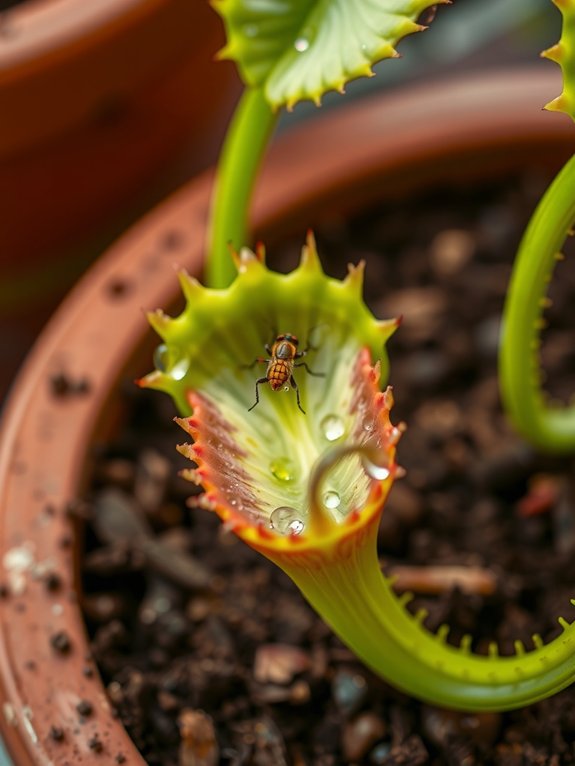
One of the bigger decisions you’ll face with Venus flytrap care is whether you’re willing to feed your plant live insects. This choice really does separate people who casually grow these plants from those who commit to keeping them in top condition.
If you’re growing outdoors, your Venus flytrap will hunt on its own without any help from you. Indoors, though, the responsibility falls to you. Live insects—mealworms are your best option—actually trigger the plant’s digestive response. Your plant can survive on photosynthesis alone, but live prey makes a noticeable difference in how well it grows and how strong it gets. Dead insects won’t work because they don’t stimulate the trigger hairs your plant needs to digest properly.
When you do feed indoors, stick with untreated insects only. Avoid anything that’s been exposed to pesticides or other chemicals, since those substances can damage your plant’s health.
Rare and Unique Venus Flytrap Varieties
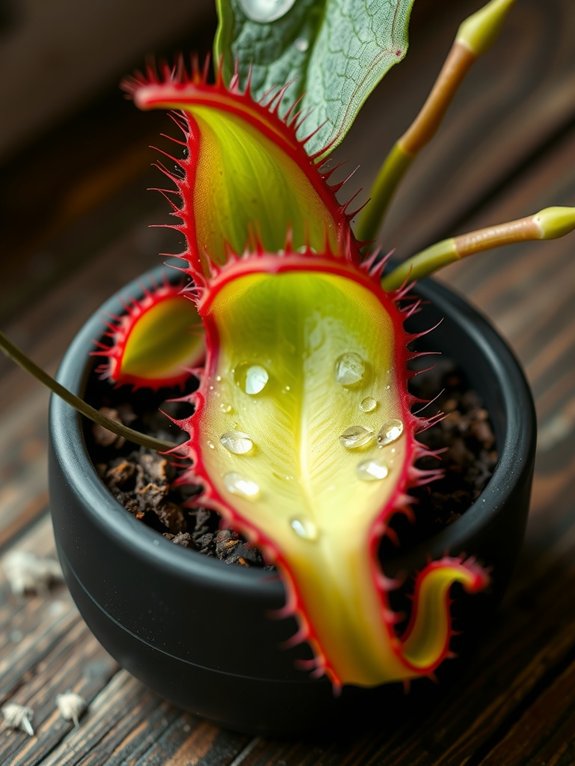
If you’ve spent time with Venus flytraps, you’ve probably noticed that not all plants look quite the same—and there’s a reason for that.
Dionaea muscipula, though technically a single species, encompasses hundreds of cultivars selected for specific traits. These carnivorous plants display remarkable diversity within their genus:
- Justina Davis: Distinguished by unique coloration patterns
- Sawtooth: Named for its distinctive trap edge geometry
- Fused Tooth: Features unusual fused dental structures
- Slacks Giant: Produces adult traps reaching 5 cm, nearly double the typical 2.5 cm size
- Tissue culture mutants: May develop deformed traps or lose predatory function entirely
Giant varieties offer impressively proportioned specimens if you’re willing to wait for results, though mutants can sometimes disappoint with compromised trap mechanics. When you’re selecting a plant, think about your experience level and what appeals to you aesthetically. A beginner might want to start with a standard cultivar before moving to giants or experimental varieties. The diversity available means you can find something that matches both your skill level and your preferences for how you want your collection to look.
Propagating From Seeds or Division
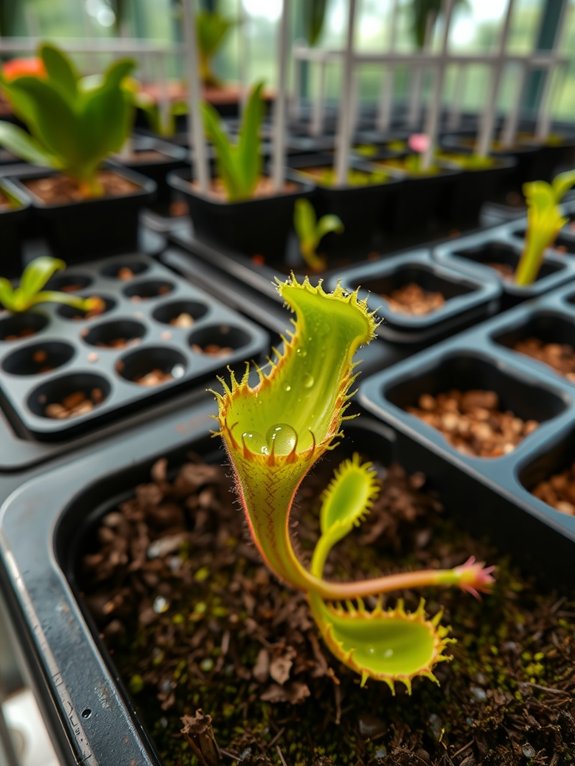
When you’re ready to expand your Venus flytrap collection, you have two main options. Seeds take years to mature into adult plants and carry a high risk of failure without exact growing conditions. Division is more reliable—you separate rhizome clumps during repotting by gently teasing them apart.
If you go with seeds, buy from reputable nurseries to avoid scams and ensure the genetics are actually viable. With division, you’re working from established plants that already have a better chance of success.
No matter which method you choose, your propagated plants need nutrient-poor soil, steady moisture, and plenty of light. One important step: remove any flower stalks that appear. When you do this, the plant redirects its energy toward developing stronger roots and traps instead of putting resources into flowering.
Seed Propagation Challenges
Seed Propagation Challenges
Choosing to grow Venus flytraps from seed instead of dividing established plants or buying them ready-made really comes down to how much patience you have and how comfortable you are with plants not making it. Getting seeds to germinate means mastering sterile techniques and understanding dormancy requirements—something many carnivorous plants stubbornly resist.
You’ll run into several real obstacles:
- Your seeds need specific dormancy triggers, usually involving periods of cold stratification
- Even with careful attention, a lot of seedlings won’t survive the early stages
- Getting plants to full size takes years of consistent work
- Any contamination during germination can wreck your whole batch, so sterile handling matters throughout the process
- Seeds don’t produce exact copies of the parent plant—you’ll get genetic variation
When you buy seeds, stick with reputable nurseries to avoid mislabeled or dead seeds. Even good seeds come with challenges though. If you’d rather skip the uncertainty, dividing plants you already have gives you more reliable results. That approach makes sense when you need dependable outcomes rather than genetic diversity.
Division and Rhizome Separation
Seed propagation can feel unreliable, so division gives you a more direct way to create new plants while keeping all the genetic traits of your original specimen. You’ll want to divide in spring when your plants wake up from dormancy and start growing again—this timing reduces the shock that transplanting causes.
Grab clean, sharp scissors or a sterile knife and carefully separate your rhizome clumps. Make sure each piece you create has at least one healthy trap and enough rhizome tissue to support itself. The goal here is treating your divisions gently since separation is stressful for the plant.
For your planting medium, stick with something nutrient-poor and well-draining. Peat moss mixed with perlite works well for this purpose. Keep the soil consistently moist after planting, but avoid waterlogging it—that’s a balance you’ll need to watch. Hold off on fertilizing right away. Your divisions need time to recover and establish themselves before you ask them to deal with feeding.
Over the next 4 to 8 weeks, maintain that moist (not soggy) environment while your new plants settle in and put out fresh growth. After about 6 to 8 weeks, when you see signs of recovery, you can start feeding again at normal rates. Full maturation takes about 3 to 4 months total, during which you keep moisture consistent and feeding regular.
Troubleshooting Dead Traps and Weak Growth
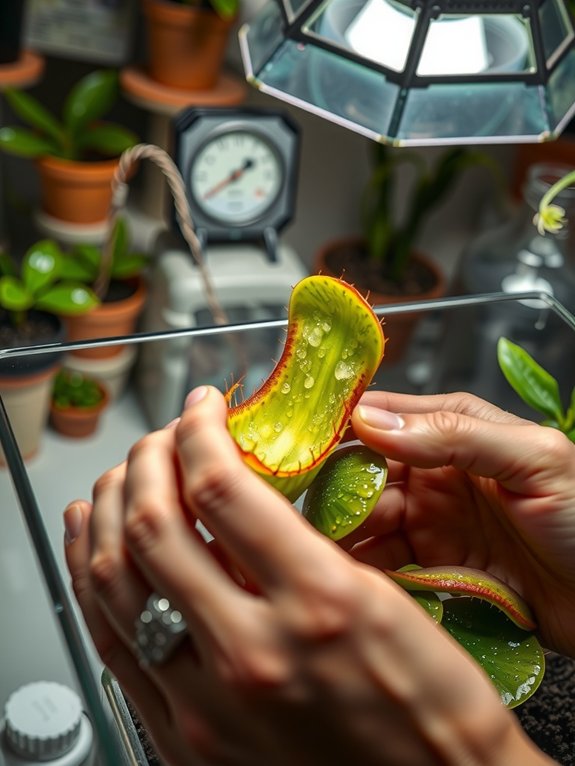
You’ll probably run into Venus flytraps that develop blackened, dying traps or show sluggish, stunted growth at some point. This frustration usually comes from one or more issues tied to light deprivation, improper dormancy cycles, soil chemistry, water quality, and root stress.
Work through these problems systematically:
- Give your plant at least 6–8 hours of direct sunlight daily to prevent trap deterioration
- Set up consistent winter dormancy in cool, controlled conditions so your plant can build energy for spring
- Switch to nutrient-poor soil made from peat moss, perlite, or sphagnum moss combinations
- Use pure water sources—rain, distilled, or reverse osmosis water—to stop mineral buildup in the soil
- Keep the soil damp but not waterlogged, and water at the soil level instead of from overhead to reduce stress on the roots
If your plant produces flowers, cut the flower stalks back to about 5 cm. This redirects the energy your plant would spend on seeds toward making new leaves instead, which helps preserve its overall strength.
Where to Buy Healthy Plants and Seeds
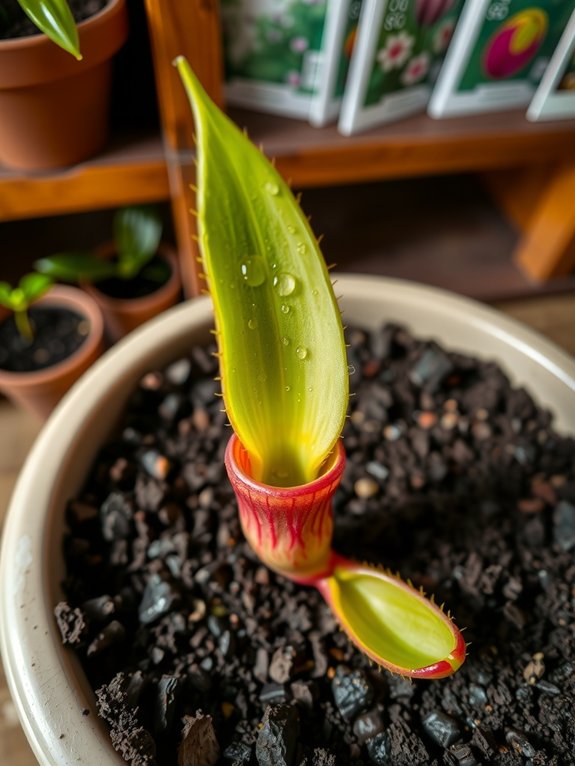
Once you’ve got the basics down—light, water chemistry, dormancy—you’ll want to expand your collection. That means finding vendors who actually know what they’re doing.
Skip wild-collected plants. They’re illegal to harvest, and they often come with problems that’ll mess up your setup. Hampshire Carnivorous Plants, based in the UK, stocks quality seedlings, seeds, and specialized compost with reliable shipping across the country. If you’re in North America, California Carnivores has a wide range of plants and seed kits. They offer free shipping and a 10% discount with code tomscarnivores.
When you’re picking a vendor, you want to know they’re legitimate. The USDA PLANTS Database, eFloras.org, Encyclopedia of Life, and Barry Rice’s resource site all let you check vendor credentials yourself and make sure you’re getting what you actually ordered.
Complete Growing Setup for Venus Flytrap Care
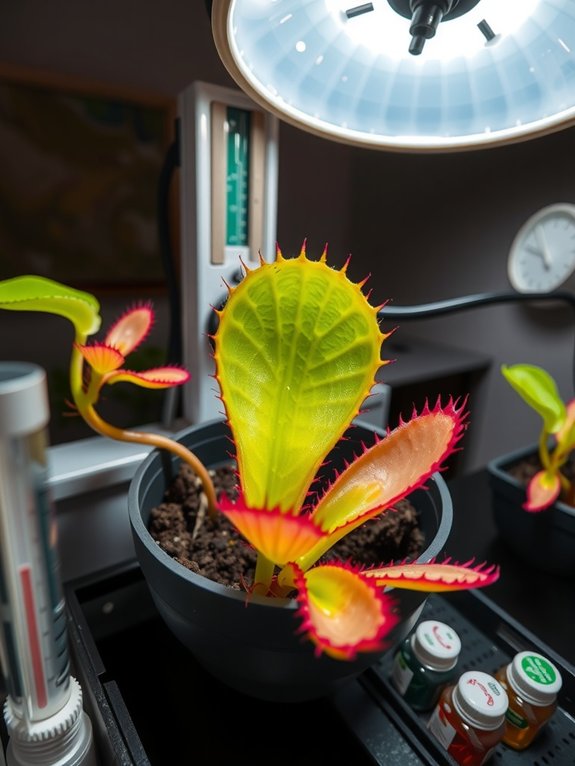
You’ve sourced a healthy plant from a reputable vendor. Now you need to set up your growing space correctly—this is what separates people who keep Venus flytraps alive from those who watch them decline.
Your setup needs these specific elements:
Soil composition: Mix 2 parts peat moss with 1 part lime-free sand or perlite. Skip any soil with minerals or added nutrients, since your flytrap comes from nutrient-poor wetlands.
Container selection: Use a pot with drainage holes. You want water to move through easily, but the soil should stay consistently moist underneath.
Watering method: Set your pot in a tray with about 1 cm of water and let the soil absorb it from below. Use rainwater, distilled water, or reverse osmosis water only. Tap water contains minerals that damage the plant over time.
Light exposure: Give your flytrap six to eight hours of direct sunlight each day. You’ll notice the traps develop deeper red coloring as light levels increase, which shows the plant is getting what it needs.
Temperature management: Let your plant experience a cool winter dormancy from November through February. Keep it in an unheated space during these months—this rest period is essential for the plant’s long-term health.
This setup takes commitment and attention to detail, but once you establish the routine, it becomes straightforward.