
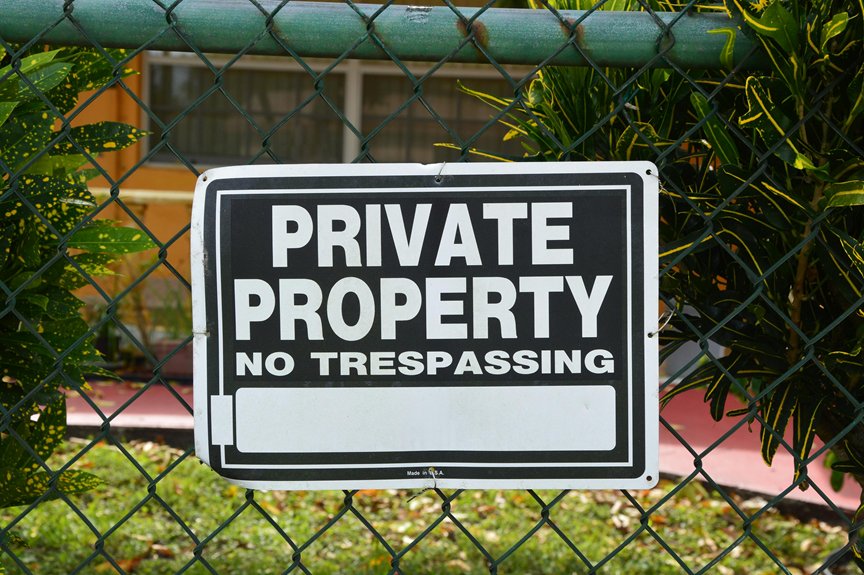
Your responsibility for backyard fence repairs depends entirely on where it sits. If the fence stands entirely on your property, you’re responsible for all maintenance and repairs. However, if it straddles the property line as a boundary fence, you’ll likely share costs with your neighbor—though Texas law won’t automatically require this without a written agreement.
Getting a professional survey confirms the exact ownership and location of your fence. This step prevents costly disputes down the road because you’ll have documentation that clarifies your actual financial exposure and your neighbor’s obligations.
Where Your Backyard Fence Sits Determines Who Pays
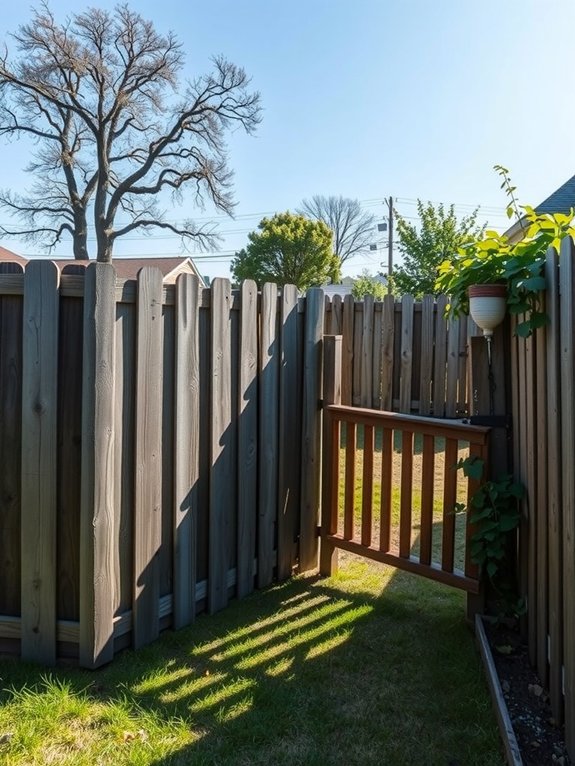
Your fence’s location on your property determines who foots the bill for upkeep. If your fence sits entirely on your side of the property line, you’re the one responsible for all repairs, replacements, and maintenance. That means any damage—whether from weather, wear, or accidents—comes out of your pocket.
Your fence’s location determines who pays. Fence entirely on your side? You’re responsible for all repairs, replacements, and maintenance.
Things get more complicated when your fence straddles the property line between your lot and your neighbor’s. In that case, you typically share ownership, which usually means splitting maintenance costs with your neighbor. The catch is that Texas law doesn’t automatically require cost-sharing unless you have a written agreement with your neighbor or your HOA’s CC&Rs spell it out.
Before you assume any responsibility for fence work, get a property survey done or review your HOA plats to see exactly where your fence sits. Knowing the precise ownership boundaries now saves you from expensive arguments later.
Backyard Fence on Your Property Line: Shared Ownership, Shared Costs
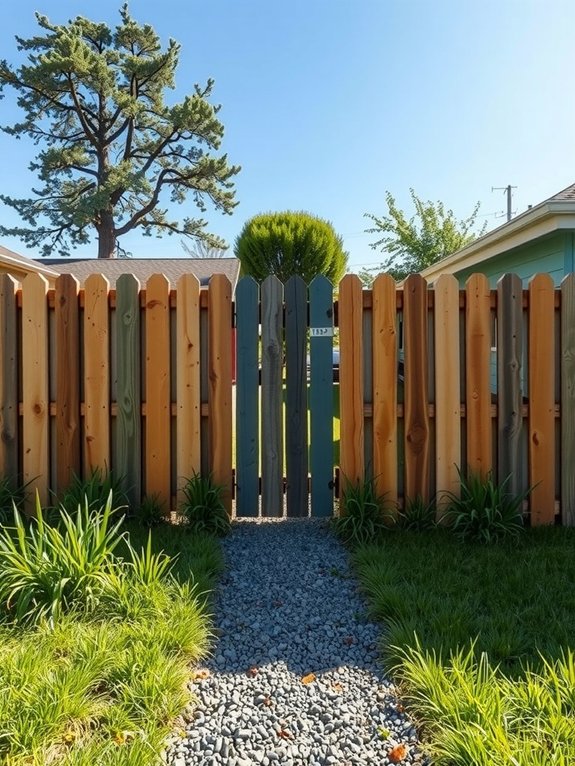
When you find out your fence sits right on the property line between your lot and your neighbor’s, you’re looking at a situation that needs both a survey and a conversation. A fence straddling the boundary creates shared ownership questions that don’t have automatic answers in Texas without written agreements or HOA rules in place.
Start by getting a professional survey done. This gives you official markers that clarify exactly where your property ends and your neighbor’s begins. Once you know for certain where that line sits, you’ll have a solid foundation for your next steps.
Here’s what typically matters when you’re dealing with a boundary fence:
- Maintenance falls on both of you. Since the fence serves both properties, you and your neighbor generally share the responsibility for keeping it in decent shape.
- Get something in writing. Talk to your neighbor about how you’ll split costs and decide who handles what repairs. Putting this agreement in writing prevents misunderstandings later when a repair bill shows up.
- Check your HOA CC&Rs and local ordinances. Sometimes these rules override the default arrangement and specify exactly how things should work in your area.
Having this clarity upfront protects your wallet and your relationship with your neighbor. You won’t be blindsided by unexpected repair costs, and your neighbor will know what to expect from you as well.
When You Own the Entire Fence: Solo Responsibility
Once you’ve confirmed through a professional survey that the entire structure sits on your property, the ownership is clear—and so is the responsibility. Texas law puts the full burden on you: maintenance, repairs, replacement costs, and liability if neglect or damage affects your neighbor’s land. Your neighbor has no automatic obligation to chip in.
| Responsibility Type | Your Obligation | Neighbor’s Role | Timeline |
|---|---|---|---|
| Routine Maintenance | Required | None | Ongoing |
| Repairs from Damage | Your Cost | Not Required | As Needed |
| Replacement | Full Expense | No Sharing | When Necessary |
| HOA Compliance | Must Follow | N/A | Before Work |
What this means practically: you need to stay on top of inspections and upkeep. Check your fence regularly for signs of rot, leaning posts, or damaged sections. If a storm takes out a section or a tree branch falls on it, that’s your repair bill. When the fence reaches the end of its life and needs replacing, you’re funding that project entirely.
This doesn’t mean you can’t ask your neighbor for help—they might pitch in voluntarily—but legally they’re not required to. Before you do any work, check whether your HOA has design or material requirements. Getting approval first saves you from having to tear out work that doesn’t meet community standards.
Texas Law’s Default: No Obligation to Split Fence Costs
Texas Law‘s Default: No Obligation to Split Fence Costs
When you look into Texas property law, you’ll find it doesn’t automatically require neighbors to share fence costs. This applies even when a fence runs directly along the boundary line between your properties—and it’s a surprise that catches many homeowners off guard when they’re facing a repair bill.
Here’s what actually happens under Texas law:
- You can’t count on cost-sharing. Texas doesn’t automatically require neighbors to split fence maintenance expenses, no matter where the fence is located.
- You’re responsible for the bill unless you’ve already worked out a written agreement with your neighbor beforehand.
- Boundary line fences stay jointly owned, but that ownership doesn’t mean automatic cost-splitting happens.
Since Texas doesn’t set a default rule here, you need to handle the negotiating yourself. Work out the terms with your neighbor and get clear expectations in writing before any problems show up.
How to Formalize Responsibility With a Written Fence Agreement?
Since Texas courts won’t automatically enforce cost-sharing between neighbors, you’ll need to create a written agreement that spells out exactly who owns what, who pays for what, and what happens if someone doesn’t hold up their end of the deal.
Your fence agreement should cover several key points. First, establish clear ownership of the boundary fence. Then, assign maintenance responsibilities for repairs and upkeep, specify what percentage each of you pays, and outline how you’ll handle disputes if they come up. You’ll also want to document the fence’s exact location using survey results or property markers so there’s no confusion later.
When you’re ready to finalize things, have both neighbors sign the agreement. Consider recording it with your local authorities or HOA documentation. This step transforms an informal understanding into something legally enforceable that protects both of you.
HOA Rules: When Community Bylaws Override Default Ownership
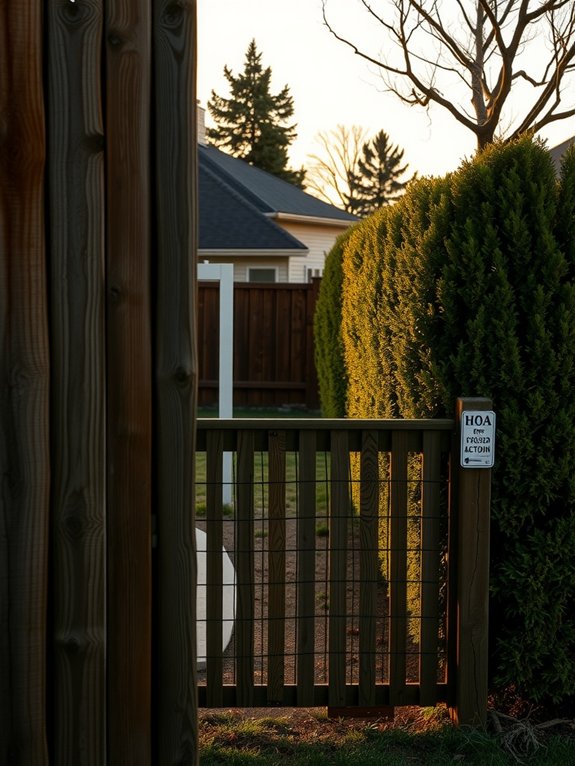
When you own a home in an HOA community, your backyard fence presents a unique situation. Even though the fence sits on your property, the HOA’s CC&Rs and bylaws can override your typical homeowner authority. This means the association might dictate what materials you use, how tall your fence can be, and who pays for maintenance.
Your community’s governing documents might classify the fence as common property that the HOA maintains entirely. Alternatively, they could assign all maintenance duties to you but require HOA approval before you make any repairs. Some communities split responsibilities based on where the fence is located or what purpose it serves.
The key step is reviewing your specific HOA documentation. What counts as your responsibility in one neighborhood might belong entirely to the association in another. This difference fundamentally reshapes your financial and legal obligations as a property owner, so it’s worth understanding before you tackle any fence project or assume maintenance costs.
HOA Bylaws and Fence Ownership
Your homeowners association’s governing documents can completely change how fence responsibility works in your community. Instead of following Texas’s default rule—where neighbors don’t automatically share fence costs—your HOA’s rules take over and reshape who pays for what.
Your community’s governing documents spell out the specifics that control fence ownership and maintenance:
- Material and height standards in your CC&Rs set exact specifications for what fences should look like, which helps prevent disagreements from starting in the first place
- Cost allocation frameworks in your bylaws determine whether the HOA covers expenses, you and your neighbor split them, or you handle costs on your own
- ACC approval processes mean you need permission before doing any fence work, which controls both when the work happens and how it gets done
These documents shift fence ownership from being your individual problem to something your community manages together. That means your rights and responsibilities within the HOA change significantly based on what your specific rules require.
Privacy Restrictions and Material Standards
Your HOA’s governing documents do more than split costs with your neighbor—they also set the rules for how your fence actually looks, which determines who pays to maintain it. Your community probably has specific standards about materials, height, and finish. These rules exist to keep the neighborhood looking consistent and protect property values. When you’re choosing between wood and vinyl or deciding on a four-foot versus six-foot fence for privacy, you’re not making a purely personal decision. You’re working within the boundaries your HOA has set up. These material and privacy standards matter for maintenance too. A fence that meets community requirements is much easier to justify as a shared expense. One that breaks the rules, though, could end up being entirely your responsibility to maintain and eventually replace.
Enforcing Community Fence Requirements
What separates a fence dispute that stays between neighbors from one that lands in your HOA’s enforcement machinery is often a single document: your community’s governing CC&Rs and bylaws. These documents can override Texas’s default ownership rules entirely when they’re specific enough and you’ve agreed to them.
Your HOA bylaws establish maintenance responsibilities that supersede traditional property line assumptions. Before undertaking repairs, you’ll likely need ACC approval. Skipping this step weakens your position in disputes and may render cost-sharing arrangements unenforceable.
When violations occur, your HOA has several tools at its disposal:
- Written notice detailing what needs fixing and when
- Fines or liens if you don’t bring things into compliance with community standards
- Mandatory repairs enforced through legal action when neglect threatens community aesthetics
Understanding your governing documents prevents costly missteps and strengthens your standing when disputes arise.
Who Pays for Storm Damage and Wear and Tear?
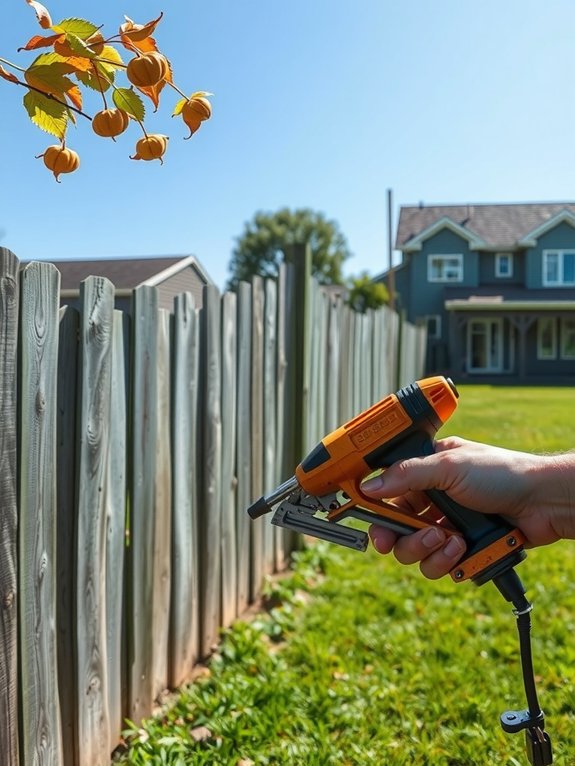
When you’re dealing with fence damage—whether it’s from a sudden storm or wear that builds up over time—who pays for repairs really comes down to where your fence is located and what you’ve agreed to in writing. Texas law doesn’t automatically split costs between neighbors the way a lot of people think it does.
If your fence sits entirely on your property, you’re responsible for fixing it and covering storm damage. The only exceptions are if your HOA has rules about it or you have a written agreement with your neighbor that says otherwise. Keep in mind that if you don’t maintain your fence properly and it falls apart and damages your neighbor’s property, you could end up liable for that too.
Things get more complicated with boundary fences that sit right on the property line. Without a formal agreement between you and your neighbor, the costs for repairs and storm damage are basically up in the air. You’ll need to negotiate with your neighbor about who pays when something happens. Local ordinances or community bylaws might give you clearer guidance, so it’s worth checking what rules apply in your area.
Storm Damage Liability Allocation
Storm damage to a fence raises questions that don’t have neat, universal answers in Texas. The responsible party depends largely on where the fence sits, what agreements you’ve made with neighbors, and whether negligence played a role in the damage occurring.
Single-property fences: If the fence exists entirely on your land, you’ll typically bear full responsibility for repairs regardless of storm severity.
Boundary fences: Shared responsibility isn’t automatic here. You’re only obligated to split costs if you’ve established a prior agreement with your neighbor.
Negligence factors: Liability shifts to you if poor maintenance or deferred upkeep contributed to storm damage that harmed adjacent property. This means you could potentially owe your neighbor for damages even if the initial cause was weather-related.
Insurance coverage: Your ability to recover costs depends on your specific policy and whether your fence qualifies as an insurable structure rather than a personal liability matter. Review your policy details or contact your agent to understand what storms or damage types your coverage includes.
Maintenance Wear And Tear
Beyond the immediate question of who pays when a storm strikes, you’re also dealing with the slower, relentless wear that comes from Texas weather itself. UV exposure fades wood, moisture cycles warp boards, and freeze-thaw patterns crack concrete footings. Unlike dramatic storm damage, this gradual deterioration is your responsibility as the property owner, whether your fence sits entirely on your land or straddles a boundary line.
| Wear Type | Responsibility | Prevention | Cost Timeline |
|---|---|---|---|
| Wood rot | Owner | Sealing, drainage | 5-10 years |
| UV fading | Owner | Stain/paint | 3-5 years |
| Board warping | Owner | Ventilation | 7-12 years |
| Footing cracks | Owner | Inspection | 10-15 years |
Here’s what matters: Texas law doesn’t require you and your neighbors to split the cost of routine fence maintenance. That means your homeowner’s insurance and preventative upkeep are your main tools for keeping repair expenses from spiraling. Regular sealing, fresh paint or stain every few years, and periodic inspections of your footings can add years to your fence’s life and keep your wallet healthier.
Getting a Survey to Confirm Fence Lines
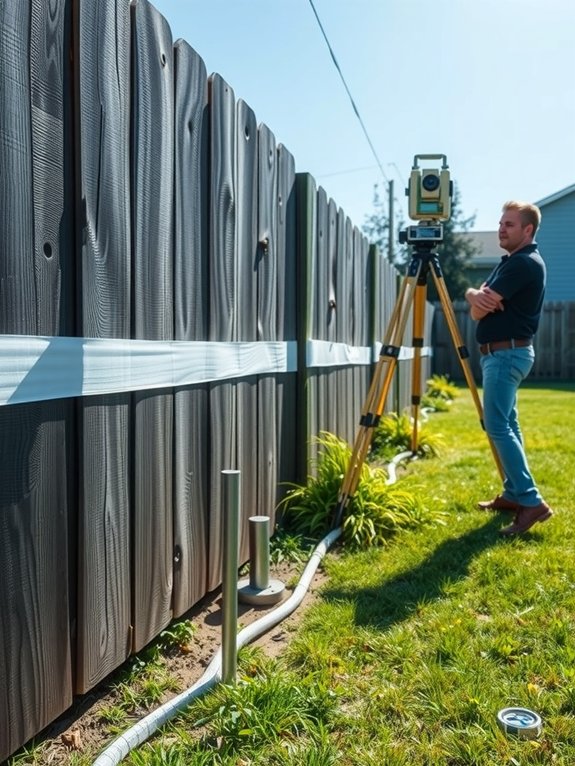
How do you know where your fence actually sits without getting a professional survey? A qualified surveyor maps your property’s exact boundaries, establishing which side of the fence belongs to whom. This matters because it determines who pays for maintenance and repairs.
Getting a survey protects you in several ways. First, it confirms whether your fence sits entirely on your property, making you solely responsible for upkeep and repairs. Second, it identifies boundary line fences, which typically require shared maintenance costs between neighboring properties. Third, it documents encroachment issues that could otherwise shift liability unfairly to you.
That investment in clarity now prevents costly conflicts later. You’re not just protecting your wallet. You’re establishing legitimate ownership claims grounded in professional documentation rather than assumptions about where your property actually ends.
Encroachment: Your Options When a Neighbor’s Fence Crosses Over
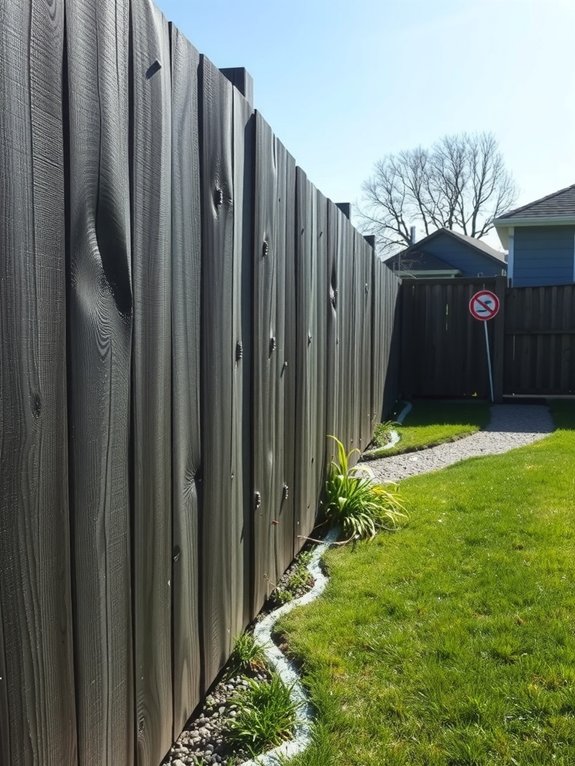
Once you’ve confirmed through a survey that your neighbor’s fence actually crosses onto your property—something that happens more often than you’d think, especially with older homes where original property markers have disappeared—you need to figure out what legal options make sense for your situation.
Your choices basically break down into a few paths. You can try working out a deal where your neighbor removes or adjusts the fence. You can send a formal notice. You can ask a court to order the fence removed or force your neighbor to pay damages. Which route you take depends on several factors specific to your location and circumstances.
Check what your local laws say about encroachments. Look into whether your HOA has rules that apply. Review building codes in your area. Pay attention to how long the fence has been there, since adverse possession laws in some places can actually give your neighbor legal rights to the fence if it’s stood unchallenged for several years. These time limits vary significantly by jurisdiction.
Your next step really comes down to three things: how your neighbor responds when you bring it up, how much of your property the fence actually affects, and how much time and money you’re willing to spend resolving this. Sometimes a fence crosses over because of an honest mistake. Sometimes it doesn’t. Your neighbor’s willingness to cooperate will help you decide whether negotiation makes sense first, or whether you should move straight to sending a formal legal notice or pursuing court action.
Legal Remedies Available Options
When you discover that your neighbor’s fence has crossed onto your property, you’re dealing with a boundary violation that happens more often than most people realize. You do have legitimate legal options available, though moving forward isn’t straightforward and requires you to think through both the practical and legal sides of your situation.
Your main remedies for encroachment are:
- Direct negotiation with your neighbor — This approach often moves faster and costs less than going to court. You can try working things out between yourselves before you escalate to formal legal action.
- Court-ordered removal — You can file a petition asking a judge to compel your neighbor to remove the fence and settle the boundary question through the court system.
- Monetary compensation — You can pursue damages to recover money for the loss of land use or any decrease in your property value caused by the encroachment.
Before you move forward with any of these options, you’ll need solid documentation. A professional survey that establishes your exact property lines is essential. Without it, your legal position won’t hold much weight. Getting this survey done first strengthens whatever path you choose next.
Surveying And Boundary Verification
Before you can pursue legal remedies—whether that’s negotiation, court action, or a damages claim—you need to know exactly where your property line actually is. That’s where hiring a professional surveyor becomes essential.
A licensed surveyor will examine your deed records, look at any previous surveys on file, and check for physical markers on the ground. Their job is to establish your precise boundary lines and determine whether an encroachment actually exists. This formal documentation requires some upfront money, but it gives you the concrete evidence you’ll need if a dispute moves forward.
The survey results will tell you more than just where the fence sits. You’ll learn whether your neighbor genuinely misunderstood the boundary or knowingly crossed it. Armed with that information, you’re in a much stronger position. You can negotiate from a place of authority, and if things end up in court, you’ll have the evidence to back up your claims.
Negotiation And Settlement Strategies
Negotiation And Settlement Strategies
Once you have that survey documenting the fence encroachment, you’re in a better position to move forward. The key is using this evidence to negotiate rather than to blame.
Starting the conversation
Your first step should be talking to your neighbor informally. Show them the survey results and frame the fence crossing as a problem you both need to solve together. This approach works better than coming across as accusatory, and it keeps things from getting worse.
Getting it in writing
After you’ve discussed some initial ideas, put whatever you agree on into a written agreement. Document the specific steps each of you will take, when they’ll happen, and who pays for what. Having these details written down prevents misunderstandings later.
What you might agree to
Depending on your local rules and your neighbor’s situation, you have options. You could adjust where the boundary line actually sits, split maintenance costs going forward, or remove the fence entirely. Talk through what makes sense for both of you.
This steady, collaborative approach usually keeps disputes from becoming hostile and helps you maintain a workable relationship with the person next door.
Common Repair Disputes and How to Resolve Them
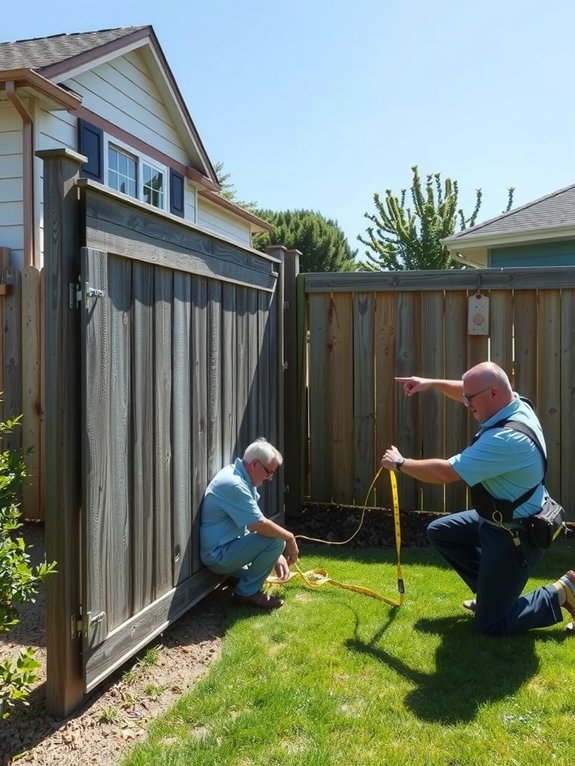
Fence Disputes: What You Need to Know
Fence disputes can catch you off guard, even after years of getting along with your neighbor. The main culprits are usually unclear ownership of the fence and mixed-up ideas about who pays for repairs. Things blow up fast when one of you thinks you’re splitting costs while the other assumes they’re footing the entire bill.
Before a disagreement gets out of hand, gather your paperwork. Pull together your property survey to confirm where the fence actually sits, check your HOA CC&Rs if you have them for what they say about maintenance, and get written repair estimates. If your fence runs along the property line, figure out whether you’ve made any agreements with your neighbor about sharing expenses.
Write down every conversation you have about cost-sharing. This step alone can stop a lot of future arguments. If things still feel murky, try mediation before you consider going to court. A mediator helps both of you lay out what you actually expect from each other and work out a solution you can both live with, whether that’s splitting maintenance duties, dividing costs, or something else entirely.
When to Hire a Real Estate Attorney
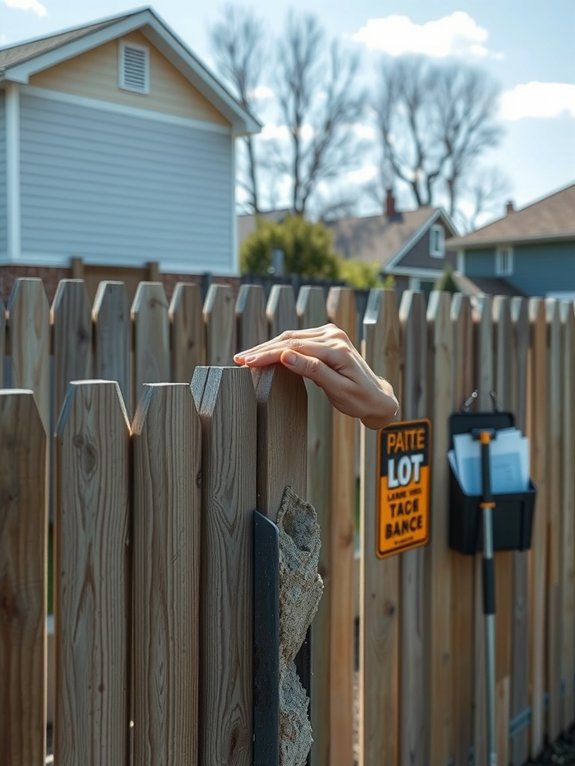
At some point during a fence dispute, you’ll notice that mediation isn’t making progress. Maybe your neighbor’s gotten defensive, the cost estimates keep shifting, or you’ve found out the fence actually sits on the property line but your HOA rules say something different from what your neighbor is claiming.
That’s when you should think about bringing in a real estate attorney. They can figure out who actually owns the fence using property surveys and settle boundary questions with legal backing. You’ll want to hire one if:
- Your written agreements or HOA rules need someone who knows the law to interpret them properly
- Your neighbor won’t split costs even though you both own the fence
- Things have gotten serious enough that there are threats or formal complaints involved
An attorney will defend what you’re entitled to, make sure you understand Texas law the right way, and create solutions that actually hold up. They take you out of the frustrating back-and-forth and give you real answers. You won’t end up paying for something that should be split fairly.