When you’re planning a fall garden, you’ll want to focus on three main categories of vegetables. Start with leafy greens like spinach and lettuce, which mature in 30–60 days. Plant them in staggered intervals two to three weeks apart so you get a continuous harvest rather than everything ripening at once.
Root vegetables such as carrots and beets need to go in the ground by early September and take 60–90 days to mature, giving you solid yields.
Brassicas like Brussels sprouts and broccoli require a different approach—start these indoors 85–100 days before your first frost date so they’re ready to transplant at the right time.
The real benefit comes from timing everything together. Greens give you fresh pickings throughout the season, roots provide substantial harvests you can store, and brassicas keep producing well into winter when other crops have stopped. When you coordinate the planting dates for all three types, you’ll maximize what your fall garden produces without leaving gaps in your harvest.
Leafy Greens: Stagger for Continuous Harvests
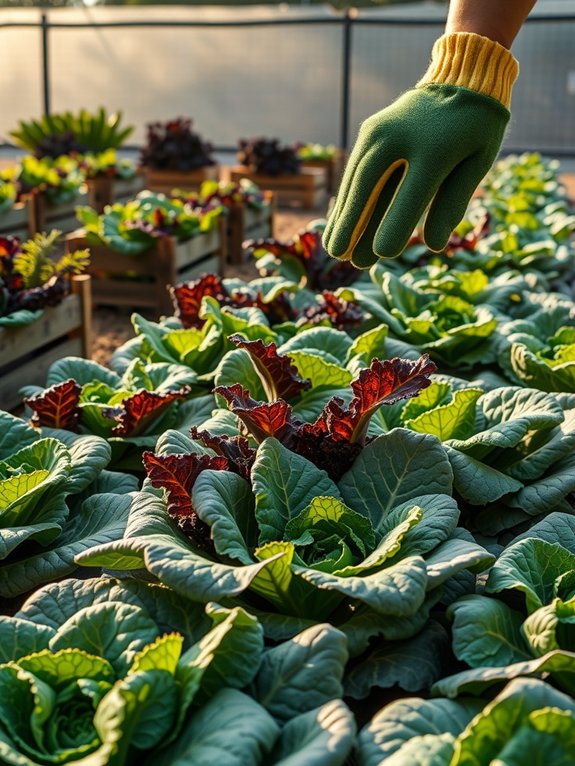
Fall gardening tends to feel more forgiving than spring, and stagger planting is a big part of why. When you sow seeds every two to three weeks starting four to eight weeks before your first frost, you create successive crops that mature at different times. This means you get fresh leaves throughout autumn instead of one big harvest all at once.
Spinach and lettuce are your quickest options, reaching harvestable size in thirty to sixty days. Kale and collards take longer but have a real advantage—they taste sweeter after frost hits, so they keep producing well into late fall. You’re working with the season’s natural rhythm rather than against it.
Row covers become your practical tool here. They shield your plants from cold snaps and extend your harvest window considerably. Layer them over your beds when temperatures drop, and you’ll keep picking longer than you’d expect.
The stagger approach works because it’s based on simple math and timing. You’re not relying on luck or perfect conditions. Instead, you’re building in backup crops so that if one planting gets hit by frost or bolts early, you’ve got others coming along. This kind of deliberate planning is how gardeners have worked with seasons for generations.
Root Vegetables: Fill Gaps With 60–90 Day Crops
Root Vegetables: Fill Gaps With 60–90 Day Crops
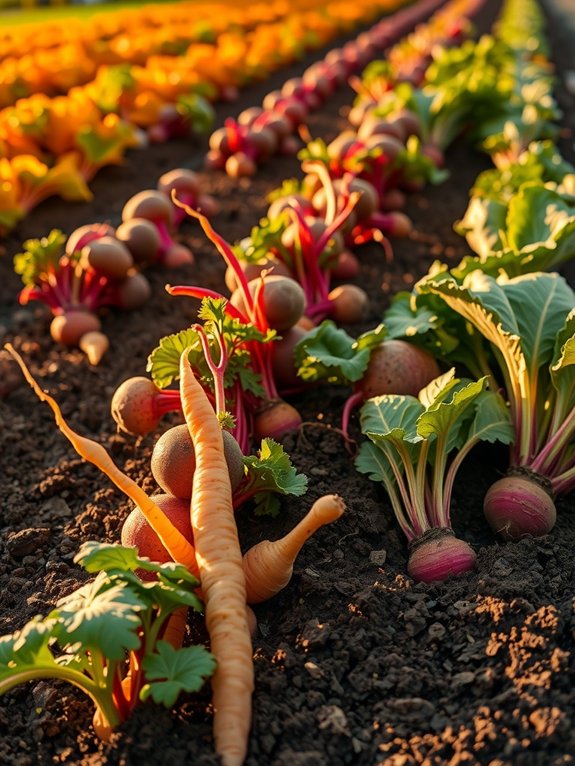
Where leafy greens give you continuous picking through autumn, root vegetables work differently. They give you a solid harvest window that you can plan around with confidence. Your fall garden works best when you start with your first frost date and work backward, picking crops like beets, carrots, turnips, and radishes that mature reliably within 60–90 days.
The timing matters a lot. You’ll want to sow seeds between mid-August and early September, though your exact window depends on where you live. Getting root crops to succeed means paying attention to a few specific things. Your soil needs to be rich and well-prepared so taproots can develop properly. You’ll need to water consistently throughout the growing season. Adding mulch layers helps protect roots through light frosts and stretches your harvest into late fall.
This approach turns the empty spots in your fall garden into yields you can actually count on.
Brassicas: Plan Indoors Now for Winter Heads
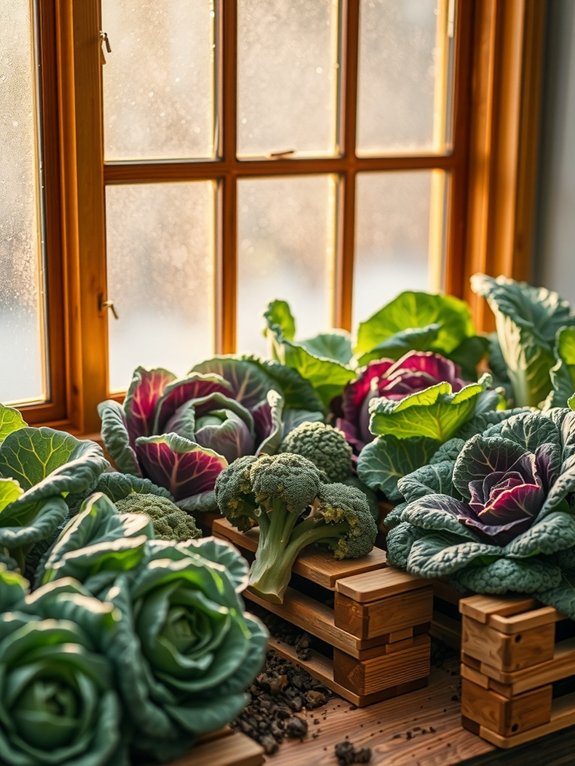
While root vegetables give you a dependable harvest window you can mark on your calendar, brassicas—broccoli, cauliflower, and Brussels sprouts—need a different approach. You’ll want to start seeds indoors about 85–100 days before your first frost. This gives your seedlings roughly three weeks to get established before you move them outside.
When you’re ready to transplant, space broccoli, cauliflower, and Brussels sprouts 18–30 inches apart, with rows spaced 16–20 inches wide. This spacing lets their heads develop without crowding. These hardy crops handle light frosts well, which means you can keep harvesting deep into winter.
From the time you transplant seedlings outdoors, you’re looking at 70–80 days until they’re ready to harvest. Keep the soil consistently moist and give them full sun. The planning upfront—starting seeds indoors at the right time—is what separates a scattered fall garden from one that actually produces.