
You’ll start by verifying property lines through your county clerk’s plat and checking local fence codes. You need to know the height restrictions, setback requirements, and what permits your area requires before you buy anything.
Next, pick your fence style and materials. Think about how much maintenance you’re willing to do and what fits your budget. Measure your entire fence line, then mark it with spray paint so you know exactly where everything goes.
Space your posts every six to eight feet along that marked line. Dig each post hole twenty-four inches deep, then set the posts in concrete with proper bracing to keep them straight and stable.
Once your posts are set, install your rails horizontally between them. After that, attach your boards vertically to create your fence panels. Finish by adding mid-run bracing for alignment and strength.
Each step sets up the next one, which means you’re building a solid structure that’ll hold up well over time.
Step 1: Check Property Lines and Local Building Codes
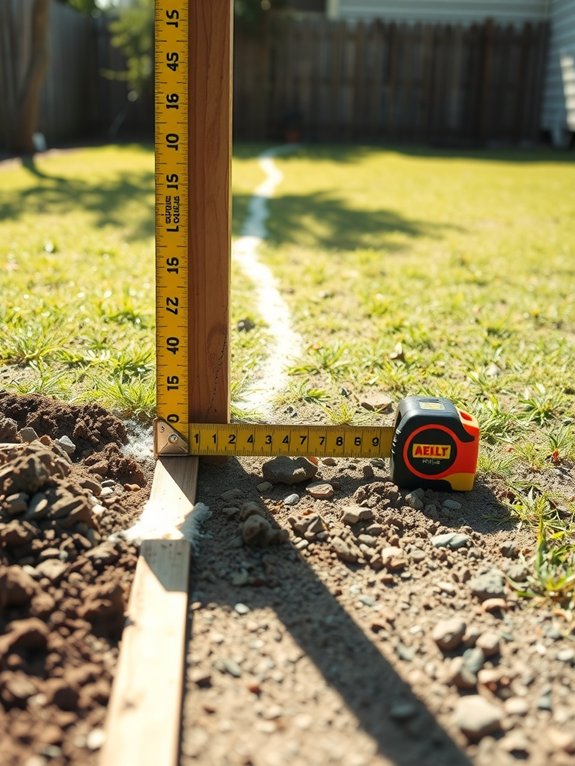
Before you install a single post, you need to know three things: where your property actually ends, what your local government allows, and whether you need permission to build. These rules determine whether your fence project stays legal and problem-free.
Before installing a fence post, know three things: property boundaries, local regulations, and permit requirements to stay legal.
Start by getting your property plat from the county clerk’s office or hire a surveyor to mark your exact boundaries. This prevents arguments with neighbors and makes sure you’re not accidentally building on their land. Then look up your municipality’s rules on fence height, design, and how far back from your property edge the fence needs to sit.
Check whether your area requires a permit before you start construction. Many places demand official approval, especially if your fence will be taller than a certain height. Getting this done early protects your money and shows your neighbors you respect local standards.
Step 2: Choose Your Fence Style and Design
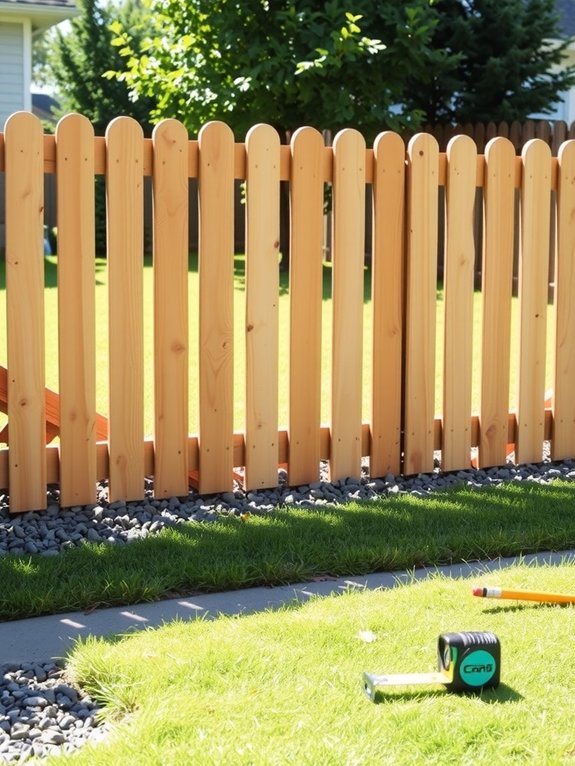
Now that you’ve confirmed your property lines and secured any necessary permits, it’s time to decide what your fence will actually look like. This choice matters because it affects how long installation takes and how much work you’ll put into maintenance down the road.
Your fence style—whether you go with board-on-board, shadow box, or standard solid panels—shapes both how your fence looks and how it functions. Different designs handle wind differently, and they each need different levels of upkeep. If you live in a windy area, for example, some styles will stand up better than others.
You’ll also need to pick your material. Wood, vinyl, aluminum, and composite are your main options, and each one has different trade-offs. Wood looks classic but needs regular staining or sealing. Vinyl costs more upfront but requires less maintenance. Aluminum is lightweight and durable. Composite splits the difference between wood and vinyl. Your choice depends on your budget and how much maintenance you’re willing to do over time.
When you’re planning the layout, space your posts about 6 to 8 feet apart. This spacing keeps your fence structurally sound while managing material costs. You should also think about which side of the fence faces your neighbors—the “good side”—since that’s what people see from the street or neighboring properties.
Finally, consider your local climate when selecting materials. Rain, snow, heat, and sun exposure all affect how well your fence holds up and looks years from now.
Step 3: Plan Your Layout and Mark the Fence Line
Step 3: Plan Your Layout and Mark the Fence Line
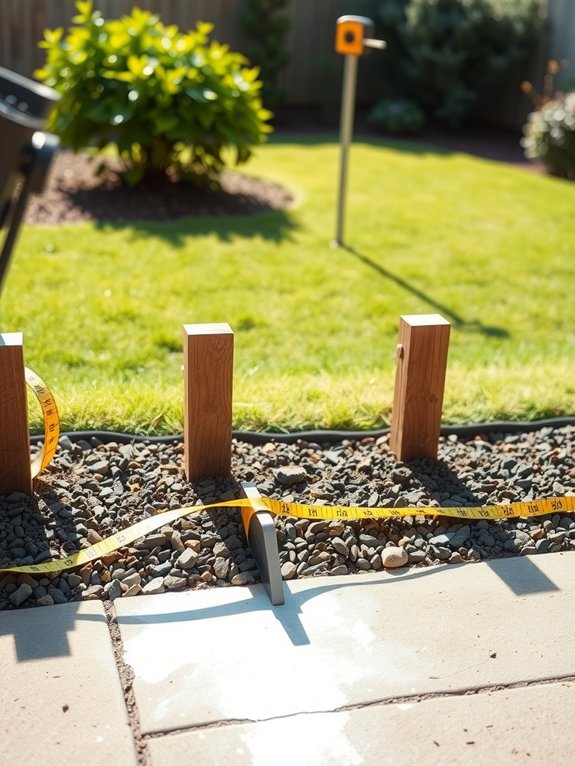
Before you break ground or rent equipment, you need to figure out exactly where your fence will go. This step requires just a measuring tape and spray paint, but it’ll prevent expensive mistakes down the road.
Planning your fence layout before breaking ground prevents costly mistakes and saves time down the road.
Start by measuring your entire fence line, including all gate locations. Use spray paint or chalk to outline the route and create a visual map of where everything will sit. Along this line, mark your post spacing every 6 to 8 feet. This spacing keeps your posts aligned uniformly and makes installation easier.
Once your posts are marked, calculate how many panels you’ll need. Take your total footage and subtract the lengths of any gates. This gives you the actual panel footage you have to cover.
Before you dig a single post hole, verify that your layout respects property line boundaries and any HOA setback requirements. Checking these details now keeps your fence legally compliant and saves you from having to tear down work later.
Step 4: Gather Tools and Materials for Your Fence
Step 4: Gather Tools and Materials for Your Fence
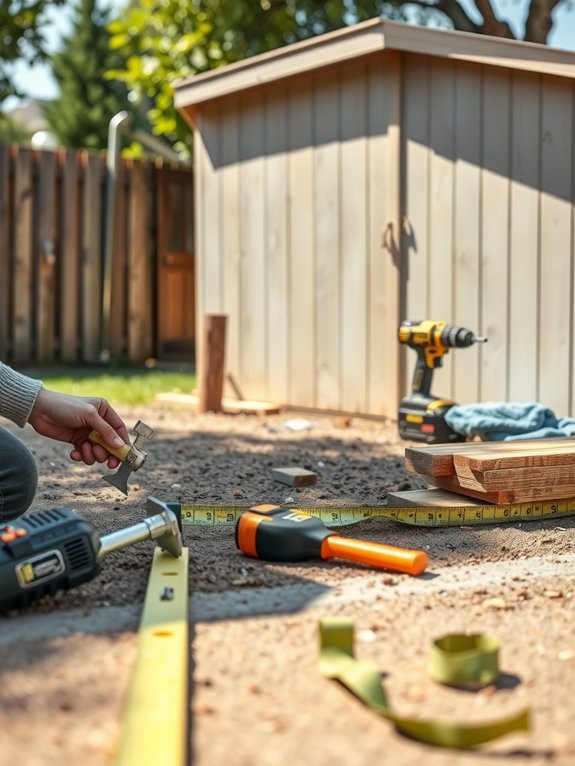
Before you start digging, collect everything you need so you’re not making trips to the hardware store halfway through. You’ll want these tools: a post hole digger, hammer, power drill, level, measuring tape, and saw. Don’t forget appropriate safety gear for the job.
For your fence materials, grab sturdy posts like 2x4s or 4x4s, concrete mix in 60-pound bags, deck boards or panels, and quality nails or deck screws. You’ll also need gravel for drainage beneath the posts.
Calculate how much concrete you need based on your post depth and spacing. If your posts go 3 feet deep and you’re spacing them 6 feet apart, work out the exact quantity before you start. This prevents you from running short mid-installation. Have a water source nearby so you can mix concrete and let it cure properly without delays.
Getting organized at this stage means your installation goes smoothly and your fence will be structurally sound.
Step 5: Dig and Set Fence Posts in Concrete
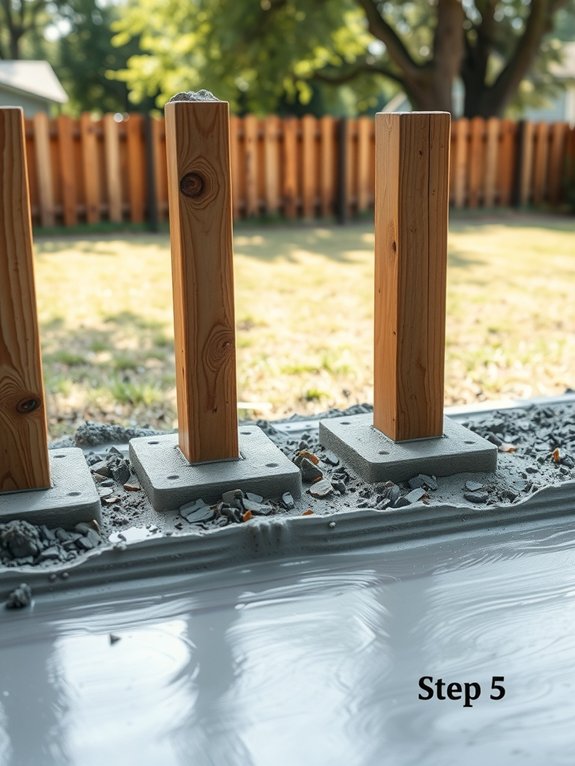
Since your entire fence depends on solid post placement, start with your corner posts—they take the most stress and need to go in first. Dig holes twenty-four inches deep and two to three inches wider than your posts. Put down three to four inches of gravel at the bottom, then pour concrete around each post to a depth of six to eight inches. Use a level to make sure each post stands perfectly vertical. This step takes patience, but getting it right now saves problems later.
Space your remaining posts every six to eight feet along your line. Once all posts are set, add water to the concrete gradually and let it cure according to the manufacturer’s timeline. While the concrete sets, brace each post from behind with two-by-four braces at mid-height to keep everything stable and straight.
Step 6: Install Rails and Attach Fence Boards
Step 6: Install Rails and Attach Fence Boards****
Your fence really starts to look like a structure once you get those rails up. Rails are the horizontal pieces that connect your posts and give your fence its strength. Without them, you’ve basically got vertical sticks. With them, you’ve got something that’ll actually hold boards and stand against weather.
To install rails properly:
- Decide how tall you want your fence, then plan for at least three rails on privacy fencing—one near the top, one in the middle, and one near the bottom
- Hold each rail level against your posts and mark where it needs to go
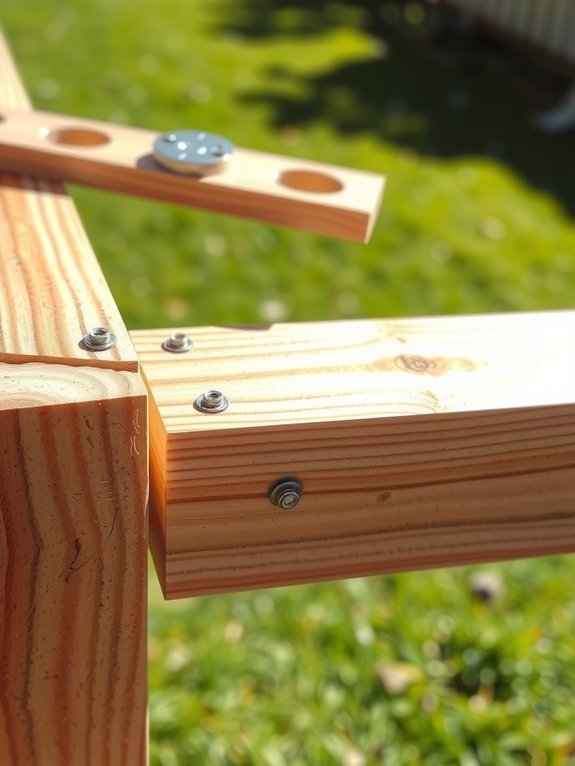
- Attach the rails using deck screws or nails, making sure they’re actually level and spaced evenly from post to post
- Tighten all connections before you move on
Once your rails run straight and true between each pair of posts, you’re ready to attach your boards or panels. That’s when your fence actually becomes the boundary and backdrop for your yard.
Step 7: Install Bracing for Proper Alignment
Step 7: Install Bracing for Proper Alignment
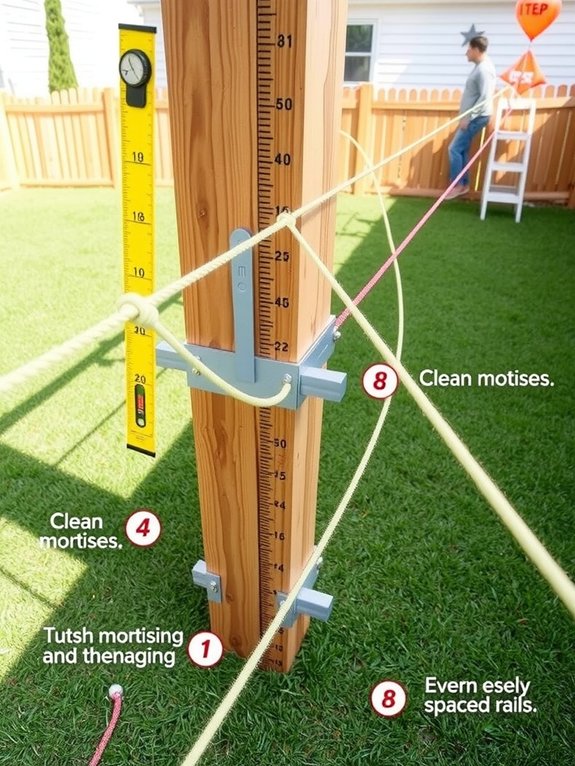
Before you attach those boards and lock everything into place, you need to install bracing. This reinforcement keeps your fence standing straight long after the wood settles and weathers. Position your 2×4 braces horizontally behind your fence line, anchoring them securely to the posts at the midpoint of each run. This placement counteracts the tension that builds as boards cure, preventing the bowing and gaps that compromise your alignment.
Install bracing before final tightening. This sequence preserves straightness throughout the settling process. During installation, regularly check your braces with a level and make small adjustments as needed. These early corrections prevent costly fixes down the road. You’re essentially building insurance against the wood’s natural movement, creating a fence that stays taut and true for years.