
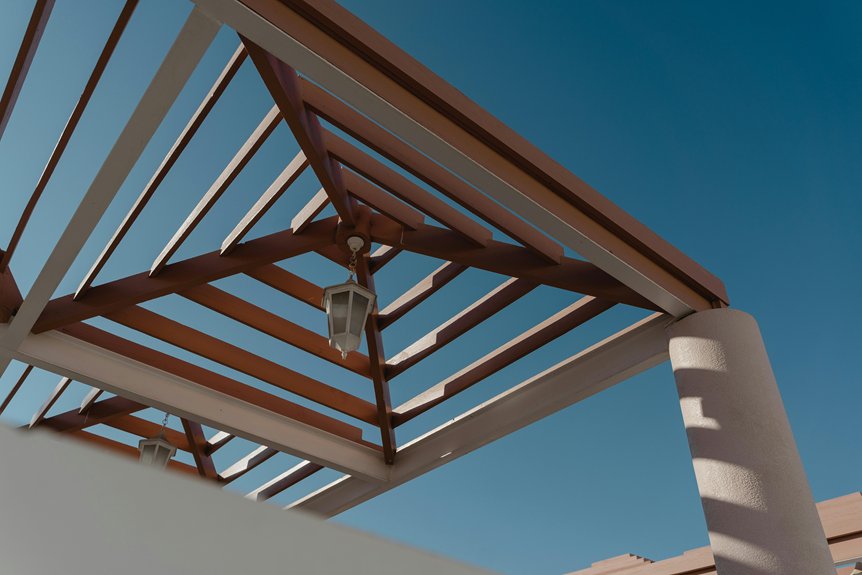
Whether you’ll need a permit for your pergola depends on a few key factors: size, location, and what you’re building. Most areas won’t require a permit if your pergola is a freestanding structure under 120 square feet and you’re not adding electrical work. That said, local codes vary quite a bit, so what flies in one neighborhood might not in another.
A few situations will likely push you toward needing a permit. If your pergola goes over that 120-square-foot size, you’ll probably need one. The same goes if it’s too close to your property lines, has a solid roof instead of open slats, or connects directly to your house. Any of these details tends to trigger local building department requirements.
Before you start building, check what your specific area requires. Your local building department can tell you exactly what applies to your project. Knowing this upfront affects both how long your project takes and what it costs, so it’s worth a quick phone call or website visit to get the details straight.
Quick Answer: Size, Location, and Utilities Determine Your Permit Need
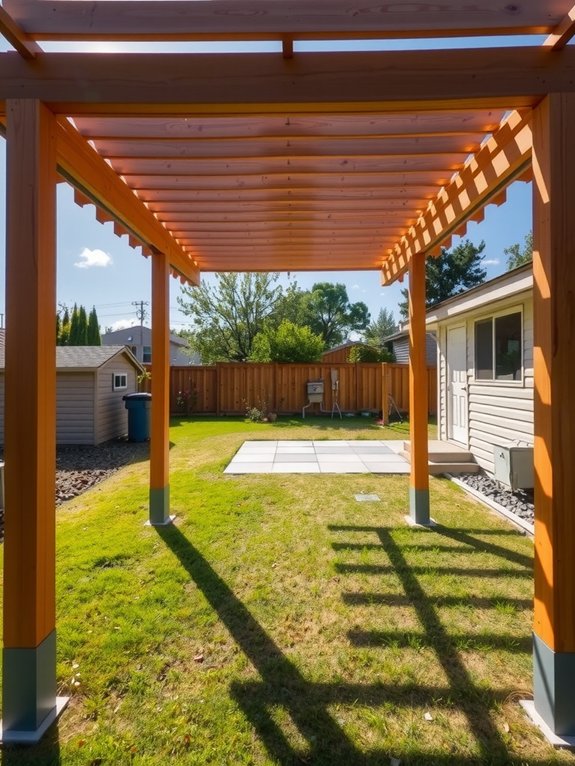
When you’re planning a pergola project, the permit question rarely has a simple yes-or-no answer. Instead, it depends on three things your local building department will care about: how big your structure is, where you’re putting it on your property, and whether you’re adding any utilities like electricity.
A freestanding pergola under 120 square feet and standing below 8–10 feet might not need a permit, as long as it respects your property lines and any easements. But if your structure is larger, you’re attaching it to your house, or you’re running electrical work, you’ll need formal inspection and approval.
The specific codes your building department follows vary depending on where you live. Before you start digging or building anything, contact your local building department to find out what applies to your situation. Checking this early saves you money and headaches down the road.
What Triggers a Permit Requirement for Your Pergola?
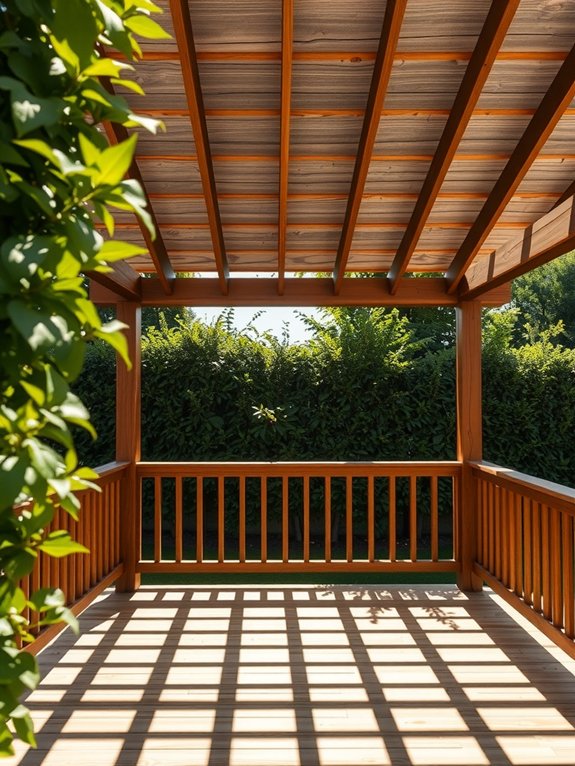
Why does one pergola sail through without a permit while another requires inspections and formal approval? The answer lies in several specific triggers that determine whether you’ll need a building permit.
Size threshold matters first. Structures exceeding 120 square feet typically cross into permit territory. Location equally counts, since proximity to property lines and zoning setbacks can demand variances or formal approval. Any electrical or plumbing work automatically necessitates permits, regardless of your pergola’s dimensions.
Size, location, and utilities are the primary triggers determining whether your pergola requires a building permit.
Roof design shifts things too. A solid covering may trigger reclassification as a pavilion, which intensifies scrutiny from your local building department. Your HOA approval, while separate from municipal permits, often influences the process significantly.
Before you break ground, understand these key triggers: size, location, utilities, structural classification, and setback compliance. Knowing what matters helps you figure out what’s genuinely needed and what approvals you should anticipate.
Pergola Permit Requirements: Building Codes and Zoning Laws
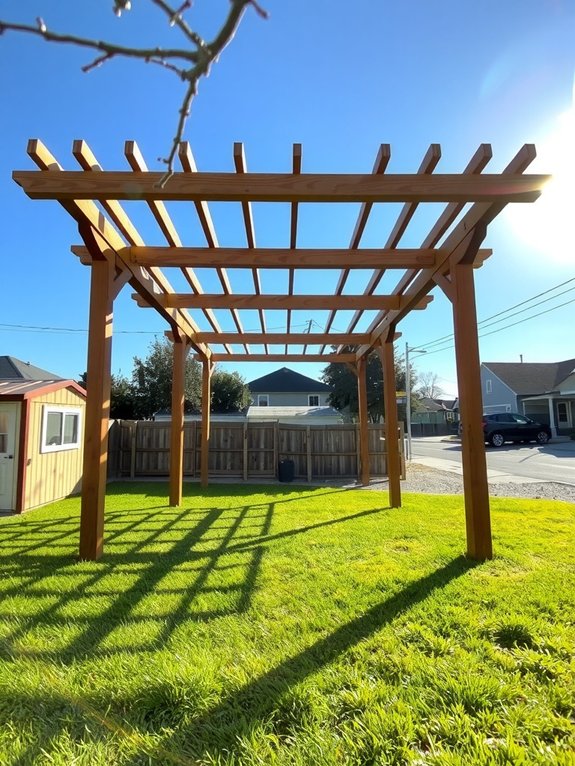
Whether your local building department requires a permit for your pergola depends on specific measurements that differ from place to place but follow similar patterns. You’ll need to understand several connected requirements that work together:
Size and height matter first. Most jurisdictions set thresholds around 120 square feet or 8–10 feet tall. If your freestanding pergola stays below these numbers, you might skip the permit process. Go over them, and you’ll likely need one.
Setback distances come next. Your structure has to sit a certain distance from your property lines—the exact measurement varies by location. Zoning laws enforce these spacing rules strictly, so check your local codes before you build.
Electrical work changes everything. The moment you wire your pergola for lights or outlets, you need an electrical permit. This applies no matter how small your structure is.
Your HOA adds another layer. If you live in a neighborhood with a homeowners association, you’ll need their approval in addition to municipal permits. This can mean extra paperwork and longer wait times.
Roof design affects your classification. A pergola with a solid roof often gets treated differently than an open one. Building departments may reclassify a solid-roof design as a pavilion, which triggers stricter height limits and coverage restrictions. This increased scrutiny means more detailed plans and potentially higher costs.
How to Get a Pergola Permit: Application Steps and Timeline
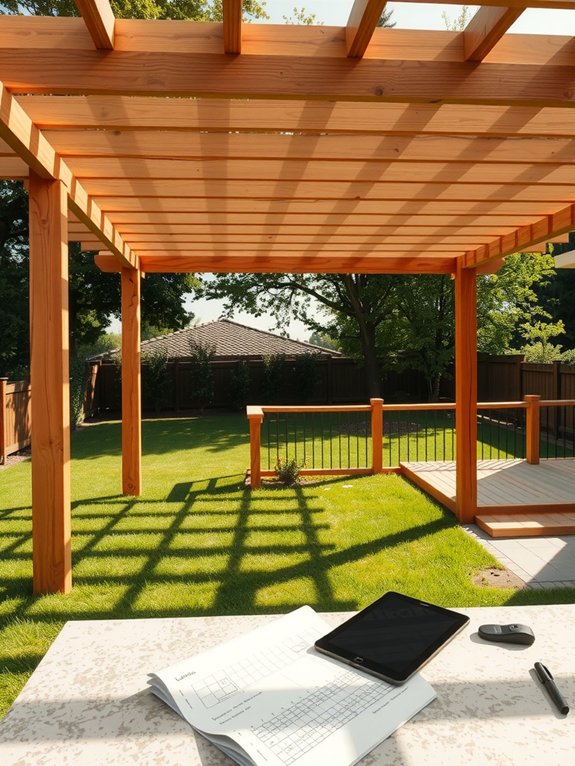
Once you’ve determined that your pergola project needs a permit, the application process follows a fairly predictable path, though timelines and specific requirements vary depending on where you live. You’ll start by visiting your local building department to submit your permit application. Bring a detailed site plan and construction drawings that show dimensions, materials, and structural details.
If you’re in an HOA community, you’ll also need to provide proof of HOA consent with your submission. The building department will review your materials and may ask for engineering calculations if your structure is larger. Most jurisdictions complete their initial review within two to four weeks. After that, you’ll schedule inspections once your work actually begins.
Your Pergola Permit Checklist: Forms, Plans, and Documentation
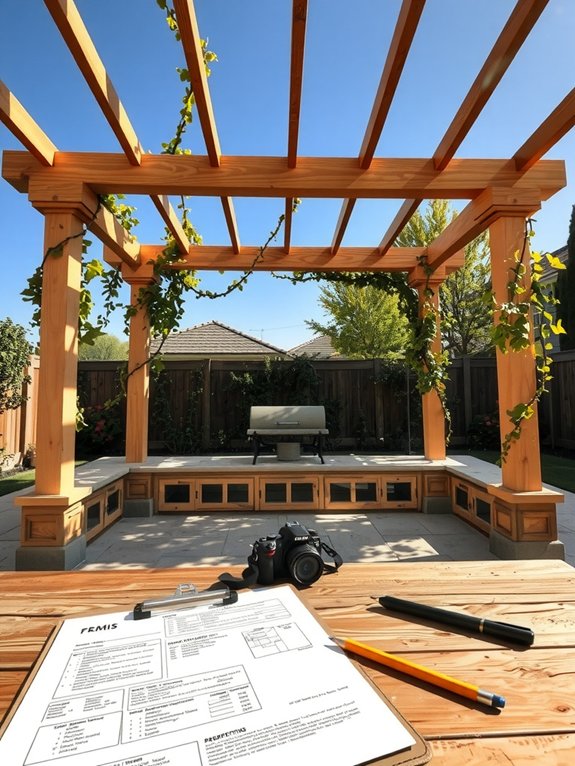
You’ll need to put together a complete documentation packet before submitting to your local building department. This should include your filled-out permit application, a scaled site plan that shows your lot dimensions and where the pergola will sit relative to your property lines and utilities, and detailed construction drawings listing the materials, dimensions, and structural details.
Submission timelines vary by jurisdiction, but most departments want you to budget 5–15 business days for their initial plan review. You should plan on at least one round of revisions or clarifications, especially if your pergola is larger than standard sizes or if the department requires engineering stamps.
After you address any reviewer comments and pay your fees, the department will set up your inspection schedule. The whole process—from application to final approval—typically takes three to eight weeks. This timeline depends on how busy your local department is and whether your project needs HOA approval or zoning verification.
Essential Documentation Packet
A complete permit packet—the foundational submission that’ll determine whether your project moves forward or gets sent back for rework—typically bundles together several critical components. You’ll need a filled-out permit application form, a site plan showing your property layout and the pergola’s placement, construction drawings that detail dimensions and materials, and for larger structures or areas subject to higher loads, engineering calculations or stamped documents from a licensed professional.
Your documentation packet needs to include:
- Permit application form completed with accurate property and project details
- Site plan clearly indicating pergola location relative to property lines and structures
- Construction drawings specifying dimensions, materials, and foundational details
- HOA approval letter, if applicable to your community
Many jurisdictions won’t issue permits without documented HOA consent alongside your complete documentation packet, so check whether your community requires this approval before you submit anything.
Submission Requirements And Timelines
Once you have your documentation packet ready, you’ll move into the submission phase. This is where you learn how your local jurisdiction actually works—the deadlines, review processes, and windows that keep things moving or create delays.
You’ll submit your permit application along with your site plan and construction drawings to the local building department. From there, your materials get routed to different reviewers. Building, structural, and trade specialists will look at your materials and dimensions. Meanwhile, the zoning and public works departments check your setbacks and calculate any impact fees you’ll owe. If you’re in an HOA, you’ll need that approval letter before the building department will issue your permit.
The review process typically takes several weeks. During this time, reviewers will send you comments or requests for changes. You’ll need to address these before you get approval. This back-and-forth is normal and expected—just factor it into your timeline.
One important detail: your permit expires within 180 days if you haven’t started work or gotten required inspections approved. If you’re getting close to that deadline, you’ll need to submit a permit extension to keep your project moving forward. Missing this step means your permit lapses and you’ll need to start the approval process over.
What Happens If You Build Without a Permit?

Why do so many homeowners skip the permit process, thinking they’ll save time and money, only to discover that the real costs—financial, legal, and structural—far exceed what they’d have paid upfront.
Building without a permit exposes you to serious consequences:
Fines and work stoppages. You’ll face substantial fines, and inspectors can issue stop-work orders that halt your project immediately. These fines often compound daily, making the financial hit worse the longer construction sits incomplete.
Demolition requirements. If your unpermitted work doesn’t meet code, you could be required to tear down what you’ve built and remove it at your own expense. There’s no getting around this one if the inspector determines it’s necessary.
Higher fees and corrections. Getting retroactive permits costs significantly more than getting them upfront. You’ll also need to pay for whatever code corrections are required to bring your work up to current standards.
Insurance problems. Your homeowner’s insurance likely won’t cover damage to unpermitted structures. If something goes wrong—a fire, a collapse, water damage—you’re paying for repairs completely out of pocket.
Selling complications. When you go to sell your home, unpermitted work becomes a major issue. Buyers and their lenders will want proof that everything was done correctly. You may face inspection requirements or be forced to disclose the unpermitted work, which typically reduces your home’s value or kills the sale entirely.
Getting permits from the start shows you’ve built to code and kept proper records. It protects your investment and your family.