
You can grow an Indoor garden with spider plants, African violets, peperomia, Boston ferns, and safe palms like areca and parlor varieties while keeping your cat completely safe. None of these plants are toxic, so even if your cat decides to nibble on them, you won’t have to worry about vomiting, lethargy, or organ damage.
The best part is that these plants don’t demand much from you. They handle variable light conditions and can bounce back from inconsistent watering schedules, which makes them genuinely low-maintenance choices for most homes.
To reduce the chances that your cat will chew on your plants, position them on high shelves or hang them in baskets where your cat can’t easily reach them. This simple step removes temptation without requiring you to choose between plants and pets.
Getting these plants to thrive does involve some specific care principles worth learning. Each plant has its own preferences for watering, light, and humidity, so taking time to understand what each one needs will help you keep them healthy long-term.
Why Some Plants Are Toxic to Cats (And How to Spot Safe Ones)
Why Some Houseplants Are Toxic to Cats (And How to Spot Safe Ones)
Some plants contain compounds that mess with your cat’s digestive system or organs when ingested, causing vomiting, drooling, or lethargy.
Have you wondered why certain plants in your home could make your cat sick while others are totally fine. The answer comes down to chemistry. Some plants contain compounds that mess with your cat’s digestive system or organs when your cat eats them. This can cause vomiting, drooling, or lethargy.
A few plants are particularly risky to keep around cats. Lilies, dieffenbachia, oleander, sago palm, azaleas, and tulips are the main ones you should watch out for. If you’re looking to add greenery without the worry, Spider Plant, African Violet, and Christmas Cactus are solid choices that won’t harm your cat.
Before you bring any new plant home, check it against the ASPCA toxicity database or call pet poison control. These resources let you build your own plant safety list so you know exactly what’s okay in your house. You might also keep a photo or notes about which plants you have and whether they’re safe.
If your cat does eat something toxic, watch for signs like vomiting, drooling, or unusual tiredness. The sooner you spot these symptoms, the sooner you can call your vet. Having quick ways to identify your plants—like labels or a phone list—helps you tell your vet exactly what your cat got into, which matters for getting the right treatment.
Spider Plant: Nearly Indestructible and Completely Non-Toxic
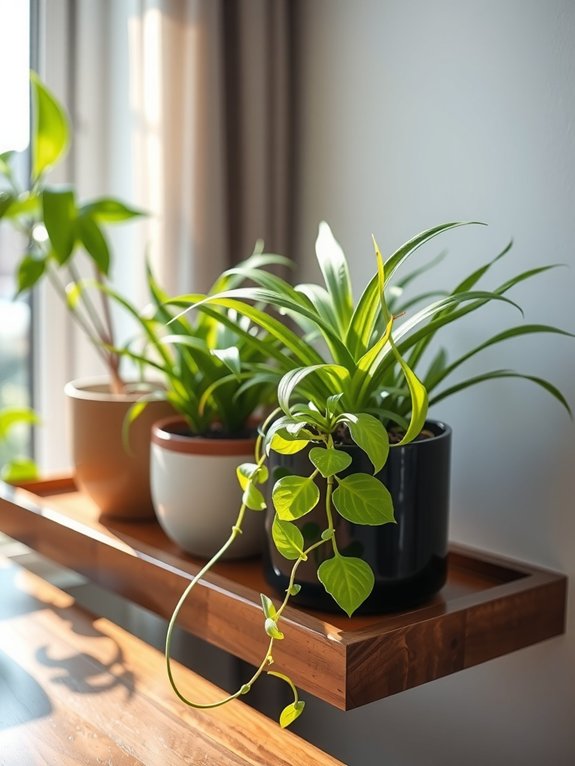
Your cat’s probably drawn to Spider Plants because of those dangling spiderettes that look like little toys and the arching leaves that move when your cat swats at them. It’s basically a plant designed for feline entertainment. The good news is that Spider Plants are super low-maintenance. They do fine in different light conditions and only need water when the top inch of soil feels dry. You can stick one pretty much anywhere in your home without stressing about keeping it alive.
Since Spider Plants are completely non-toxic to cats, you don’t have to worry if your cat decides to nibble on the leaves. If you want to protect the plant from getting chewed up, try rotating it regularly or placing it somewhere that’s less convenient for your cat to reach. That way you’re not fighting your cat’s natural curiosity, just redirecting it a bit.
Why Cats Love Spider Plants
If you’ve noticed your cat gravitating toward certain houseplants with an almost magnetic attraction, spider plants (Chlorophytum comosum) are probably the reason. They’re safe, they’re resilient, and they seem to possess an irresistible appeal that keeps felines coming back without consequence.
Your cat is drawn to the cascading arching leaves and delicate plantlets because they create visual and tactile stimulation. Cats naturally respond to movement and texture, and spider plants deliver both. Unlike many houseplants, spider plants won’t harm your feline companion even when chewed, making them genuinely feline-safe.
The hanging plant structure encourages interactive play, giving your cat something to bat at and explore. Beyond keeping your cat entertained, these plants also purify the air in your home, so you’re getting both enrichment and a practical benefit. You can provide what your cat instinctively wants while maintaining a safe living space—something that’s hard to find with indoor plants.
Easy Care Requirements Explained
Spider plants won’t test your patience or your green thumb. They’re a solid choice when you’re managing a curious cat’s safety alongside your plant care. These cat-friendly houseplants handle bright, indirect light or low light with equal ease, adapting to whatever your indoor space provides.
Watering them is straightforward. Keep the soil evenly moist while letting the top inch dry slightly between waterings. This rhythm helps you avoid the overwatering mistakes that catch a lot of people early on. Since spider plants are non-toxic and cat-safe while requiring minimal intervention, you get genuine peace of mind. You can focus on enjoying their graceful arching leaves instead of troubleshooting problems or worrying about your pet’s health.
Safe Growth Habits Guaranteed
What makes a houseplant genuinely reliable in a home where cats roam freely is its ability to handle both nibbling and occasional neglect. The spider plant does this better than most, which is why it’s become the standard choice for pet-owning plant parents. Its non-toxic nature means you don’t have to worry every time your cat takes a bite.
The spider plant’s forgiving biology is where its real strength lies. It tolerates irregular watering, adapts to different light conditions, and only needs well-draining soil to do well. You don’t have to get everything perfect for it to grow healthily.
Beyond just surviving, your spider plant will reward you with spiderettes—baby plants that emerge naturally. You can propagate these new plants to expand your cat-safe collection without much effort. This low-maintenance quality is what makes the spider plant a reliable companion for pet owners who want greenery without constant stress.
Cat-Safe Violets and Peperomia: Colorful, Low-Maintenance Picks
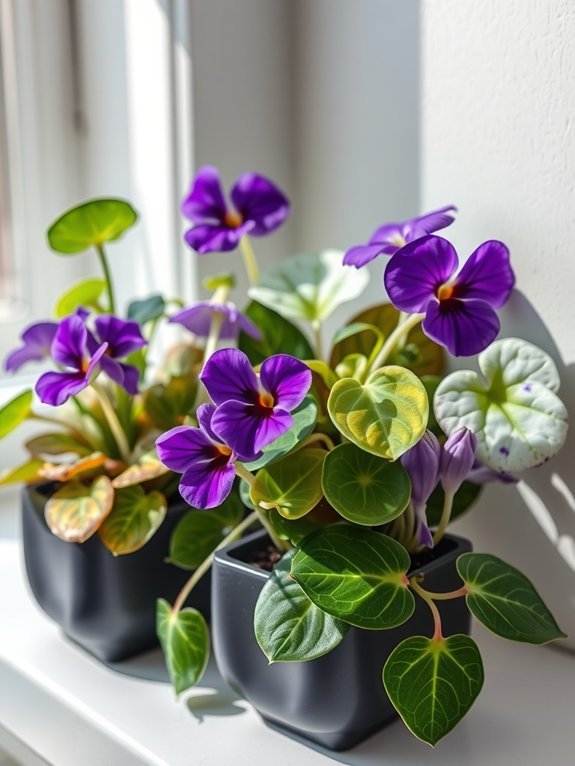
African Violets have velvety rosette leaves and bloom throughout the year, even though people often think they’re difficult to care for. The good news is they’re not nearly as demanding as their reputation suggests. You just need to give them bright, indirect light and keep the soil consistently moist. Since they’re non-toxic to cats, you won’t have to worry if your pet decides to nibble on the leaves.
Peperomia species like the Baby Rubber Plant are equally forgiving. Their glossy, compact foliage fits well into the variable conditions most homes naturally have. You can place them on shelves and tabletops where your cat might poke around without stress. These plants can handle whatever your household throws at them.
Combining both plant types creates a display that works on multiple levels. The African Violet’s delicate flowers pair nicely with the Peperomia’s textured leaves, giving you visual interest without the burden of high-maintenance care. You get the safety benefit of knowing neither plant poses a threat to your cat, plus the added bonus that both varieties help purify the air in your home.
African Violets For Beginners
If you want a cat-safe houseplant collection that still gives you color and flowers, African Violets and Peperomia are two solid choices when you’re starting out. African Violets are non-toxic to cats and bloom year-round when you give them bright, indirect light and keep their soil consistently moist and well-draining. Once you get into the rhythm, it’s pretty straightforward. Peperomia is equally safe for cats and needs less attention overall—it does fine with moderate watering and indirect light while showing off nice-looking leaves.
Both plants stay compact, so they work well on desks or shelves where you can keep them away from direct sun. This placement matters because it stops your cat from knocking them over. Since they don’t demand much from you, you’ll spend less time fixing problems and more time enjoying the colors and textures your plants bring into your home with your pet.
Peperomia Care Essentials
Peperomia plants, particularly the glossy-leaved Peperomia obtusifolia (commonly called Baby Rubber Plant), work well for people who want a houseplant that doesn’t require constant care. If you have cats, you’ll appreciate that these plants are non-toxic to them, which means you can grow them without worry.
To keep your Peperomia healthy, focus on three basic care requirements:
- Indirect light keeps the foliage looking vibrant without damaging the leaves
- Well-draining soil mixed with materials that prevent water from sitting around the roots
- Allowing the soil to dry partially between waterings, which takes advantage of their natural ability to handle drier conditions
This approach prevents root rot and matches how Peperomia grows in nature. Your compact, attractive plant will do well in your home alongside your cats, showing that pet-safe plants don’t have to look boring.
Combining Colors Safely
Why stick with just green when you can combine African Violets and Peperomia for a display that works well with cats in your home. African Violets give you purple, pink, and lavender flowers throughout the year, while different types of Peperomia obtusifolia add shiny leaves in matching colors. Both plants are non-toxic and don’t need much care, which matters when you have pets around.
These plants handle indirect light well, though they have different preferences. African Violets do best in bright indirect light, while Peperomia grows fine in low to medium light. This difference gives you flexibility in where you place them around your home.
When you arrange these plants, keep them where your cat can’t easily nibble on them. Position them on high shelves or in corners that are harder for pets to reach. Watching how your cat reacts to the plants helps you figure out if you need to move them further away. This way, you get the color and variety you want while keeping your pet safe.
Non-Toxic Palms That Thrive in Indoor Homes
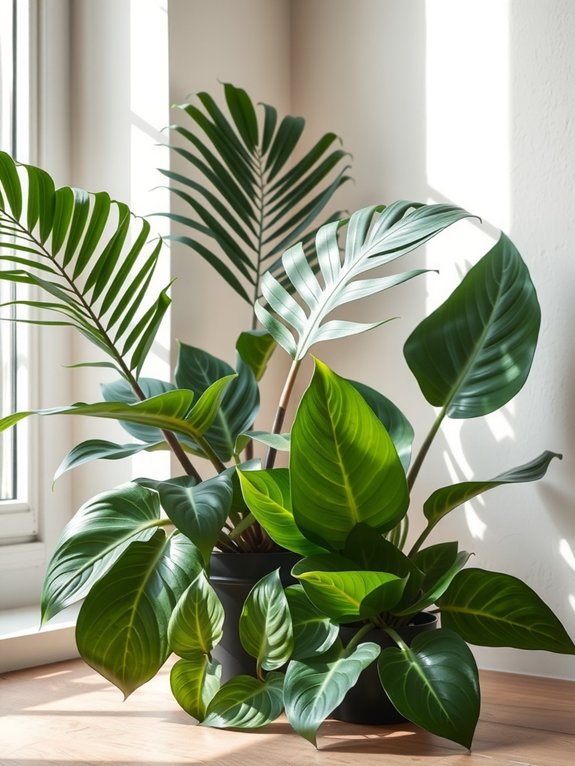
When you’re looking for houseplants that grow tall and graceful without putting your cat at risk, palms are solid choices. They’re safe for pets, visually interesting, and work well indoors. Cat-safe palms let you get that tropical look you want while keeping your feline friend protected from toxic plants.
Areca Palm does best in bright indirect light with soil that stays evenly moist. You’ll get those signature arching fronds that make it so visually appealing.
Parlor Palm adjusts well to lower light situations, which is helpful if your home doesn’t have tons of bright windows. It needs consistent moisture, though—you’ll want to water it regularly without letting the soil get waterlogged.
Ponytail Palm handles drought better than other options and likes bright indirect light. This one works if you sometimes forget to water or travel occasionally.
Any of these three will give you the tropical feel you’re after while keeping your cat safe from toxicity issues.
Safe Ferns for Cats: Beauty Without the Risk
If you’ve looked at those delicate, feathery plants in garden centers but worried about your cat, there’s good news. Several ferns and fern-like plants give you the visual interest you want without toxic concerns.
| Plant | Light Needs | Key Feature |
|---|---|---|
| Boston Fern | Bright indirect | Feathery fronds |
| Spider Plant | Bright indirect | Arching leaves with plantlets |
| Areca Palm | Bright indirect | Lush, arching fronds |
| Parlor Palm | Low to bright indirect | Elegant, fronded appearance |
Boston Ferns and Spider Plants are both non-toxic and work well indoors when you give them consistent misting and the right light. You’re not choosing between a nice-looking home and keeping your cat safe—these plants actually let you have both.
How to Arrange Cat-Safe Plants Where Cats Can’t Destroy Them
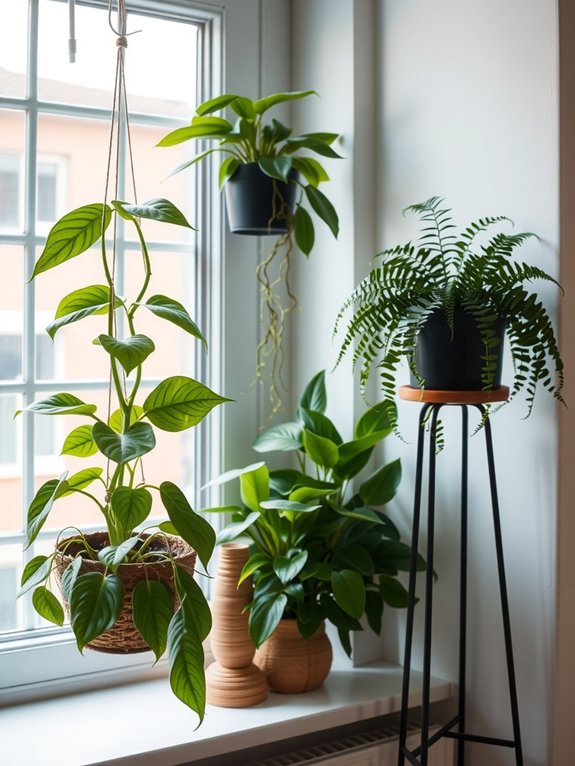
Just because a plant is non-toxic doesn’t mean your cat won’t treat it like a toy, batting at fronds or chewing on stems out of boredom or curiosity. You can protect your cat-safe plants by thinking strategically about where you put them.
Elevated displays work well for keeping plants out of reach. Put your Areca Palm, Boston Fern, and Spider Plant on high shelves or wall planters. This keeps them beyond casual paw reach while still letting you enjoy how they look in your room.
Vertical solutions are another option. Hang your Parlor Palm and other specimens in hanging baskets or vertical planters to create layers of greenery. When plants are up off the ground, cats are less likely to bother them.
Enclosed protection helps with plants your cat finds especially tempting, like the Boston Fern. You can use cat-proof enclosures or see-through barriers. This way, your plants stay protected while still looking good in your space.
One more practical tip: use lightweight pots on stable stands. Curious cats will investigate anything nearby, and a sturdy setup reduces the chance of things getting knocked over.
Your Cat Ate a Plant: Symptoms to Watch and When to Call the Vet
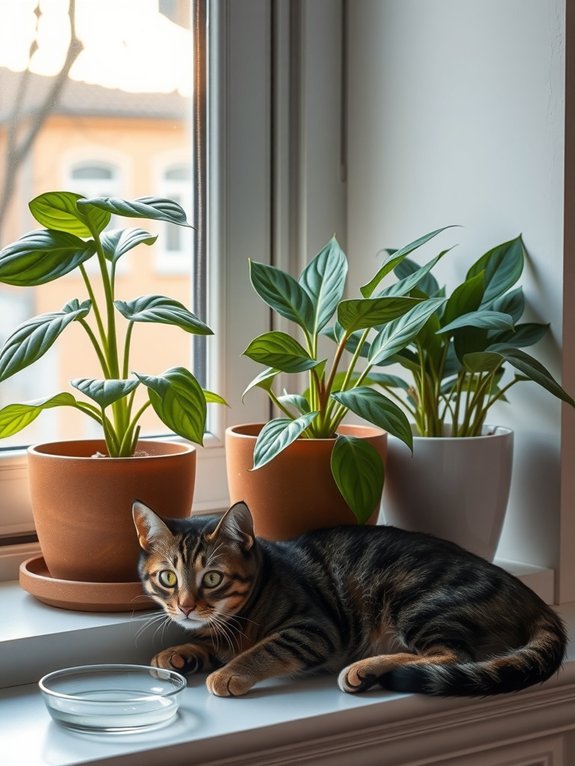
How you respond in the first hours after finding your cat eating a houseplant depends on knowing what they’ve eaten and watching for warning signs. Pay close attention to your cat during this time, since the first few hours matter most.
The first hours after your cat eats a houseplant are critical—stay alert and watch closely for warning signs.
Watch for vomiting, drooling, lethargy, seizures, or trouble breathing. These symptoms can show up within hours of your cat swallowing plant material. Write down the plant’s name or take a photo of it, estimate how much your cat ate, note what time it happened, and have your cat’s age and weight ready.
Don’t make your cat throw up on your own. Instead, remove any leftover plant pieces from around your cat and gently rinse out their mouth with water. Call your veterinarian or the ASPCA Animal Poison Control Center at 888-426-4435 right away if your cat shows any symptoms or if you can’t figure out what plant they ate.
Bring the plant sample or a clear photo to your vet appointment. This helps your vet identify the plant correctly and give you the right treatment plan for potential poisoning.