
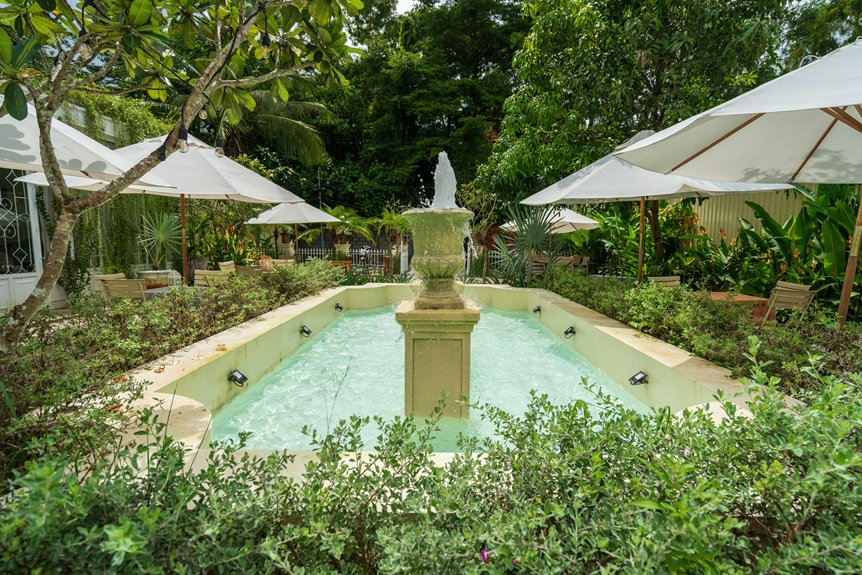
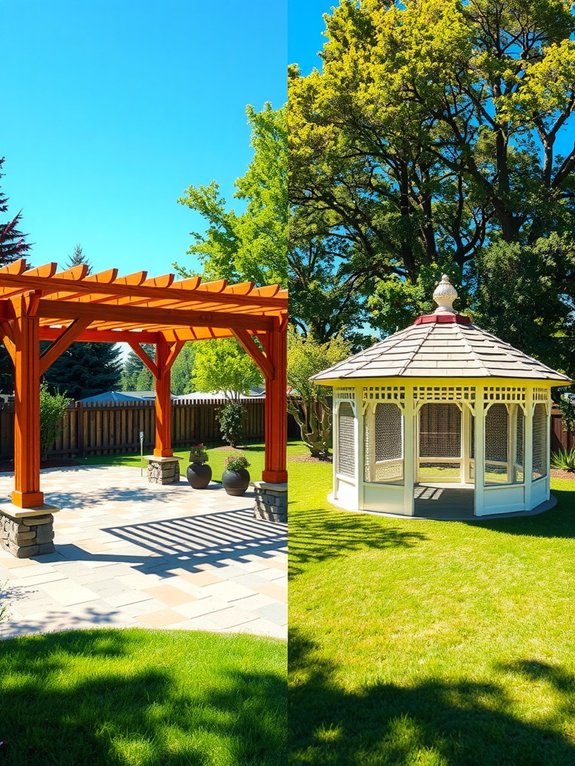
When you’re deciding between a pergola and a gazebo, the roof design is probably the first thing you’ll notice. Pergolas have adjustable louvers that let you control how much shade you want, while gazebos come with solid roofs that keep you completely protected from rain and sun. That’s a pretty big difference if weather is a concern for you.
The shapes matter too. Pergolas tend to be rectangular and stretch out in a line, whereas gazebos usually have a circular or hexagonal design. This affects how they look in your yard and how much space they actually take up.
You’ll also experience these structures differently. Pergolas have open sides, so air flows through easily and you stay connected to the rest of your yard. Gazebos work more like separate rooms—they’re enclosed spaces that sit apart from everything else. If you like feeling somewhat separate from your surroundings, a gazebo gives you that. If you want something that blends in with your yard’s flow, a pergola does that better.
From a practical standpoint, pergolas are easier to set up. You’ve got more flexibility about where to put one, and you’ll deal with fewer permit requirements. Gazebos need a solid foundation and typically require more permits and paperwork from your local government. That’s worth considering if you want a quick installation.
Your decision really comes down to what matters most to you. Do you want something flexible with partial shade and open sides, or do you need permanent protection from the elements.
Pergola vs. Gazebo: How Roof Design Changes Everything
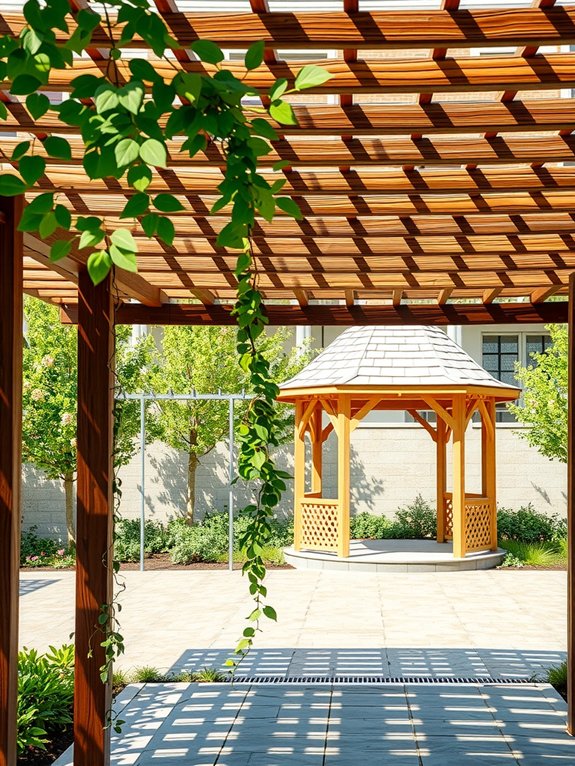
When you’re comparing a pergola and a gazebo, the first thing you’ll notice is what’s happening overhead. That roof design is what really changes how you’ll use the structure day to day. A pergola gives you adjustable louvers—either full or retractable—so you control how much shade you get. You can dial in partial shade and shift it as the seasons change or your needs do. A gazebo takes the opposite approach. Its solid, pitched roof stays put and gives you complete weather protection no matter what.
Beyond just coverage, these two structures work differently with your outdoor space. Pergolas have open sides that let air move through and keep your garden feeling connected to the rest of your yard. Gazebos create more of a separate outdoor room—they’re enclosed and designed to shield you from the elements. Picking between them really comes down to what you actually want from your outdoor space. Do you want flexibility with light and airflow, or do you need a solid, protected area that works in any weather.
Shape and Layout: Why It Matters for Your Space
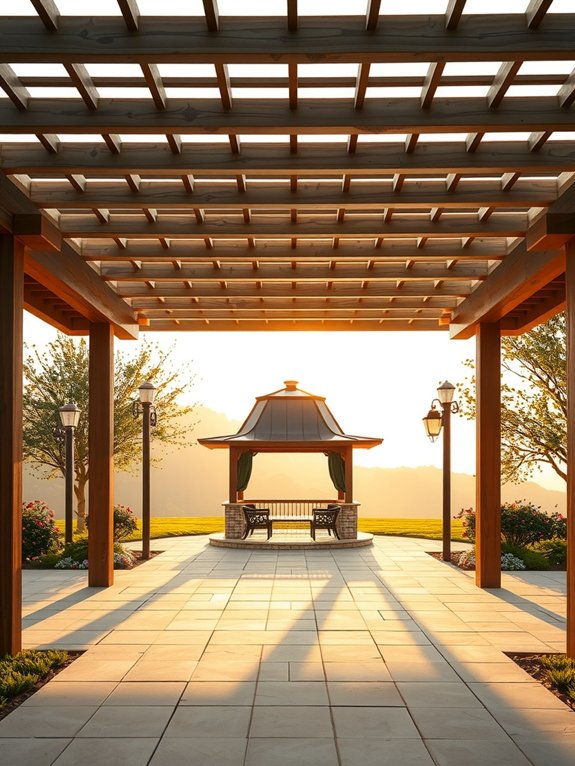
Once you’ve settled the roof question, you’ll find that the fundamental shapes of these structures—rectangular pergolas versus polygonal gazebos—actually determine where they’ll fit in your yard and how you’ll move through the space. Your pergola shape naturally suits linear layouts, whether freestanding or wall-attached, creating natural gathering zones along dining areas or pathways. A gazebo shape, by contrast, embraces polygonal footprints—hexagonal or octagonal designs—that establish focal points in your garden with their own distinct presence.
| Feature | Pergola | Gazebo |
|---|---|---|
| Primary Shape | Rectangular layout | Circular/hexagonal layout |
| Placement | Linear spans | Central focal points |
| Roof Type | Open lattice roof | Solid pitched roof |
| Structure | Freestanding vs wall-attached | Freestanding standalone |
These spatial differences matter because they affect how you’ll actually use your outdoor living space. A pergola works well when you want to shade a pathway or create a dining area that connects two parts of your yard. A gazebo, with its self-contained footprint, becomes a destination—a place where people naturally gather because it feels like its own room. When you’re deciding which one fits your yard, think about whether you want to define a route through your space or create a standalone focal point.
Weather Protection and Year-Round Entertaining
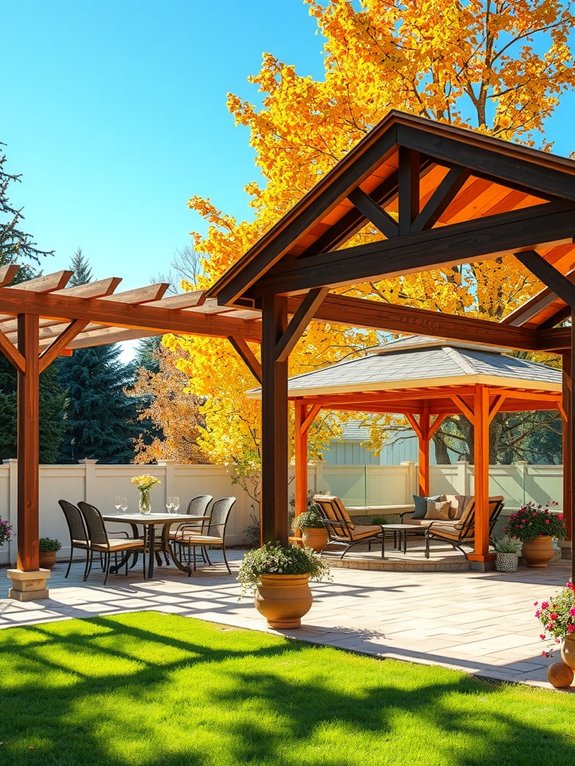
When you’re planning to entertain outside year-round instead of just on perfect summer nights, your roof choice becomes the main thing that determines whether you’ll actually spend time in that space when weather gets rough. Gazebos with their solid, pitched roofs keep rain, snow, and intense sun off your furniture and guests, which means you can reliably use them no matter the season. Pergolas, on the other hand, have open designs where louvers or add-on canopies only give you partial shade and won’t protect you from rain. Modern aluminum pergolas are tough—they can handle winds over 200 mph and heavy snow loads. But if you want weather protection for entertaining without needing extra equipment, a gazebo is your better option. It turns your outdoor gatherings into dependable spaces regardless of what weather comes your way.
Installation Flexibility: Where and How to Place Them
The spot you choose for your structure matters as much as the structure itself. It affects how your yard functions, what you can actually do there, and which permits you’ll need to pull. Pergolas give you serious flexibility—you can set them up as standalone structures or attach them to your deck or patio using concrete footings. Gazebos work differently. They need their own dedicated space with heavy-duty foundations to handle their solid roofs and wind resistance.
When it comes to permits, pergolas have a real advantage. Installing one on your deck or patio typically requires fewer approvals than building an enclosed structure. That means a faster process to get your project approved. Gazebos, on the other hand, demand more permits because of their permanent footprint and solid construction.
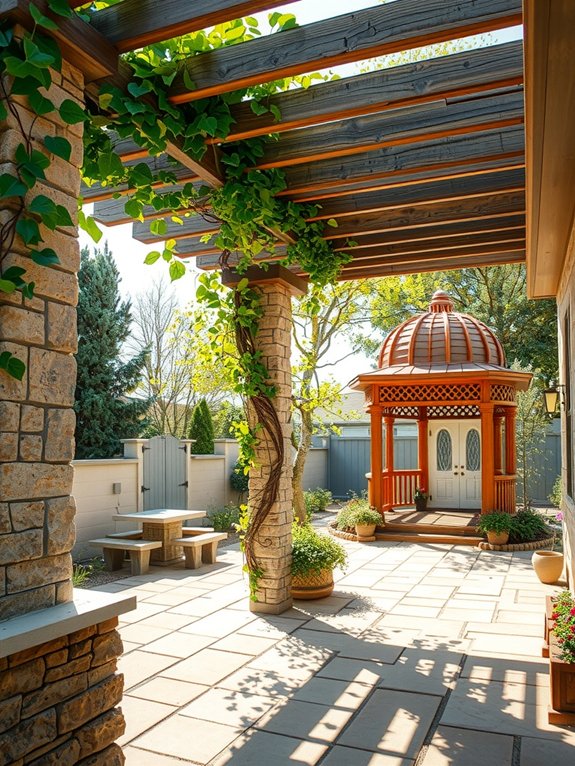
Smaller options open up even more possibilities. Grill gazebos and cabana-style pergolas let you place entertaining areas throughout your yard instead of keeping them close to your house. This means you can design spaces that actually fit how you live and entertain, rather than being locked into what your current yard layout allows.
| Feature | Pergola | Gazebo |
|---|---|---|
| Foundation Type | Concrete footings | Substantial foundations |
| Installation Effort | Moderate | Extensive |
| Placement Freedom | High flexibility | Fixed location |
| Permit Requirements | Fewer permits | More permits |
| Yard Integration | Multiple options | Dedicated footprint |
Which One Fits Your Budget, Style, and Main Goal?
Which One Fits Your Budget, Style, and Main Goal?
The way you actually plan to use your outdoor space should guide your choice. Think about what matters most to you—whether that’s keeping costs down, creating a focal point in your yard, or boosting your home’s resale value.
Go with a pergola if you want something modern without breaking the bank. The installation costs less, and the open-roof design fits well with contemporary homes. You can customize it over time with upgrades like motorized louvers or lighting, which helps you get a better return on your investment.
Choose a gazebo if you need shelter from rain and want a traditional structure that stands alone as a centerpiece. Keep in mind that gazebos require stronger foundations and cost more to install, but they work year-round and have a timeless look that doesn’t go out of style.
To make your final decision, think about your local weather patterns, how often you actually entertain outside, and what style appeals to you. These practical factors will tell you whether you’re really looking for the open, flexible feel of a pergola or the full protection and permanence of a gazebo.