You can absolutely add a roof to your pergola. The right choice depends on your climate, budget, and how much maintenance you’re willing to handle.
Your options break down into four main types. Louvered roofs let you adjust how much sun comes through. Polycarbonate panels block UV rays while still letting light through. Retractable fabric canopies work well if you want seasonal flexibility. Solid metal panels protect you from almost anything weather throws at you.
Here’s where durability and upkeep diverge. Fabric canopies typically need replacement every five to eight years. Aluminum structures can last twenty years or more. That gap matters when you’re planning your budget over time.
Before you decide, look at what actually happens in your region. Check wind ratings for your area, consider how much snow load your roof needs to handle, and factor in replacement cycles specific to where you live. Pick a roof type that matches your local weather patterns and long-term costs rather than just how it looks.
Can a Pergola Have a Roof?
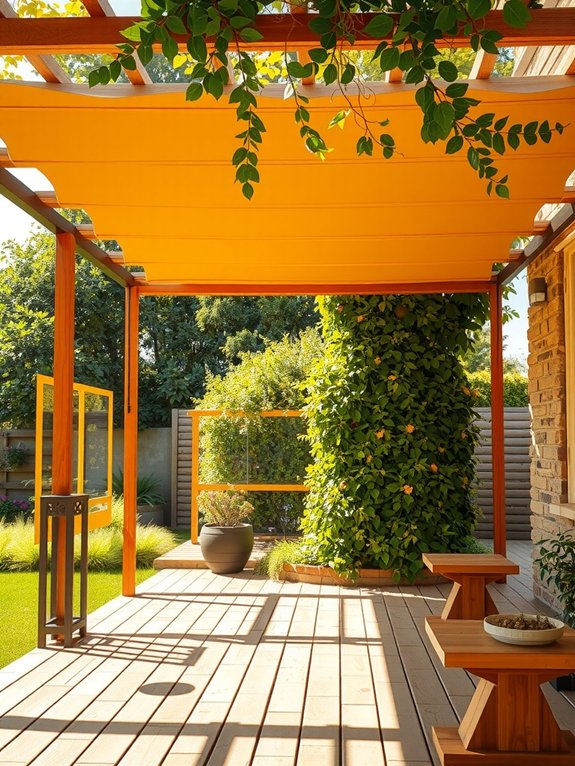
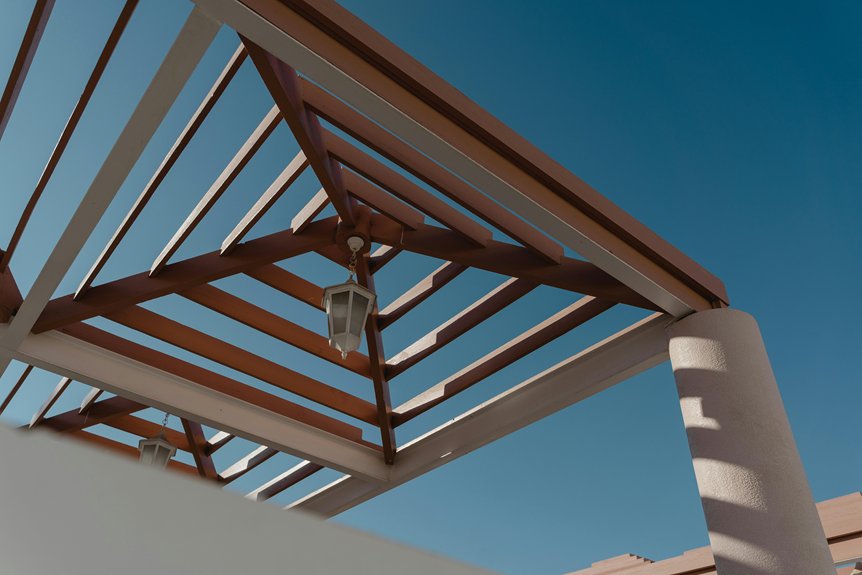
When you’re thinking about adding a roof to your pergola, you’re really deciding whether you want to change it from a semi-open structure into something that provides real shelter. The good news is that you absolutely can do this. Your roof options have come a long way from the days of just open beams.
One popular choice is a louvered roof with pivoting aluminum slats. You can adjust these slats by hand, or you can install a motor to do it automatically. This setup gives you flexible weather protection—you can open it up on nice days and close it when you need shade or rain protection.
If you want something permanent and durable year-round, consider a fixed solid roof made from aluminum, steel, or polycarbonate. These materials hold up well over time and give you consistent coverage. On the other hand, if you prefer something seasonal and adjustable, retractable fabric canopies let you roll them out when you need them and keep your pergola open otherwise.
Your choice really depends on your climate, how often you plan to use the space, and what matters most to you. Think about whether permanence is important, how much maintenance you’re willing to handle, and how much protection from the elements you actually need.
Choose Your Pergola Roof by Climate, Budget, and Maintenance
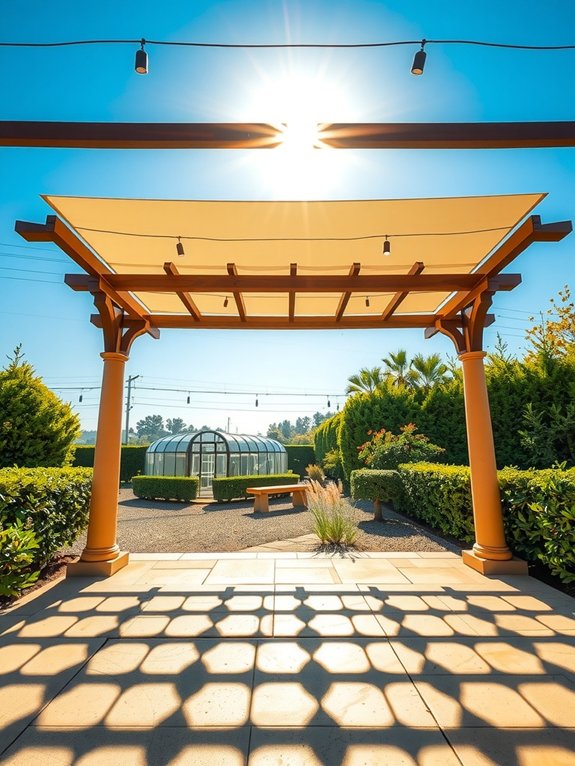
Your climate zone, budget, and maintenance tolerance are the three factors that should guide your pergola roof choice. You’re basically deciding between a durable solid aluminum structure that lasts 20+ years in tough weather, or a more affordable polycarbonate panel system running $1,000–$4,000 that needs regular sealing and cleaning.
Here’s where upfront cost gets tricky. That cheaper option often costs you more over time when you factor in replacements and labor. Fabric roofs last 5–7 years, polycarbonate lasts 7–15 years, and motorized louvered slats fall somewhere in between. If you live in snow-heavy or UV-intense regions, those replacement cycles compress even faster. Running the real numbers on what you’ll spend over 15 or 20 years tells a different story than just looking at the initial price tag.
Your willingness to do maintenance work is just as important as your location. If you’re willing to inspect, clean, and reseal regularly, you can get away with a lower-maintenance retractable fabric option for mild climates. But if you’d rather set it and forget it, motorized louvered slats handle sun and rain across moderate conditions without constant upkeep. Know yourself here—what sounds like no problem in spring often feels like a chore by year three.
Climate-Specific Performance Ratings
Your pergola roof choice really comes down to matching what works for your climate, not what looks best in a showroom. That’s the difference between making a smart choice and spending money you’ll regret later.
Louvered roofs perform well when your weather shifts around unpredictably. Motorized versions can handle winds over 200 mph if they’re set up correctly, which makes them solid if you’re dealing with tough, changing conditions. Polycarbonate materials give you a middle ground between letting light in and keeping the elements out—they’re rated for winds between 50-80 mph and snow loads of 10-20 psf, though that depends on how they’re installed.
If your region gets hammered with rain and snow, solid metal or insulated panels give you protection year-round. Retractable fabrics work better if you have seasons where you need coverage and other times when you don’t. The key is checking what your area actually demands weather-wise and picking materials that match those real conditions rather than just going with whatever appeals to you aesthetically.
Life-Cycle Cost Analysis
Looking beyond the sticker price—that initial number you see when you’re getting quotes—reveals what actually matters: whether you’re throwing money at a roof that’ll need replacing in five years or investing in one that’ll last much longer.
Life-cycle cost analysis shows the real picture. Polycarbonate runs roughly $357 annually over seven years, retractable fabric about $714, and louvered roofs approximately $600. That upfront expense can be pretty misleading.
Here’s what you’re actually comparing: a $3,000 polycarbonate covering that demands replacement within five to seven years versus an $8,000+ louvered roof that delivers 25+ years of weather protection and structural integrity. When you factor in labor and material costs across multiple replacements, the math shifts pretty quickly.
You’re not just choosing between options based on what you pay today. You’re deciding whether you want to keep paying for replacements every few years or make one solid investment that handles the job for decades. The cost per year drops significantly when you spread it across a 25-year lifespan instead of a five-year one.
Louvered Roofs: Adjustable Sun and Rain Protection
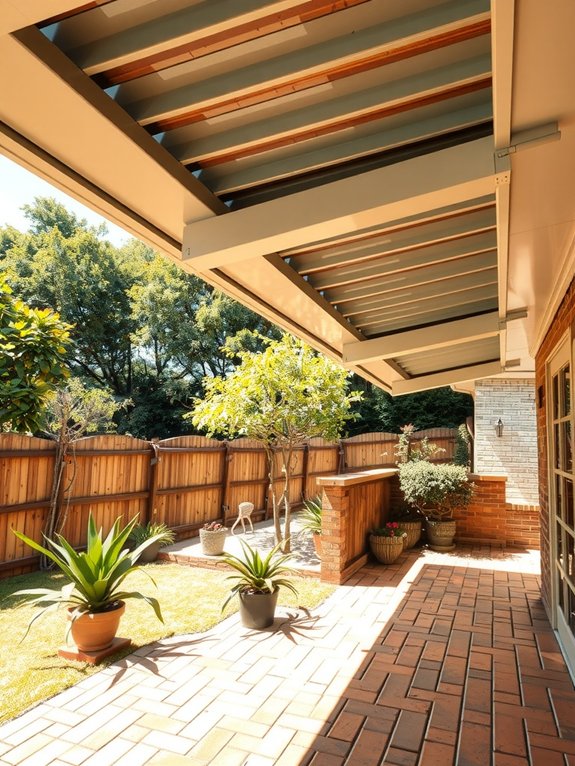
Why settle for a fixed overhead structure when you can command your outdoor environment with precision? Louvered roofs give you adjustable sun and rain protection through pivoting slats that you control remotely or via a smartphone app. You rotate the louvers to your preferred angle, managing sunlight intensity and airflow at the same time.
When weather turns threatening, you close them completely. This creates a waterproof seal that blocks rain entirely. The system uses commercial-grade aluminum with stainless hardware, so it withstands wind speeds over 200 mph and snow loads up to 65 pounds per square foot.
Smart rain sensors automatically close the louvers when precipitation begins, and perimeter sealing prevents water from getting inside. You’re not just installing a roof—you’re investing in outdoor living that actually adapts to what you need in the moment.
Polycarbonate Panels: Light With Weather Protection
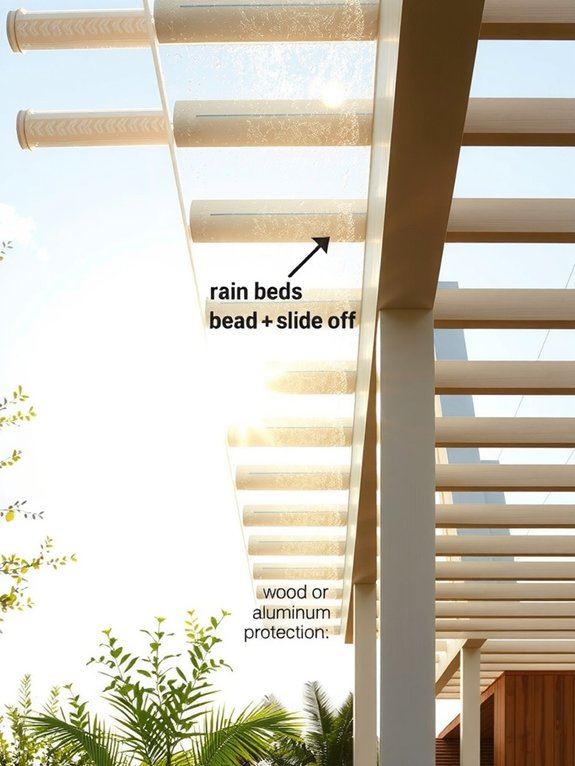
If you want the weatherproofing of a solid roof without losing that open, airy feeling that makes pergolas attractive, polycarbonate panels give you a practical solution. They’re lightweight yet durable, and they’ve become a popular choice for pergola installations.
You’ll come across panels in thicknesses from 6mm to 16mm. The thickness you pick matters because it affects both how much UV protection you get and how structurally strong the panels are. These panels block harmful rays while still letting filtered sunlight through to the space below, so you get brightness without intense glare or heat.
When it comes to rain protection, the quality of your installation makes all the difference. If your panels are properly sealed at the edges, you’ll get complete water coverage. But if those edges aren’t sealed, water will find its way through. Unlike louvered systems that let some weather through, polycarbonate gives you consistent protection and shade. You’re essentially getting something that works better than an open pergola but feels less heavy than a completely solid roof.
Retractable Canopies: Flexible Sun and Shade Control
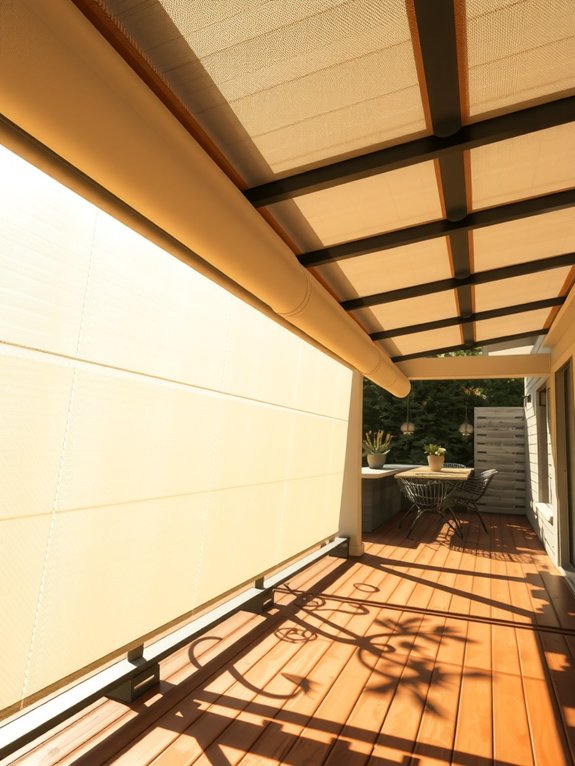
When you’re picking a retractable canopy for your pergola, you’ll need to decide between motorized systems that work at the touch of a button and manual versions you pull along the overhead tracks yourself. Motorized options offer more convenience, but manual setups cost less and require fewer moving parts to maintain.
Whichever type you choose, the fabric will need regular attention to prevent fading and mildew. Plan on replacing it every five to eight years depending on how much sun and moisture your setup gets. You’ll also need to retract the canopy when wind speeds hit 25 to 35 mph or higher to avoid damage.
The real appeal of retractable canopies is their flexibility. You can shift from an open pergola to a shaded spot or fully enclosed space based on what you need at the moment. That said, the trade-off is real: heavy rain will soak through the fabric itself. So you’re getting adjustable comfort and partial sun control, not the kind of weather protection a solid roof would give you.
Manual vs. Motorized Operation
How you operate your retractable canopy—manual or motorized—shapes your daily experience and what you’ll need to maintain over time. It’s a choice worth thinking through carefully.
With manual operation, you use a crank or lever to extend and retract the fabric. You get simplicity and lower upfront costs, but you’ll put in physical effort each time you adjust it. Motorized systems let you control everything remotely, through an app, or with voice commands. You can adjust your sun and shade without leaving your seat, which fundamentally changes how you use your outdoor space.
The practical tradeoff is straightforward. Manual systems need less maintenance but require you to do the work yourself. Motorized canopies need periodic motor servicing in addition to fabric care, but they deliver genuine convenience—the kind that actually matters when you’re relaxing outside.
Weather Limitations and Maintenance
Once you decide between manual or motorized operation, you need to think about what your retractable canopy can actually handle. Convenience doesn’t matter much if weather forces you to pack it away constantly.
Retractable fabric roofs have real limits when it comes to weather. They’ll keep off light rain, but they’re not waterproof during heavy downpours—you’ll need to retract them quickly when storms hit. Wind is another issue. Once gusts reach 25–35 mph, you have to collapse your canopy to prevent damage. Snow is even trickier since these systems have zero snow load capacity, meaning you need to retract immediately if it starts accumulating.
Maintenance is an ongoing consideration. High-grade fabrics like Sunbrella resist fading well, but you’re looking at replacement every 5–8 years. The motorized tracks and mechanisms need regular lubrication and adjustment to keep everything running smoothly season after season.
Aesthetic Appeal and Adaptability
Beyond their practical function, retractable fabric canopies let you completely change how your outdoor space feels depending on what you need in the moment. You can extend them for a more formal, Mediterranean-style setup or pull them back when you want full sun and open sky. This flexibility keeps your coastal aesthetic looking intentional throughout the year, whether you’re throwing a party or just sitting quietly by yourself.
Adding motorized controls with built-in lighting or fans gives you even more control over the mood and usefulness of your space. You can shift from a shaded afternoon retreat into an evening entertainment area without moving anything around.
The fabric comes in canvas or Sunbrella materials in lots of color options, so you can match what you already have while still getting real weather protection when you need it. What really sets retractable canopies apart is that you’re calling the shots on both how they work and what atmosphere they create, which means they can adapt as your needs change.
Metal and Solid Panels: All-Weather Durability
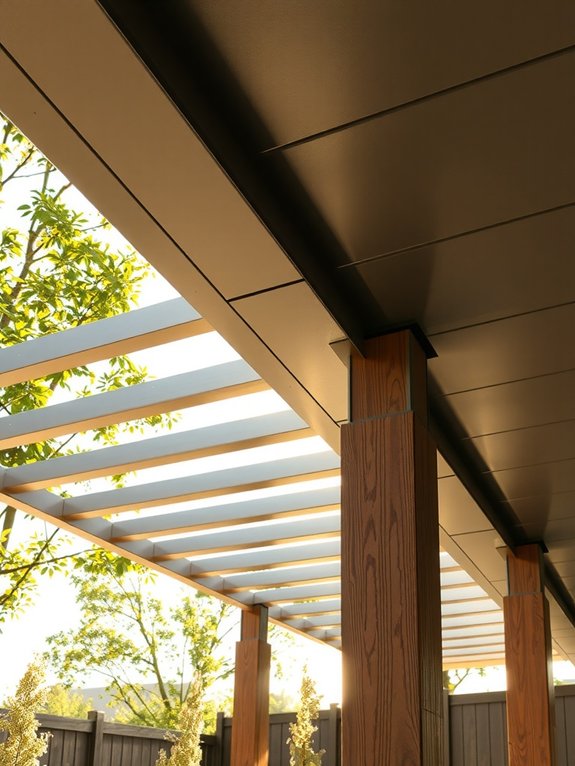
When you’re ready to invest in a pergola that actually protects you instead of just looking nice, solid metal and panel systems give you the performance you need. Aluminum and steel panels are built to last with minimal maintenance, and they handle weather better than louvered options can.
Solid roofs made from polycarbonate or insulated panels stand up to some serious conditions. They can handle wind speeds between 90 and 130 mph and support snow loads up to 40 psf. That means you can use your pergola year-round without worrying about damage. The solid coverage keeps water and UV rays from sneaking through gaps, which is something you just don’t get with other designs.
Keeping your pergola in good shape doesn’t take much effort. You’ll want to check your seals, gutters, and fasteners regularly. If you’re using steel, pay attention to rust prevention to keep your structure strong and protective through all the seasons.
Shade Cloth and Sails: Quick Budget Upgrades
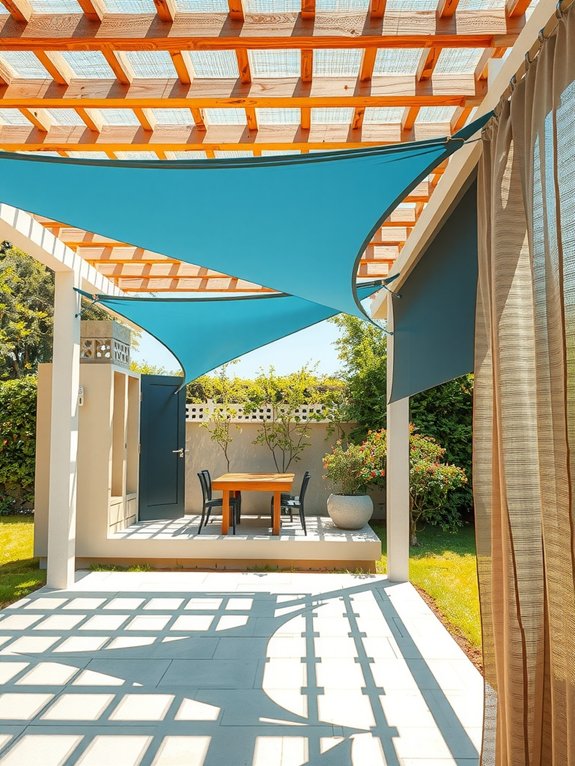
If a solid metal roof seems like too much for what you need—or what you can spend—shade cloths and sails give you a practical option without forcing you to sacrifice usefulness. These affordable upgrades work well because they use outdoor-grade fabrics like Sunbrella that block sun while staying reasonably priced and simple enough to install yourself. You’ll attach the fabric to your pergola beams using tensioning systems that keep everything tight and prevent drooping. This setup also lets you customize how much shade you get and how your space looks through different colors and patterns.
Keep in mind that these fabrics aren’t waterproof. A light rain won’t hurt them, but heavy downpours can be a problem. You’ll need to replace the fabric every five to eight years and stay on top of regular cleaning to keep them looking good. In hot, dry climates where you don’t deal with much moisture, shade cloths and sails make a lot of sense as an accessible way to add shelter without breaking the bank.
Waterproof Louvers: Materials and Sealing Solutions
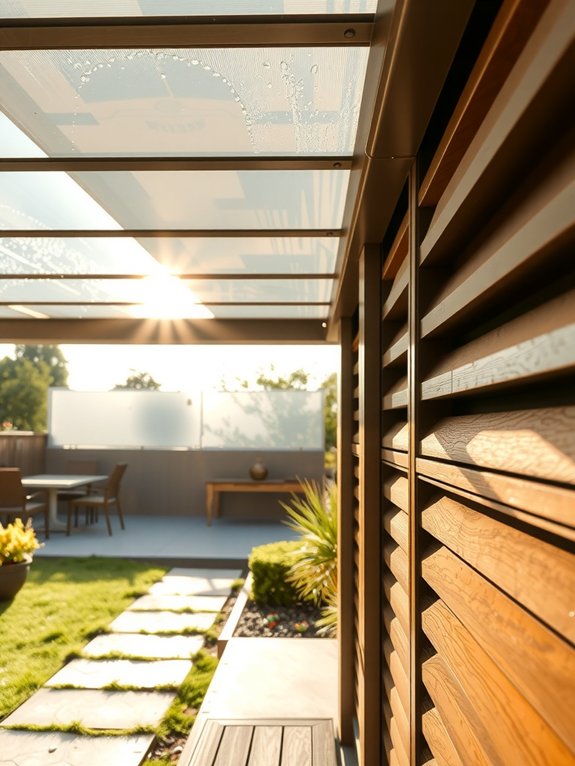
Louvered roof systems use adjustable slats to give you control over light and weather protection. When you’re serious about keeping rain out of your exterior living space, you’ll want to invest in commercial-grade aluminum paired with stainless steel hardware. These materials hold up well in wet conditions without breaking down over time.
Your waterproofing approach needs to work on three levels. First, the roof’s slope directs water toward drainage points so it doesn’t pool. Second, you seal the perimeter carefully to block water from sneaking in at joints and edges. Third, smart louvers can close automatically when rain arrives. This layered approach matters because you’re not depending on just one part of the system to protect everything. Instead, multiple safeguards work together, which means your investment stays protected even if one element isn’t operating perfectly in a given moment.
Install Your Pergola Roof: Tools, Timeline, and When to Call a Pro
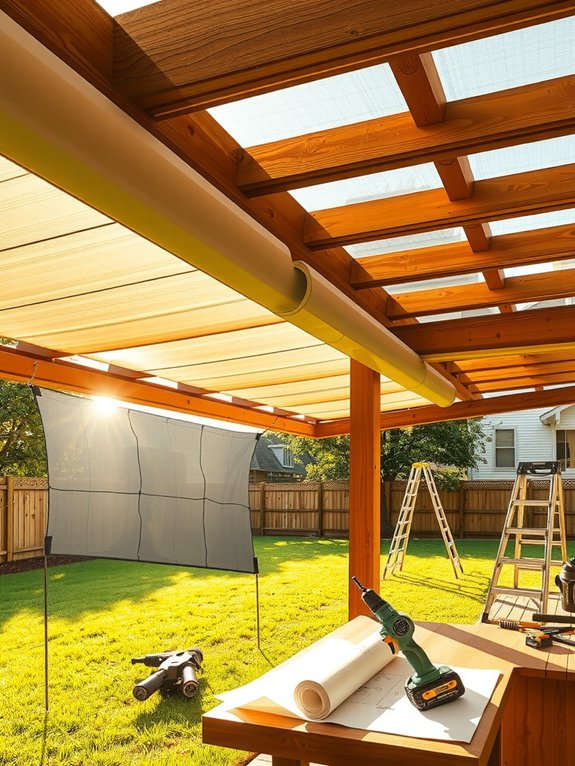
Installing your pergola roof depends on which system you pick—polycarbonate panels, motorized louvers, or a custom hybrid setup—since each one requires different tools, skills, and time. For a basic installation, grab a level, measuring tape, drill/driver, the right screws, and a ladder. A simple polycarbonate or fabric roof takes a few days to finish, while a motorized louvered system stretches into weeks.
Here’s where you need to be honest with yourself: if structural work, electrical connections, and weatherproofing details make you uncomfortable, a professional installer becomes worth the investment for anything motorized or custom-designed. They’ll handle the slope, drainage, anchoring, and permit requirements that actually keep your warranty intact and your installation solid long-term.