
Used coffee grounds give your houseplants roughly 2% nitrogen by weight, which powers chlorophyll production. As the grounds break down gradually, they also supply calcium, magnesium, potassium, and phosphorus—nutrients your plants need to function well.
Beyond nutrition, coffee grounds improve how your soil works. They help it hold water better while creating that loose, crumbly texture that roots prefer to grow through. Since the nutrients release slowly over weeks rather than hitting all at once, you won’t accidentally overload your plants with nitrogen the way fresh grounds can.
The practical benefits are worth noting too. Coffee grounds cost you nothing since you’re reusing kitchen waste, they contain no chemicals, and they’re straightforward to work with. Just match them to plants that naturally prefer acidic soil—like gardenias—and you’re working with your plant’s actual needs instead of against them.
Nitrogen and Essential Micronutrients: Why Coffee Grounds Fuel Plant Growth
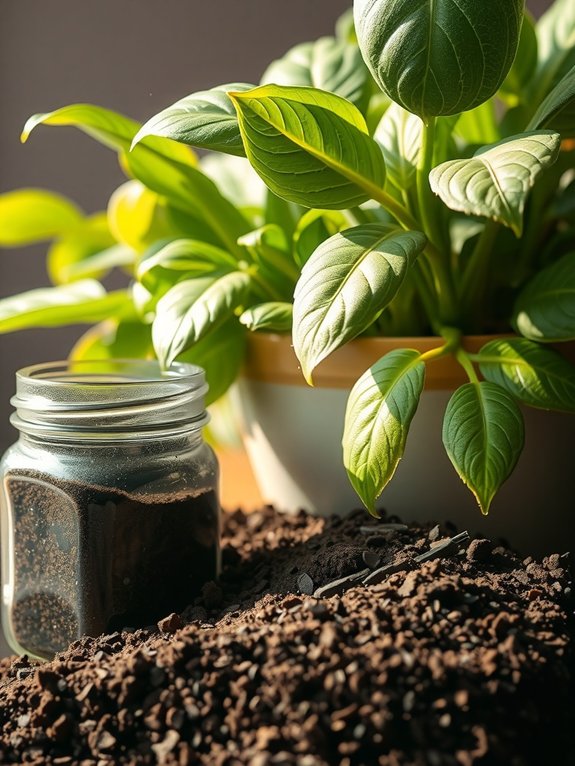
Why do houseplants respond so noticeably when you add nitrogen to their soil? The answer lies in what nitrogen actually does for plants. Coffee grounds contain roughly 2% nitrogen by weight, and that nutrient directly powers chlorophyll production and leaf expansion—the visible growth signs you’re looking for in your houseplants.
Beyond nitrogen, coffee grounds deliver several micronutrients your plants need. You get calcium, magnesium, potassium, and phosphorus all mixed in. These minerals work together to strengthen root systems and support flowering. The fresh grounds are slightly acidic, which works particularly well if you’re growing acid-loving houseplants like azaleas or blueberries. Once you brew the grounds or let them compost, they shift toward a neutral pH level.
The best way to use coffee grounds is through composting. When you incorporate them into a slow-release nutrient mix this way, you’re creating a steady supply of nutrients that stretches between your regular feedings. This approach fills nutritional gaps in your soil without requiring constant attention.
How Coffee Grounds Improve Soil Structure and Water Retention
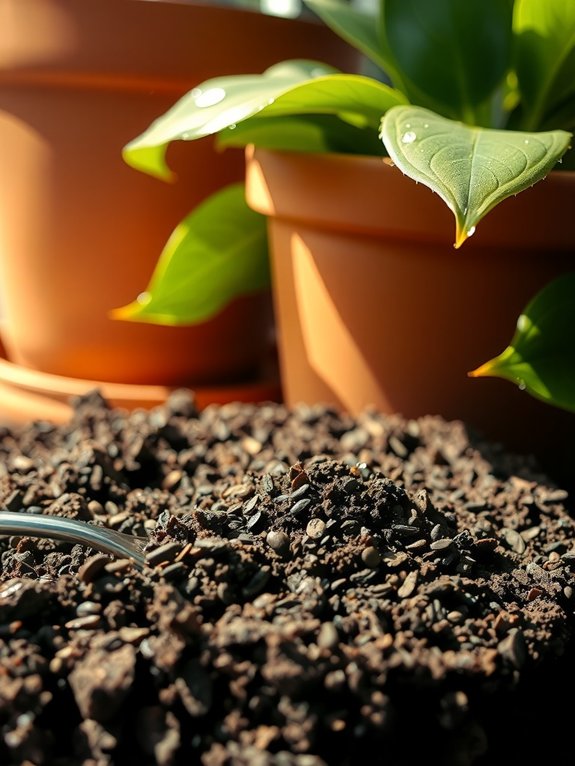
How you structure your potting soil matters just as much as what nutrients you’re feeding your plants, and coffee grounds address this challenge without requiring expensive amendments or constant upkeep. When you incorporate grounds into your potting mix, you’re introducing organic matter that transforms your soil composition fundamentally.
The organic material increases aggregation and porosity, which means roots can access air more freely. At the same time, coffee grounds absorb moisture effectively, so your potting mix holds water better for plants that need consistent moisture. As the grounds decompose gradually, they create that loose, crumbly texture that improves drainage—preventing the compaction that happens when soil gets packed down over time.
Beyond structure, you’re also getting micronutrients like calcium, magnesium, and iron that become available to your plants as the grounds break down. The key is using coffee grounds moderately alongside other organic materials. This balanced approach builds soil that works with your plants’ needs rather than against them, creating conditions where water moves through properly and nutrients stay accessible.
Better Than Store-Bought: Why Houseplants Love Chemical-Free Coffee Grounds
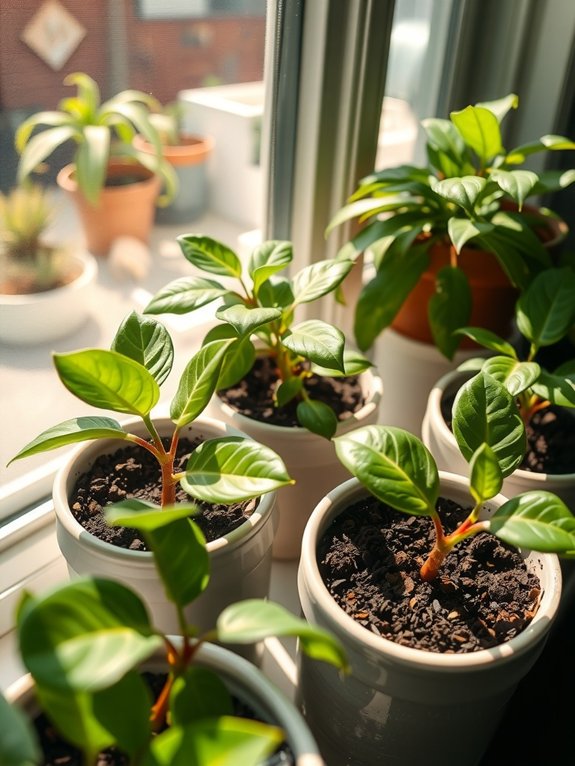
What you’re really getting when you buy commercial fertilizer is a standardized mix of synthetic nutrients—some your plants need, others they won’t use—all wrapped in marketing and priced up considerably. Coffee grounds offer something different. They’re an organic amendment that gives you slow-release nitrogen along with trace minerals, without the chemical extras. You’re working with something that actually improves how well your soil holds moisture while gently shifting pH toward the slightly acidic range many houseplants prefer.
There’s something straightforward about using waste you’d otherwise throw away instead of buying something synthetic. The grounds work steadily and predictably, requiring only moderate application. It’s a choice that shifts how you think about feeding your plants—less about buying the right product and more about using what makes sense.
Free Plant Food: Turning Kitchen Waste Into Plant Care Savings
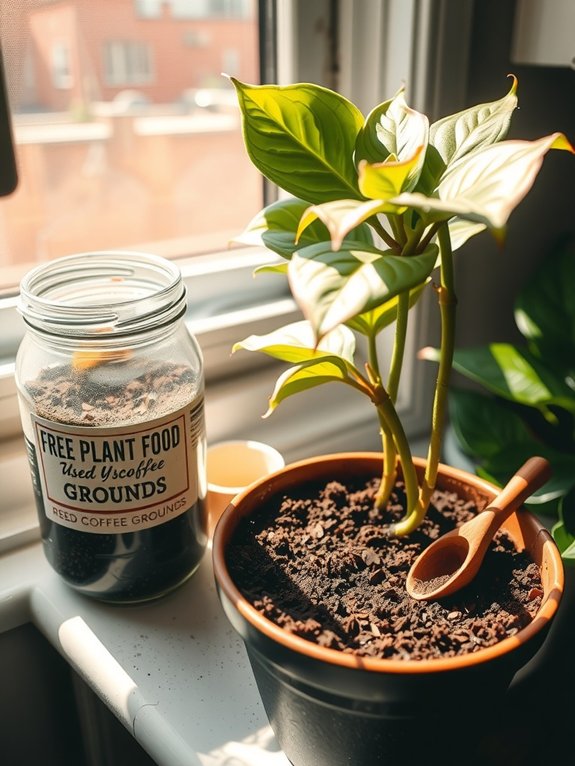
If you’re already brewing coffee at home, you’ve got a fertilizer supply that costs nothing and shows up daily in your filter or French press. You’re cutting down on waste while feeding your houseplants at the same time, which makes sense both for your wallet and the environment.
Used coffee grounds work as a nitrogen source that releases nutrients slowly over time. Here’s what happens when you use them:
- You skip the store trips and fertilizer costs
- Grounds break down in your soil and improve its texture, which helps water stick around longer
- Your plants get steady nutrients over weeks instead of quick bursts
- Kitchen waste becomes something useful instead of ending up in the trash
The practical approach is straightforward: collect your grounds, let them dry out first, and mix them into your potting soil or sprinkle them around the base of your plants. Start with a thin layer so you don’t overload your soil with nitrogen, which can actually work against you. Most plants do well with grounds mixed in at about 10-20 percent of your soil volume.
Rather than throwing away what you’ve already made, you’re putting it to work. Your daily coffee routine becomes a real part of how you keep your plants going, using something that’s literally within arm’s reach.
Coffee Grounds as Slow-Release Nutrients
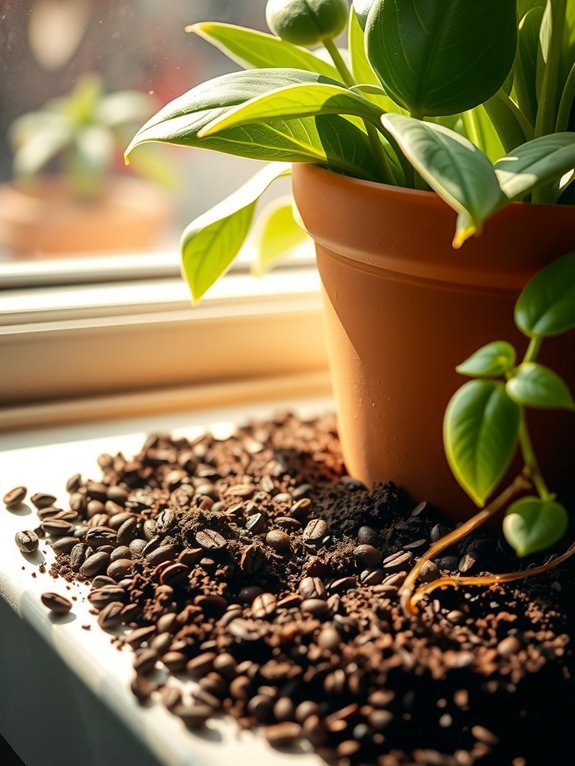
Why wait for a quick nutrient spike when you could feed your plants steadily all season long. Coffee grounds deliver exactly what plants need over time: nitrogen for steady growth, plus calcium and magnesium for overall plant health. The key difference is pacing. Instead of the sudden jolt from synthetic fertilizers, composted coffee grounds break down gradually, releasing nutrients at a rate your plants can actually use. This prevents the nutrient shock that damages roots while also improving how your soil holds water and its overall structure.
The one important detail: use dry, composted grounds, not fresh ones. Fresh grounds are too acidic and will interfere with how your plants absorb nutrients. When you mix composted grounds into your soil, you’re essentially building a self-sustaining system that works at a steady pace.
| Feature | Benefit |
|---|---|
| Slow-release nitrogen | Steady growth without shock |
| Calcium & magnesium | Enhanced plant health |
| Improved water retention | Consistent root hydration |
| Better soil structure | Optimal nutrient delivery |
| Composted application | Gradual decomposition process |
This approach requires patience, but the payoff is consistent, reliable plant growth that doesn’t depend on you remembering to fertilize on a strict schedule.
Which Plants Love Coffee Grounds: And Which Don’t
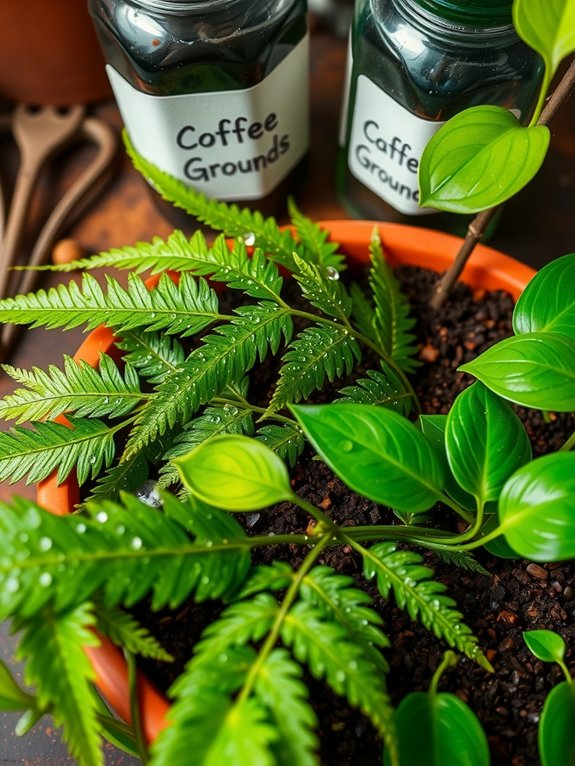
Your acid-loving plants—gardenias, jasmine, and similar species—do well with coffee grounds because these plants naturally prefer lower pH soil. Succulents and cacti, on the other hand, like alkaline conditions and can actually struggle when you add extra acidity to their soil.
The key is knowing what your specific plant needs. You can figure this out by looking up where the plant grows naturally or checking its native habitat. Once you understand your plant’s soil preference, you’ll know whether coffee grounds will help or hurt it.
Keep in mind that different plants respond differently to the same amendment. What works great for one plant on your shelf might cause real problems for another one nearby. So matching the right soil amendment to each plant’s chemistry matters much more than the amendment itself.
Acid-Loving Plants Thrive
When you’re thinking about using coffee grounds on your houseplants, here’s something worth understanding: plants that love acidic soil—like gardenias, jasmine, and azaleas—react differently to coffee grounds than plants that prefer neutral conditions. Used grounds measure around pH 6.8 after brewing, which means they’re nearly neutral themselves. But they can still help create the acidic environment these plants actually need, as long as you apply them the right way.
Here’s how to use them effectively:
- Mix grounds into your compost or potting soil blend instead of sprinkling them directly on top
- For indoor plants, avoid putting grounds straight on the soil surface, since this can make the soil too acidic too quickly
- If you’re working with outdoor acid-loving shrubs like azaleas, work the grounds into the surrounding soil gradually
- Watch how your gardenias and jasmine respond over time, and adjust your approach based on what you observe
The key is working slowly and indirectly. By blending grounds into your soil rather than applying them as a top layer, you’ll steadily shift your soil toward the acidic conditions these plants need without creating problems.
Succulents And Cacti Struggle
If you’ve watched a succulent wilt after coffee grounds were added to its pot, you’ve discovered one of gardening’s harder lessons: not all houseplants respond well to what acid-loving plants need. Succulents and cacti naturally prefer alkaline soil, so when you introduce the acidity from coffee grounds, you’re working against their natural preferences.
Here’s what happens when you apply grounds directly to these plants. The grounds compact in the soil, which blocks air from reaching the roots and makes it harder for them to breathe. At the same time, the high nitrogen content pushes these plants toward weak, leggy growth they can’t handle. The acidic pH also creates root stress that these drought-adapted species don’t need.
| Problem | Effect | Solution |
|---|---|---|
| Acidic pH | Root stress | Avoid direct contact |
| Soil compaction | Poor aeration | Use dilution only |
| Excess nitrogen | Weak growth | Apply as compost amendment |
If you want to use coffee grounds with succulents and cacti, your safest bet is heavy dilution mixed into compost. This approach keeps the grounds from directly touching your plants while letting them break down into something less problematic.
Understanding Plant Soil Preferences
What separates a houseplant that does well from one that struggles often comes down to soil chemistry—specifically, whether your plant’s roots sit in acidic or alkaline conditions. When you understand what your plant needs, you can figure out whether coffee grounds will actually help or hurt your indoor garden.
Here’s what you need to know about soil preferences:
- Acid-loving plants like gardenias and jasmine do better when you add coffee grounds because they benefit from the increased soil acidity
- Moisture-loving species improve their water retention and get nitrogen boosts from modest applications of used grounds
- Succulents and cacti prefer alkaline conditions, so added acidity will stress them out
- Used grounds work better than fresh ones because they prevent the soil from becoming too acidic for sensitive plants
- You’ll want to apply grounds carefully and in moderation so you don’t mess up aeration and drainage
The key is matching the grounds to what your specific plant actually needs. This approach gives you the best results without guessing or experimenting too much.
The Right Way to Feed Your Plants With Coffee Grounds Without Overdoing It
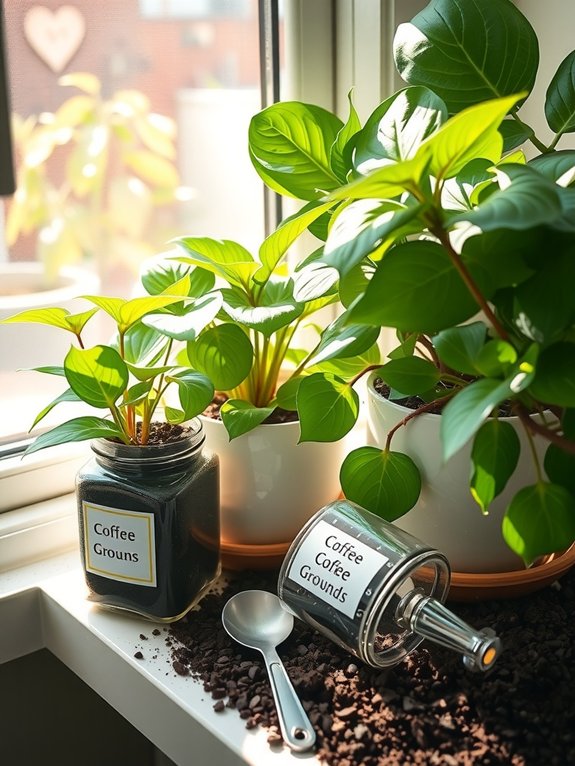
How many times have you stood over a houseplant with a container of coffee grounds, wondering whether you’re about to do more harm than good? You’re not alone in that hesitation. The key to success lies in restraint and understanding what your specific plant actually needs.
Start With Used Grounds Only
Fresh coffee grounds carry excessive acidity that can stress sensitive houseplants. Once you’ve brewed your coffee, those used grounds become safer to work with. This simple step matters more than you might think when it comes to protecting your plants from pH damage.
Used coffee grounds are safer for plants than fresh grounds, which carry excessive acidity that can stress sensitive houseplants and cause pH damage.
Know Your Application Methods
You have several ways to apply coffee grounds, and each one works differently depending on what you’re trying to accomplish.
For top dressing**: Sprinkle used grounds directly on top of your soil at about 10-15% of the total soil volume. Apply this monthly to acid-tolerant plants** that can handle the gradual nutrient release.
For composting**: Mix your coffee grounds with other materials using a 1:3 greens-to-browns ratio**. This approach releases nutrients slowly and safely over time, making it ideal before you pot up new plants.
For a liquid feed**: Brew a dilute mixture by combining one cup of brewed coffee with three cups of water. This ratio minimizes sudden pH shifts that can shock your plants. Use this liquid feeding every two weeks on moisture-loving** houseplants.
When mixing into soil: Add grounds at potting time, keeping them to 10-15% of your soil mix for consistent nitrogen input throughout the growing season.
Watch for Signs of Trouble
Monitor your soil pH and how your plant responds to the coffee grounds. Some plants genuinely prefer acidic conditions—think moisture-loving varieties. Others, like succulents, will struggle with this treatment and should be left alone. Pay attention to whether your plant looks healthier or stressed after a few weeks of coffee ground applications, then adjust your approach accordingly.