Your pea variety determines whether you’ll need trellising. Dwarf types that top out around 25 cm can stand on their own without support. Tall varieties that reach 2 m need sturdy structures to keep them upright. Mid-height cultivars growing 50–60 cm will benefit from trellising, though they can technically survive without it.
Before you automatically set up a trellis, check what your specific variety actually does. Look at the climbing tendencies and expected height on the seed packet or plant label.
The real reason many gardeners bother with trellising comes down to practical benefits. When you get peas off the ground and up on a support, you improve light exposure to the leaves, increase airflow around the plants, and reduce disease problems. Better airflow means less chance of fungal issues that thrive in humid, crowded conditions.
Do All Pea Varieties Actually Need a Trellis?
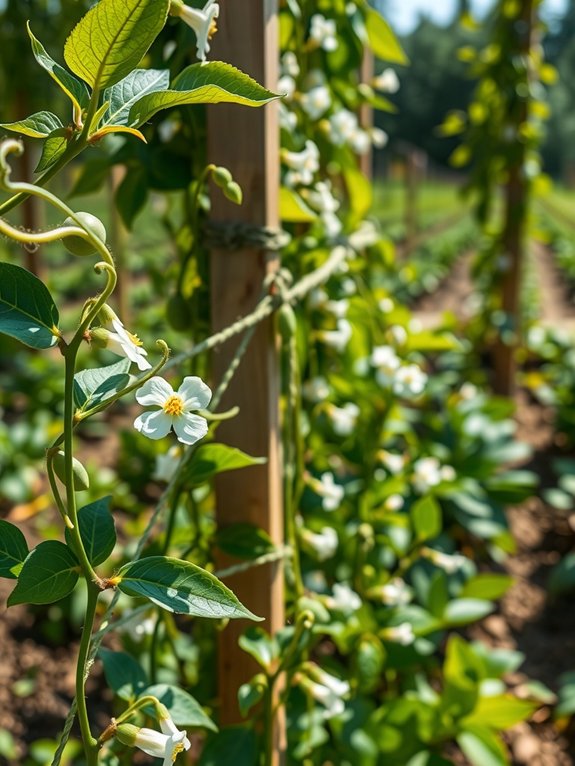
Why would you invest in a trellis for every pea you plant when some varieties don’t actually need one? The key is knowing what type of pea you’re growing. Different varieties have different growth habits, and understanding these differences matters more than assuming all peas need support.
Dwarf pea varieties top out around 25 cm tall and handle themselves without any help. They stay compact and sturdy enough on their own. On the other end, tall varieties that reach toward 2 m absolutely need a strong trellis to keep them upright and stable. Then you’ve got the middle ground—peas that grow to 50–60 cm—where support is more of a nice-to-have than a necessity.
Before you buy seeds or seedlings, spend some time reading about the specific varieties you’re considering. Check what height each one reaches and whether the description mentions climbing or vining tendencies. This research takes just a few minutes but saves you money and effort by helping you match your choice to what actually works for your space. You’ll avoid building structures you don’t need while making sure your peas perform well according to their natural growth pattern.
Which Trellis Type Fits Your Garden and Budget?
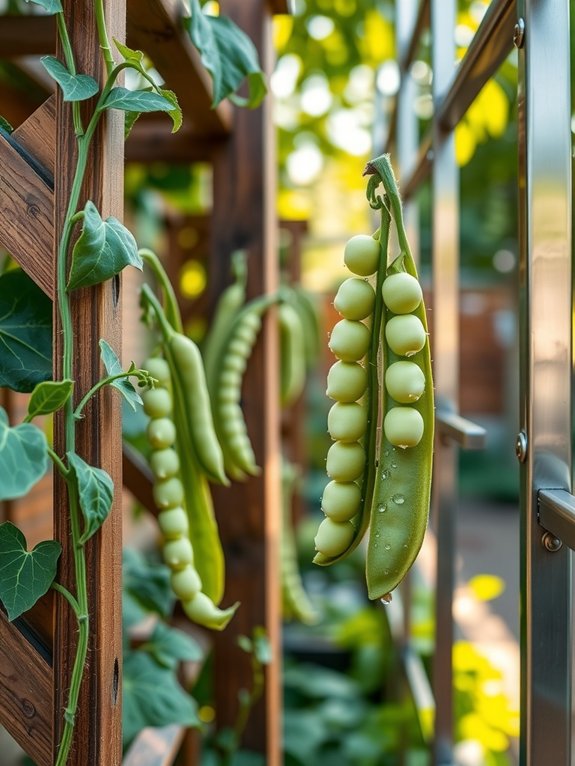
Once you’ve figured out what variety works for your space, you need to pick a structure that’ll actually support your peas without draining your wallet or taking over your garden.
| Support Type | Best For | Cost | Durability |
|---|---|---|---|
| Pea sticks (50 cm) | Dwarf, self-supporting varieties | Low | Seasonal |
| Chicken wire/wire mesh | Medium pea plants, raised bed gardens | Moderate | 2-3 years |
| Bamboo canes, cattle panels | Taller varieties up to 2 m | Moderate | 3-5 years |
| Prefab obelisks, wigwams | Long-term investment, visual appeal | High | 10+ years |
Your decision really comes down to how tall your plants will get. Dwarf varieties need barely anything, while taller types require something solid like wire mesh or cattle panels. Chicken wire gives you solid value for the price—it holds up to wind and protects your plants well. If you’re the type to grow peas seasonally on a budget, a temporary ladder trellis works fine. On the other hand, permanent prefab structures cost more upfront but last for years and look decent in your garden while doing the job.
Why Peas Grow Bigger and Healthier on a Trellis?
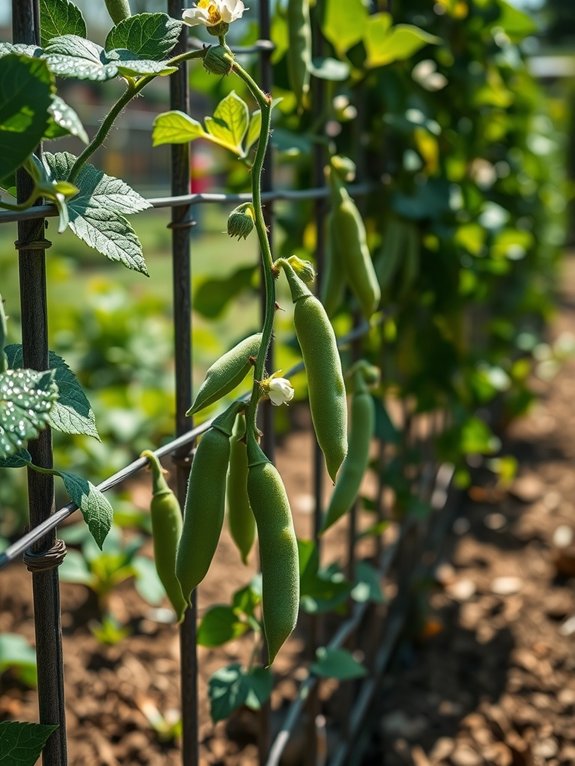
When you put your peas on a trellis, you’ll notice they perform better across the board. It’s not just about appearance—the setup gives your plants real botanical advantages that add up to a better crop.
Light hits more of your plant when it grows up. Instead of leaves piling on top of each other on the ground, vertical growth spreads them out. This means each leaf gets better access to sunlight and can do its job more efficiently.
Air moves freely around trellised plants. Better airflow keeps moisture from sitting on your leaves, which cuts down on fungal diseases and pest problems without you having to do extra work.
Your soil stays in better condition. Water drains properly around the root zone when plants aren’t crowding the ground. This supports steadier, more consistent plant development from start to finish.
You’ll get peas for a longer stretch. The improved ventilation and stronger plant condition mean you keep harvesting well into the season instead of watching production drop off early.
Using a trellis is straightforward and practical. It’s the kind of setup that makes a real difference in your results—the difference between an okay harvest and one that actually delivers what you put into it.
Getting Your Trellis Ready and Helping Peas Climb It
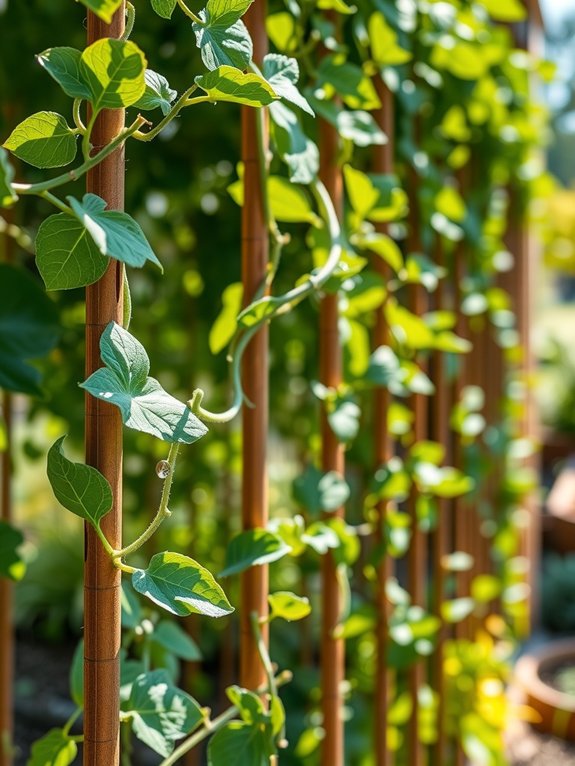
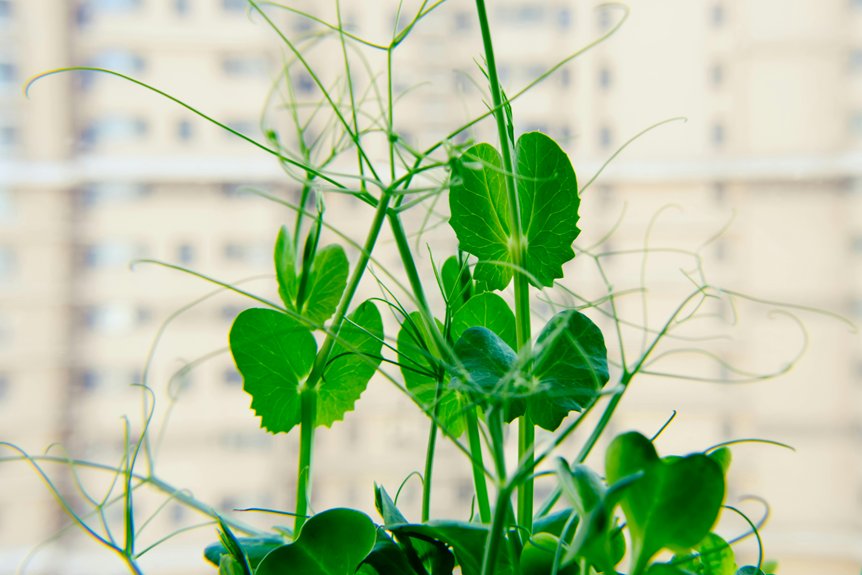
How you set up your trellis matters as much as deciding to use one. Your pea shoots won’t climb something that doesn’t match how they naturally grab onto things. Look for horizontal and vertical elements like wire mesh, bamboo lattices, or cattle panels. These materials let pea tendrils wrap around them the way they’re designed to do.
Get your trellis in place before you plant. Secure it firmly to the ground so wind won’t knock it over once the weight of developing pea pods builds up. Position the structure close enough that young shoots find it within a few days. This timing lets the tendrils grip right away instead of struggling to reach support that’s too far away.
Once your peas are established on the trellis, you’ll notice real benefits. Better air circulation moves through the plants, which cuts down on disease problems and strengthens the stems. The setup does more than just hold up the plants—it creates the right conditions for your peas to grow the way they naturally would.
Harvesting Is Easier: and Faster: From Trellised Peas
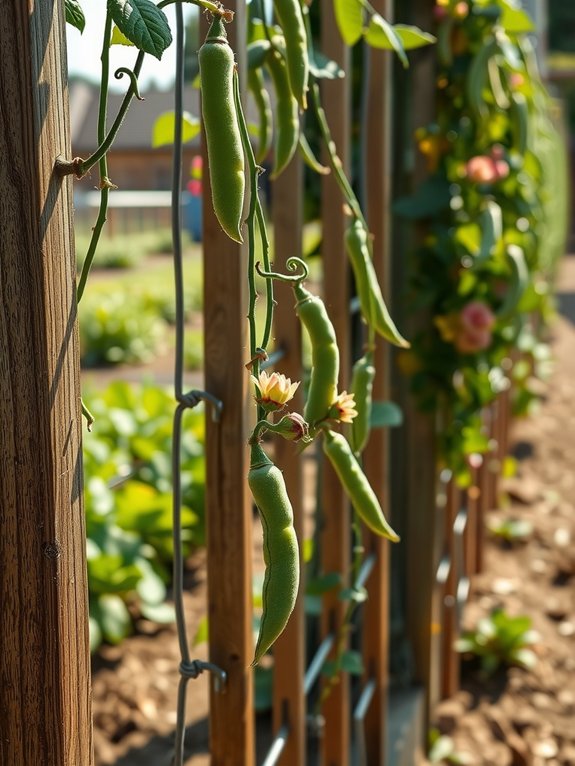
Why does harvest day feel so different when you’re picking from a trellis instead of bending over a sprawling ground-level tangle? You’ll discover that trellised peas transform the entire harvesting experience through practical advantages that compound over time.
- Pods remain elevated and clean, eliminating dirt contamination while reducing strain on your back
- Snap peas and snow varieties mature faster without weed interference crowding the vines
- Superior air circulation around the support structure prevents fungal diseases that plague ground crops
- Sequential harvesting along the trellis extends your overall harvest window, allowing repeated pickings rather than single bulk collections
Whether you’re gathering young snap peas or fully developed shelling peas, the trellis-supported vines deliver faster, cleaner harvests. That accessibility transforms what might feel like tedious work into manageable garden labor that works with your body instead of against it.