5 Steps to Care for a Mandevilla Plant
To get your mandevilla going, start by giving it at least six hours of direct sunlight each day. The more sun it gets, the more flowers you’ll see, so placement matters. Before you plant, set up sturdy support structures since mandevillas are climbing vines that need something to grow on.
Once you’re ready to plant, use soil that drains well and mix in organic matter to give the plant what it needs. Check that your soil pH sits between 6.6 and 7.8—this range keeps nutrients available for your plant to use.
Water your mandevilla regularly to keep the soil moist, but don’t let it sit soggy. Finding that balance takes a little attention, but it prevents root problems down the line.
During the growing season, feed your mandevilla every two weeks with half-strength balanced fertilizer. This steady approach gives the plant consistent nutrition without overwhelming it.
In early spring, prune your mandevilla by removing up to one-third of the stems. This might seem like a lot, but cutting back actually encourages fuller, bushier growth instead of thin, leggy branches. These five steps work together to create the right conditions for your plant to perform well.
Step 1: Choose a Sunny Location With Proper Support
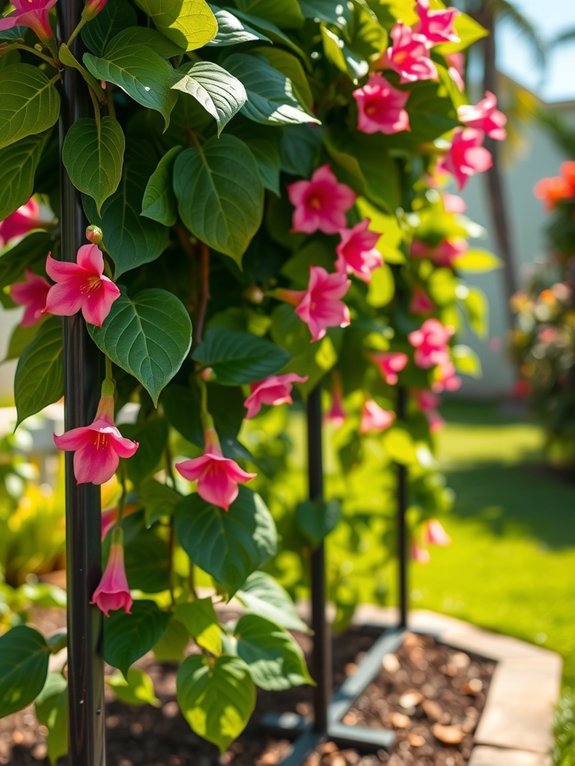
Mandevilla plants need two main things to get started: plenty of sunlight and something to climb on. You should plan for at least 6 hours of direct sun each day, and more is better. When mandevilla sits in too much shade, it won’t produce as many flowers, so light really does matter for your blooming results.
Before you plant, set up your climbing structure. This could be a trellis, arbor, or any sturdy frame that fits your space. The support needs to be solid enough to hold the plant as it grows and matures. If you’re growing mandevilla in a container, pay extra attention to how sturdy your structure is, since you’re dealing with both the plant weight and the soil weight at the same time.
Once your mandevilla starts growing, gently tie the stems to guide them along your support structure. This hands-on training helps direct the plant where you want it to go. By combining a sunny spot with reliable support, you’re setting up the conditions your mandevilla needs to establish itself properly.
Step 2: Plant in Well-Draining Soil
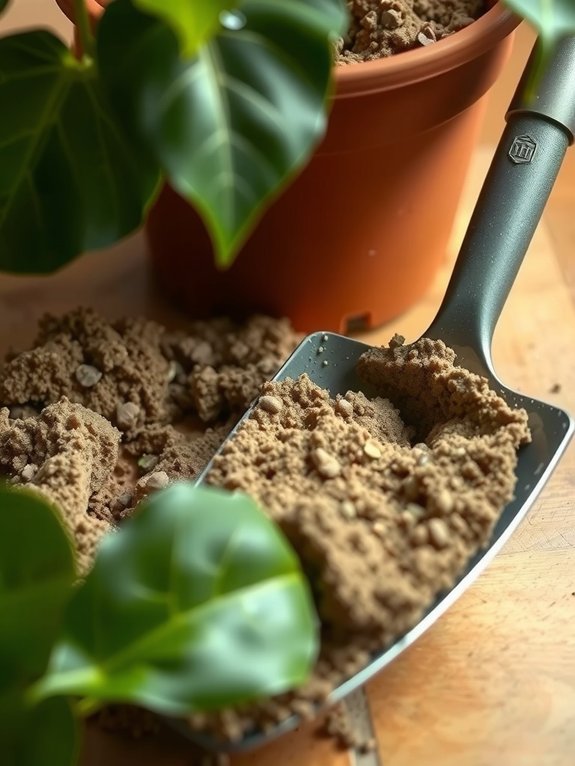
Why does soil matter so much when you’re growing mandevilla? The right soil foundation prevents root rot, that silent killer of otherwise healthy plants, while supporting consistent growth through proper moisture management.
The right soil foundation prevents root rot while supporting consistent growth through proper moisture management.
You’ll want to establish these essentials:
- Use well-draining soil rich in organic matter and compost to improve structure
- Maintain soil pH between 6.6 and 7.8 for optimal nutrient availability
- Amend sandy or clay soil with compost to enhance both drainage and water retention
- Select containers with drainage holes and add hydrogranules if drainage remains limited
When repotting, loosen roots gently and position the root ball slightly above surrounding soil, promoting air circulation. Water thoroughly after planting to blend old and new potting mix, ensuring your mandevilla establishes strong roots from the start.
Step 3: Water Regularly and Adjust for Season
Getting your watering rhythm right means finding the balance between keeping your mandevilla consistently moist and avoiding the soggy conditions that lead to root rot. The key is paying attention to both what’s happening around your plant right now and how the seasons will change its water needs.
Let the top inch of soil dry out between waterings, then give it a deep soak. This approach prevents the wet, disease-prone conditions that mandevillas don’t tolerate well. During hot, dry spells, you might water every other day. Make sure your pot has drainage holes so excess water can escape instead of sitting around the roots.
Even though mandevillas can handle some drought, don’t let the soil dry out completely. Instead, adjust how often you water based on the season, your local climate, and what kind of potting mix you’re using. These factors all shift your plant’s actual moisture needs.
If you’re keeping your mandevilla indoors, increase the humidity around it by misting regularly or running a humidifier. This helps both the leaves and your overall watering schedule work more effectively. The real skill comes from watching your specific plant and adjusting as conditions change, rather than just following the same routine every week.
Step 4: Fertilize Your Mandevilla Every Two Weeks
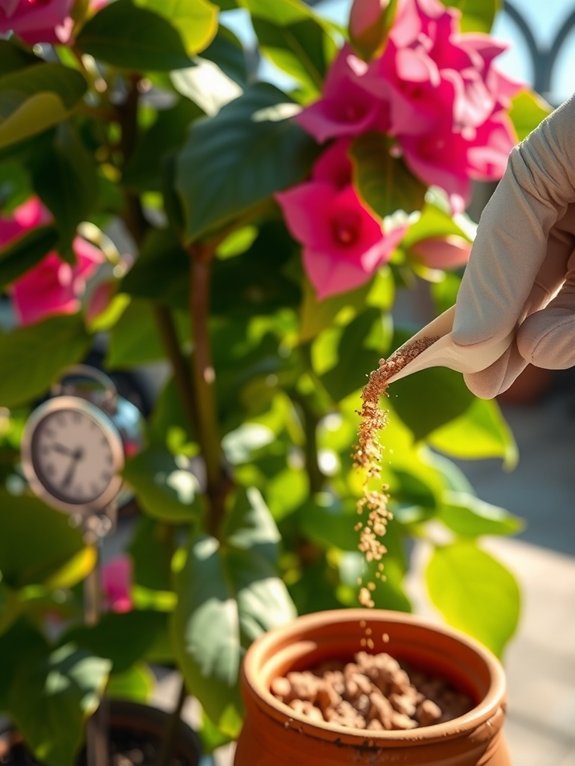
Once you’ve got your watering schedule down, you’ll need to think about feeding your mandevilla. Regular fertilizing during the growing season supports bloom production and keeps your plant strong overall.
Regular fertilizing during the growing season supports bloom production and keeps your mandevilla plant strong overall.
Your fertilizing approach:
Apply a balanced fertilizer diluted to half-strength every two to three weeks. For container plants, a general-purpose fertilizer works well, and you might consider a timed-release formula if you want to space out your feeding tasks across the season. Always fertilize when the soil has moisture in it—this prevents root burn and helps your plant absorb nutrients gradually rather than all at once.
Stop fertilizing in fall and winter. Your mandevilla naturally slows its growth during these months, so it doesn’t need the extra nutrients.
If blooms start to decline: Check your soil moisture before you assume the plant needs more fertilizer. Overfeeding actually creates more problems than it solves. Low light is another common culprit worth investigating before you change anything else.
Step 5: Prune Mandevilla in Early Spring for Full Blooms
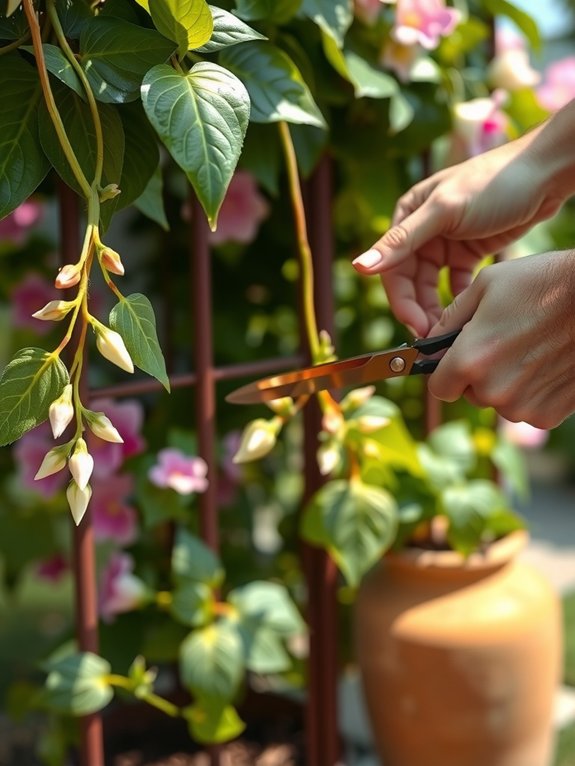
Step 5: Prune Mandevilla in Early Spring for Full Blooms
Pruning your mandevilla isn’t optional if you want it to produce lots of flowers. The timing is key—you need to prune in early spring before new growth starts. This gives your plant time to recover and push out vigorous new branches.
Here’s what to do: Start by removing any dead, diseased, or broken wood. Then cut back up to one-third of the remaining stems to encourage a fuller, bushier shape. Use clean, sharp shears and disinfect them between cuts to keep disease from spreading from one part of the plant to another.
| Task | Purpose | Benefit |
|---|---|---|
| Remove dead wood | Disease prevention | Healthier plant |
| Cut back one-third | Fuller habit | Denser foliage |
| Lightly trim tips | Bushier growth | More blooms |
| Disinfect shears | Prevent disease | Plant safety |
After you finish pruning, feed your mandevilla with a balanced fertilizer diluted to half strength. This supports the new growth that’s about to emerge and sets up your plant to flower well throughout the season.