
How Tall Should a Pergola Be
You’ll want your pergola between 8 and 10 feet tall. This range gives you solid head clearance while keeping your structure visually balanced with your home’s size and style.
Eight feet works best if you’re attaching the pergola to your house or working with limited space. Go with 10 feet if you have a larger property, want to install a ceiling fan underneath, or just prefer more breathing room. The extra height can make a space feel less confined, especially in open yards.
Your specific plans matter too. If you’re building a dining area, aim for 8 to 9 feet so the structure doesn’t feel overwhelming during meals. For hot tubs, you’ll want that full 9 to 10 feet to avoid moisture buildup and steam issues.
Before you finalize your height, check your local wind patterns. Taller structures catch more wind, so you might need stronger reinforcement if your area gets consistently strong gusts. Look at your home’s roofline and your yard’s overall size—these two things should guide your final decision more than anything else.
Standard Pergola Heights: What 8, 10, and 12 Feet Actually Mean
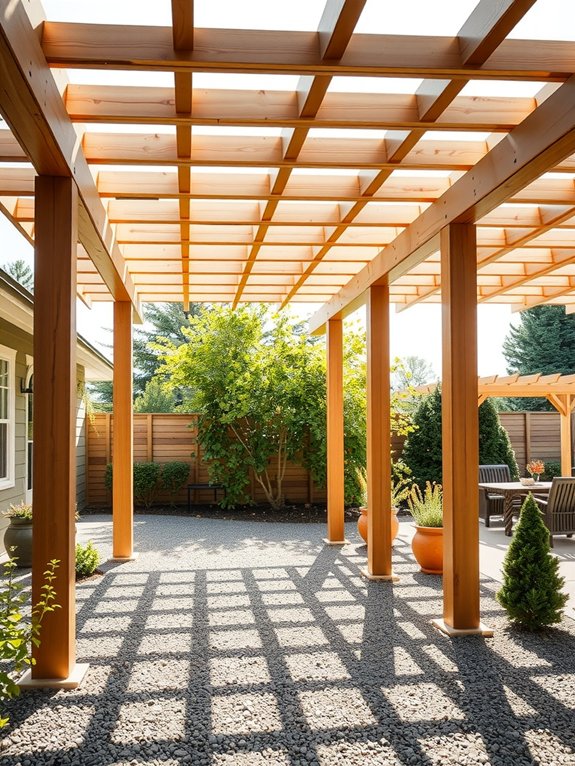
Picking the right height for your pergola comes down to understanding what each standard measurement offers. At 8 feet, you get solid head clearance with beams around 9 feet and rafters near 10 feet. This size gives you shade without making your outdoor area feel cramped or closed off. It’s the practical choice when you’re working with limited vertical space.
An 8-foot pergola provides solid head clearance and shade without cramping your outdoor space—ideal for limited vertical areas.
Ten feet is where most people land with their pergolas. This height lets you add ceiling fans or lighting fixtures without creating installation headaches. It works well for most homes because it balances function with proportion.
If you go with 12 feet, you’re opening up more airflow and making your space feel bigger. Taller structures work better in larger yards where they won’t dominate the landscape.
Your pergola style matters too. Attached pergolas typically work best at 8 to 9 feet since they connect to your house. Freestanding pergolas can go between 8 and 10 feet depending on wind conditions in your area and how much room you actually have. Local wind patterns might limit how tall you want to build, so check what works best for your specific location.
Finding Your Ideal Pergola Height: The 3 Key Factors
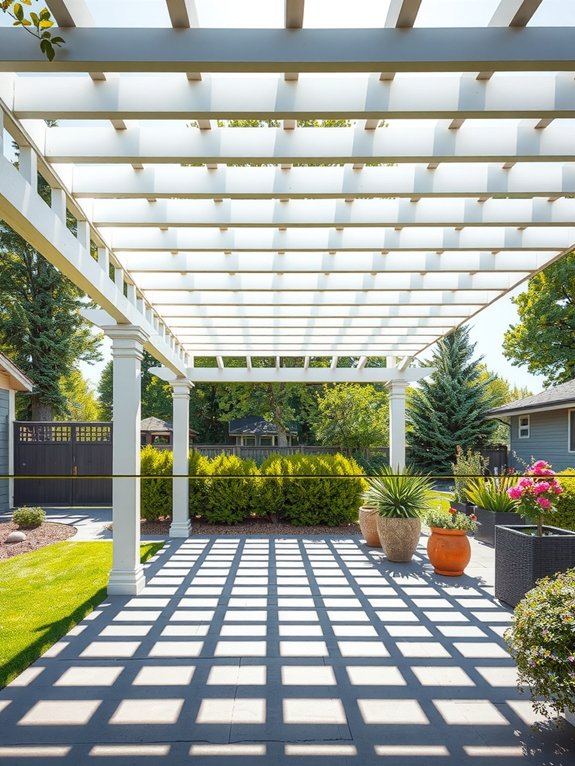
Now that you know what standard heights look like, you can narrow down your options by looking at three specific factors that’ll actually work for your situation.
First, think about what you’re using the space for. Dining areas work best at 8–9 feet, while hot tubs and outdoor kitchens need 9–10 feet of clearance. Second, check how the pergola’s height fits with your house. You want it to line up with your roofline and not block your windows or views. Third, consider your local weather and wind patterns. If you live in a windy area, taller structures need more reinforcement to stay stable.
These three factors—your specific use, how it looks from your windows, and your climate—will point you toward a height that works both practically and visually, whether you’re attaching it to your deck or building it as a standalone structure.
Matching Your Pergola to Your Home and Yard
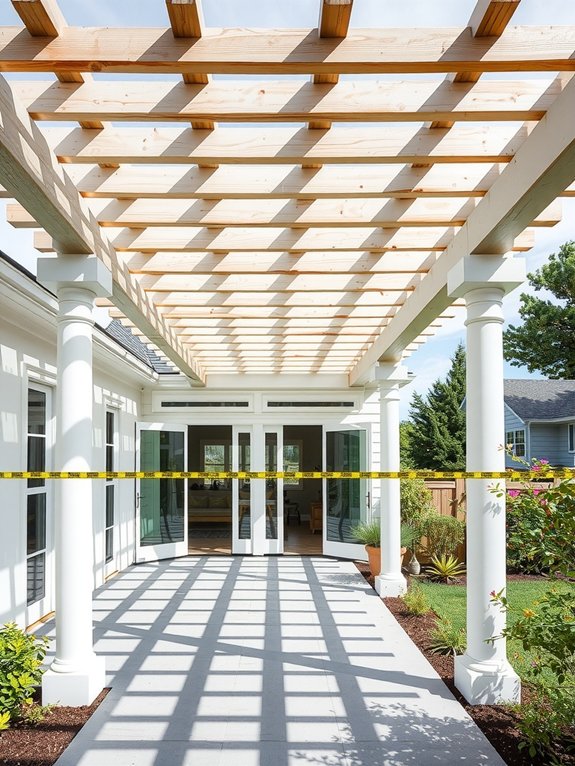
When you’re standing in your yard figuring out where a pergola should go, the most important decision isn’t really about the structure itself—it’s about how it’ll fit with everything around it. Your pergola’s height, matched to your home’s size and what’s already in your yard, creates the balanced look your outdoor space needs. Aligning your pergola’s peak with your home’s eaves or roofline gives you a sense that everything belongs together.
| Pergola Type | Recommended Height | Best For | Key Consideration |
|---|---|---|---|
| Attached | 8–9 feet | Standard homes | Preserves interior sightlines |
| Freestanding | 8–10 feet | Flexible placement | Balances proportion with landscape |
| Tall design | 11–12 feet | Large properties | Suits two-story homes |
An attached pergola needs careful planning when it comes to lining up with your home’s eaves so you don’t block views from your windows. Freestanding structures give you more options for placement, but you still need to think about where trees, fences, and other features are in your yard before you decide on a spot.
Common Pergola Height Mistakes
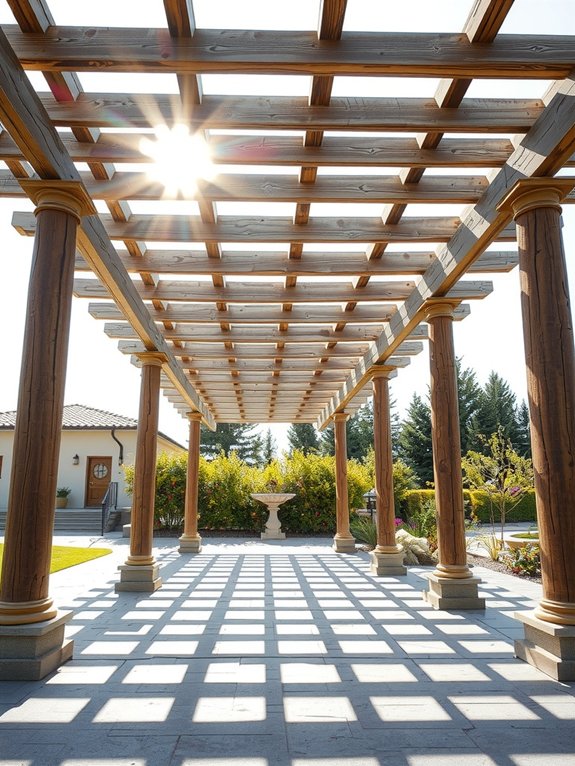
Why do so many pergolas end up feeling awkward in their spaces, neither quite tall enough to provide meaningful shade nor short enough to maintain visual balance with surrounding structures? You’ve likely seen the culprits: oversized installations that dwarf modest yards, and undersized ones that sacrifice airflow and sun protection.
Most common mistakes stem from stepping outside the proven 8–12 feet range, which throws off both functionality and aesthetics. When you’re planning your pergola, you need to think about clearance requirements for fans or lighting—ideally 8–9 feet minimum. If you skip this step, you’ll end up with fixtures that compromise accessibility after installation.
Before you break ground, check your local codes and HOA rules. Ignoring these invites permit complications or costly height reductions post-construction. Finally, don’t overlook ground conditions and proper footing depth, particularly in freezing climates. That foundation work directly impacts your pergola’s structural stability over time.
Custom Pergola Heights: When to Go Adjustable or Fixed
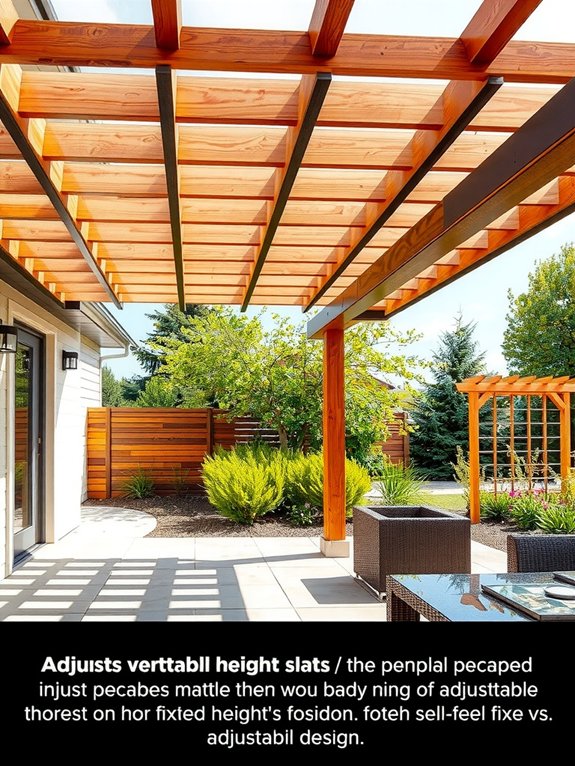
Once you’ve settled on the standard 8–12 feet range, you’ll face a more nuanced decision: whether your pergola should stay fixed at a single height or accommodate adjustments as your needs evolve.
Adjustable-height pergolas with motorized louvered roofs give you dynamic shade control. You can integrate accessories like fans or lighting without needing structural overhauls down the road. This flexibility works well if you’re not entirely sure how you’ll use the space or think your needs might change.
Motorized louvered roofs offer dynamic shade control and flexible accessory integration without future structural overhauls.
Fixed-height designs provide architectural harmony and installation stability. The trade-off is that you need to think through headroom balance and ventilation upfront. For fixed installations, aim for around 9–10 feet—this height typically works well with standard ceiling fans and fits most home proportions.
If you’re going with an adjustable setup, plan a height range that gives you options. For attached pergolas, consider 8–9 feet; for freestanding structures, plan between 8–10 feet. This range lets you make adjustments later without major complications.
Whichever direction you choose, align your roof design with your home’s existing eave lines. This creates a cohesive outdoor living space that feels intentional rather than tacked on.