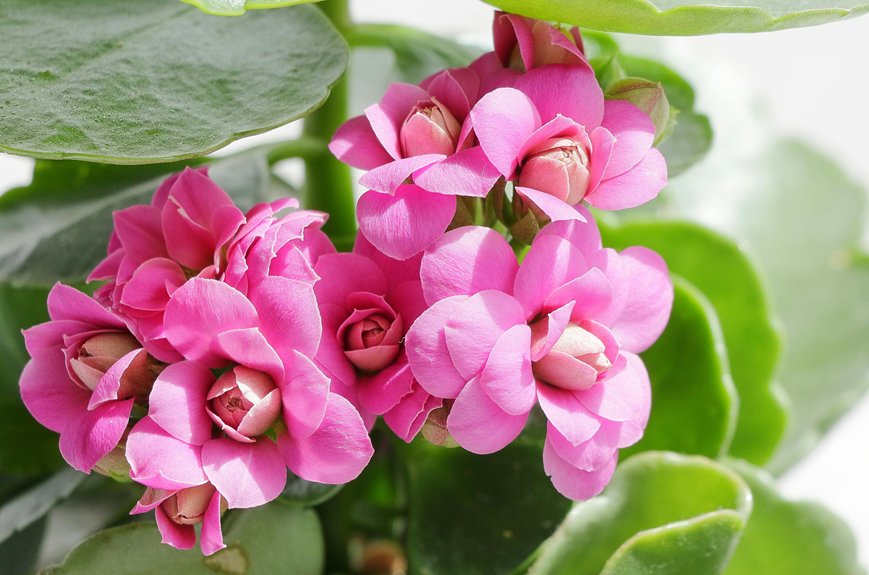
To keep your kalanchoe healthy, give it bright indirect light with one to two hours of direct sun each day, though this depends on where you live.
Water thoroughly only when the top inch of soil feels completely dry to the touch. These plants are succulents, so overwatering is their biggest problem.
Use fast-draining cactus or succulent soil, and keep temperatures between 60–85°F.
During the growing season, feed your kalanchoe with fertilizer at half strength once a month.
Remove spent flowers as they fade to help your plant keep producing new blooms.
Once you understand what your specific plant needs, you’ll find it easier to spot and fix problems before they become serious issues.
Light Requirements for Healthy Kalanchoe Growth
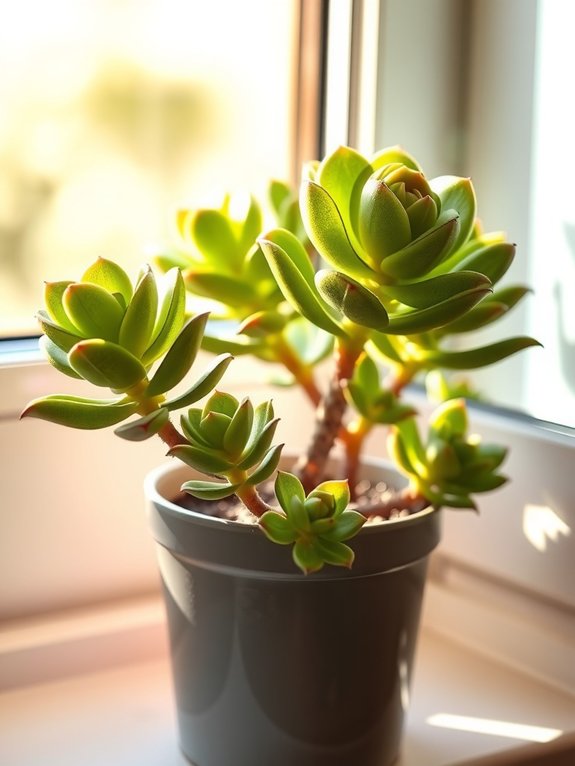
Your kalanchoe shows you when it’s getting enough light through its growth and flowers. When conditions are right, you’ll see robust growth and plenty of blooms. Your plant needs bright light—aim for one to two hours of direct sun during summer months, though this depends on where you live. South or west-facing windows usually give you the strong light your kalanchoe needs indoors.
The tricky part is finding the sweet spot. Too much direct sun, especially in hot climates, will scorch the leaves. Too little light, and your plant gets stunted with fewer flowers. Bright indirect light works well year-round and gives you a solid baseline to build from.
Position your kalanchoe near a sunny windowsill but block out the harshest afternoon rays. This balance respects both what your plant needs and what can actually damage it. When you get this right, you end up with a vigorous plant that flowers regularly.
Watering Your Kalanchoe: Finding the Right Balance
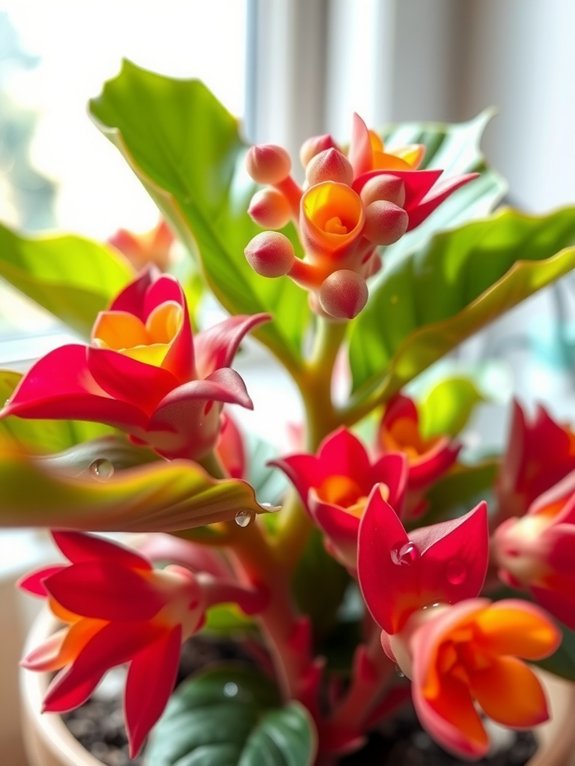
Watering is where most people run into trouble with kalanchoe plants. Since your kalanchoe is a succulent, it likes dry conditions and doesn’t need much water. Water it thoroughly once a week, but let the top inch of soil dry out completely between waterings. This approach matches how the plant survives in nature and keeps root rot from developing in wet soil.
Water your kalanchoe thoroughly once weekly, allowing the top inch of soil to dry completely between waterings to prevent root rot.
Your pot setup matters just as much as your watering schedule. Use a well-drained cactus or succulent soil mix, and make sure water doesn’t pool around the base of the pot. Standing water is the quickest way to kill a healthy kalanchoe.
During the growing season, you might water a bit more often, but the soil still needs to dry between each watering. When temperatures drop or light decreases in winter, cut back on how often you water. Water the soil directly rather than splashing water around randomly—this helps you avoid wet spots that can lead to fungal problems.
Keep an eye on how dry your soil gets. The right watering schedule depends on your home’s light, the season, and how warm it is. Adjust your routine as these conditions change throughout the year.
Choosing the Right Soil and Drainage
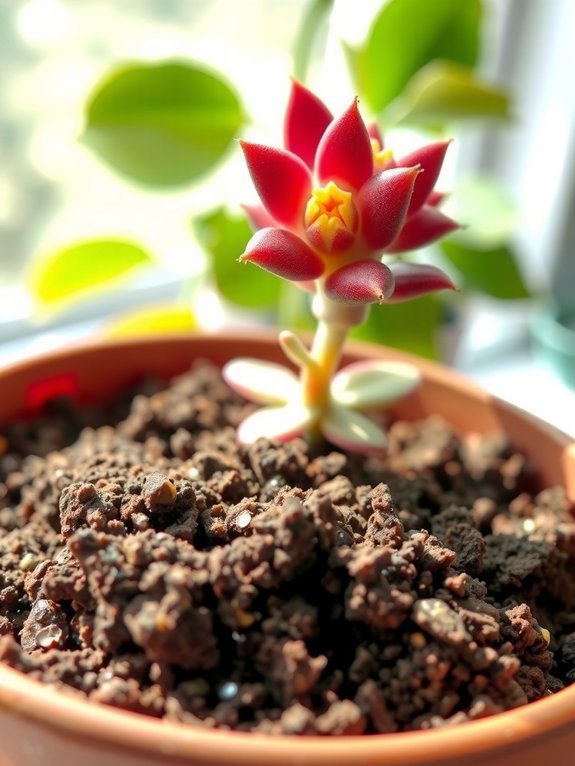
You’ll want to use a well-draining soil mix—either a commercial cactus or succulent blend, or a homemade combination of half organic potting soil and half perlite or sand. Kalanchoes come from dry regions, so they really struggle with wet soil that leads to root rot.
Plant your Kalanchoe in a pot with drainage holes so water can flow out freely after watering. Between waterings, let the soil dry out completely. This matches how the plant naturally handles drought and keeps you from overwatering it, which is what usually causes root rot.
Getting the drainage and soil right is straightforward, but it’s probably the single most important thing you can do to keep your Kalanchoe healthy over time.
Well-Draining Soil Mix
Kalanchoes come from dry, sandy places where water moves through soil quickly. Regular potting soil holds too much moisture, which leads to root rot—one of the biggest problems for succulents. You need to mix your own soil that drains well.
Here’s what works: combine half organic potting soil with either succulent mix or cactus potting mix. Then add gritty gravel or coarse sand to the blend. This extra grit keeps water from sitting around your plant’s roots. The combination gives your kalanchoe the drainage it needs while keeping the soil structure stable enough for the roots to anchor into.
Don’t forget about your pot itself. Make sure it has drainage holes on the bottom. Even perfectly mixed soil can’t help if water has nowhere to go. Without drainage holes, moisture builds up and damages the roots, inviting disease and decay.
Root Rot Prevention
Why does root rot happen so easily with kalanchoes, despite their reputation as hardy plants? These succulents evolved in arid environments, so they struggle when their water needs aren’t handled correctly. The key to prevention is your drainage strategy.
Start with drainage holes in every pot. This keeps water from sitting around the roots. Next, mix your own soil blend using half organic potting soil and half succulent mix. This combination resists moisture retention better than standard potting soil alone. You can also add perlite or sand to speed up drainage even more.
Your watering approach matters just as much as your soil choice. Wait until the top inch of soil dries completely before watering again. When you do water, soak the pot thoroughly and let the excess drain away. This mimics the conditions kalanchoes expect in their native habitats. By combining fast-draining soil with proper watering habits, you’re recreating what your plant actually needs to stay healthy.
Fertilizing Your Kalanchoe the Organic Way
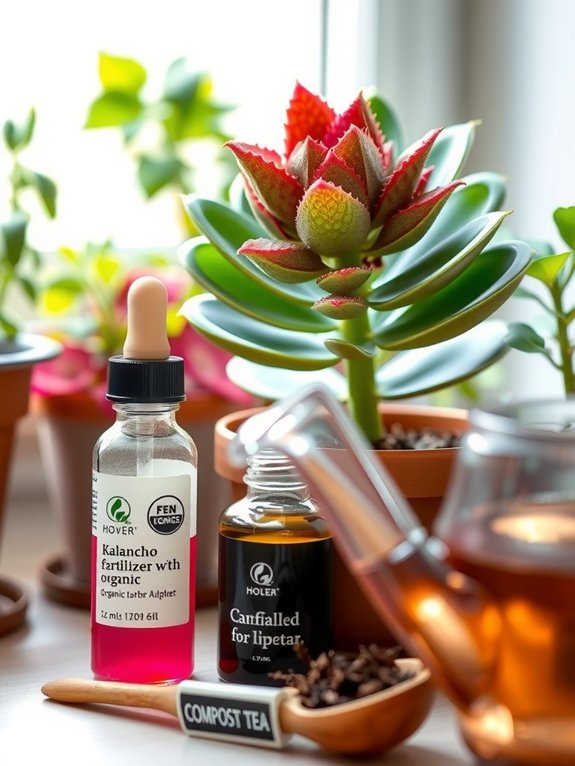
How you feed a kalanchoe plant matters more than how often you do it. These succulents evolved to grow in nutrient-poor soil, so heavy fertilizing actually works against what they need. The best approach starts with organic amendments. When you plant in spring, work worm castings and compost into the soil, and add more as a top layer when needed.
During spring and summer, feed your kalanchoe once a month at half strength. This lighter schedule respects how little nutrition the plant actually requires. A couple times during the warm months, apply seaweed extract as an organic boost that adds to your care routine without overdoing it.
Feed kalanchoe once monthly at half strength during spring and summer, plus occasional seaweed extract for organic nutrition without overdoing it.
This method skips synthetic fertilizers altogether and works with your plant’s natural preferences rather than fighting against them. You’re working alongside what the kalanchoe already wants to do, not pushing it in a different direction.
Pruning Your Kalanchoe for Shape and Health
With the same meaning, using contextually relevant synonyms in place of “essentially”:
You’ll find that deadheading—removing spent flower clusters by cutting the stem down to where the foliage begins—keeps your kalanchoe looking tidy while signaling the plant to direct its energy toward fresh blooms rather than seed production. Leggy growth, that stretching habit some kalanchoes develop when they’re reaching for light, responds well to selective pruning that removes these elongated stems just above a leaf node, encouraging the plant to branch out into a fuller, more compact form. With sharp, clean shears and a light touch, you’re fundamentally guiding your kalanchoe toward the dense, balanced shape that’ll serve both its appearance and its health.
Modified version:
Deadheading—removing spent flower clusters by cutting the stem down to where the foliage begins—keeps your kalanchoe looking tidy while signaling the plant to direct its energy toward fresh blooms rather than seed production. Leggy growth, that stretching habit some kalanchoes develop when they’re reaching for light, responds well to selective pruning that removes these elongated stems just above a leaf node. This encourages the plant to branch out into a fuller, more compact form. With sharp, clean shears and a light touch, you’re basically guiding your kalanchoe toward the dense, balanced shape that’ll work for both its appearance and its health.
Deadheading Spent Flowers
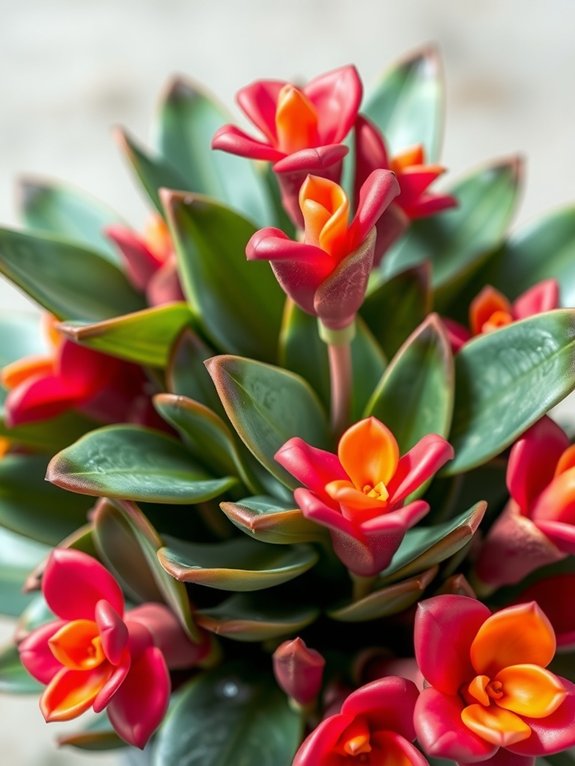
Once your kalanchoe’s flower clusters fade, those dense, star-shaped blooms that have held their color for weeks, it’s time to redirect the plant’s energy toward fresh growth and a cleaner look. Deadheading spent flowers means trimming each stem down to the foliage, which stops seed formation that would otherwise drain your plant’s resources and reduce future blooming.
Grab clean, sharp scissors or pruning shears for each cut. Making precise cuts minimizes stress on your plant. Since kalanchoe blooms last a long time, you won’t need to prune nearly as often as you would with other flowering plants.
Keep your pruning restrained. Remove only the spent flower heads and any leggy growth that’s making your plant look less compact. This careful approach keeps your kalanchoe looking good while maintaining its health.
Trimming Leggy Growth
Beyond removing those faded flower clusters, there’s another pruning task worth your attention: cutting back the leggy stems that show up when your kalanchoe reaches for light or grows without enough space. Using clean, sharp pruning shears, trim back stems to where you see healthy foliage, removing no more than a third of the plant at once.
Timing matters here. Do this pruning during the active growing season, spring through early summer, when your kalanchoe can put its energy toward recovery after you cut it back. Once you’re done pruning, hold back on watering—kalanchoes like drier conditions better—and move your plant to bright indirect light. This setup helps new growth come in strong while preventing the weak, stretched-out stems you just worked to get rid of.
Common Kalanchoe Problems and Solutions
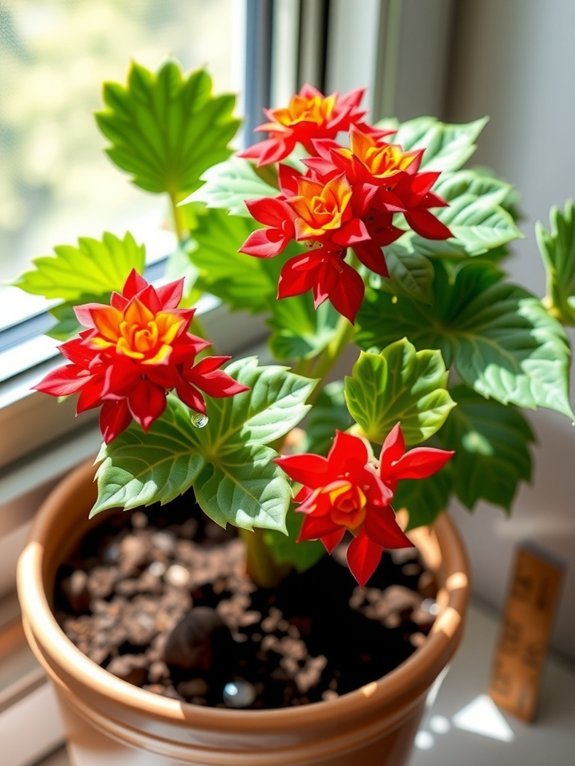
Your kalanchoe might look like it should thrive on neglect, but a few things can still go wrong. The biggest issue is overwatering. When you water too much, the soil stays wet and roots start to rot. You can fix this by letting the soil dry out completely between waterings and using soil that drains well. If your plant’s stems feel mushy or the leaves look soft, that’s a sign you’re watering too often. Cut back on watering right away and make sure water can escape from your pot.
Overwatering is the biggest threat to kalanchoe. Let soil dry completely between waterings and ensure proper drainage to prevent root rot.
Brown spots on the leaves mean your plant is getting too much direct sun. Move it to a spot with bright light but without harsh rays beating down on it all day.
Watch for pests like mealybugs and aphids, which leave behind sticky residue or white cottony clumps. You’ll need to treat these to keep them from spreading.
If your kalanchoe isn’t blooming much, it probably needs more light. Try moving it to a brighter location and give it darker periods at night, which can help trigger flowering.
How to Encourage Your Kalanchoe to Bloom Again?
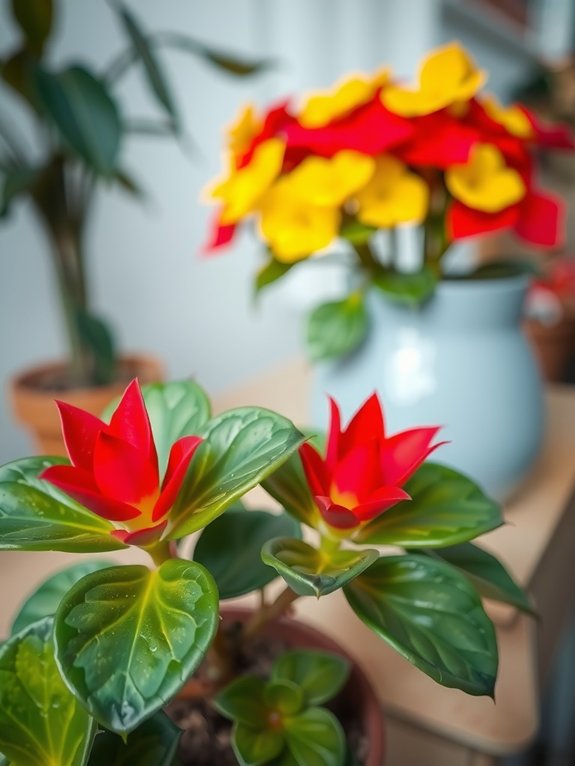
Why Isn’t Your Kalanchoe Flowering as Reliably as It Once Did?
The answer likely comes down to light. Kalanchoe is a short-day plant, which means it needs specific light patterns to set buds and actually bloom. Your plant isn’t being difficult—it’s just following its natural rhythm.
What Your Kalanchoe Really Needs
For 3–4 weeks, you’ll need to give your plant 12–14 hours of uninterrupted darkness each day while providing bright indirect light during the daytime hours. This dark period tricks your plant into flowering mode. During this time, reduce watering slightly since your plant isn’t actively growing as much. Once you see buds starting to form, go back to your regular watering schedule and continue with the bright indirect light.
Keep your plant in a warm spot too. Cold drafts can mess with the flowering process, so avoid placing it near windows or doors where it might get chilled.
After the Blooms Appear
When buds form, keep the soil slightly moist rather than letting it dry out completely. After the flowers have dried up, remove the spent blooms. This deadheading step encourages your plant to produce new growth and sets up the conditions for it to bloom again later on.
| Care Phase | Duration | Key Action |
|---|---|---|
| Dark Period | 3–4 weeks | 12–14 hours uninterrupted darkness |
| Bud Formation | Ongoing | Maintain bright indirect light |
| Post-Bloom | After drying | Remove spent flower heads |
Creating the Right Temperature and Humidity
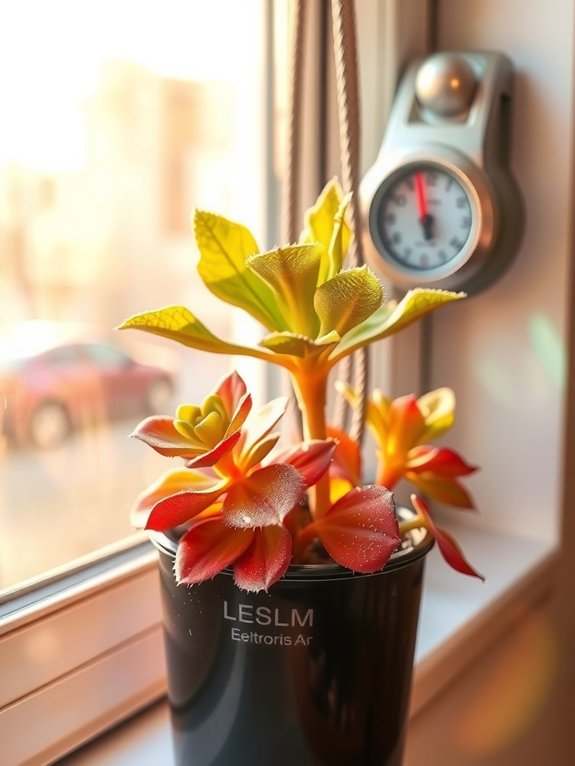
Creating the Right Temperature and Humidity****
Once you’ve figured out the light side of things, temperature and humidity become your next focus—and they’re actually pretty manageable. Kalanchoe plants do well when you keep conditions similar to their warm native homes.
Once you’ve nailed the lighting, temperature and humidity are your next easy wins—just keep conditions warm like their native homes.
Aim to keep your room between 60–85°F, which gives you a solid range for steady growth and blooming. Cold drafts from windows or vents can stress your plant, so position it away from those spots. You don’t need to fuss much with humidity since regular indoor levels work fine without any special adjustments.
Bright indirect light in a warm spot will keep your plant healthy without the stress of direct sun exposure, which can scorch the leaves. With these straightforward conditions in place, your Kalanchoe will stay healthy and colorful throughout the year.
Repotting and Long-Term Care
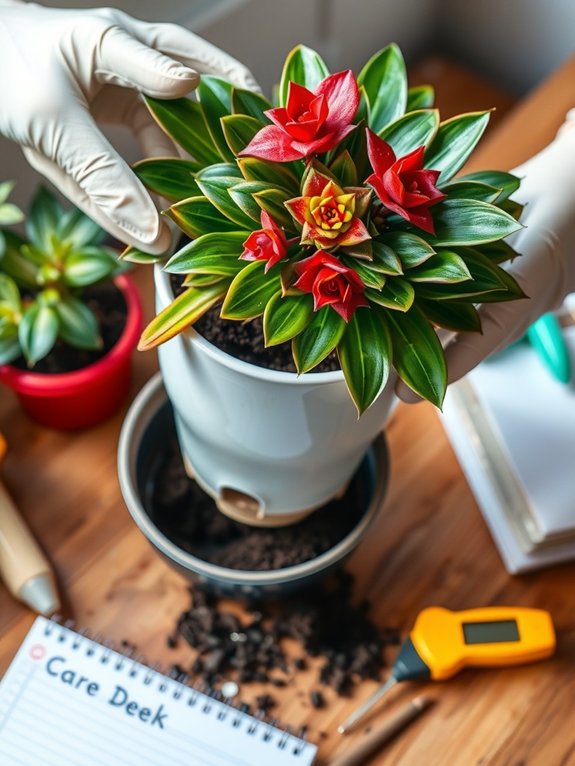
Repotting and Long-Term Care****
Your Kalanchoe will need repotting every one to two years as it grows. When the time comes, move it into a container that’s just slightly larger than the current one and fill it with fresh, fast-draining soil. A cactus or succulent mix works well, especially if you blend in some perlite or sand to help water drain quickly and prevent root rot.
Right after repotting, water your plant thoroughly. Then step back and let the top layer of soil dry out before you water again. This approach protects the roots from getting too soggy, which is a real problem for these plants.
During the transition period, keep your Kalanchoe in a bright spot with indirect light and position it in a warm room. After it settles in, do some light pruning by removing any spent flowers and leggy growth. This helps your plant maintain a nice, compact shape. These simple steps will keep your Kalanchoe healthy and blooming for years to come.