
When you’re deciding on a fence material, you’re basically choosing between privacy, how much work you’ll put into maintenance, and what you can spend. Let’s break down your main options.
Wood is the classic choice. It looks good and fits most neighborhoods, but here’s the catch—you’ll need to seal it regularly to keep it from rotting and weathering. If you’re willing to do that upkeep, you get a fence that lasts and looks natural.
Vinyl takes the opposite approach. You won’t spend weekends maintaining it, which saves you time and frustration over the years. The tradeoff is that vinyl costs more when you first install it, so you’re paying upfront for that convenience.
Chain link is your budget-friendly option. It does the job of keeping things secure without demanding much from you in terms of maintenance. The downside is it won’t give you privacy—people can see right through it.
Aluminum gives you a more polished look without the seasonal work. It doesn’t need sealing or staining, so it’s similar to vinyl in the maintenance department but typically costs less.
Composite materials bring together durability and environmental responsibility. They’re made from recycled materials and hold up well over time, though they’ll still cost you more than basic chain link.
Your decision really comes down to balancing what you can afford upfront against how much maintenance you’re willing to handle down the road, plus what look you want for your space.
How to Choose the Right Fence Material for Your Needs
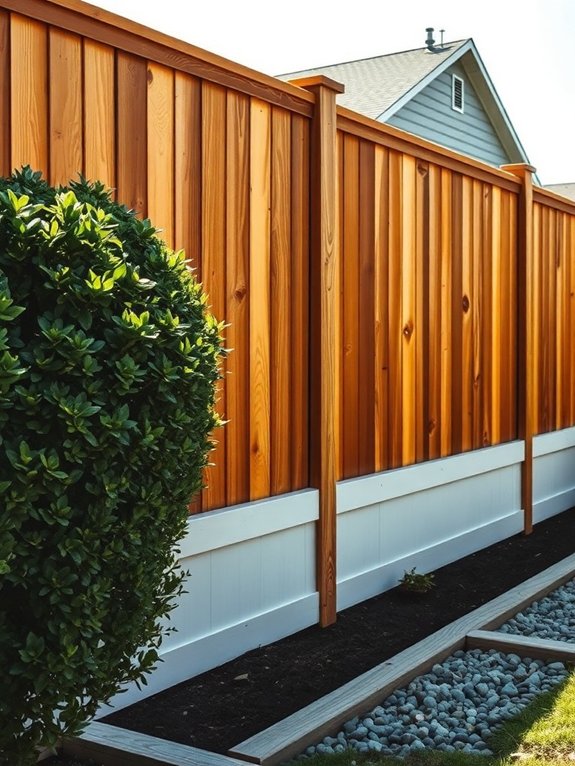
When you’re standing in your backyard imagining your fence project, you’ve got three main things pulling at your attention—appearance, cost, and upkeep time. Here’s what matters: you need to think about all three, but which one takes priority depends on your specific situation.
Start by figuring out your privacy needs. Wood and vinyl give you solid screening if that’s important to you, while chain link won’t block much of a view. Privacy matters more in some yards than others, so be honest about what you actually need.
Wood and vinyl give solid privacy screening, while chain link won’t block much view. Be honest about what your yard actually needs.
Next, think about how much work you’re willing to do. Wood requires regular sealing to stay in good shape, which means you’re committing to ongoing maintenance. Vinyl is basically the low-maintenance option if that appeals to you.
Your climate plays a big role in what lasts longest. Vinyl resists rot and pests, so it holds up well in wet areas. Metal fence options handle extreme weather better than other materials, which matters if you live somewhere with harsh winters or intense sun.
Once you’ve sorted through privacy, maintenance, and durability, match those factors against your budget and what style you actually want your fence to look like. When all those pieces line up, you’ll land on a material that fits how you actually live and what your property needs.
Wood Fences : Classic Beauty With Maintenance Needs
Wood Fences: Classic Beauty With Maintenance Needs****
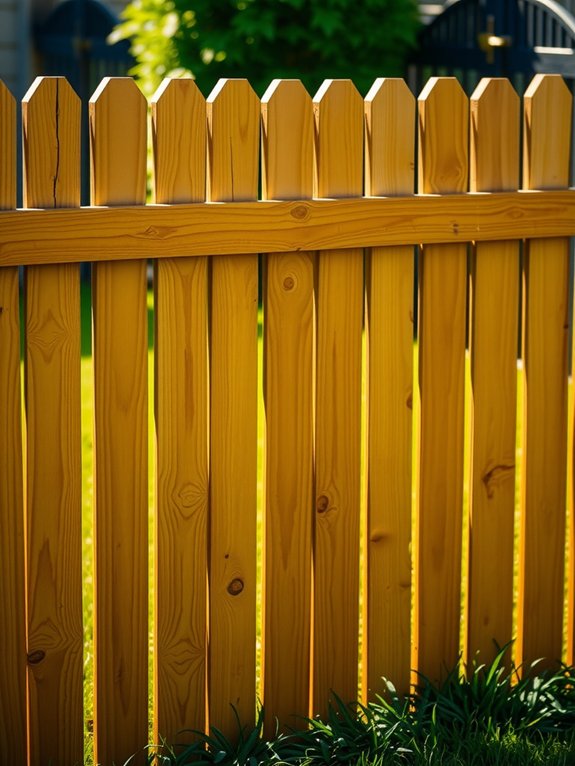
Why do wood fences remain the default choice for countless homeowners, despite their demanding upkeep? You’ll find that wood’s timeless appeal—those warm tones and customizable styles like Split Rail or Solid Board—creates the privacy and aesthetic cohesion you’re seeking. The material adapts readily to your vision; staining or painting in whites, blacks, grays, or sage greens aligns the fence with your home’s character.
That said, maintenance demands genuine commitment. You’re looking at regular sealing and staining cycles, plus vigilant inspections for rot, termites, and carpenter ants that threaten structural integrity. With diligent care, you’ll get 10–15 years from your investment, though higher long-term costs reflect this reality. Wood demands honest assessment before installation.
Vinyl Fences : Durability Without the Upkeep
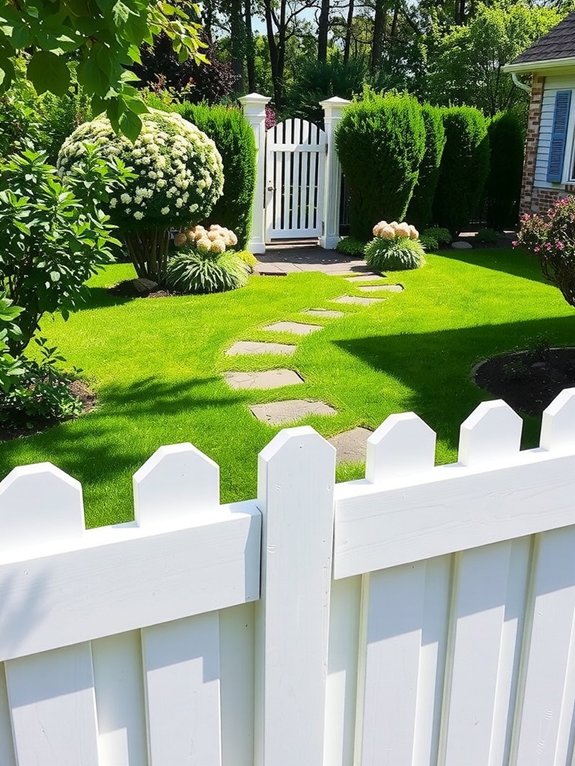
If wood’s maintenance demands—seasonal sealing, rot inspections, constant weathering checks—don’t fit your schedule, vinyl fences work differently. You get real low maintenance; your weekends stay free from sealing, staining, and specialized treatments. Vinyl resists rot, fading, cracking, and pest damage. It handles harsh weather without deteriorating and only needs occasional cleaning to stay looking good. You can also find vinyl in multiple styles and colors that capture wood’s appearance.
The downside is price. Installation costs more than wood or chain link options. If a panel gets damaged, you’ll typically need to replace the whole thing rather than fix just that section. There’s also the environmental angle to consider since vinyl comes from petroleum-based materials. Weigh whether the long-term durability payoff justifies these concerns for your situation.
Chain Link Fences : Affordable & Practical Security
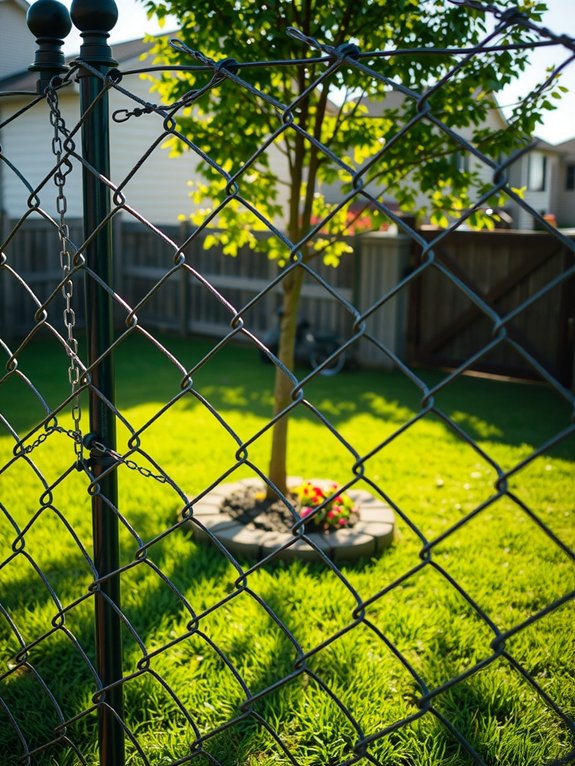
Chain link fences sit on the practical side of the spectrum—they’re straightforward, economical, and they show up in countless backyards because they do what you need them to do. If you’re looking for affordable security on a large property or need to contain pets, chain link gives you solid value for your money.
These fences hold up well against rust when they’re properly galvanized, and they can handle serious wind without falling apart structurally. You won’t spend much time maintaining them either. Occasional cleaning and periodic rust checks are really all it takes to keep one working reliably for years.
The trade-off is real though. Chain link doesn’t give you privacy, and it won’t win any design awards. The industrial look and limited customization options mean you’re picking practicality over style. If you care more about budget-friendly protection and durability than how your fence looks from the street, chain link is a solid choice that makes sense.
Aluminum Fences : Elegant Design With Low Maintenance
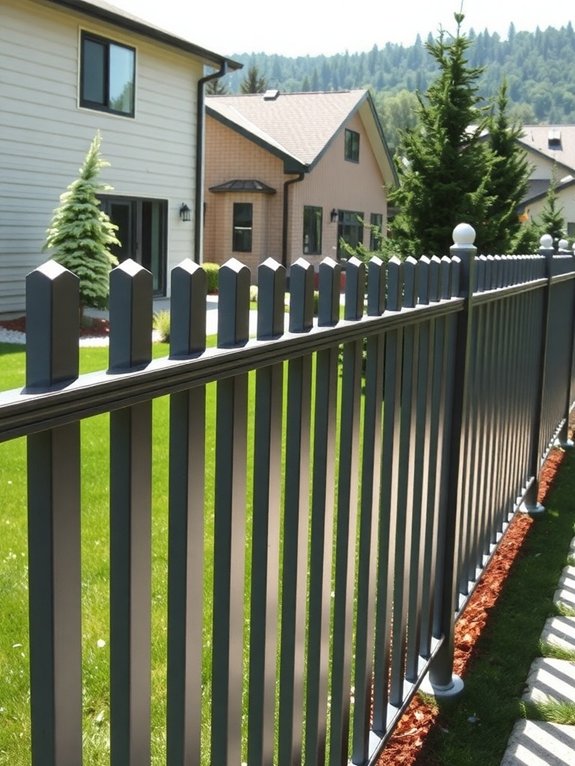
When you’re ready to move beyond chain link’s basic look, aluminum fences offer that sophisticated appearance without the maintenance burden that comes with wrought iron. Powder-coated finishes and decorative options like spear tops, Ascot styles, and Canterbury designs give you the refined aesthetic you want while staying completely rust-resistant.
Aluminum fences deliver sophisticated style with rust-resistant durability, offering refined aesthetics without wrought iron’s maintenance demands.
The upkeep is genuinely minimal. You’re looking at occasional cleaning and nothing more—no seasonal sealing or staining like you’d do with other materials. That low maintenance routine saves you real time and effort over the years.
The cost is higher than chain link, but you’re getting durability that justifies the investment. Most aluminum fences perform reliably for over twenty years without deteriorating. That longevity means you won’t be replacing it anytime soon.
There’s a trade-off worth considering: these open-design fences prioritize visibility and visual appeal over privacy. If you need a solid barrier to block sightlines, aluminum might not be your best choice. But if you’re willing to accept that limitation in exchange for a refined look that stays maintenance-free, aluminum fencing delivers genuine value.
Composite Fences : The Eco-Friendly, Long-Lasting Option
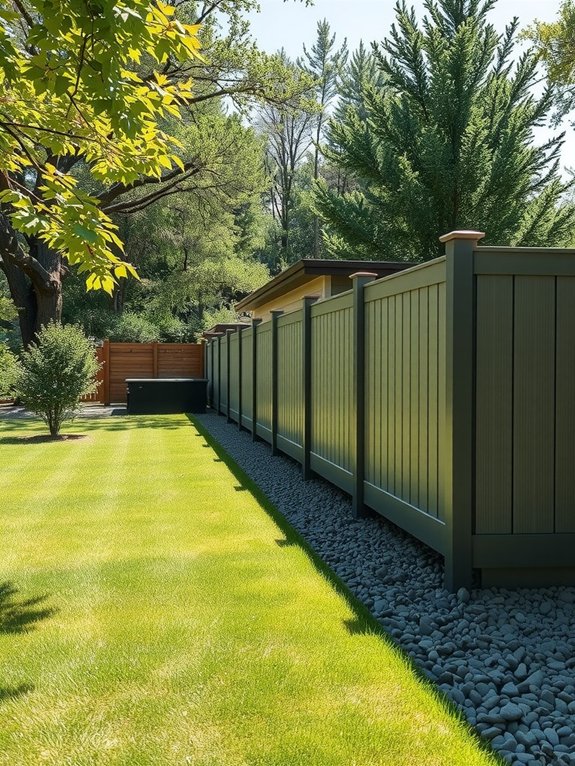
Composite fencing combines recycled wood fibers and plastics into a barrier that stands up to wind, rain, and UV exposure without the seasonal maintenance that wood requires. You get a material that lasts longer than traditional options while demanding minimal upkeep, which appeals to homeowners who want durability without the constant work.
The main drawback is the higher upfront cost. However, you’ll recoup that investment over time through lower maintenance expenses. Keep in mind that you can’t paint composite fences, and darker colors will fade more noticeably under intense sun than lighter shades do.
Your design choices with composite are more limited compared to wood or vinyl, so if you want maximum aesthetic flexibility, this material might feel restrictive. That said, composite delivers reliable performance and genuine low maintenance if longevity and environmental responsibility matter to you.
Compare by Budget, Maintenance, and Privacy
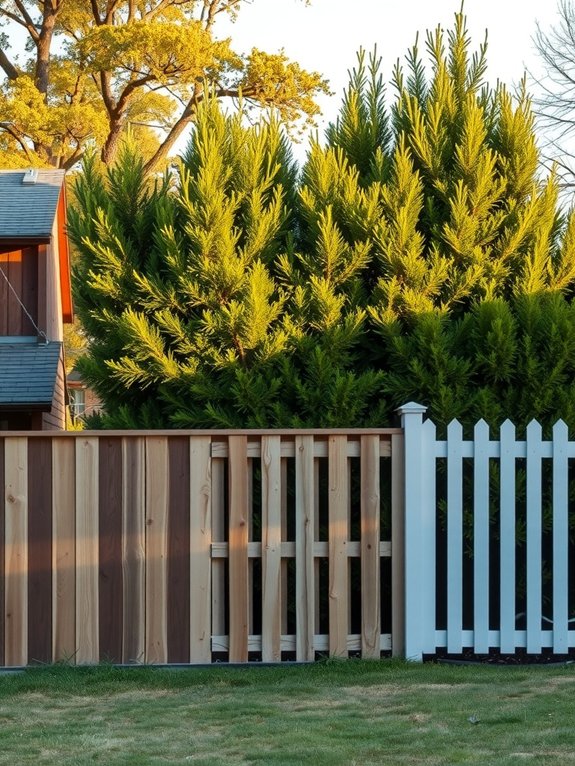
Now that you’ve considered composite’s balance of durability and environmental benefit, it’s worth stepping back to examine how the major fence materials stack up against each other across three practical dimensions: what you’ll spend upfront and over time, how much work they’ll demand from you, and how effectively they’ll shield your yard from view.
Wood fences demand serious maintenance—sealing, staining, repainting—that compounds costs annually. The tradeoff is that wood excels at privacy. Vinyl requires minimal upkeep despite higher initial investment, making it a good choice if you want to spend less time on repairs. Chain-link stays budget-friendly but sacrifices both privacy and aesthetics, so you’re paying less upfront but getting less in return. Aluminum offers low maintenance with moderate expense, though it provides limited screening compared to wood or vinyl.
The key is aligning your fence choice with your actual capacity and priorities. If you have time for regular maintenance and privacy matters most, wood might work for you. If you’d rather spend money now to avoid future upkeep, vinyl makes sense. If your budget is tight and you’re okay with a visible fence line, chain-link covers the basics. Understanding these trade-offs helps you make a choice you’ll actually stick with long-term.