
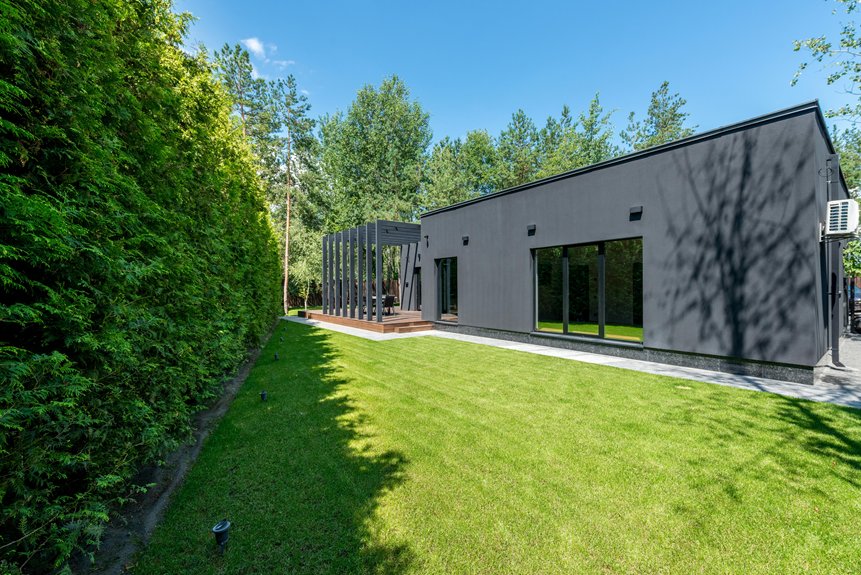
You’ll start by getting clear on what you want from your space—think about how you’ll actually use it.
Next, spend time watching how sun moves across your yard and where water pools after rain. These patterns matter more than you might think.
When you’re ready to sketch out your design, use the Golden Ratio as a guide. A width of about 9–10 units paired with 16 units of length creates proportions that feel balanced without looking stiff or formal.
For the actual planting structure, anchor your design with multi-stem trees and substantial boulders positioned at asymmetrical corners rather than dead center. Layer your plants strategically—taller specimens go toward the back, and compact groundcovers move forward. Space everything based on how wide and tall plants will be at maturity, not their current size, so you won’t end up with overcrowded beds in two years.
Before you plant anything, get your drip irrigation system in place during ground prep. This saves you time later and delivers water more efficiently than sprinklers. When you plant, cluster specimens in groups of seven or nine rather than dotting them around individually—this approach looks more intentional. Finish with 2–3 inches of mulch to suppress weeds and regulate soil temperature.
The real work happens in the details of how you execute these steps.
Define Your Backyard Goals and Site Layout
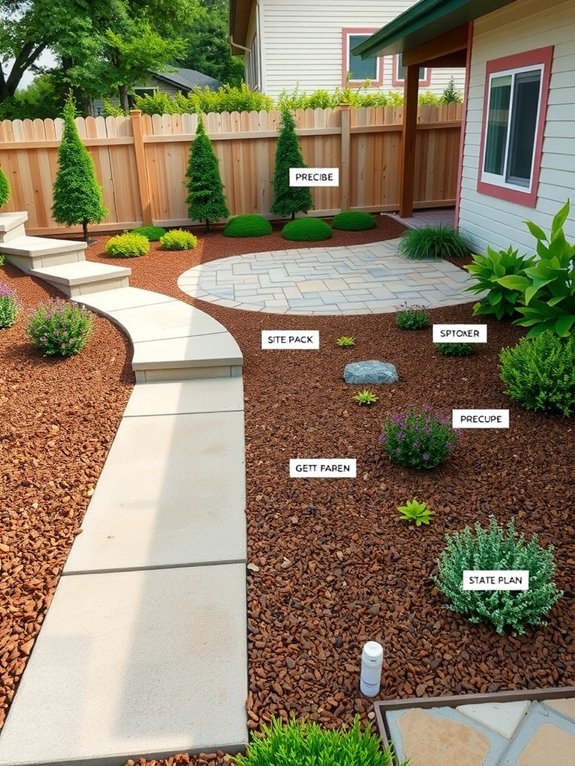
How do you actually picture yourself using your backyard once it’s done? This question matters because it’s the difference between a design that works and one that costs you money to fix later. Before you start sketching, think honestly about what activities matter to your family. Do you want to eat dinner outside under shade? Do your kids need a safe play area? Are you interested in growing vegetables? These specific uses guide everything that comes next.
Once you know what you want to do back there, create a site plan on graph paper. Map out what’s already there—your house, deck, shed, trees, fences—and mark where utilities like water lines and electrical run. Draw everything to scale so you’re working with realistic measurements. At the same time, pay attention to how the sun moves across your yard throughout the day, where wind tends to blow, and how water drains after rain. Understanding these conditions helps you figure out where to place focal points like patios or water features, and where different plants will actually do well.
Use a bubble diagram to sketch out different zones and how they connect to each other. This visual tool helps you translate ideas into a real concept plan before you commit to anything permanent. This upfront planning work saves you from having to redesign things later because you didn’t account for how your family actually moves through the space or what the site conditions really allow.
Map Your Landscape’s Sun, Wind, and Drainage
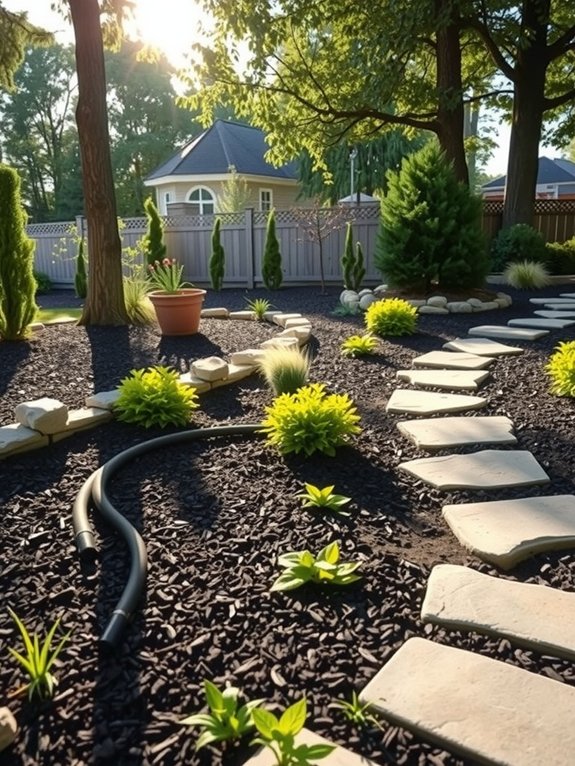
Start by observing your yard’s sun exposure patterns. Track which areas get full sun (six or more hours), part sun (three to six hours), or shade. This information matters because it determines which plants can actually survive in each spot and helps you figure out where to place your beds.
Pay attention to wind direction and strength too. You can assess this by watching how trees bend during breezy days, noting how quickly soil dries after rain, and checking where frost damage shows up when winter arrives. Once you understand your wind patterns, you’ll know where to add windbreaks or where you can take advantage of sheltered spots for plants that need protection.
Before you plant anything, examine your slope and drainage situation. Watch where water pools after heavy rain and which areas stay soggy the longest. This step is crucial because poor drainage will kill even tough plants. If your drainage is problematic, you’ll need to either grade your land or build raised beds to fix the issue.
Sun Exposure Patterns
Sun Exposure Patterns
Before you plant anything, spend some time mapping what your yard actually gets—not what you think it gets. The difference between full sun and part sun can seriously affect how well a plant performs over time. Walk around your space throughout the day and watch how light moves across it. Notice which spots get morning sun and which ones get hit with afternoon heat.
| Sun Exposure | Hours Required | Best Plant Types |
|---|---|---|
| Full Sun | 6+ hours direct | Roses, lavender, ornamental grasses |
| Part Sun | 3-6 hours direct | Hostas, hellebores, Japanese maples |
| Shade | Less than 3 hours | Ferns, bleeding heart, woodland plants |
One thing to keep in mind: light conditions change with the seasons. Trees grow larger and cast bigger shadows, so what worked one year might not work the next. Check your yard’s sun patterns across different times of year and adjust where you place plants accordingly.
Drainage and Wind Assessment
Mapping your yard’s sun patterns gives you half the picture—what happens to water when it rains and how wind moves across your space completes it.
Start by walking your property after a storm. Look for where water pools near your foundation or along walkways, then mark these wet spots on your site map. Pooling water causes real problems like root rot and foundation damage, so you’ll need to fix these areas before you plant anything. Grading adjustments or French drains can redirect water away from problem zones.
While you’re observing drainage patterns, also watch how wind moves through your yard. Look at which way trees lean and notice where debris naturally drifts. These clues show you your prevailing wind directions. Strong winds damage delicate plants and create harsh conditions in certain spots, so you may want to install windbreaks like hedges, fences, or strategic plant groupings to protect vulnerable areas.
This combined assessment matters because it anchors your design in what actually happens in your yard rather than what you hope will happen. You’re working with your site’s real conditions instead of against them.
Gather Inspiration for Your Landscape Style
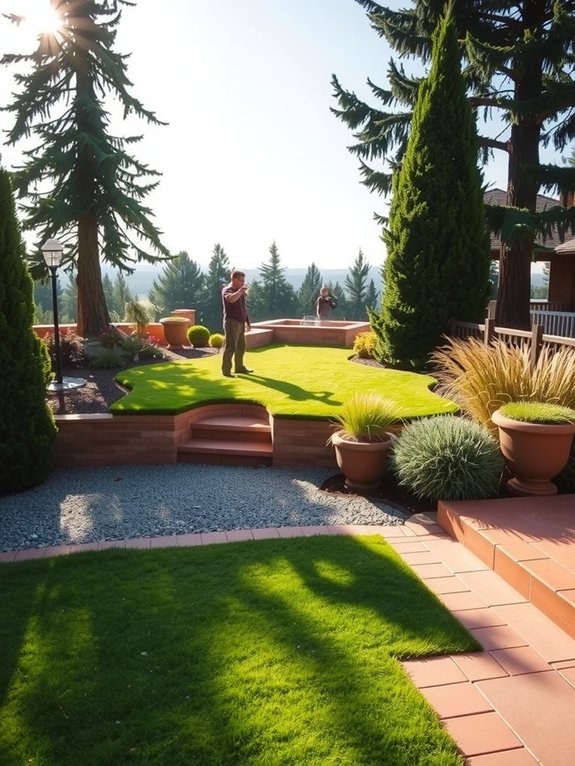
Every successful garden starts in your head before you touch the soil—with a collection of images, impressions, and ideas that’ll guide your choices about which plants to use and where to place your hardscape features. You’ll collect inspiration photos from magazines, websites, and walks around your neighborhood, documenting styles that match what you’re picturing. This visual research keeps your design on track and helps you avoid expensive mistakes down the road.
| Style | Plant Character | Hardscape Feel | Color Palette |
|---|---|---|---|
| Modern | Architectural, minimal | Clean lines, concrete | Neutral tones |
| Cottage | Abundant, layered | Winding paths, wood | Soft pastels |
| Desert | Drought-tolerant, spiky | Gravel, stone | Warm earth |
| Tropical | Lush, textured foliage | Decking, mulch | Vibrant greens |
Your inspiration photos serve as reference points that transform vague preferences into actual decisions. They help you match your ideas to what your specific site can handle and what your household can realistically maintain over time.
Sketch a Landscaping Plan With Paths and Focal Points
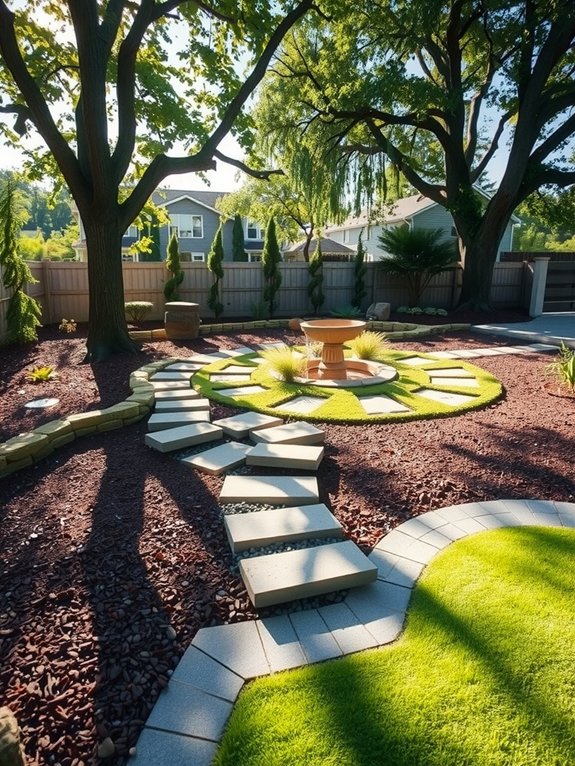
Once you’ve gathered your inspiration, it’s time to move from looking at images to actually planning your space. This means thinking through how people will walk through your yard and where they’ll naturally look.
Start with bubble diagrams—simple circles on paper that show how different zones connect to each other. Map out where you want seating, plants, and areas for entertaining. This rough sketch lets you work out relationships before you worry about specific details.
When you design your main pathways, aim for about four feet wide so two people can walk side by side comfortably. Mix in narrower, winding paths that create smaller, quieter spots. The contrast between wide and narrow paths makes your yard feel intentional rather than random.
Focal points matter because they guide where people look and move. Place urns, sculptures, water features, or seating areas strategically throughout your space. These elements create connections between different zones and prevent your yard from feeling like separate, unrelated sections stuck together.
Keep your sketch flexible while you work. Check that your paths and focal points actually match what you want your space to do and what your site conditions allow. Making changes on paper is much easier than fixing them after you’ve started building.
Apply Design Rules: Odd Numbers and Golden Ratio
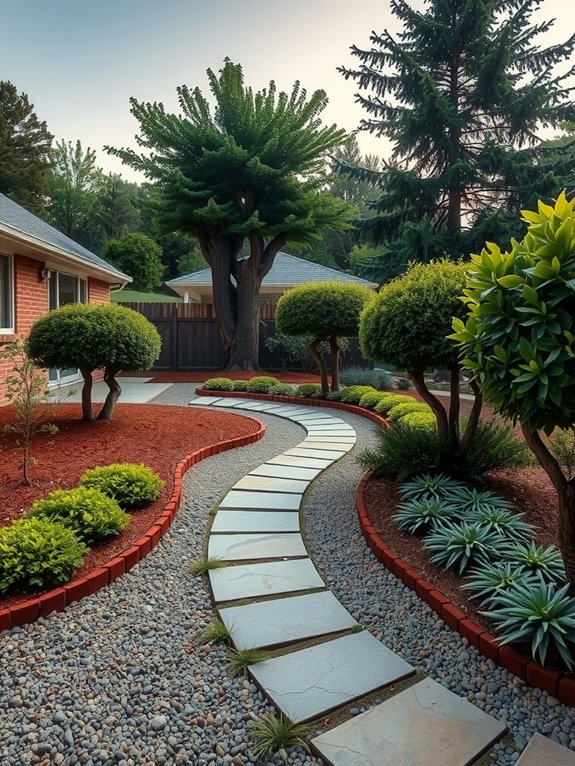
Now that you’ve sketched your paths and positioned your focal points, you’re ready to refine those layouts using two design principles that show up again and again in nature. Start by grouping plants in odd numbers—three shrubs, five perennials, seven groundcover specimens. Asymmetrical arrangements pull your eye in more naturally than even numbers, which can feel stiff or too formal.
At the same time, use the Golden Ratio—that 1.618:1 proportion found throughout nature—to decide on your bed widths and depths. If you’re making a planting bed that’s sixteen units long, pair it with a nine or ten-unit width. That proportion creates curves that feel right rather than randomly measured.
These two principles work together well. When you anchor odd-numbered groupings within Golden Ratio proportions, your scattered plantings shift into landscapes that look intentional. Instead of feeling like random plants stuck in the ground, your yard starts to feel like it belongs to something larger and more carefully thought out.
Select Trees for Landscaping Anchors
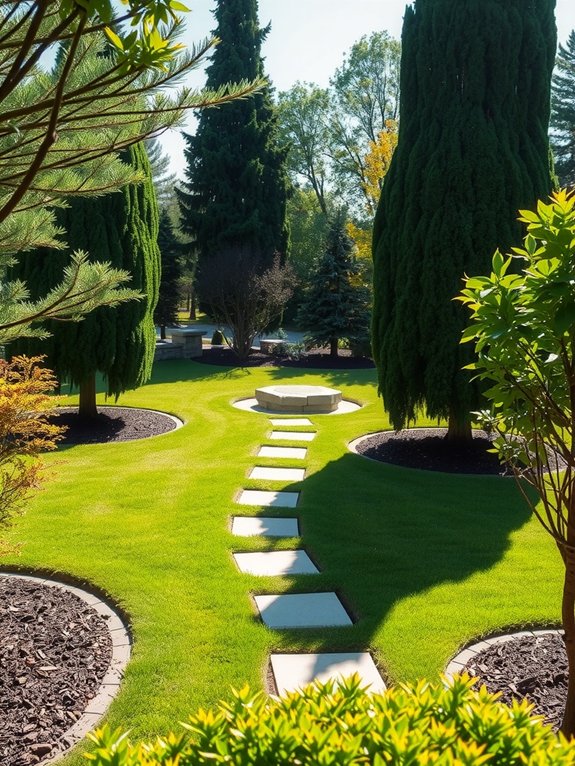
You’ll want to anchor your landscape with multi-stem or large trees—think Redbud or Magnolia—and position them asymmetrically on corners to create strong focal points without making your yard feel rigid and formal. When you’re picking your anchor trees, think carefully about how big they’ll actually get and how they’ll grow. If you choose something that’ll block your sightlines or crowd your pathways in ten years, you’ll undo all the planning you’re doing right now.
Once you’ve placed your main trees, pair them with smaller boulders or hardscape elements positioned nearby. This grounds the anchor visually and makes clear that it’s doing real work in your landscape’s structure.
Anchor Placement Strategy
What transforms a scatter of plants into a cohesive design is the strategic placement of anchor trees—multi-stem varieties like Redbud or Magnolia that establish visual weight and organize the entire landscape around them. Position your anchors at critical junctions: corners, pathway transitions, or zone boundaries where they’ll guide movement naturally.
Pair each anchor with substantial boulders to create tactile, grounded focal points that work well in asymmetrical layouts. The combination gives you a solid foundation to build from.
Before you finalize placement, consider the tree’s mature dimensions carefully. You’ll want to ensure its eventual spread won’t encroach on pathways or obstruct sightlines years down the road. Taking this step now saves you from having to relocate plants later.
Build your surrounding plantings outward from these anchors methodically, letting them dictate your design’s flow. This creates intentional structure that feels effortlessly professional and makes your backyard landscape something you’ll appreciate each time you look at it.
Multi-Stem Tree Selection
Multi-Stem Tree Selection
You’ll find that certain trees work better as landscape anchors than others, and it really comes down to how they’re structured. Multi-stem varieties like Redbud and Magnolia branch out in ways that give your space visual weight without feeling as formal or stiff as a single-trunk tree can sometimes feel in a home setting.
When you’re picking an anchor tree for your landscape, take time to look at how big it’ll get and which way it’ll grow. You want to make sure it won’t eventually block pathways or ruin the views you care about from inside your house or from key spots in your yard.
Here’s a practical move: position a couple of substantial boulders near your chosen tree. This does two things at once—it grounds the whole composition and helps tie together different elements so they feel connected visually rather than scattered.
The real payoff comes when you combine your tree with stone and organize your other plants into cohesive groups, with individual specimen plants placed strategically throughout. This kind of layered approach—where scale feels balanced and you can find visual interest no matter where you look—is what separates landscapes that feel intentional from ones that feel like plants were just dropped in randomly.
Layer Plants for Depth and Winter Interest
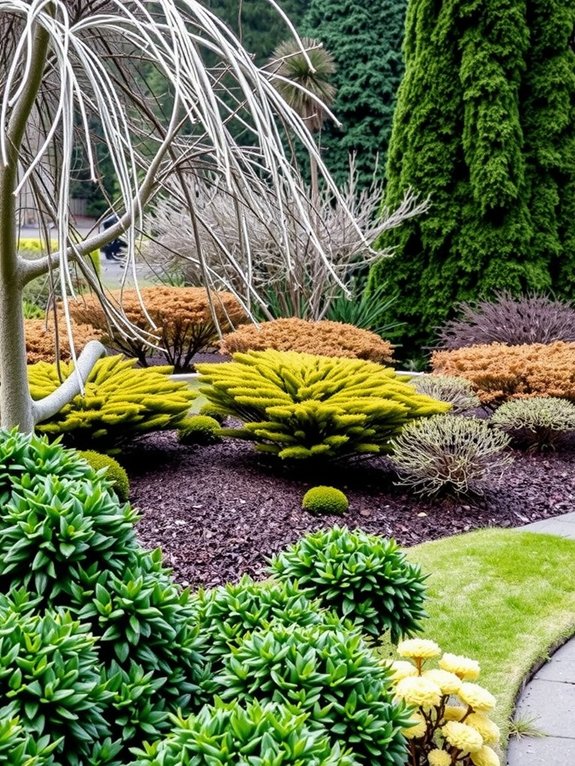
Once you’ve arranged your beds with attention to the bones of your landscape, layering becomes the technique that transforms a flat planting into one with genuine spatial dimension and sustained visual appeal. When you layer plants strategically, you create the depth that separates amateur from polished designs.
Position your tall specimens first. Start with trees or substantial shrubs in the back layers to establish your visual foundation. Then graduate toward mid-height perennials and compact groundcovers fronting the bed for cohesive tiering.
Select evergreen backbones to anchor winter interest. These plants hide deciduous growth while textural or fruiting mid and front layers sustain seasonal appeal through the dormant months. This strategy keeps your beds from looking bare and brown when deciduous plants drop their leaves.
Mix contrasting forms and textures across your layers. Pair glossy leaves against matte surfaces, and combine upright evergreens with sprawling groundcovers. This prevents monotony as your plantings mature and fill in.
Account for mature sizes throughout your design. This step prevents crowding and ensures your foreground plantings won’t disappear beneath towering neighbors as everything reaches full size. Check plant tags for their expected width and height at maturity, not their nursery container size.
Space Plants for Their Mature Size
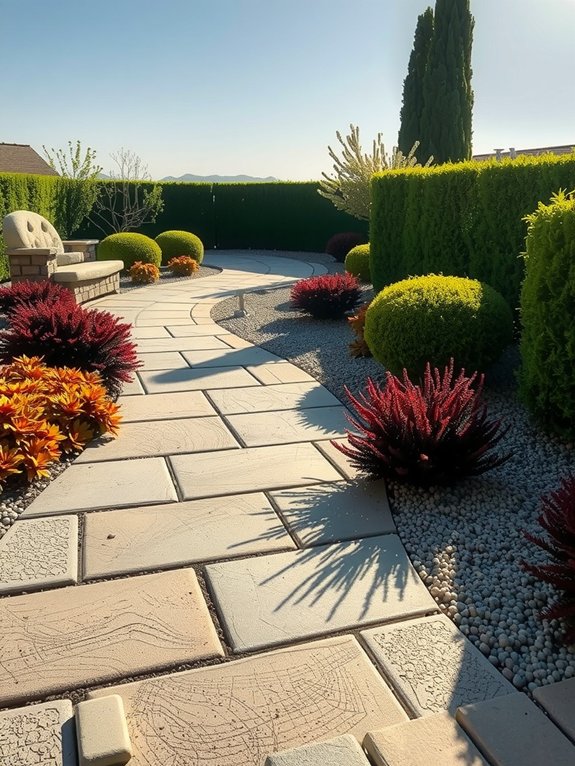
How many times have you planted a “dwarf” shrub only to watch it eventually take over your foundation or block the sightlines you’d carefully planned? You’re not alone. The real issue is that most people overlook mature size—that critical measurement—during the initial excitement of planting.
Before you buy anything, check the plant tag. It tells you the width and height your plant will actually reach when fully grown. A River Birch spreads roughly 25 feet wide by 40 feet tall, while a Waxy Leaf Ligustrum maxes out around 10 feet wide by 15 feet tall. Those numbers matter a lot when deciding where to put things.
When you’re spacing your beds, use larger specimens as focal points and arrange smaller varieties around them strategically. This prevents the crowding that ruins both how your garden functions and how it looks, keeping the intentional design you’ve thought through intact.
Build Your Planting Map
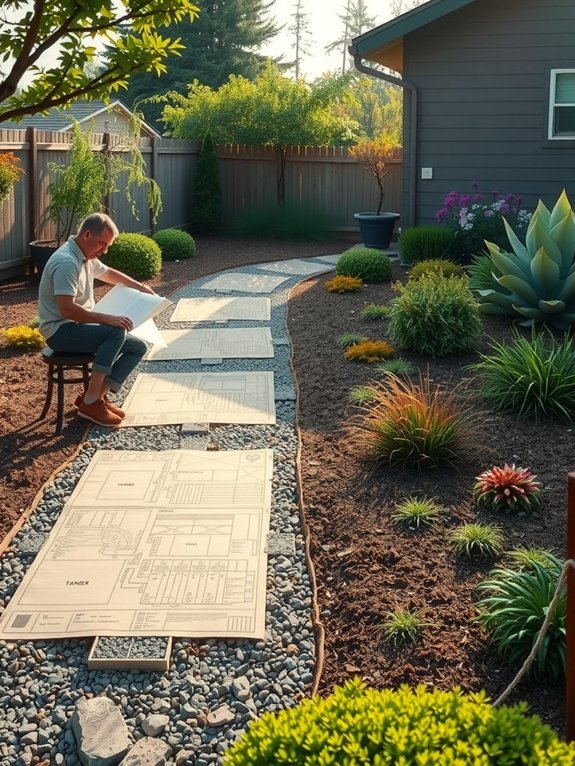
The difference between a landscape that looks like you planned it and one that looks random usually comes down to one step most people skip: drawing out your plan on paper before you dig.
Your planting map turns spacing ideas into something you can actually see. Start by picking an anchor plant—a multi-stem Redbud or Magnolia works well—then build outward from there. This keeps your design from feeling scattered, with plants looking like they belong together rather than just scattered around.
Start with an anchor plant like Redbud or Magnolia, then build outward to keep your design cohesive and intentional.
Group your plants densely into clusters of 7, 9, or 40 rather than planting singles. You’ll get more visual impact and your beds will look more mature faster.
Use the golden ratio** when you’re sizing your beds. A 9–10 foot width works well for 16-foot beds** and helps guide natural curves that feel right.
Draw plants at their full grown size**** on your map. This matters because you’ll avoid crowding near your paths and the sides of structures. What looks sparse now will fill in, and you don’t want plants pressing against your walkways or house in five years.
This kind of deliberate planning is what makes a landscape feel intentional rather than accidental.
Install Your Landscape
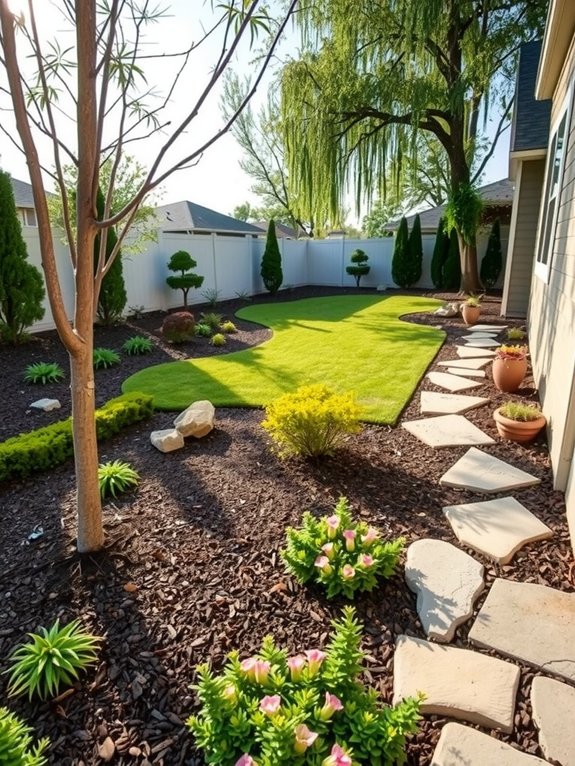
You’re ready to move from your plan on paper to actual planting. The order you follow matters—preparing soil, positioning plants and hardscape, then setting up irrigation and mulch—will determine how well your landscape holds up through its first season.
Start by amending your soil with compost and grading the site based on the slopes and drainage patterns in your design. This prep work might feel like extra effort, but it prevents erosion and waterlogging down the road. Once your ground is ready and you have your planting map, install your hardscape anchors first. Think walls, steps, and dry creek beds. These give your landscape its bones.
Next, position your plants at their mature spacing. This means leaving room for them to grow to full size rather than crowding them in. Finally, lay down your drip irrigation lines and mulch layers. This combination cuts down on how often you need to water and reduces ongoing maintenance considerably.
Prepare the Ground First
Removing or decompacting your existing lawn—whether you sheet mulch it down or physically excavate it away—is foundational work. It’s unglamorous but critical because what happens beneath the surface determines whether your plants will genuinely perform well or just get by in mediocre conditions.
Build soil health first. You need to establish a robust planting bed with amended soil, nutrients, and organic matter that’ll sustain your plants for years. This isn’t something you want to shortcut. Better soil now means fewer problems and less maintenance later.
Install drip irrigation during ground prep. Run your irrigation lines before you plant anything. This way, water reaches your plants’ roots efficiently without waste or guesswork. You won’t have to adjust lines around established plants or deal with surface watering later.
Plan your spacing strategically. Draw your plants at their mature sizes on your layout. This prevents crowding and protects your pathways and structures from overgrowth down the line. It’s easier to adjust on paper than to move established plants around later.
Install Plants and Features
With your soil amended, irrigation lines running, and spacing sketched out on paper, you’re ready to move plants from nursery containers into the ground. This is when your plan becomes a real, living landscape.
Plant in massed groups of seven, nine, or more of the same species rather than scattered singles. Grouping plants this way anchors your design and creates stronger visual impact than individual specimens spread throughout the space.
Position your large specimen—a multi-stem Redbud or Magnolia—at a corner to establish a focal point. Place boulders nearby to guide movement asymmetrically through your landscape.
Layer evergreens in front to conceal back-row deciduous plants while staggering their bloom times across different seasons. This gives you visual interest throughout the year rather than everything flowering at once.
Space everything according to mature dimensions. Your River Birch will reach forty feet tall and twenty-five feet wide, so account for that final size now rather than crowding plants and having to remove them later.
Water and Mulch Properly
Proper watering and mulching aren’t something you add after installation—they’re what separate a landscape that barely makes it from one that actually performs well. Good hydration practices build the foundation for long-term plant health, while mulch acts as a protective barrier for your soil and plants.
- Apply a 2–3 inch mulch layer after planting. This conserves moisture, keeps soil temperature steady, and blocks weeds from taking over.
- Group plants with similar water needs together, then install drip irrigation. This approach cuts down on evaporation and runoff while delivering water straight to where roots can use it.
- Water deeply and less often rather than shallow and frequently. Deep watering pushes roots down deeper into the soil, which makes your plants more resilient during dry spells.
Check your soil moisture regularly and adjust your watering schedule based on what the weather is doing and what season you’re in.