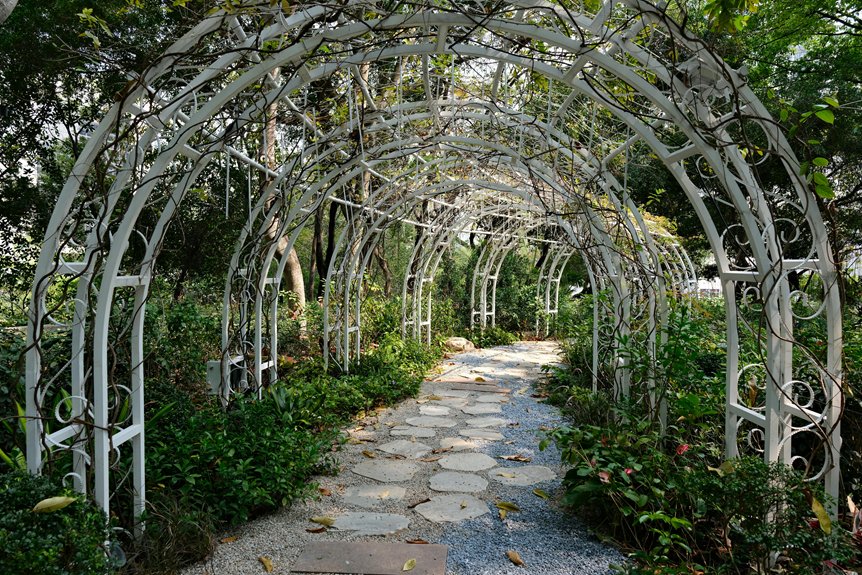
A standard 16-foot cattle panel that’s roughly 50 inches wide works well for most garden trellises. The tricky part isn’t really the panel itself—it’s how your path width affects the structure. If you’ve got a narrow path, you’ll get a steeper arch with more headroom. A wider path will flatten things out considerably.
When you’re setting this up, plan for about five feet between your posts and make sure they’re anchored securely. The real question is what you’re growing. Lightweight vines don’t need much support, but heavier crops like squash will require extra reinforcement to keep everything from sagging or collapsing under the weight.
Your exact panel size ultimately depends on your specific garden dimensions and what plants you’re actually planning to grow. Measure your space first, think about what you want to grow, then choose your panel size based on those real details rather than just going with a standard option.
Standard 16-Foot Cattle Panels: The Default Choice (and Why)
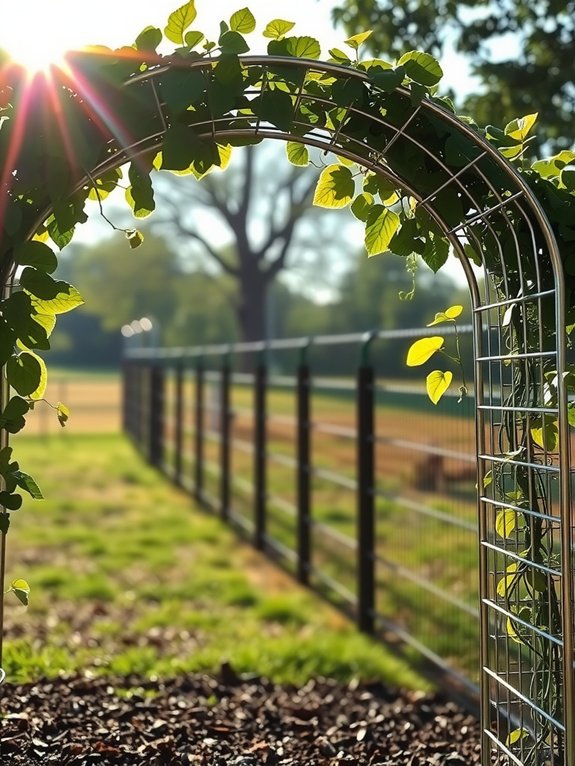
Why did the 16-foot cattle panel become the standard choice for garden trellises? When you’re planning your garden infrastructure, cattle panel length matters quite a bit, and the 16-foot size has earned its reputation through straightforward reliability. You’re working with a panel that’s roughly 4 feet wide, which gives you proportions that feel natural once you’ve actually handled one. When you bend these panels into U-shaped arches and secure them to four corner posts, you’ll create a 50-inch-wide opening that’s spacious enough for substantial plant growth. The stiffness of the material requires careful handling or support straps, but this same quality ensures your structure stays solid through multiple seasons. Because these panels are consistent and predictable, you can build extended runs of multiple arches in succession, which makes designing cohesive garden spaces much simpler.
How Path Width Determines Your Arch Height?
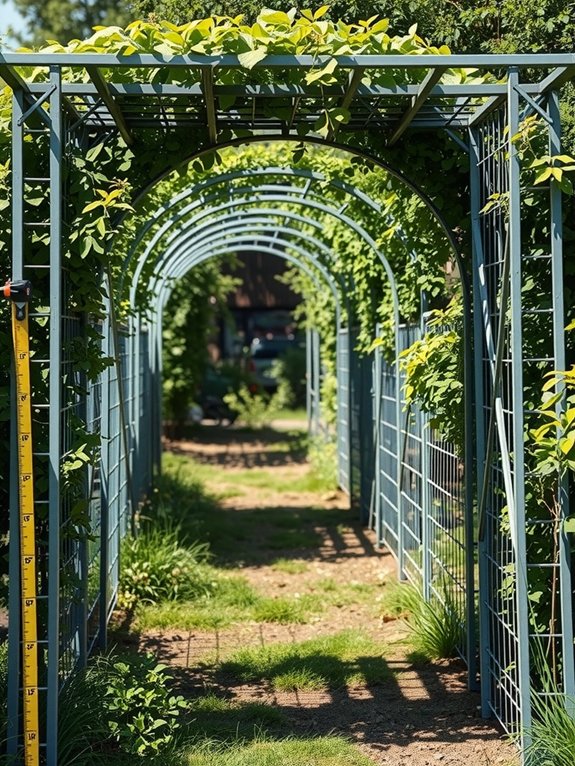
Your garden path’s width is the main factor that controls how tall your arch can be. A narrower path forces the cattle panel into a sharper curve, while a wider path lets it settle into a gentler arc that doesn’t reach as high. You can figure this out yourself by marking where your path will go and seeing how the 16-foot panel naturally curves in that space.
To find the height that’ll work for your setup, measure your actual path width first—include any support posts on the sides. Then think about how rigid the panel is. With a 7–8 foot wide base, you’ll typically get around 6.5 feet of clearance. Keep in mind that plants will eventually grow into the arch and fill some of that space.
Getting this width-to-height relationship right matters because you don’t want to end up with an arch that’s too low for comfortable walking or so steep that climbing plants can’t grip the sides properly. Measure carefully before you build, and you’ll avoid the frustration of fixing things later.
Measuring Your Garden Path
Measuring Your Garden Path
The distance between your garden borders—where you’ll position your arch—directly affects how tall your trellis can actually get. You’re working with a standard 16-foot cattle panel that’s roughly 50 inches wide, so your path width determines your arch’s footprint and the peak height of the curve.
Here’s how width affects height: a 4-foot-wide trellis gives you steeper sides and more vertical rise. A wider path spreads that same panel flatter, which cuts down your overall height considerably. The relationship is straightforward—narrower paths let you build taller.
When you measure, go from soil edge to soil edge to account for actual foot traffic space. This matters because your measurement shapes everything else in the project. Also plan your base spacing so posts sit roughly 5 feet apart, which prevents the panels from bowing under their own weight. Taking time to measure twice now saves you real frustration once you’re building.
Calculating Optimal Arch Height
Once you’ve measured your path width, the geometry of your arch becomes pretty straightforward. Narrower paths naturally produce taller peaks, while wider passages force the cattle panel into a gentler curve. This relationship between path width and arch height determines your trellis size and how prominent the structure will be in your garden.
Here’s what you should know about the key variables:
Standard 16-foot cattle panels give you roughly 6 feet of peak height when you’re working with typical 4–5 foot paths. If your path is 3 feet or narrower, you can push your arch considerably higher, though you’ll need to watch for structural stress. Going the other direction, paths wider than 6 feet mean you’ll either need to accept lower arches or use multiple panels side by side.
Wind exposure is another real consideration. If your location gets regular wind, you’ll want to angle the top of your arch, which effectively reduces the usable height at center. That’s a trade-off worth planning for upfront rather than discovering later.
Your path width is the fundamental constraint that governs how dramatically your cattle panel can curve overhead. It’s not just about looks—it directly shapes both how the structure functions and how much visual presence it has in your space.
Width-to-Height Relationship Guide
The width of your path directly controls how tall your arch can get. Here’s why: cattle panels come in standard sizes—typically 16 feet long and about 4 feet wide. When you narrow your footprint, you’re forcing that fixed panel material to bend upward instead of spreading out sideways. A wider path lets the same panel flatten and spread, giving you a shorter arch.
| Path Width | Arch Height | Best Use |
|---|---|---|
| 3–4 feet | Taller (5+ feet) | Intimate passages |
| 4–5 feet | Moderate (4–5 feet) | Standard guidance |
| 7–8 feet | Shorter (3–4 feet) | Open spaces |
The relationship is straightforward: tighter width = taller arch. Wider width = squat arch. When you’re choosing your cattle panel size and planning your trellis arch, this width-to-height trade-off should drive your decisions. Think about the space you’re working with and whether you want people walking through a tall tunnel or moving under something more open.
Panel Width Basics: Why It Affects Stability and Access
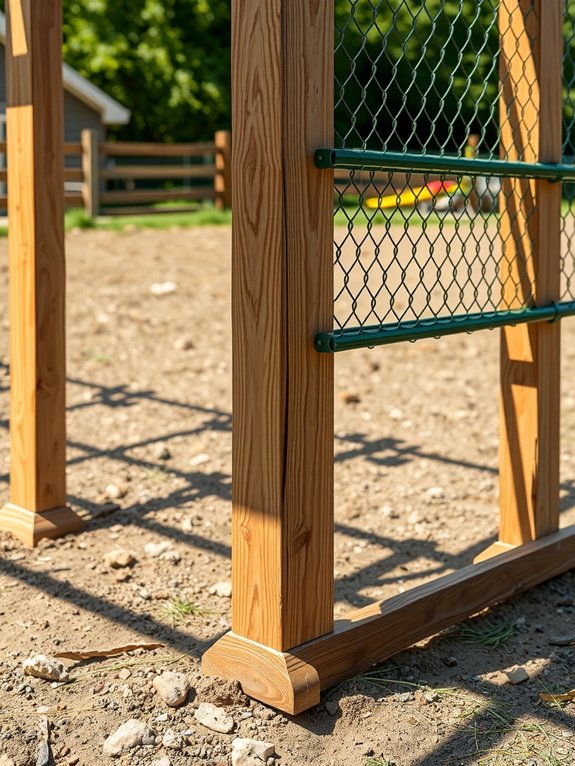
Standard cattle panels measure 50 inches wide, and this fixed dimension shapes everything about your arch project. Once you decide to build, you’re working with constraints that don’t budge—the panel width stays constant, but how you space your path directly controls how tall your structure ends up and whether you can actually walk under it without ducking.
Here’s what you need to know about stability:
Path width changes your arch proportions. Wider paths give you shorter, squatter arches with less headroom. Narrower paths create taller structures where you won’t feel cramped underneath.
Post spacing matters for preventing sag. Space your posts about 5 feet apart to keep the panels from bowing under their own weight as tension builds.
Where you attach panels affects rigidity. Fastening panels to the outside of your posts minimizes side-to-side movement, which keeps the whole structure from flopping around when wind hits it or you brush against it while working.
The cattle panels themselves have limits on how much they’ll flex, so you can’t just rely on the material to stay put on its own. Secure anchoring becomes non-negotiable when you’re spanning wider distances. Without proper attachment and post spacing, you’ll watch the panels gradually shift and sag.
Calculate Panel Size for Your Garden
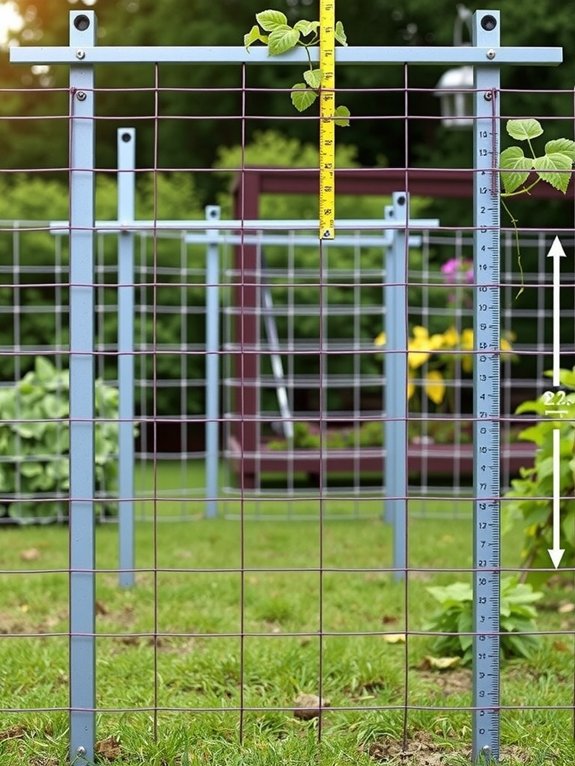
How you measure your garden space—from your path width to the distance between posts—determines whether you’re building something practical or an awkward setup that’ll frustrate you regularly. Start by measuring your path width, since this directly affects how tall your arch can be. Narrower paths let you build taller arches, while wider passages work better with shorter structures.
Measure your path width first—it determines how tall your arch can safely be and whether your setup will actually work.
A standard cattle panel is 16 feet long, which gives you options. You can build a single arch or connect multiple panels depending on what fits your space. For keeping things stable, space your posts about five feet apart. This distance prevents the panels from bowing while keeping the structure sound.
Most gardeners find that a 4–5 foot trellis height works well. It’s tall enough to make a real presence in your garden without blocking access or creating problems when you’re working around it. The key is measuring both your width and depth honestly, then matching your panel setup to what actually fits your growing space.
Crop Weight: Does Your Panel Size Need Extra Support?
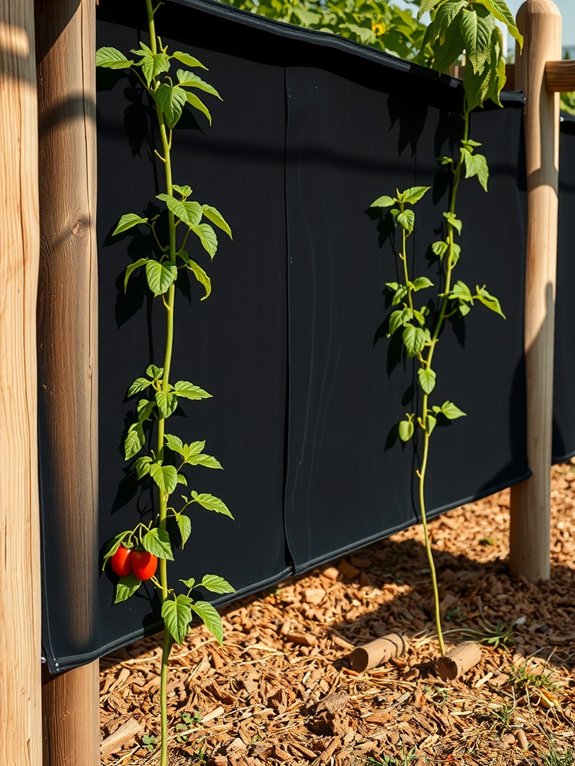
Once you’ve settled on your panel size and arch height, you need to figure out whether your structure can actually handle what you’re planning to grow, since different crops put different demands on your system.
Heavy crops like winter squash and cantaloupes need wrapping with twine or additional attachments to keep them from sagging. You’ll want to secure your cattle panel with zip ties or wire where the wires meet the posts so nothing shifts under the weight of the fruit. Well-anchored posts are especially important for taller arches that support multiple vines per side, as they reduce the bending stress on your frame. For longer arches, think about adding reinforcement attachments either inside or outside the structure to keep heavy produce elevated rather than resting on the ground.
Your arch’s durability really comes down to matching your support system to how much weight your crops will actually put on it. A standard 16-foot panel handles 4–5 vines per side without too much trouble when everything is properly secured. Heavier fruiting varieties, though, need you to plan your reinforcement strategies ahead of time rather than discovering problems after you’ve already planted.
Single vs. Multi-Panel Setups
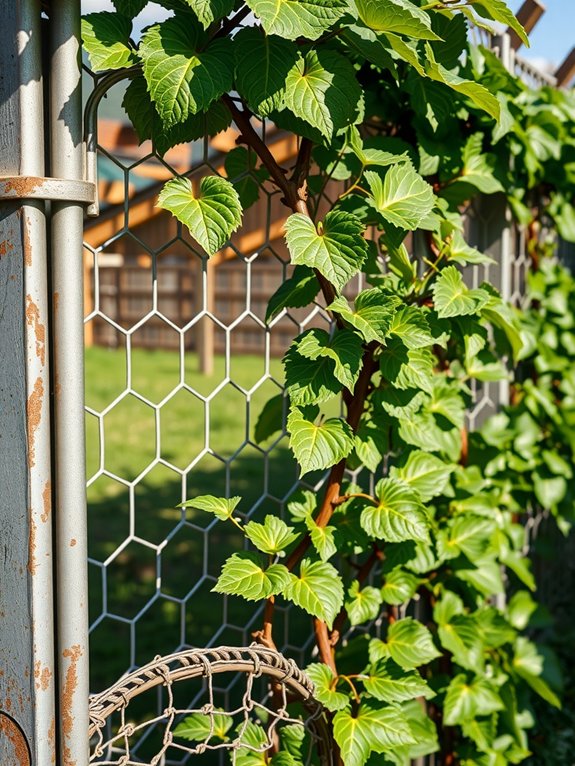
When you’re ready to move beyond a basic 16-foot arch, you’ll need to decide between building with a single panel or multiple panels. This choice affects what you can grow and how you’ll use your garden space.
A single cattle panel works fine if you’re growing modest climbing crops. But if you want to expand your growing options, a multi-panel setup is worth considering. You join panels end-to-end and secure the connections with extra fasteners or tying wires to create one continuous arch trellis that spans your entire bed.
Four panels per line gives you the climbing space that heavier crops need. Yes, this approach requires more initial fastening work. But you’ll rebuild less often and get better wind resistance across your garden, which makes the extra effort upfront worthwhile.
Accessibility: Choosing a Height You Can Harvest From
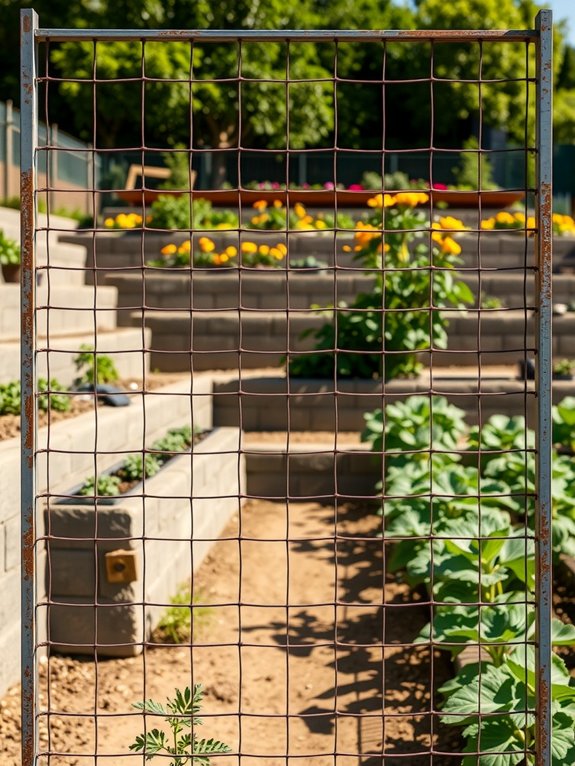
When you’re planning your trellis, height matters more than you might think. Build it too tall and you’ll spend the season stretching and straining. Build it too short and you’ll be bending constantly. Getting this right at the planning stage means your harvest stays comfortable throughout the season.
Finding Your Sweet Spot
Aim for a trellis between 4 and 5 feet tall. This range lets you pick tomatoes and cucumbers at waist level without awkward reaching or repeated bending. If you’re working with a narrower path, you can go taller—up to 6.5 feet—as long as you space your posts properly and account for wind stability. Wider paths naturally work better with shorter structures, so think about your garden layout when deciding.
Making It Work for You
Raised panels and elevated configurations give you another option. By lifting your growing space off the ground, you increase the amount of accessible area where you can actually reach your crops at harvest height. This setup works especially well if you’re growing tall varieties that need extra vertical space.
The goal is simple: set up your trellis so picking vegetables feels manageable, not like a workout. When harvesting doesn’t leave you sore or frustrated, you’re more likely to stick with gardening season after season.
Tight Spaces? Try Shorter Panels and Gothic Arches
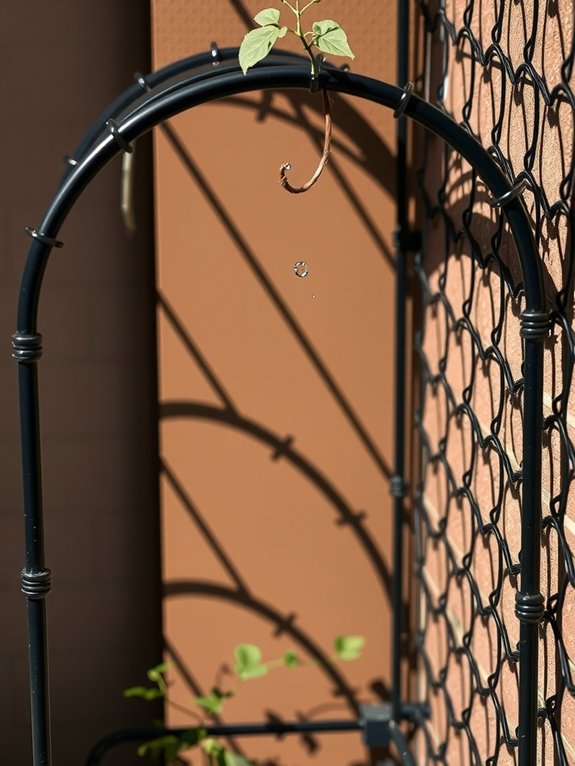
If your garden’s already cramped—narrow walkways between rows, limited square footage, or tight passages you need to navigate during harvest—a single towering trellis can turn a workable space into an obstacle course. Shorter panels offer a practical solution.
Here’s what works: connect two shorter cattle panels near the top to create a Gothic arch design. This pointed shape climbs tall without eating up horizontal space. The configuration reduces overall width while keeping structural strength, so you can position end posts closer to walkways and preserve the clearance you need for movement and harvesting.
Make sure your arch width matches your inside-row width. This alignment prevents base bowing and guarantees stable post attachment. You’re basically trading conventional horizontal sprawl for vertical compression—a trade-off that pays real dividends when every foot of space matters.
Wind Exposure and Panel Size
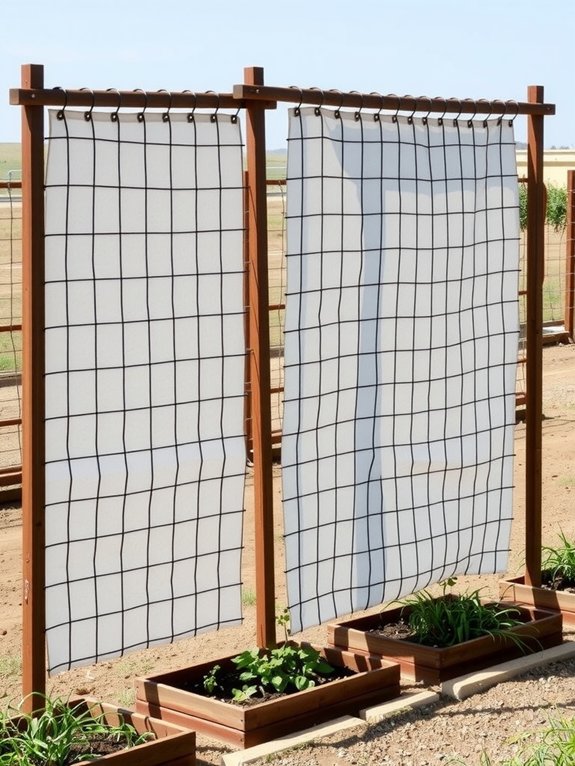
How well your trellis handles wind comes down to the balance between panel size, post spacing, and how you design the arch structure. This matters especially once you’ve chosen a Gothic style. The standard 16-foot cattle panel is tall enough that wind becomes a real concern—the extra height can make the arch unstable when gusts hit.
Here’s what actually works:
Space your posts about 5 feet apart. This keeps the panels from bowing too much when wind pushes sideways against them.
Angle the arch tops inward. This simple change redirects wind pressure down through the structure instead of letting it push outward at the weakest points.
Know your local wind patterns before you pick a panel size. What works in a sheltered spot won’t work in an exposed area. Check what conditions your location typically gets.
Add extra bracing in spots that get hit hardest. If certain sections face prevailing winds, tie them down more securely or attach them to nearby structures.
Arch stability isn’t something you only read about—you’ll notice the difference pretty quickly between a solid setup and one that needs constant fixing.
5 Sizing Errors That Ruin Your Arch (and How to Fix Them)
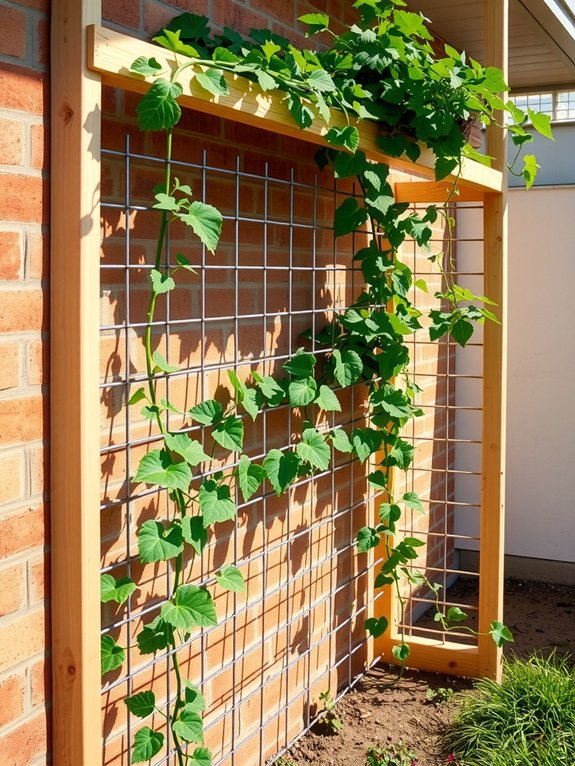
Most arch failures come down to three core mistakes you’ll want to avoid. First, spacing your posts more than five feet apart lets the stiff panel bow dangerously under its own weight and whatever plants you’re growing on it. Second, choosing a panel length that doesn’t match your path width creates real problems—a 16-foot panel won’t arch gracefully over a six-foot passage without either sagging or squeezing you into an uncomfortably tight tunnel. Third, you need to think about how your path width affects both your arch height and whether you’ll actually be able to walk through it once it’s built. It’s easy to get halfway through installation only to realize you’ve created either a claustrophobic crawlspace or a structure so wide it won’t hold up properly.
The good news is that understanding how post spacing, panel length, and path dimensions work together prevents these problems before they start. You’ll save yourself from tearing down and rebuilding by measuring twice and thinking through these relationships before you cut anything or dig any holes.
Spacing Posts Too Far Apart
One of the most common mistakes—and one I’ve watched gardeners repeat despite good intentions—is spacing the support posts too far apart. This decision undermines your arch’s structural integrity before you’ve even planted the first climbing bean.
Cattle panels have real limitations, and here’s what happens when you ignore proper post spacing: the arch flattens under its own weight, wind load causes inward collapse (especially with Gothic-style tops), and panels sag progressively. Shortening the cattle panel itself won’t fix these problems.
The solution is straightforward. Space your posts approximately five feet apart. This tighter spacing maintains your arch’s intended shape and prevents the structural failure that wider spacing inevitably creates. You need that support framework in place before you add any weight to the panels.
Choosing Wrong Panel Length
When you pick a cattle panel length without thinking about how wide your path will be, you’re basically guessing at how tall your arch will be and how it’ll actually hold up. That guess becomes pretty clear the moment you start bending that first panel into shape. A 16-foot panel over a narrow path gives you a taller, steeper arch, but widen that same path and the whole thing flattens out. That matters because it changes both how easy it is to harvest and whether your structure stays stable.
You might think shortening the panel itself would fix arch bowing, but if your posts are sitting around 5 feet apart, that won’t really help. The panel’s stiffness doesn’t bend the way you want it to, regardless of length.
Here’s what actually works: attach your panels on the outside of the posts to cut down on flop, add extra T-posts halfway between your main posts, or switch to a shorter Gothic arch design. Gothic shapes naturally resist spreading outward, which keeps everything more stable.
Ignoring Path Width Constraints
The most common mistake I’ve watched gardeners make—and truthfully, the one I’ve made myself—is treating path width as an afterthought rather than the structural foundation it actually is. Your cattle panel arch’s success depends entirely on this dimension.
Here’s what happens when you get path width right. A 4–5 foot trellis width minimizes base bowing and prevents the lateral stress that destabilizes your structure. Wider paths flatten your arch, reducing the height and arch rigidity you’ve worked to achieve. Narrower paths create steeper curves, which means you need to place stronger end posts closer to the panel ends to keep everything stable.
The real issue is that path width directly determines how much weight the arch distributes across its foundation. When you ignore these constraints, you’re essentially asking your cattle panel to compensate for poor planning. The panel can’t overcome physics. Your trellis width controls everything from arch shape to long-term stability, so you need to nail this dimension before you start building.
When to Go Oversized vs. Downsize
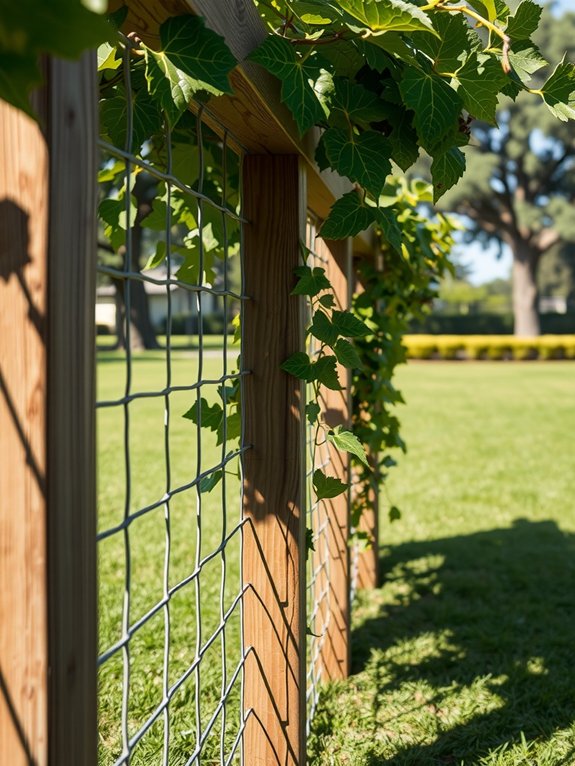
How you size your cattle panel trellis depends on your garden’s layout, the plants you’re growing, and how much structural support you want to put in. The standard 16-foot cattle panel works well for most gardeners. It gives you a reliable arch height without needing excessive anchoring.
The standard 16-foot cattle panel provides reliable arch height and structural support for most garden layouts without excessive anchoring.
If you want taller arches or more climbing space, you can use panels longer than 16 feet. Just know that these require significantly stronger posts and deeper foundation work to prevent bowing under weight.
Shorter panels work better if you’re working with a tight space. You’ll probably need to combine multiple panels to get the coverage you need.
Before you decide, think carefully about your soil conditions and how deep you can set your posts. Stability is what keeps your structure standing through seasons of heavy plant growth.